Why Belly Fat Won't Go Away
In a Nutshell
Subcutaneous belly fat resists loss because it has lower blood flow and hormone sensitivity than visceral fat, so the body burns dangerous visceral fat first. To lose it, maintain a 300-500 calorie deficit, eat 1.2-1.6 g protein/kg body weight daily, and do 3-4 weekly strength-training sessions to preserve muscle while the deficit drives fat loss. Supporting steps—moderate cardio, high daily movement (NEAT), 7-9 hours of sleep, and stress reduction—prevent metabolic slowdown and keep fat loss consistent.
These notes were generated by AI and may contain inaccuracies.
You're eating better, working out consistently, and maybe you've even lost weight, but that belly fat is still there, barely moved. If that's you, you're not doing anything wrong. You're just fighting the most stubborn type of fat in the human body and today, I'm going to explain exactly why it's so hard to lose, what the science actually says works, and how to lose it as fast as your body will realistically allow. Stay with me through this whole video because number three on this list is the one most people underestimate, but it's the one that makes everything else work better. I'm Dr. Kabir Harricharan Singh, a double board certified physician in family and obesity medicine. Before we get further into it, here's a quick disclaimer. Even though I'm a doctor, I'm not your doctor. This is educational information only, not personal medical advice. Always discuss decisions about your own health with your own doctor first.
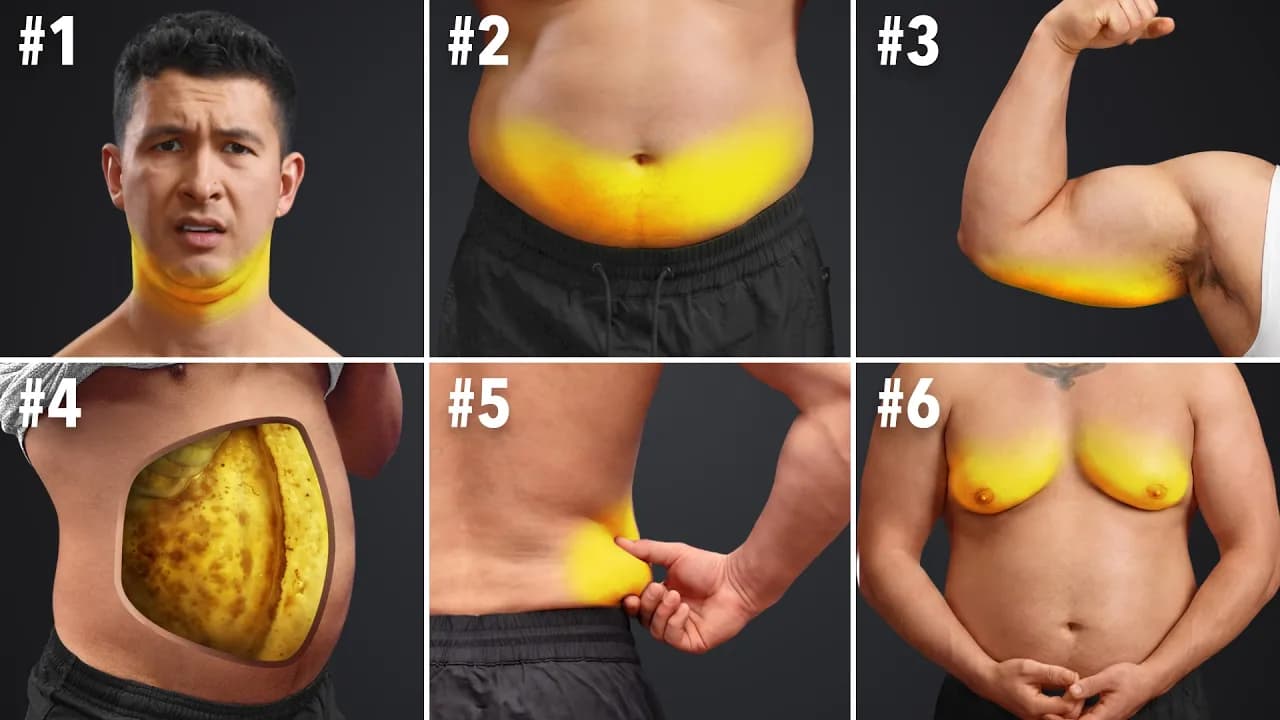
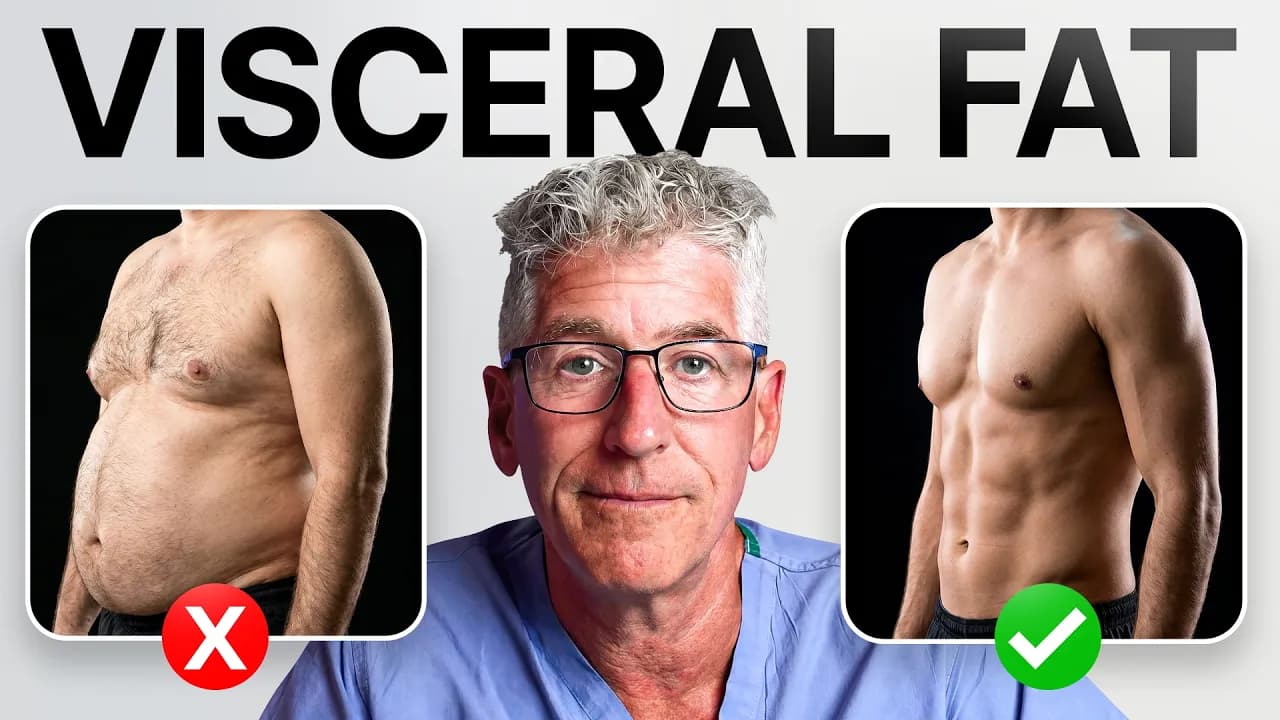
There are two types of fat in your body, and they both behave very differently. The first is visceral fat, that deeper fat that's packed around your internal organs. It's metabolically active and it's dangerous, but it actually responds relatively quickly to the right interventions. The other type of fat is subcutaneous fat, the fat that's just under the skin, the kind you can see and pinch. This is what most people are trying to get rid of when they talk about belly fat. And here's the frustrating truth. Subcutaneous fat is a lot more stubborn than visceral fat. And understanding why is the first step to actually dealing with it.
Why is subcutaneous fat so hard to lose? There are three biological reasons this fat is the last to go and none of them have anything to do with your willpower or your effort. First, fat burning requires hormones to reach the fat cells through the bloodstream, trigger the release of stored fat, and then carry the fat away to be burned as energy. But subcutaneous fat has lower blood flow than other fat depots. Less blood flow means the whole process happens more slowly in subcutaneous fat than anywhere else. Second, subcutaneous fat is less sensitive to hormones that signal fat burning. Specifically epinephrine and norepinephrine. Even when these hormones are circulating at high levels during exercise, subcutaneous fat cells are slower to respond. And third, this one is actually good news even though it doesn't feel like it, your body deliberately prioritizes burning visceral fat first because it's more dangerous. So, if you've been doing the right things and you've lost weight, but that belly fat seems unchanged, there's a good chance your body has been reducing visceral fat first. The subcutaneous fat is next, it just takes a little longer.
Create a calorie deficit. There's no way around this one. I'll be straightforward with you. There's no supplement, no exercise protocol, or no dietary strategy that replaces a calorie deficit when it comes to fat loss. The research on this is clear, and randomized control trials consistently show that diet induced weight loss leads to significant reduction in subcutaneous fat in the abdomen. But here's where most people get this wrong. They go too aggressive too fast. A severe calorie restriction might feel like the fastest path, but it's actually one of the slowest for reasons I'll get into in a moment. So, start with a modest deficit, somewhere in the range of 300 to 500 calories below your maintenance level. That's enough to drive consistent fat loss without the metabolic and hormonal consequences that come from extreme dieting.
Protein. Get this right or you'll lose muscle, not fat. When you're in a calorie deficit, your body is looking for energy wherever it can find it. And if you're not eating enough protein, it will break down muscle to get it, and that's the opposite of what you want. Protein preserves your muscle mass while you're in a deficit, it reduces hunger, making a calorie deficit easier to sustain, and it improves body composition, meaning the weight you lose comes from fat rather than muscle. The data shows that the target amount of protein is roughly 1.2 to 1.6 g of protein per kilogram of body weight per day, which is roughly about 0.5 to 0.75 g per pound. Spread it across your meals rather than trying to hit that whole target in one sitting, and you'll get significantly better muscle protein synthesis throughout the day.
Strength training. This is the one that changes everything. Earlier, I told you there was one piece most people underestimate, and this is it. Strength training, resistance training, lifting weights, whatever you want to call it, is the single most important tool for visible fat loss and I want to explain why. Because most people think of it as optional or as something they'll add in once they've lost weight first. But that's backwards. That would be like going to the bathroom and saying, "I think I'll wipe after I get dressed." But here's what resistance training actually does. It preserves the muscle mass you already have while you're losing fat, which matters a lot because muscle mass is a metabolically active tissue that burns calories around the clock, even at rest. It improves your metabolism in ways that cardio alone doesn't. And research shows it influences fat cells at a molecular level, promoting fat burning and shifting the hormonal environment in your body towards fat loss rather than fat storage. When you combine strength training with a calorie deficit and adequate protein, you lose fat and preserve muscle. But when you skip it and just diet, you lose fat and muscle, and you end up with a smaller version of the same problem as before, plus a slower metabolism. So aim for three to four sessions a week focused on the major muscle groups. You don't need to be in the gym for 2 hours. 45 minutes of focused, progressive resistance training is enough to drive the real results.
Cardio. It's helpful, but not the foundation. Cardio is not the enemy, but it's not the solution on its own, either. Think of it as an accelerant, something that helps you create or deepen your calorie deficit and improves your cardiovascular health alongside everything else. Clinical trials show that aerobic exercise does reduce subcutaneous fat in the abdomen, but the mechanism is largely through burning additional calories rather than through any specific fat targeting effect. This is why cardio alone without the deficit and the protein and the strength training tends to produce disappointing results for people trying to lose that stubborn belly fat. Adding two to four cardio sessions a week or simply increasing your daily step count works. But it's important to choose whatever form of cardio you'll actually do consistently because consistency is the variable that matters most.
Daily movement. This is usually what separates progress from plateaus. Beyond your structured workouts, how much you move throughout the rest of your day matters more than most people realize. This is what researchers call non exercise activity thermogenesis -- or NEAT-- and it can account for a surprisingly large number of calories burned or not burned depending on your daily habits. Walking to the store instead of driving, taking the stairs, standing at your desk for part of the day, or even doing things around the house. None of these feel like exercise, and they aren't, but cumulatively, they can be the difference between continued fat loss and hitting a plateau. If your fat loss has stalled despite doing everything else right, looking at your overall daily movement, not just your workouts, is usually a good place to start.
Sleep. Poor sleep is working against you. If your sleep is consistently off, fat loss slows down. Poor sleep increases the hunger hormone, specifically ghrelin, which drives appetite, while suppressing leptin, the hormone that signals fullness. It also reduces insulin sensitivity and it impairs the hormonal environment your body needs to burn fat efficiently. Research consistently shows that sleep deprived individuals lose a smaller portion of fat relative to muscle during a calorie deficit compared to folks that are well-rested. 7 to 9 hours of sleep a night on a consistent schedule isn't a luxury when you're trying to lose fat, it's a requirement. If you're cutting sleep to make time for your early morning workouts, you may be undermining the very result you're working towards.
Stress. The invisible break on fat loss. Chronic stress elevates cortisol, and elevated cortisol, particularly when it's sustained over weeks or months, actively promotes fat storage, specifically in the abdominal region, and makes existing fat harder to mobilize and burn. This is one of the reasons people sometimes do everything right on paper and still struggle with belly fat. The stress load they're carrying is creating a hormonal environment that works directly against their efforts. Daily nervous system resets, breathing exercise, time outdoors, mental breaks, and protecting boundaries around your schedule are physiologically meaningful interventions that change the hormonal environment your fat cells are operating in.
Before I wrap up, I want to name the single most common mistake I see because it derails more people than anything else on this list, and that's trying to lose subcutaneous fat too fast. When you crash diet, meaning severe calorie restriction, extreme cardio, or unsustainable protocols, you lose muscle alongside fat. Your metabolism slows in response, and your fat loss stalls. You end up working harder for worse results. And because it's unsustainable, most people eventually stop. And the fat comes back faster than it left. Stubborn belly fat isn't a willpower problem, it's a biology problem and now you understand the biology. Create a calorie deficit, protect your muscle with protein and strength training, use cardio as an accelerant, move more daily, sleep well, and manage your stress to the best that you can. That's the protocol. It's not exciting, and it doesn't have a cute name, but it works.
Keep Kabir Harricharan Singh, MD in your library
Save the videos and channels worth coming back to, and find them again in one place.