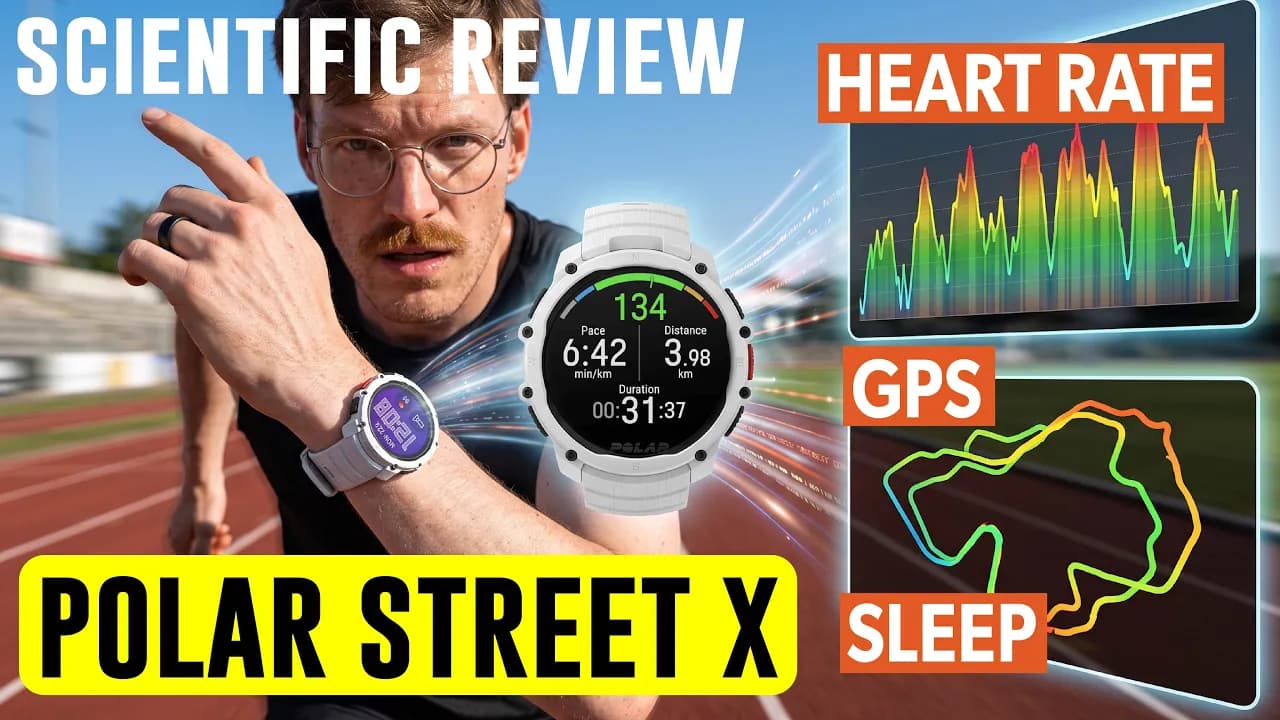
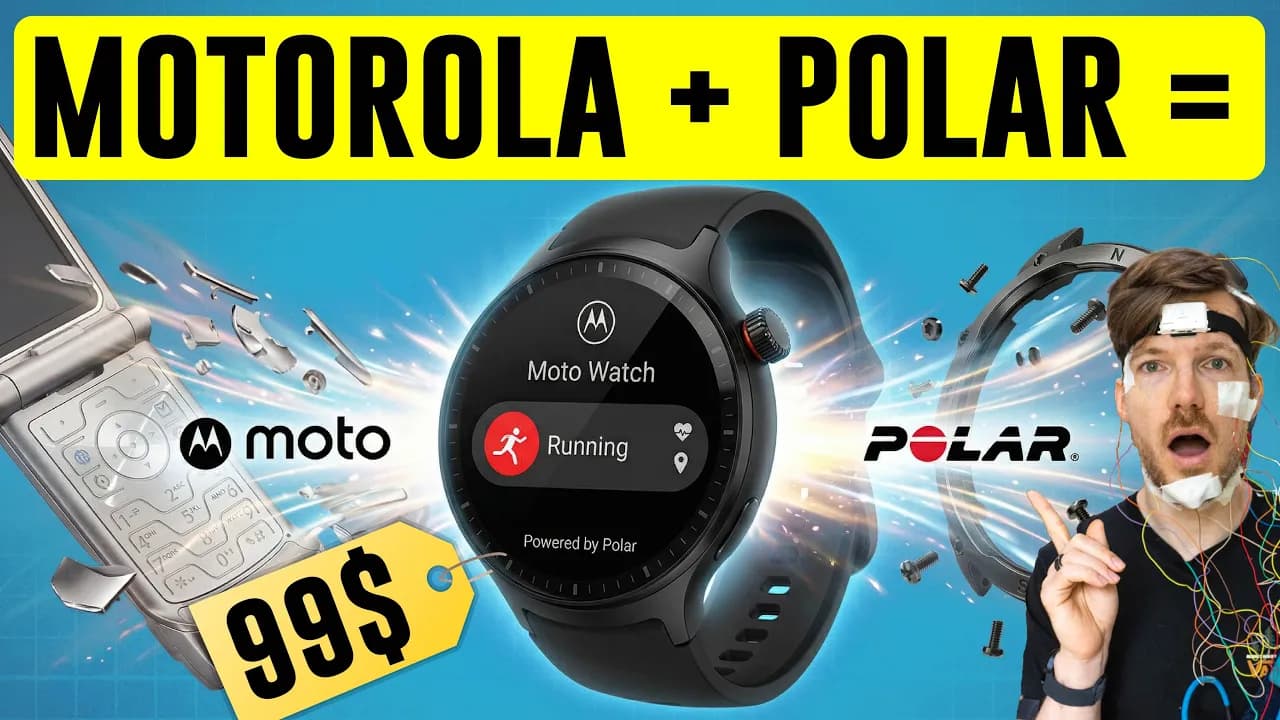
Why I Love (And Hate) the New Polar Street X
In a Nutshell
The Polar Street X ($250) is a compelling Garmin Instinct alternative with excellent feature-to-price ratio (flashlight, route guidance, skin temp), minimalist rugged design (1.28" 1000-nit AMOLED), and strong EU data privacy. Avoid it due to the outdated Polar app (sluggish despite overhaul), mediocre Precision Prime optical HR sensor (strong on biceps/indoor cycling but weak on wrist/outdoor activities vs. newer sensors), and subpar sleep tracking (behind Oura, Whoop, Fitbit). Full review pending; check other testers for algorithm improvements.
These notes were generated by AI and may contain inaccuracies.
The new Polar Street X seems like a proper Garmin Instinct alternative at a more affordable price. Polar hasn't provided reviewers with early access, but based on the sensors, much can be said about its likely performance using data from tested devices with the same sensor. Provides three reasons to get it and three reasons to avoid it, based on previous testing, new features, price, and more.
Polar Street X is marketed as a more affordable Polar watch at $250 or euros, actually $219 British pounds. Not a real budget device, but for premium brand Polar, one of the more affordable watches. Easily recommendable for Polar ecosystem fans from a price point.
Host is Rob, post-doctoral scientist specializing in biological data analysis.
First reason to get it: excellent feature/quality to price ratio. Garmin equivalent with similar features costs much more. Includes flashlight like Garmin Instinct 3, Venue 4, and Fenix 8. Flashlight in two colors: white and red (helps preserve night vision when camping). Also includes route guidance. Not full on-watch maps, but shows shape and provides turn-by-turn guidance during sessions without needing phone connection (confirmed via email to Polar). Polar more inclusive with features vs. Garmin, which software-blocks many on lower/mid devices.
Includes nightly skin temperature measurements (nice to have, especially for women).
Second reason: design. Likes Scandinavian minimalist but cool and rugged look (personal preference; may be too bulky for women’s daily wear). 1.28-inch AMOLED touchscreen, brightness up to 1,000 nits (good in most scenarios, but not ideal in bright sunlight; others reach 1,500-2,000 nits).
Third reason: data privacy. As European company, Polar good at this; data likely on EU servers for European users (needs policy check).
Summary of reasons to get: price to feature ratio, design, data security.
First reason to avoid: Polar app. Major overhaul coming, but currently outdated and sluggish. Not easy for quick overview of health/fitness stats. Fine for workout tracking and data storage, but behind for holistic health/sports tracking vs. Whoop, Oura Ring, Coros, Suunto, Garmin (more nimble). Even on Polar Vantage V3, interface sluggish.
Second reason: sensor uses older Precision Prime optical heart rate tracking (same as Polar Loop).
Performs worse on host than others; works well on biceps, worse on wrist.
Polar Loop (Polar’s Whoop-like strap, no subscription, cheaper) tested on indoor cycling, outdoor cycling, running.
- Indoor cycling: correlation 0.99, 65th percentile (better than 65% of devices).
- Outdoor cycling: correlation 0.79, 29th percentile (bumpiness harder).
- Running: correlation 0.99, 88th percentile.
- Indoor cycling: correlation 0.82, better than 12%.
- Outdoor cycling: correlation 0.77, better than 27%.
- Running: correlation 0.95, better than 54%.
- Weightlifting: poor (recommend ECG chest strap for accuracy).
Polar Ignite 3:
- Indoor cycling: 0.96.
- Outdoor biking: 0.73.
- Running: 0.89.
Polar Pacer Pro:
- Spinning: 0.97.
- Outdoor biking: 0.69.
Summary: Expect good enough for indoor cycling, not for outdoor cycling unless algorithms improved; running at edge. Newer Elixir sensor (e.g., Vantage M3) does better (higher correlations). Polar upgraded Precision Prime algorithms recently—past bad experiences may improve.
For wrist HR, might be good enough but likely better devices exist (check other reviewers). External sensor: no problem.
Running channel next to scientist job costly (devices, editor Alex). Support via Amazon affiliate link, other links (e.g., Whoop, Oura Ring, Eight Sleep Pod).
Third reason to avoid: sleep tracking. Mediocre like all sports watches (Suunto, Coros, Garmin).
Tested Polar Grit X2, Polar Loop (retest): roughly same area as Garmin, Amazfit, Suunto Vertical 2; Coros worse. Not top performers.
Top 5 brands: Fitbit/Pixel watches, Apple Watch, Whoop, Oura Ring, Eight Sleep Pod. Also Sleep 2 (not recently tested).
Recommendations:
- Budget sleep/health: Fitbit.
- Sleep/health: Oura Ring.
- iOS, app okay: Apple Watch.
- Sports/health: Whoop.
- Sleep improvement: Eight Sleep Pod (cools/heats each side independently; great for hot summers; 30-day trial via affiliate).
Get for: price/feature ratio, design, data safety. Avoid (for host): optical HR on wrist, sleep stages, app.
Full testing pending; Polar might have upgraded algorithms. Excited irrationally about design/price; could be easy recommend if performs better than expected (N=1 or 2 testing—check other reviewers).
Affiliate links for Polar Street X, Garmin, Suunto, Coros, Whoop, Eight Sleep Pod.
Keep The Quantified Scientist in your library
Save the videos and channels worth coming back to, and find them again in one place.