Why the Dodgers Made More Than the S&P 500
In a Nutshell
Sports franchises deliver 18% annual returns and negative S&P 500 correlation because they combine media rights, local monopolies, and inflation-protected real estate, making them one of the few assets that move independently of public markets. Ray Dalio’s 8-12 uncorrelated holdings rule is the key principle: mixing teams, private credit, energy assets, and now power plants for AI data centers lets investors cut risk 80% while raising returns. The largest mispricing is in fossil-fuel and nuclear energy assets trading at 3-4× cash flow versus the Magnificent Seven at 100-200×, driven by surging electricity demand from data centers.
These notes were generated by AI and may contain inaccuracies.
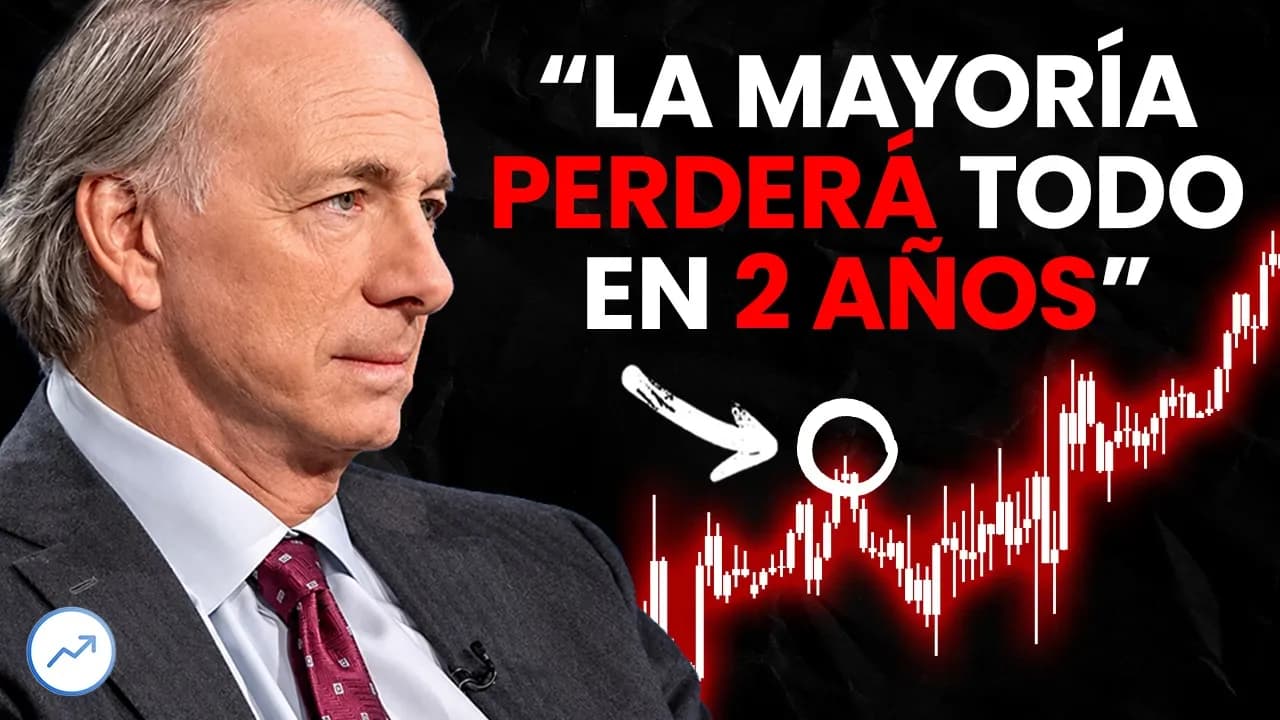
Ray Dalio, one of the best investors in world history, was interviewed for 30 minutes that lasted 4 hours. When asked the most important principle that contributed to his success, Dalio stated he had thought about it for 15 years and now calls it the best way to invest: "If you find 8 to 12 uncorrelated investments that you believe in, you can reduce your risk by 80% and increase your potential for profit."
Uncorrelated means unrelated. The speaker initially gave examples of oil, technology, and money, but clarified that on public markets, these are all related to each other. Shares and bonds are supposed to go in opposite directions, but this is no longer entirely true. Most things in the public market are related to each other. In 2008 and 2020, both went down, and brokers say "I don't know, that's how it happens. It always happens."
This is why you need private equity, private credit, private assets, and private real estate. Two weeks after the interview, the speaker attended the JP Morgan alternative asset conference in Miami, which requires assets of at least over a billion to attend. Ray Dalio was speaking just before the speaker and gave the exact same advice about uncorrelated investments. Everyone in the room lowered their heads and wrote it down.
The speaker uses a golf shop metaphor: if you only sell sunscreen, you'll sell a lot on sunny days but nothing on rainy days. If you only sell umbrellas, you'll sell a lot on rainy days but very few on sunny days. But if you have both in your store, you'll profit every day. Some investments will increase and some will decrease. Most people don't get the opportunity to do this because public markets are highly correlated due to indexation and S&P 500 investing.
Something is said to be "one" correlated with the S&P 500 when it moves in line with it nearly 100% of the time. Its dimensions may vary, but the direction remains essentially the same. Zero means no relationship. Negative numbers mean it moves in the opposite direction.
Sports teams are at the top of the list because the correlation between sports and the S&P 500 is negative, meaning less than zero. The business model of sports teams does not affect the S&P 500 on a daily basis. Sports teams provide inflation protection, real estate, and valuable media rights.
A statistic shows that in 2005, 14 of the top 100 live broadcasts were sports. In 2025, 96 of the top 100 will be sports because people want to watch live events without ads. Owning a GP stake or private wealth management firm has point one correlation, meaning in 90% of cases it does not move in the same direction.
The energy sector shows negative correlation and usually runs in the opposite direction. Aerospace and defense or venture capital have 30-40% correlation, which is different from public assets like Nvidia that can have 80-95% correlation because they practically control the market.
Sports teams have achieved an 18% compound annual return in the last 10 years. Peter Guber bought the Dodgers for $2.2 billion in 2012. Newspapers ran headlines saying "They've gone crazy" and "They'll lose money" and "This is the highest price ever paid for a franchise." The speaker asked Peter if he was sure, and Peter said he knew what he was doing and would make an announcement.
In professional sports, if you own an NBA team, you're one of 32 teams. NFL teams are one of 32 teams. You receive 1/32 of revenue from national and international sales but retain rights to local advertising. The week after buying the Dodgers, they sold advertising rights for $7 million and made a net profit of $5 million within a week.
Sports teams are media firms and real estate firms. Fans come from the word "fanatic" or "devotee" and have been around for many generations. It's like a legitimate monopoly with built-in customers who will pay inflated prices for hot dogs regardless.
The NFL is the organization in the strongest position, generating three or four times more revenue than the next one. There are 16 matches and 8 home games. If you own a team, your share of revenue excluding local advertising revenue is about $450 million on the first day, before a game is played, before a season ticket is sold, before anything is done.
The speaker was skeptical for two years before deciding to invest in sports because they weren't sure it wasn't just a hobbyist asset. The realization came when understanding that cord-cutting was real, and this was the driving force behind the evaluation.
The speaker mentioned seven different ways to invest in their book, with sports teams being one. Another investment area is fuel. When the book was written less than two years ago, it had to be updated because there was nothing about data centers. The speaker bought a 1.3 gigawatt power plant in West Virginia along with some partners, where 8% of the electricity comes from there.
The demand for electricity was already growing due to population and technology, but AI has created massive additional demand. It's a matter of defense whether China wins or not. The speaker has not been investing in those areas for a few years because of the attitude towards fossil fuels.
In the private market, investment opportunities in fossil fuels are available at three to four times cash flow, which is incredibly cheap. The Magnificent Seven stocks are trading at 200 times cash flow or 100 times cash flow. The reason for the low valuations is that very few people are willing to invest in fossil fuels. The speaker respects people's right to avoid these investments but also respects their capital and their right to invest where the country and world need things.
The speaker is also working on other sources of energy including nuclear. They are optimistic about nuclear because of the huge surge in data centers, with about 1,500 pending to be built. This is a very big political discussion that will be one of the topics in the midterm elections and 2028. China is spreading information about this to weaken America and incite the population against data centers because if China wins the energy war, they will also win the war on AI.
The speaker addresses people who say they're against building AI data centers everywhere because of noise. The position is that people need to go find out the facts rather than listening to stories being told to them. Most of the information is coming from bots, and this has been repeatedly documented by China. If they win in the energy sector, they will control the world through AI.
The speaker notes that most people get their information from social media and TikTok rather than from sources that inform them. The information age is long gone - there is an abundance of information now, and people are drowning in a sea of information but thirsty for wisdom. Most people are just being fed all kinds of information all day long.
Keep Tony Robbins in your library
Save the videos and channels worth coming back to, and find them again in one place.