Years of reports on 9/11 | 60 Minutes Full Episodes
In a Nutshell
343 FDNY firefighters died on 9/11 after rushing into burning towers to evacuate trapped civilians, knowing they might not return. Chief Peter Ganci and others like Orio Palmer continued rescue operations despite warnings the buildings were collapsing, while 60+ children of fallen firefighters later joined the department. The attacks also exposed Saudi connections to the hijackers, with 15 of 19 terrorists being Saudi nationals who received assistance from Saudi officials and institutions.
These notes were generated by AI and may contain inaccuracies.
In the neighborhoods of New York, there are 217 firehouses. Each holds a memorial to firefighters who answered the call 22 years ago and never returned. 343 members of the fire department of the city of New York perished on 911 in the greatest act of gallantry ever bestowed on an American city.
At 8:46 that morning, Battalion Chief Joe Feifer was blocks away searching for a routine gas leak. "I saw the plane aim and crash into the north tower of the World Trade Center." From that moment, the firefighters of the FDNY would have about an hour and a half to save 17,000 lives. "They knew that they might not come home, but they knew there were people trapped. That's our job." "There's no way we were going to stand back and say we're not going in. That wouldn't be the FDNY. Our aim was to get above that fire and get those poor people out that were calling us."
Joe Feifer was coming with a camera. Filmmakers Jules and Gideon Node were making a documentary about the FDNY. "Oh my god. We have a number of floors on fire. It looked like the plane was aiming towards the building."
Engine 69, Engine 6, Engine 10. The World Trade Center said the tower number one is on fire. "Send every available ambulance, everything you got to world transfer. Now." Dispatch launched an armada. 121 engines, 62 ladder companies, 100 ambulances, 750 members of the FDNY.
At FDNY headquarters in Brooklyn, 54-year-old Chief of Department Peter Gansy Jr. raced to his car. He was the boss, leading the second largest fire department in the world after Tokyo. Dan Nigro was his number two. "So, we went downstairs quickly, got in the car, and headed over the Brooklyn Bridge where we could see the damage, see the smoke, see the fire. That's when I said to Pete, 'Uh, Pete, this will be the worst day of our lives.' And, you know, that was before I knew the half of it." Pete Gansy's voice was recorded in route. "Transmit a fifth alarm for this box. Get us a staging area uh chief somewhere on West Street. Okay." A box is a location. K signals the end of a message. A throwback to the 19th century telegraph, which on this day was punctuating the greatest crisis in the department's 136 years.
Division 1 Commander Peter Hayden met Battalion Chief Joe Feifer in the lobby of the burning tower. "Well, I knew that we weren't going to be able to put out the fire. So, the order of the day was to search and evacuate as many people as we could. Uh, and that we were going to back away." The fire was 93 floors above. Elevators were out, so firefighters climbed tight stairwells shouldering 75 pounds and more. "And I thought we would have enough time to get the people out. And everybody that was above the impact of the plane um we were pretty much sure were either dead already or going to die. There was a lot of people jumping out already." 1,355 people were trapped above the fire. The Boeing 767 had severed all three stairwells, leaving one way out. The first firefighter killed was hit by a fellow human being. "It was happening so rapidly that I grabbed the the PA system at the fire command post and I said that firefighters are coming. If you can hold on, it's something that's going to haunt us probably for the rest of our lives."
Tour Commander Sal Casano had arrived precisely 17 minutes after the North Tower was hit. "Just as I got out of my car, I heard another explosion. And I can tell you exactly what time it was. It was 9:03 cuz that was the plane that hit the south tower." The second 767 exploded into floors 77 through 85. Now 2,000 people were trapped a quarter mile high. Casano ran into the department chaplain, Michael Judge. "And I just told him, 'Uh, father, we're going to be for a bad day. You're going to need a lot more chaplain here.'" "The more and more firefighters, they kept coming in and they took their assignments with no question. Yeah. Pretty tough to do." "But it's also hard to give them those assignments." "I could tell when I gave the assignments out, you know, I could see the look look in their eyes. I remember seeing firefighters hugging each other and and and heading up." "How many firefighters did you see that day refused to go up the stairs?" "Nobody refused to go in."
Sal Casano could remember one lieutenant from Engine 33 coming up to him and not saying a word. "And we stood there wondering if we were both going to be okay. And that lieutenant was my brother Kevin." Casano told his brother and other fire officers, "Go up to the 70th floor." They hoped 70 could be a staging area in the north tower. In less than half an hour, the FDNY had rescue operations in the North Tower, the South Tower, and the nearly sold out 800 room hotel between them. From the time the first plane hit the North Tower until the second tower collapsed was 102 minutes. "The things that were going through Pete's mind in just 102 minutes. It's just mindboggling."
Sal Casano was with Chief of Department Pete Gansy at his command post on the street below the towers. This is the only known picture of Gansy that day. "Was Gansy the kind of boss that you did things for because you feared him or because you desperately did not want to let him down?" "You did it because you love him." Gansy joined the FDNY in 1968. "What kind of man was Peter Gansy?" "Uh, you know, Pete, uh, I guess people would say he's my alter ego. Had chest full of medals. And he was just a a downto-earthth, honest, hardworking guy. You know, he's a paratrooper in the army. Worked his way up to be chief of department in the FDNY. Quite a story." "A story of courage over his 33-year career. He won the department's medal of valor, crawling into a burning apartment on his hands and knees, grabbing a child who was certainly going to die and dragging that child out and saving her life." "That's the kind of person Pete was. He would put people before himself without a doubt. He put his firefighters before himself three months before 9/11." Gansy, the chief of department, responded from home to a call of firefighters trapped in a burning store. He went in wearing shorts and boat shoes. He once said his 11,000 firefighters were his children. On that day in Queens, he lost three.
On 911, the man responsible for firefighter safety was Chief Al Tur who was tormented by the passing minutes. He asked Pete Hayden if he had considered the threat of a partial localized collapse on the burning floors. "I said yes. Uh but we needed to get the people out. There were hundreds upon hundreds of people coming down the interior stairs." "How much time did you think you had?" "I thought we had a couple of hours." The chiefs knew no steel high-rise in history had ever completely collapsed due to fire. "None of us expected the building to come down. We expected the fire to keep burning and conditions to get worse. But um if we could just get one route above in each building, perhaps we could bring some folks down at least. You just needed a little more time." "We just needed time."
No one would do more with time than Oreo Palmer. He's receiving orders to go to the south tower to try to clear a path to the trapped souls calling 911. 32-year-old Melissa Doy was saying the Hail Mary prayer when 911 answered. The once aspiring ballerina was a manager in a financial firm on 83, one of the burning floors in the South Tower. "Is are they going to be able to get somebody up here? We come up." "Well, there's no one here yet and the floor is completely engulfed. We're on the floor and we can't breathe and it's very, very, very hot." The operator was right. Someone was rising toward Melissa Doy. Oreo Palmer ran marathons as a hobby.
Battalion 7 is Chief Palmer. Ladder 15 is a team of firefighters a few floors below. "What do you got up there, Chief?" "I'm still in voice, 74th floor. No smoke problem. The walls are breached, so be careful." This is ladder 15's Lieutenant Joe Levy. "We're on 71. coming up behind you." Palmer found fire marshal Ron Bua on the 75th floor evacuating civilians. "75 firefighters. Adam, stay away to knock down two fires. You guys have a house stretch. We can get some water on and knock it down. Okay." Palmer had discovered the only intact stairway to the top of the south tower. Unlike the north tower, the second plane had missed stairway A.
"Go 77 now on the B. I'll be right through you." If Palmer could clear this stairwell, 619 souls would have a way out. He was five floors below Melissa Doy and rising. "No, no, no, no, no. I'm going to die." "Ma'am, ma'am, say your prayers. We're not going to die. I'm going to be positive because you got to help to get off the floor." "Stair is going up to 79. Okay." "All right. I'm on my way up." "Stay calm. Stay calm. Stay calm. Stay calm." "You're doing a good job, ma'am. You're doing a good job." "It's so hot. I'm burning up."
Palmer took the only working elevator as high as it would go. Then he led the men of ladder 15 on a climb from the 40th floor. Palmer was trying to clear a path to 619 people trapped by fire. This is Palmer's radio transmission from the 78th floor of the South Tower. He's calling the firefighters of ladder 15 who are coming up with rescue gear from a few floors below. "We got two eyes in the pockets of fire. We should be able to knock it down with two lines. Where you know 78 floor 1045 code ones." 1045 code ones were fatalities more than he could count. Palmer pressed towards 79, climbing at about one floor a minute. As he rose, Melissa Doy speaking to 911 from the 83rd floor thought she heard someone. "Wait, wait, wait. Hello, ma'am." "Oh my god. They coming through now." "Find out if there's anybody here on the 83rd floor." "Ma'am, don't worry. You stay on the phone with me and we're I already know. Find out if there's anyone on the third floor because he" They don't know what she heard, but hearing no answer to her shout, Melissa Doy returned the call. "Can you Can you with me, please?" "Yes, ma'am." "Oral Palma knew how dangerous this was and he didn't stop. Ladder 15 knew how dangerous it was. But we never thought that an entire high-rise building would collapse. There was no history of it anywhere in the world."
This day, history was changing because the planes had blasted away the sprayon fireproof foam insulating the structural steel. The burning floors were sagging, slowly, pulling the exterior inward. EMS Division Chief John Peruia was in the city emergency operations center where he received a warning from an official he believes was an engineer. He said, "The buildings are severely compromised. You can see slight lean. They're in danger of collapse." So Peruia grabbed one of his staff guys, EMT Rich Zerillo, and said, "Rich, go to Pete Gansy. Don't talk to anyone else and deliver this message. The buildings are in danger of collapse." In this 4-second video at far left, you see Rich Zerillo's blue shirt. He's delivering the warning to Pete Gansy. Zerillo hardly got the words out when Gansy's attention was drawn to a roar from the south tower above him. "Loud noise. Had no idea what it was. All we saw was this plume of dust and smoke and and debris." In the moment before, Melissa Doy had given the 911 operator her mother's phone number and the message that her daughter loved her. Then there was silence. "Oh my god. Melissa, please. Going to be all right. You're going to be fine. You got to talk to your mother yourself. But you got to think positive. You got to stay calm. Okay? You got to talk to your mother yourself. All right. Melissa" Palmer's last radio transmission was battalion 7 to latter 15, and there's nothing after that. That's when the tower collapses. He must have known that with every step he ascended, his chance of survival dropped. "Didn't deter him one bit. The only thing that was in his mind was, 'Let me get up there. Let me get as many people out as I can as quickly as I can.'"
Joe Feifer next door in the north tower was 200 ft from the cascading twin. "And then the lobby goes pitch black." "Everybody all right?" "Yeah, I'm okay." "And in the darkness, I wondered if I was dead or alive." "WE GOT TO GET EVERYBODY OUT. LET'S GO." Joe Feifer was given the order to evacuate and one of the firefighters were calling his name. "Chief Hay, he says, 'Uh, we we have somebody down.'" "I felt somebody at my feet. And I I saw this was our fire fire department chaplain, Father Michael Judge. I removed his white collar. I checked for his pulse and breathing and he had none and I knew he was gone. Several of us picked him up and we carried him out." The EMTs that had taken him actually took him not to the morg, but they took him to St. Peter Claver, which is a Catholic church a little bit north of the trade center, and they laid him on the altar and they called up the Franciscan priests to come down and get him. "Power two has had a major explosion and what appears to be a complete collapse." "Mobilize the army. We need the army in Manhattan." There was a rush of dust with high pressure coming in, you know, with force um that I've never experienced before. Gansy's streetside command post had been set up next to an underground garage in case shelter was needed. Captain John Sudnik, Gansy, and the Chiefs dove into the entrance. "I just remember the dust that day feeling like it was searing your lungs. It's like it was like it felt like you were swallowing glass." "Pitch black. Pitch black. But we heard voices. Are you okay? Are you okay? And then that's when we made our way back up. And then when we got up to uh where the command post was, Pete's mind went into rescue mode." Pete Gansy heard on the radio the cries of trapped and wounded firefighters. "And then I remember him giving orders. I need truck companies. I need rescue company. Tell them to come with me." As he had before, Gansy went into the debris to save his men himself.
In the still standing north tower, many firefighters refused the order to evacuate while they were still carrying the wounded and disabled. Gansy sent Salasano to set up a new command post. 28 minutes later, Casano was on his way back. "And then I look up and all I could see was the um antenna from the north tower imploding." "The other tower just collapsed. Made to collapse. Made to collapse. I in my mind um had to be resolved with death." Regina Wilson was on the street below the tower. She was with engine 219 in her second year as a firefighter. "And I prayed and then I just asked God to just protect me. And then if he couldn't, I knew that I would die doing what I love." Inside the collapsing North Tower, the men of Engine 39 were caught in a stairwell. "And it started out slow. Boom boom boom. Then it got quicker where pretty soon was just like bum bum coming down." Jeff Kiglio and Jamie Epamiottis were on the stairs near the ground floor with 110 floors above them. "It took 10 seconds for it to come down, but it felt like 10 minutes. I saw I was in the background of a funeral. I saw my casket. I saw my parents, my wife sitting in the front. And as I'm watching this, I'm like, 'All right, it's going to be quick.' I'm just waiting for something to tap my shoulder and figure I'll feel a tap and that'll be it. We'll be gone. You know, we're not going to suffer." James McGlenn and Bob Bacon were in the same stairwell. "You know, the wind actually came up the stairwell, you know, blew me into the air and the the landing that I was on just disintegrated underneath me and I kind of bounced, you know, back and forth and hanging from like a pipe. Uh, I think I said a couple of prayers and said, 'God, please get us out of here.'" Their fragment of an intact stairwell lay upon a mountain of misery. 16 acres of wreckage, 91 crushed FDNY vehicles, and quiet like the first heavy snow of winter. Every once in a while, you'd hear the radio, the dispatcher on the radio trying to contact somebody. "I'm an adding any division or any staff chief at the scene of the World Trade Center. Okay." Silence spoke of unimaginable loss. "Any division chief or any staff chief at the scene of any of the World Trade Center. Okay." That day, 23 battalion chiefs responded. Only four of us survived.
Joe Feifer thought of the lieutenant of engine 33, his brother Kevin, who Feifer sent up the north tower. "I got on my radio and I said, 'Battalion one to engine 33' and I repeated it several times and I didn't get an answer." Kevin Feifer was gone and so was the crew of ladder 105 which rolled from Regina Wilson's firehouse. "We found the truck. We didn't find the members." "What happened to them?" "They all died." Among them was John Chapura, her mentor and her savior. Regina Wilson was assigned to the doomed ladder 105. But early that morning before the attack, John Chapura asked to switch jobs, which put her among the survivors of engine 219. "I tried to honor him by by talking his name. And that's how it is in the African-American culture. When you speak the name of an ancestor or you speak the name of a loved one, then they live. And so every time I say John named, he lives. And it gives me comfort."
The men of engine 39 were trapped in the wreckage near the north tower lobby. They could hear only a few feet away Battalion Chief Richard Prunty who was pinned and calling for help. "We couldn't get to him and he was passing out at times. Yeah, he was coming in and out." "Did you hear his radio transmissions?" "The last thing that he said was of course about his wife and saying that 'tell my wife and children I love them.' Yeah. That they were the most of my wife that she was the most important thing in the world to me." Those words were among Richard Prunty's last. The men of engine 39 were rescued, but 343 members of the FDNY were gone. In a tradition where the job is handed down in families, many lost fathers, sons and brothers. "Guys I had worked with both retired and active saying to me, you know, have you seen my son? And uh you know, firefighter, young firefighter coming up, you know, chief, have you seen my father? I knew him. And I uh I just said no. I didn't have the courage to tell him what I knew to be true."
Among the fallen were Peter Gansy and 71-year-old Deputy Fire Commissioner William Fen, who had gone with Gansy to rescue the trapped. Pete Hayden climbed a top an engine to address the living. "I yelled out, um, you know, we we just lost a lot of guys here today. Let's have a a moment of silence. And uh well I took my helmet off and um I reheld it. I held it and uh after a while I put my helmet back on. They put their helmets back on. I said, 'Okay, we got a job to do. Let's do it.'" "Do you look back and wonder how did I survive? And 343 members did not." "Um, I didn't think about it as much. We were crazy busy. I was working 18 hours a day. And then it hit me. I says, 'I'm here.' You know, I mean, I get home and I'm tired. And there was always food on the table waiting for me when I came home. That no matter what time I came home. And um I'm laying in bed and I asked my wife, 'Why me?' and she said, 'Did you ever think there was a job for you to do?'" There was a job for Casano and others to do. Rebuilding the FDNY.
The late chief of department, Peter Gansy, had three children. His daughter married a firefighter. These are his sons. Captain Peter Gansy III was 27 on 911. Battalion Chief Chris Gansy was 25. "How did you learn your father died?" "I ran home and I got in the door right when Steve Marciello was my dad's driver. Uh Al Tory, who was a chief of safety. I just remember them telling my mom that he's gone. And she said, 'Gone where?' Like that like an innocently. And they're like, 'He's dead.' And I remember the scream that she that she let out. It's I could still hear it in my ears and it pains me to hear it. The pain uh of a realization that that he's never walking back in the door." "Pete, what kind of man was he?" "He loved being around family, but his family was also the fire department. Uh we knew it. Uh my mom knew it sometimes to his dismay, but she uh you know we we understood the type of person that he was and and why he chose you know our chosen career." "Chris, you were in business and on your way to an MBA. Did 911 make you a fireman?" "Absolutely. Had 911 not happened, I would not have been a New York City firefighter." You've quoted your dad as telling new graduates from the fire academy, "You will never ever be rich, but you will always be happy." "You'll always be happy. That's hard to explain to people how like you can get injured or you could get killed, but yet somehow you come home with a smile on your face. Like I enjoy being part of the organization. It makes me gives me a sense of pride that I never felt anywhere else. And and and maybe that's what had driven my father for for so many years."
Josephine Smith's late father, 47-year-old Kevin Smith, was with Hazmat 1 on 911. "I always wanted to be like my father. You know, I always wanted to be brave like him and strong and and willing. It really just runs through our blood generation to generation. I just think it's just who we are. It's our passion. It's our upbringing." "Somebody else might have thought with such grievous loss, I don't want to have anything to do with that." "It's not the job that took my father. It was an act of terrorism that took my father. And that made me want to fight even more to protect the city of New York and the citizens. You may have taken my father from me, but the passion in the blood is still there." John Palumbo works in 92 Engine in the South Bronx. Tommy Palumbo works in 69 Engine in Harlem. John was a week away from being 8 years old on 911 and Tommy was nine. There are 10 kids in the Palumbo family, eight boys and two girls. The Palumbo brother's dad, Frank Palumbo, was 46 when he died. Ladder 105. In a sense, it wasn't 9/11 that made the Palumbo boys firefighters. It was September the 12th and all the days that followed. "My dad's brothers and sisters in the fire house, they cooked for us. They drove us places. They took us to Six Flags. I remember going on their shoulders and, you know, they'd take us by the arms and spin us in circles." The firehouse turned out for birthdays and games.
Mike Florio serves as a firefighter at Engine 214, Ladder 111 in Bed-Stuy, Brooklyn, the same firehouse where his father John Florio worked. John was 33 years old on September 11th. Every day Mike walks into the firehouse, his father's pictures are on the walls along with memorials for the other four firefighters from that house who died. Mike has memories of the firehouse from when he was a young boy, and being there every day brings him closer to his father.
The firehouse cooked dinner for the ten Palumbo children and their mother every Monday for five years until the family moved away.
More than 60 children of 9/11's fallen have completed training at the FDNY academy on Randall's Island and are now on the job. To join, they took a written exam given only once every four years. About 60,000 applicants take the exam, and only those in the top 10% earn a place in the department.
"I'm very proud of them. I feel that their fathers would have been very proud of them."
Dan Nigro, Chief Ganci's number two on 9/11, was promoted to chief of department and became the city fire commissioner. John Sudnik, a captain on 9/11, rose to chief of department, and so did Peter Hayden. Salasano became fire commissioner. Battalion Chief Joe Feifer became chief of counterterrorism and now teaches crisis leadership. Regina Wilson was studying for the lieutenants exam. Oreo Palmer's name lives on through the FDNY award for the most physically fit firefighters.
"A lot of bravery. A lot of bravery was displayed that day. And followed by a lot of sadness."
"I think for everybody that was there that day, it has just stayed with them. The sadness you have - we have plenty of good days, plenty to be thankful for, those of us who survived, but it's a day that it'll never leave you."
"Sadness becomes part of your life."
Chief Ganci survived the collapse of the first tower and instead of moving to safety, he went to answer the mayday calls from his trapped firefighters. He knew the other building was in imminent danger of collapsing, but decided he was not going home. He chose his guys, and when the smoke clears, it was the only decision. He wouldn't have been able to live with himself if he left and one more guy was killed. His decision was: "I have to be there until the last guy is out."
Today's recruits were children on September 11th. Three columns of the World Trade Center and 343 lives are indelible in time. The message emphasizes that so many sacrificed so much that this story can't get lost because the world is changing fast, and it shouldn't become just a page turned in a history book.
The devastation extends beyond the World Trade Center rubble to hundreds of communities in New York suburbs. Summit, New Jersey is a town of 21,000 people where about 3,000 residents, 20% of the adult population, worked as bond traders, investment bankers, stock brokers, and clerks in the Twin Towers and surrounding buildings. Town leaders estimated as many as 50 residents may be unaccounted for.
Summit is described as a comfortable, sheltered community where everyone knows their neighbors. The commute to the World Trade Center is 35 minutes by train. Officials watched parking lots near the Summit train station where some commuters who left Tuesday morning had yet to pick up their cars - a grim sign they might never return.
About 3,000 residents filled the village green across from the train station for a candlelight prayer service. Richard Rosen attended with his wife and two children. He noted that the attack snuffed out lives of people who coached kids' soccer, walked kids to school, and went out for beers with friends, striking at the heart of the community.
Michael Mahern noted: "It could have been me. I used to work in the World Trade Center. It could have been me. It could very well be my children crying and my children being brought food and my children being worried about and being prayed over."
A seven-year-old son drew a picture of a plane crashing into the World Trade Center that night, showing he was dealing with the events in his own way.
Todd Ranky, a father of three young children, worked as a bond salesman at Sandler O'Neal in Tower Two on the 104th floor. He called his wife Debbie every morning from work. On September 11th, he was on the phone with her when the first plane hit. He said "Good morning. How are the kids? How are you?" Then: "Oh my god, we've been hit. Something is the matter. Something happened. Boy, that was loud."
Debbie, watching on television, told him: "Todd, get out of there. I see fire and it looks like it's very close to your building. Get out." Soon after that phone call, the second plane smashed into Tower Two. Two of Todd's co-workers at Sandler O'Neal were killed, 20 managed to escape, and 66 were still missing.
Debbie Ranky maintained hope that Todd was still out there. One of her neighbors and friends in Summit is Michael Redudsky, a producer at 60 Minutes. She asked for his help finding her husband. On Wednesday morning, they set out with Debbie and the family - a dozen people in all. Over the next two days, they searched across the city.
Todd's three sisters led the search party. They felt they had to be there for Todd, and knew he would be looking for them. They walked the streets, learning what was being done in the city. The men in the family observed that the women had "tunnel vision" on finding Todd Ranky, and nothing would take them off that course until they were exhausted and collapsed, having given their best shot.
With thousands missing, the family searched for Todd by going to hospitals. They visited NYU, Beth Israel, Cabrini - no Todd Ranky. They looked for other people Todd worked with, thinking if someone else from his group was in a hospital, maybe Todd was there unidentified. The injured were taken to 30 hospitals in the New York area.
By late afternoon at Saint Vincent's Hospital, they found the master list with names of all injured. Todd's name was not on the list. Every hour the list was updated, but his name never appeared. By the end of the day, Debbie was exhausted, having not eaten, and she fell apart.
The toughest thing was looking at Todd's children - his seven-year-old son and nine and eleven-year-old daughters. Every night when they came home, the first thing the children wanted to know was if Todd had been found. The family told them no, but that they were going back tomorrow to continue searching.
The men continued searching while the women took Debbie home. Their first stop was Chelsea Piers, where the ice rink was being used as a temporary morgue. They didn't find Todd's body. One family member described it as "looking for the needle in the haystack" - his head told him he wasn't going to find the needle, but his heart told him to keep digging.
Early Thursday morning, the Ranky family drove back into New York City. By then, the death toll stood at 94, and hope was fading for more than 4,000 people still listed as missing. Along with thousands of others, the Rankys went to the armory where for the first time there was a list that included the dead as well as identifiable body parts.
One family member described looking for his brother on the list as "the most disgusting thing I've ever done in my life." The list included items like right-hand nail-biters and people identified by license plate numbers or driver's licenses. It was compared to looking at lists of the dead from war. Todd Ranky was not on any list of the dead or injured at any hospital.
The family asked themselves daily what they could do next. They regrouped and kept calling hospitals, talked to people who could put Todd's picture out, continued looking for him, watched the news to see if anyone else had been found, and came into New York every day looking for answers.
On Friday night back in Summit, family members and neighbors put up a flagpole on the Rankys' front lawn. Todd Jr. raised the American flag, and then the children lowered it to half staff.
125 people were killed in the Pentagon on September 11th. A 757 obliterated the first and part of the second floor, but the third, fourth, and fifth floors remained suspended in midair for 35 minutes. Hundreds of people escaped. The answer lies in a partially classified government study of previous terrorist bombings including Oklahoma City and Khobar Towers.
Everything learned from those studies was hidden inside the walls of the Pentagon itself in anticipation that one day the building would be bombed.
John Yates is a civilian security manager in the Pentagon. Five minutes before the plane hit, someone asked him to come see what was going on with the World Trade Center on television. He walked back to his desk and called his wife, who jokingly asked him to do the rest of his work from underneath his desk. He joked back that he would, then walked back to watch more of what was happening in New York.
He had been standing there for just a couple of minutes when the plane hit the building. The sound was deafening. He remembered a bright ball of fire that went right over his head. The fire burned 35% of his body. The plane hit directly below his office, but the floor held, giving some but not all a chance to live.
People standing next to him watching television didn't make it. The lady standing to his left didn't survive. They were within arm's length of each other.
Yates survived in part because his floor was reinforced and held up for half an hour. The terrorists hit the only section of the Pentagon designed to resist a terrorist attack. Lee Evey runs a billion-dollar project to renovate the Pentagon that had been underway since 1993. The first section was five days away from being finished when the terrorists hit it with the 757.
The renovation project built strength into the 60-year-old limestone exterior with a web of steel beams and columns. Steel tubes start on the first floor and go all the way up to the fifth floor and all the way through from floor to floor. Everything is bolted together with horizontal steel as well as vertical steel, creating one strong matrix of steel that supports the windows and provides tremendous additional strength to the wall.
When the plane hit at 350 mph, the limestone outside shattered, but inside those shards of stone were caught by a shield of cloth that lines the entire section of the building. This is a ballistic type cloth that helps prevent masonry from fragmenting and blowing through areas where there are people. It's essentially a bullet-resistant vest for the building, made from the same type of material used in bullet-resistant vests.
All of this, especially the steel, held up the third, fourth, and fifth floors. They stayed for 35 minutes, suspended over the hole gouged by the jet. Only after the evacuation did the heat melt the new steel away. If that area had not been renovated, the wall might have collapsed immediately.
Lieutenant General Bob Flowers commands the Army Corps of Engineers. The Corps helped design the Pentagon's new protection. Engineers studied past attacks including the 1983 Marine barracks bombing in Lebanon, Oklahoma City in 1995, the U.S. embassies in East Africa, and the Khobar Towers barracks in Saudi Arabia.
At Khobar Towers, most damage and casualties were caused by flying debris from the structure and glass. Based on that, they worked to design things to prevent flying debris and flying glass. At Oklahoma City, the bulk of casualties were caused by the collapsing structure. They studied how to put redundant capability in a structure to prevent it from collapsing if attacked.
The Corps of Engineers makes a science of terror, setting off its own bombs. This was the first time the public was allowed to see the Corps' counterterrorism work at its research center in Mississippi. Reed Moyer is the technical director for survivability. His team tries to get to terrorist strikes as soon as possible to get the most information before things are moved or repair work begins.
They want to find out what performed well and what didn't, and try to characterize the size of the bomb and the blast. Moyer designs his own terrorist bombings in miniature with exacting scale models of reinforced concrete buildings, scaled down to quarter scale.
On one testing day, the team tested a common interior wall with particle board, steel wall studs, and sheetrock set in a steel frame with instruments inside. They've done hundreds of these tests to create new kinds of building materials. They tested what happens to a concrete wall when sprayed with a new plastic coating.
The Corps runs these experiments through its supercomputer center, one of the most powerful in the nation. The computer can test various kinds of bombs against different buildings without breaking any glass. It's not just a pretty movie - it's an actual calculation.
In a special 3D imaging room, Moyer showed how the supercomputer recreates the blast wave at Khobar Towers and predicts the path of every shard of glass from a single breaking window. These studies helped create a new generation of windows that can stand up to tremendous force. The windows are strapped in like a seat belt - they pop out a couple of feet and stop.
The Corps has tested more than 100 window designs. The new windows have glass on the outside, glass on the inside with a plastic sheet in the middle. It retains all the glass particles when hit, and they're all connected into the frame so that it gives strength to keep it from blowing in.
The renovated section of the Pentagon had just been fitted with blast-resistant windows. U.S. Army Lieutenant Colonel Vince Cam was sitting next to one of those windows, about three feet away. He saw a loud bang accompanied by a fireball that came up towards the window - bright as the sun or brighter, like a stove turning on, bright reddish orange. Neither the heat nor the force broke through the windows right next to the impact site.
The Pentagon's new windows cost $10,000 apiece. No one has counted how many lives they saved. Cam stated that if he had been sitting in the same window on an unrenovated part of the Pentagon, he probably wouldn't have survived.
Lee Evey's team finished tearing down the section they had just put up - 400,000 square feet, about 10% of the Pentagon. The new Pentagon is already rising with steel rods being sunk into the same old pilings. September 11th will always be an essential date for the Pentagon - ground was broken for the building on September 11th, 1941, and they intended to open the new section on September 11th, 2002.
They're pulling limestone out of the same Indiana quarry used 60 years ago. In Mississippi, the supercomputers are analyzing the September 11th attack to improve defenses even more. John Yates has been told he will be moving back into the very same office.
"It's a testament to the work that the people in the renovation did and the engineers. And you know, if it hadn't been done, if there had been no structural hardening, I can't imagine what the death and destruction would be. It just would have been more catastrophic than what it is. 10 times, 100 times worse."
"Yeah. Yeah, I don't ask why anymore. I just say thank you."
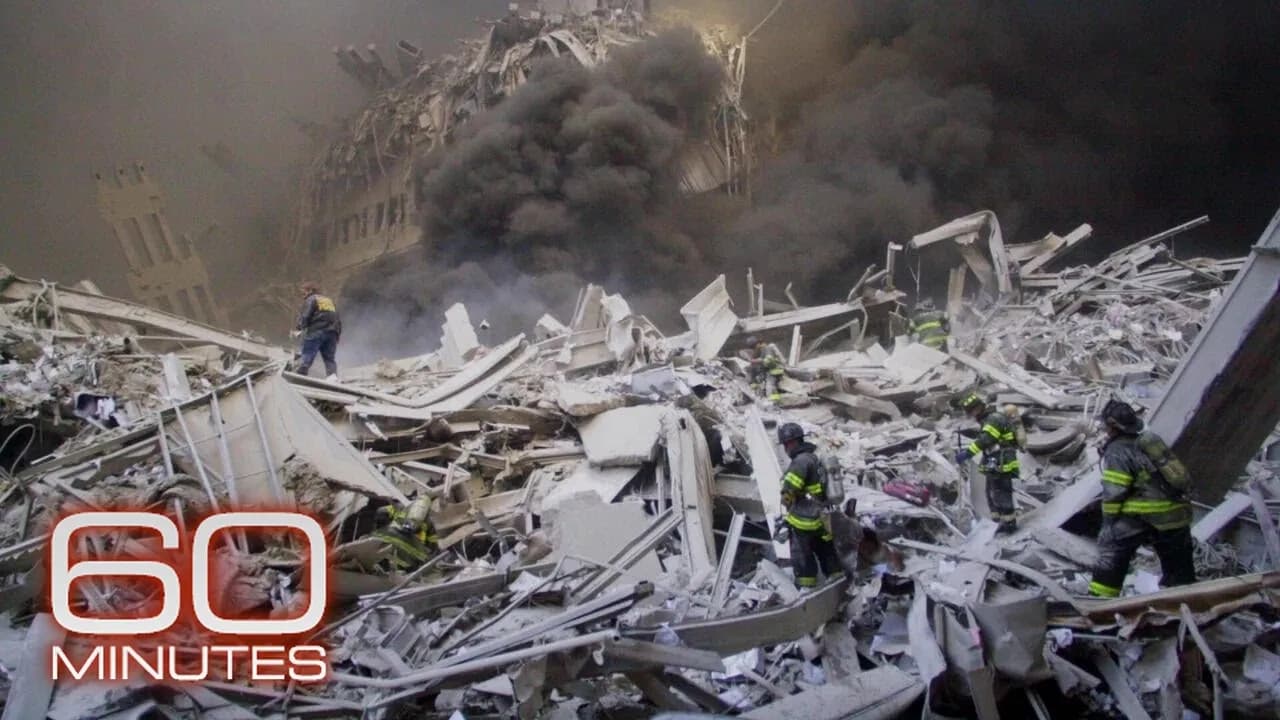
It all started in Manhattan nearly two months ago at a place that will be known forever as ground zero. An act of terrorism and mass murder that ignited a war that now has no end in sight. The story covers the people who died there, the murderers who killed there, and the heroes who still work there. For the first time, the report goes underground at ground zero to a once vibrant underground city within a city that is now a 16-acre burial ground.
Seven weeks and a day after the attack on America's Twin Towers, there is still smoke in the air at ground zero. They can't put out the subterranean fires. It will be several more months before all the debris is carted away. Then there will be an even more daunting, dangerous, and time-consuming cleanup job: digging up and repairing what can't be seen - the tunnels, garages, and underground mall beneath ground zero.
Ken Holden, commissioner of New York's Department of Design and Construction, is the city's point man in the cleanup effort.
Debris from the tall towers crashed through the roof of World Trade Center Building 6 and through the basement's six stories underground. Large chunks of heavy facade broke off from the upper floors, 90 or higher, and crashed through the center of the building, crashing through nine floors. The debris, some individual pieces weighing 30 tons, cannonballed through Building 6, creating an open space that looks like an atrium. It left much of the building unstable above ground and below.
Down below, there are cracks and fissures in the staircases and walls pretty regularly. There was a hell of a crack in the structure. The deeper the descent, the darker and drearier and dustier it became. The smell of smoke was present, and when the wind shifts in certain pockets, there is the uniquely unmistakable smell of death. There was devastation everywhere, so much damage to the superstructure that quite frankly it was surprising to see anything still standing.
The huge exterior columns that support the exterior of the building have been sheared off by the force of the fire and explosion. When looking at it from the outside, the northern facade is leaning against this building because these columns have sheared off.
Level B3, three floors beneath ground zero, was what used to be a garage for federal government employees. Daylight filters in from the giant crater at the bottom of what is called the atrium. Cars are hanging off, cars down below. One automobile is hanging with its tires burnt off, the rubber having been burnt off. The fire here was so hot that these cars are all burnt out. The aluminum hubcap has just melted right off, creating a puddle of aluminum from the fire.
This underground area is not only a graveyard for automobiles but also for some people. Tens of thousands of people used to come to these underground tunnels every day, not just to work in the towers and park their cars, but also to visit a vast underground shopping mall. Thousands of people came here to shop every day. There was a city underneath the city, a very vibrant place with shops and restaurants. Between 15 to 25,000 people per building worked there, with the one and nine train going through the middle of the complex, along with PATH trains.
The PATH commuter rail line is six stories below ground zero. Miraculously, no one died in this station the day the towers came down. The standard operating procedure for the port authority and the TA is when there's a fire to evacuate, so both the PATH trains and the subways were evacuated when the buildings were on fire. When they did collapse, no one was injured.
35,000 commuters used to arrive in this station from New Jersey every day, but everything stopped just 5 minutes after Tower 1 tumbled down six stories overhead. An empty train remains with a sign that says "next stop home." It may take 2 years before the trains will start rolling here again, and even longer before a nearby subway line will be fixed. There are hundreds of miles of wires, pipes, and cables to be replaced.
By the end of next year, Commissioner Holden hopes to have his area above and below ground zero cleared up at a price tag of $2.5 billion. Approximately 400,000 tons have already been removed, with initial estimates from FEMA and the Port Authority at 1.2 million tons total, meaning they're about a third of the way through.
When the World Trade Center complex was built 30 years ago, an enormous retaining wall called a slurry wall was constructed below ground. The wall is 3 feet wide and 60 to 70 feet deep, designed to prevent water from the Hudson River from flooding the six-story basements. The massive underground containing structure is nicknamed the bathtub because it keeps water out so that parking structures could be built underground. The wall has been supported by the floors in the basement levels, floors that have now buckled.
Because of all the damage, engineers will have to shore up the wall with more than a thousand cables to prevent it from collapsing. They drill through the three-foot wall, drill 85 feet or so down to bedrock, then drill 35 feet into bedrock. They take cables used on bridges, grout them up, concrete them up, wait three days for it to cure, and then tension those cables.
There is no more water seeping through the slurry wall now than in normal circumstances, but it's a constant battle to keep it dry down here. This water is not seeping in from the river but comes from firemen's water. Saving the wall is critical because if the tunnels flood, the water could pour into train and subway lines and destabilize nearby buildings.
A father firefighter asked to hold off on road building operation, pointing to where his best friend was already buried and where he was looking for his son. He climbed up to the debris pile with a spade, picking up spadefuls of debris looking for a son, then threw the spadefuls back and continued to climb and look.
In order to work at ground zero every day, there is a need to segue away from sacred ground considerations and move towards a construction site mindset, but one cannot work there without being cognizant that there are people here, there's suffering here, there's dead bodies here, and there's a need to treat this ground differently from any other construction site.
Commissioner Holden's attitude is the same as most guys working on the pile: "60 years ago when the Nazis were bombing Great Britain and the British people were pulling out their family and their friends and their neighbors from the rubble, Winston Churchill said we shall not fail. We shall not falter. We shall not weary. We shall not tire. Just give us the tools and we'll finish the job."
There was nothing random about the acts of terrorism against the World Trade Center. The Twin Towers were not just symbols of American finance. Sandler O'Neal's headquarters were on the 104th floor of Tower 2, providing financial expertise and services to small and medium-sized banks and savings and loans across the country, with friends in Wayne, New Jersey, Sioux City, Iowa, and Santa Barbara, California.
Of Sandler O'Neal's 171 employees, 83 reported for work at the World Trade Center on September 11th, and only 17 made it out alive. The firm first regrouped in a small Midtown office, hiring crisis counselors and therapists, searching hospitals, and trying to console and help the families of friends and colleagues who were dead or missing.
The grim reality set in that much of Sandler O'Neal's intellectual and human capital had been depleted. The job of resurrecting the firm fell on 44-year-old managing partner Jimmy Dunn. The company lost its entire communication system, nearly every piece of paper, a third of its people, and two best friends and top executives: senior managing partner Herman Sandler and Chris Quackenbush.
Just four days after the attack, survivors moved into temporary quarters given by Bank of America. Brokerage houses and investment banks, competitors in the cutthroat world of Wall Street finance, offered equipment, people, and services. By Monday morning when the market reopened, they were moved in and ready to go.
Terry Maltis, who had run another division, moved in and took charge. The firm started collecting DNA samples, things never thought they would do. They pledged to be in business because not doing it was not going to be an option. At 9:00 last Tuesday morning, traders Frankie and Bruce were standing at their desk waiting for the market to open, but the market never opened. Now the market is going to open and they are going to make those trades.
A rumor mistakenly reported that Sandler O'Neal had suspended operations, so Jimmy Dunn went live on CNBC to let clients know the firm was up and running. Programmers and software specialists drove all night from Chicago to pitch in and got most of the system up before markets reopened.
Across the front of the office on spreadsheets was a long list of funerals, wakes, and memorial services. Jimmy Dunn was determined there would be Sandler O'Neal partners at all of them. The battered firm pledged to continue paying salaries of lost employees at least through the end of the year, plus bonuses and family benefits until 2006. A foundation has been set up for long-term assistance.
Founding partners Fred Price and Tom O'Neal say whatever they do can never be enough. They talk to fathers who've lost their second son, mothers who lost sons they adored, wives who just had babies two months ago who lost their husbands. It comes at you in waves.
Every day seems to whipsaw between somber responsibilities and professional celebrations marking Sandler O'Neal's return to the street. Their first deal announced after 9/11 was on September 18th. They are doing deals, holding onto clients, and shopping for permanent office space, rebuilding a company they built from scratch 13 years ago.
The firm had 70 people and plans to grow to about 100. They feel like they're at war because they attacked the United States of America, attacked the capitalistic structure, attacked their little firm and killed their friends. They have a low tolerance for petty issues right now.
An estimated 10,000 children lost a parent on September 11th. Danielle Spanelli is 8 years old, and her dad Frank Spanelli went to work that morning and never came home. Her brother Chris is 14, big sister Nicole is 18, and their mom is Michelle. Danielle remembers that her dad would kiss them goodbye in the morning, and he told her that he kisses them goodbye to let them know that if anything ever happened to him...
Frank Spanelli worked as a foreign exchange broker and had recently taken a job at the World Trade Center. On September 11th, he called his wife immediately after the first plane hit, saying "Hi, Lenny. It's me. Uh, playing with the building. Um, I'm okay. Uh, the building's on fire. We're trying to get out. I love you. I'll see you later." Frank was found in the wreckage two weeks before his 45th birthday.
His family continued their tradition of baking a birthday cake despite his death. His daughter explained, "I just knew that if he was here that he'd want a cake, so I just decided to bake it with my mom." The children noted their mother's difficulty sleeping, as she wakes at 1:00 in the morning and cannot return to sleep.
Frank's daughter expressed her understanding of the attacks: "I think that these people just took my dad away from us for like no good reason. I don't know why. Like if they met him, I know that they changed their mind. They just when there were these loving people and then they just had to take them away."
Tyler and Kelsey Williams said goodbye to their father, US Army Major Dwayne Williams, at Arlington National Cemetery. The family had moved to the Washington area just three months before the attacks. Dwayne had a new job at the Pentagon. After their father didn't return home, 13-year-old Kelsey and 17-year-old Tyler wrote about their loss.
Kelsey wrote: "I feel the pain of my father on my heart. I touched my father's face as if he were beside me." Tyler expressed: "I couldn't picture life without you, and now it's here. It's like the devil looked at my mind and picked my worst fear." Tyler also wrote about his role in the family: "I let mom lean on me cuz now I stand in your shoes. I don't know how you did it, but you got us through."
Mike Shaw, 16, helps take care of his sister Nicole and mother Debbie after losing his father Jeff, an electrician at the World Trade Center. Jeff knew every inch of the towers. When the first plane hit, Debbie called his cell phone, and he told her it was dark with smoke and "just didn't look good." After the second plane hit, she called back and heard him running, out of breath, saying "Bye. Bye. I love you. Bye."
The family keeps Jeff's cell phone connected to hear his voice when calling. Mike calls before bed to tell his father about his day at school, after school activities, and dinner, saying "I wish he was here with us for dinner. That I miss him and wherever he is, I hope that he's doing okay."
Brendan Rean played in the district championship baseball game where he got the winning hit. His father, New York firefighter Lieutenant Bobby Rean, was coaching that game in July. The team received their championship award after the father's death. When asked what he would tell his father now, Brendan simply said, "We have practice tonight."
Brendan remembered his father's reaction to the winning hit: "first like everyone came over and like tackled me and everything and then he came out and tried to look for me and only like he couldn't find me." When asked what his father said after the hit, Brendan replied, "Nice hit."
Lieutenant Bobby Rean left behind his wife Donna after 21 years of marriage, 12-year-old Brendan, and 16-year-old daughter Caitlyn. Caitlyn expressed gratitude for her father's presence: "I'm just really happy that he was around because I noticed that like a lot of my friends dads like they work into the night and I was always really thankful that my dad was around a lot and he spent a lot of time with us."
Chuck Zion was a senior vice president at the financial firm Cantor Fitzgerald. His 18-year-old son Zachary explained his father's experience during the 1993 World Trade Center attack, noting it took over three hours to descend from the 104th floor. When Zachary saw the building collapse, he knew his father was unlikely to survive because "90 minutes to get down 104 floors is just not enough."
Zachary described his father's interests: "Chuck loved cooking, football, and golf." When asked how his America would differ from his father's, Zachary said: "I think that people have realized what a special place this is, about how lucky they are to be here, and what special values that America represents. But it's not something that you just get for free. It's something that, you know, you have to fight for, literally."
Zachary expressed gratitude for the time he had with his father: "I'm just grateful that I got as much time as I did. You know, there are a lot of kids that are left behind that, you know, won't have known their parents the way I got to know mine. I was at least lucky enough to realize what a wonderful man my dad was before he left and really admire him."
Frank Spanelli's younger children reflected on the time they lost with their father. One child expressed: "I always that thought that he was going to be there. I never thought this was going to happen. Just all happened in matter of minutes. And of course there were tons of things that I hadn't learned from him and hadn't been with him long enough."
The child reflected on expectations that would never be fulfilled: "Yeah. I mean, there's certain things that you just always expect. You expect your dad to be there on your high school graduation. You expect your dad to be there to walk you down the aisle. You expect your dad to be there for, you know, your grandkids and just there to teach you his life lessons that he had already learned."
A simple memory of his father's teachings brought comfort: "The other day I was mowing the lawn and I forgot how to uh how it wasn't turning on. So I just remembered something that he told me and didn't turned on work perfectly." When asked what he would say to his father, the child responded: "It's really hard after this. Uh, you look back and you realize that you're never again going to be able to call someone dad again. And just to call someone by the name dad would just be the one thing that I would want. Um, I would just like to say, 'Dad, I love you.'"
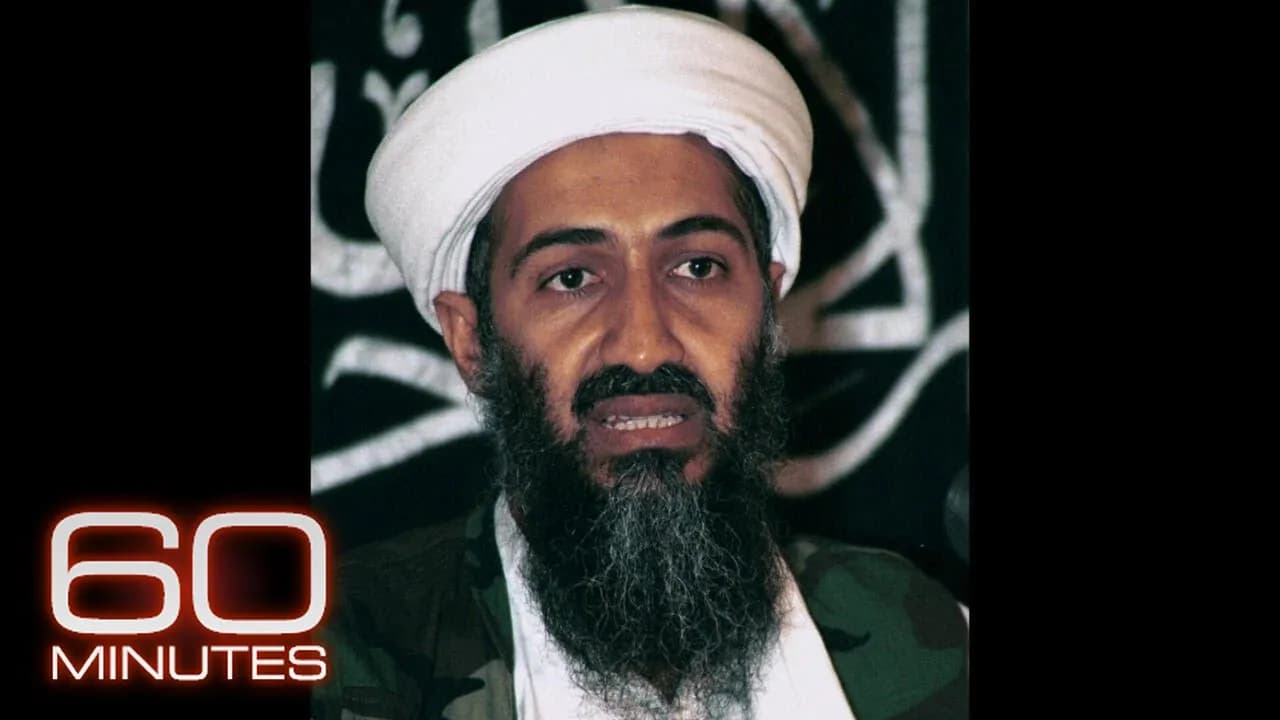
Mark Owen, whose real name is not used for security reasons, recently left the Navy's elite counterterrorism unit, SEAL Team 6. He wrote the book "No Easy Day" about the assault on Osama bin Laden's compound. Owen was on the helicopter that crashed into the compound, was the second man in bin Laden's bedroom, and took pictures of the body that the world has never seen. He received a Silver Star for valor and a Purple Heart for wounds suffered in the raid.
Owen emphasized that the book is not about him but is "a tribute to the hundreds of Americans who gathered intelligence, planned, and trained in the 10-year pursuit of the world's most wanted man. SEAL Team 6, he told us, just took care of the last 40 minutes."
When asked whether the mission was to kill or capture Osama bin Laden, Owen stated: "This was absolutely not a kill only mission. It was made very clear to us um throughout our our training for this that hey if given the opportunity this is this is not an assassination you will capture him alive if if feasible." He confirmed that the preferred option was "to take him alive if you could," adding "We're not we're not there to assassinate somebody. We weren't sent in to to murder him. This was hey kill or capture."
Chief Petty Officer Owen served 14 years in the Navy and completed 13 combat deployments in Afghanistan, Iraq, and elsewhere. He rose to the Naval Special Warfare Development Group, known as SEAL Team 6. When asked why his squadron was chosen for the bin Laden mission, Owen replied: "Nope. Nope. Certainly nothing special about me. Nothing special about the the 24 guys that were chosen. Nothing special about the our squadron. It really could have been any number of guys."
In April 2011, after returning from Afghanistan, Owen's team was called to North Carolina for an exercise. They learned that intelligence had tracked a bin Laden courier to a compound in Abbottabad, Pakistan. The house seemed too large for the neighborhood, had no telephone connection, and the residents burned their trash. The compound featured a 12-foot wall and a walled-in balcony.
The intelligence team had identified an individual they called "the pacer" who would walk around the courtyard for exercise. The pacer never stopped to help with manual labor when others were working, suggesting he was the boss. The pacer had been in Abbottabad for about 5 years, and the compound was approximately one mile from the Pakistani military academy.
The raid plan involved two modified Blackhawk helicopters, call signs Chalk 1 and Chalk 2, carrying 24 SEALs and a Belgian Malinois combat dog named Cairo. Chalk 1, Owen's helicopter, was to hover over the compound and drop two fast ropes into the courtyard. Chalk 2 would land by the road to drop off the external containment team. The second helicopter would then hover over the third floor to drop remaining team members onto the balcony for a top-down assault.
The team conducted approximately 100 rehearsals on a full-size mock-up of the compound built in North Carolina. This level of training was unusual, as Owen noted he had "never rehearsed for something for three weeks." One rehearsal was observed by Admiral Mike Mullen, Chairman of the Joint Chiefs, Admiral Eric Olsen, head of special operations, and White House observers.
The team received several days off around Easter before loading onto a plane bound for a US base in Afghanistan. A CIA analyst who had spent five years tracking bin Laden was among the passengers. She expressed 100% certainty that bin Laden was at the compound. The president approved the mission on April 30th, though bad weather delayed the operation until the following night.
Just before midnight on May 1st, 2011, the Blackhawks departed from Jalalabad, Afghanistan, for the 150-mile flight to Abbottabad. The helicopters flew blacked out under Pakistani radar at treetop level. During the flight, Owen heard the radio call announcing they were crossing the border into Pakistan. Despite the high-stakes mission, some team members were able to sleep during the flight.
As Chalk 1 approached the compound, the helicopter suddenly banked hard 90 degrees. Owen realized something was wrong when the pilots lost lift, likely due to the compound walls magnifying and reflecting the helicopter's downdraft. The helicopter crashed but landed intact due to the pilot's skill in placing the load-bearing section of the tail precisely on the compound wall.
Owen emphasized the pilot's crucial role: "I wouldn't be here if it weren't for him." He noted that if the pilot had not brought the helicopter down intact, the mission would not necessarily have failed because Chalk 2 was on the ground and immediately adapted by abandoning the roof assault plan.
The transcript ends with the statement that the team had planned to be on the ground for 30 minutes but were now running late.
Owen's team landed in a courtyard walled off from the house. They hopped out and went directly to the front door. The other helicopter landed outside the perimeter wall, dropped off all its SEALs, and took off. Their objective was clearing and securing the southern compound so the rest of the team could proceed with their mission in the main building.
SEALs are described as being good at "pickup basketball" - they all know how to shoot, move, and communicate. When situations go sideways, they can read off each other and adapt. One group was positioned outside the perimeter wall to ensure no one escaped, while the group that was supposed to rope to the roof was outside the wall looking for a way in.
Owen led his team to the outer building where they expected to find one of Bin Laden's couriers. They made significant noise during their approach, losing the element of surprise. At the double doors, attempts to open them failed as they were solid metal. Owen prepared to use explosive charges when rounds started coming through the door.
The team returned fire through the door despite not being able to see what was on the other side. When the shooting stopped, a SEAL who spoke Arabic called out to those inside. The door opened revealing a woman holding a child with several kids behind her. The woman stated her husband was dead after being shot.
Owen later discovered he had been wounded by a fragment in his shoulder. A bullet had lodged in his bolt cutters, which he carried for cutting locks, narrowly missing his neck.
Within five minutes, Owen's team cleared the outer house. More SEALs entered the compound and converged on the first floor of the main building, where they found another courier with an assault rifle. The courier's wife jumped in front of him as the SEALs were shooting. All women on the target were described as very hostile and aggressive, which was different from typical experiences in Afghanistan or Iraq.
After securing the ground and second floors, the team moved up the stairs single file. The point man was in front, with Owen as number two. They had been told to expect one of Osama bin Laden's sons, Khaled. At the second floor, they saw a head pop out and disappear around a corner. The point man whispered "Khaled" and when the man looked back around, he was shot.
It had been 15 minutes since the crash, approximately 1:15 a.m. The team proceeded up the stairs quietly and methodically, following their training to "not run to your death." Khaled was found dead on the landing. As they continued, the point man saw someone stick their head out a door and shot them.
Inside the room, a body was seen on the ground with two females near the door. The point man rushed the women, grabbing each under an arm and pushing them against the far wall to minimize potential harm if they had suicide vests.
Owen and another SEAL engaged the man on the floor multiple times until his body was still. At the time, they didn't recognize him as Bin Laden - it could have been anyone. Twenty minutes had passed, and they were running out of time as the remaining helicopter only had enough fuel for about 30 minutes total.
Mark Owen and other SEALs examined the body on the third floor. Owen noted the man looked younger than expected with a dark black beard, though he was tall at approximately 6'4" and had a distinctive nose. They weren't willing to make the identification call themselves, suspecting the President was listening.
A SEAL who spoke Arabic grabbed a child and asked who the man was. The child identified him as "Osama bin Laden." When asked again, a female also confirmed the identity. The commander took one look and said "Okay, I think that's him." The code word "Geronimo" was used to report "enemy killed in action."
With only 10 minutes remaining, the team collected DNA samples, took photographs with duplicate copies, and prepared to remove the body. Owen cleaned the face using water from a CamelBak and a sheet from the bed to take identifiable photos. He described the photos as gruesome due to the bullet wound in the head.
In the bedroom, Owen found an assault rifle and pistol on a shelf. He noted that the first door they encountered had received enemy fire, and an AK was found next to Khaled, establishing the hostile nature of the compound.
On the second floor, SEALs collected computers, discs, flash drives, and videotapes. They stuffed materials into garbage bags and any available containers, including an old gym bag found on site. One SEAL was seen carrying both a bag of intelligence materials and a computer terminal.
Neighbors had woken up and were approaching to investigate. The interpreter told them a police operation was occurring and to return home. The crashed helicopter needed to be destroyed due to its secret design and gear. The EOD (Explosives Ordnance Disposal) expert initially misunderstood and began prepping the house to blow instead of the helicopter.
Two CH-47 helicopters had been standing by with reinforcements and fuel. The remaining Blackhawk returned for half the SEALs while a CH-47 picked up the rest. The body was loaded onto the Blackhawk in a body bag. The helicopter demolition charge detonated with under 30 seconds remaining as the CH-47 performed a go-around.
The SEALs were on the ground for approximately 38 minutes. During escape, they were forced to land in Pakistan for refueling from a waiting CH-47. They knew they were out of Pakistan when radio confirmation came that they were back in Afghanistan.
Once landed, the team had a brief celebration with hugs and high-fives before returning to work. The body was loaded onto a pickup truck and brought to a hangar where Vice Admiral McRaven was waiting. The CIA analyst who had tracked Bin Laden began crying upon seeing the body.
Six hours later, President Obama announced the operation. The team watched the announcement live while still in their camouflage uniforms. Upon returning to the United States, Owen stopped at Taco Bell for tacos and a bean burrito before driving home.
Days later, the team flew on an ancient C-130 that had been used in the 1980 Iran hostage rescue attempt to meet President Obama at Fort Campbell, Kentucky. All team members received Silver Stars for valor. When the President asked who shot Bin Laden, they declined to identify the individual, emphasizing it was about the team effort rather than any single person.
Owen wrote "No Easy Day" to give readers a sense of what it was like to be there without revealing secrets or tactics. The Pentagon expressed concerns about the book, claiming it contained sensitive and classified information and that Owen breached secrecy agreements. Owen maintained the book compromised neither secrets nor SEAL safety.
The book release was timed for the 9/11 anniversary to avoid political implications. Owen intended to donate most profits to charities supporting families of fallen troops.
A few months later, Owen visited Ground Zero in New York for the first time and found it very emotional. He reflected that their team played a small piece in avenging the nearly 3,000 deaths, describing it as "full circle" and being ready to move on.
After the book's announcement, cable news reported Owen's real name. Owen's goal was to get the history straight and pay tribute to Navy SEALs serving worldwide.
The 28 pages refer to one of the country's most sensitive documents dealing with 9/11 and the possible existence of a Saudi support network for the hijackers while they were in the US. The pages have been locked away in a secret vault for 13 years, with only a small group of people having ever seen them. Former US Senator Bob Graham has been trying to get the 28 pages released since the day they were classified in 2003, when he played a major role in the first government investigation into 9/11.
Graham was chairman of the Senate Select Committee on Intelligence and co-chair of the bipartisan joint congressional inquiry into intelligence failures surrounding the attacks. The joint inquiry reviewed a half million documents, interviewed hundreds of witnesses, and produced an 838-page report, but the final chapter was blanked out and excised by the Bush administration for reasons of national security.
Graham believes the 28 pages outline a network of people that supported the hijackers while they were in the US, with the support coming substantially from Saudi Arabia - meaning the government, rich people in the country, and charities, all of the above. The Saudi role has been soft-pedaled to protect a delicate relationship with a complicated kingdom where rulers, royalty, riches, and religion are all deeply intertwined in its institutions.
Porter Goss, Graham's Republican co-chairman on the House side of the joint inquiry and later director of the CIA, also felt strongly that an uncensored version of the 28 pages should be included in the final report. The two men made their case to the FBI and its then-director Robert Mueller in a face-to-face meeting, but the FBI pushed back very hard and said the 28 pages could not be unclassified at that time. When asked why it was classified, the answer was "because we said so and it needs to be classified." Goss knew of no reason then and knows of no reason now why the pages need to be classified.
The 28 pages are locked away under the Capitol in guarded vaults called sensitive compartmented information facilities or SCIFs. This is a highly restricted area where members of Congress with proper clearances can read the documents under close supervision, with no note-taking allowed.
Former Democratic Congressman and US Ambassador to India Tim Romer has read the 28 pages multiple times, first as a member of the joint inquiry and later as a member of the 9/11 Commission. He describes them as a working draft similar to a grand jury or police report that includes provocative evidence, some verified and some not.
The 28 pages lay out the possibility of official Saudi assistance for two of the hijackers who settled in Southern California. That information was turned over to the 9/11 Commission for further investigation. Some questions raised were answered in the commission's final report, others were not. Romer states that people will be surprised by the information in the 28 pages and by some of the answers sitting in the 9/11 Commission report about what happened in San Diego and Los Angeles and what was the Saudi involvement. Much of this surprising information is buried in footnotes and appendices of the 9/11 report, part of the official public record but mostly unknown to the general public.
In January 2000, the first of the hijackers landed in Los Angeles after attending an al-Qaeda summit in Kuala Lumpur, Malaysia. The two Saudi nationals, Nawaf al-Hazmi and Khalid al-Mihdhar, arrived with extremely limited language skills and no experience with Western culture. Yet through an incredible series of circumstances, they managed to get everything they needed from housing to flight lessons.
During their first days in LA, witnesses placed the two future hijackers at the King Fahd Mosque in the company of Fahad al-Thumairy, a diplomat at the Saudi consulate known to hold extremist views. 9/11 investigators would find him deceptive and suspicious, and in 2003 he would be denied re-entry to the United States for having suspected ties to terrorist activity.
Phone records show that al-Thumairy was in regular contact with Omar al-Bayoumi, a mysterious Saudi who became the hijackers' biggest benefactor. He was a ghost employee with a no-show job at a Saudi aviation contractor outside Los Angeles while drawing a paycheck from the Saudi government. Al-Bayoumi had been listed even before 9/11 in FBI files as being a Saudi agent.
On the morning of February 1, 2000, al-Bayoumi went to the office of the Saudi consulate where al-Thumairy worked. He then proceeded to have lunch at a Middle Eastern restaurant on Venice Boulevard, where he later claimed he just happened to make the acquaintance of the two future hijackers. Al-Bayoumi decided not only to befriend them, but to help them move to San Diego and get residence.
In San Diego, al-Bayoumi found them a place to live in his own apartment complex, advanced them the security deposit, and co-signed the lease. He even threw them a party and introduced them to other Muslims who would help the hijackers obtain government IDs and enroll in English classes and flight schools. There is no evidence that al-Bayoumi or al-Thumairy knew what the future hijackers were up to, and it is possible that they were just trying to help fellow Muslims.
The very day al-Bayoumi welcomed the hijackers to San Diego, there were four calls between his cell phone and the imam at a San Diego mosque, Anwar al-Awlaki. The American-born al-Awlaki would be infamous a decade later as al-Qaeda's chief propagandist and top operative in Yemen until he was taken out by a CIA drone. In January 2001, a year after becoming the hijackers' spiritual adviser, he left San Diego for Falls Church, Virginia. Months later, al-Hazmi, al-Mihdhar, and three more hijackers would join him there.
Attorneys Jim Kreindler and Sean Carter represent family members of the 9/11 victims in their lawsuit against the kingdom, alleging that its institutions provided money to al-Qaeda, knowing that it was waging war against the United States. The US government has even backed the Saudi position in court that it cannot be sued because it enjoys sovereign immunity.
The 9/11 Commission report says that Saudi Arabia has long been considered the primary source of al-Qaeda funding through its wealthy citizens and charities with significant government sponsorship. But the sentence that got the most attention when the report came out states: "We have found no evidence that the Saudi government as an institution or senior Saudi officials individually funded the organization."
Attorney Sean Carter says this is the most carefully crafted line in the 9/11 Commission report and the most misunderstood. When they say they found no evidence that senior Saudi officials individually funded al-Qaeda, they conspicuously leave open the potential that they found evidence that people who were officials they did not regard as senior officials had done so. That is the essence of the families' lawsuit - that elements of the government and lower level officials sympathetic to bin Laden's cause helped al-Qaeda carry out the attacks and help sustain the al-Qaeda network.
Former US Senator Bob Kerrey is another of the 10-member 9/11 Commission who has read the 28 pages and believes they should be declassified. He filed an affidavit in support of the 9/11 families' lawsuit. Kerrey states that the 9/11 Commission did not get every single detail of the conspiracy, did not have the time or resources, and certainly did not pursue the entire line of inquiry in regards to Saudi Arabia. He does not believe all the things in San Diego can be explained as coincidence.
John Lehman, who was Secretary of the Navy in the Reagan administration, says that he and others make up a solid majority of former 9/11 commissioners who think the 28 pages should be made public. The 28 pages in no way fall into the category of something that should not be declassified. Lehman has no doubt that some high Saudi officials knew that assistance was being provided to al-Qaeda, but he doesn't think it was ever official policy. He also doesn't think that it absolves the Saudis of responsibility.
Lehman states that it was no accident that 15 of the 19 hijackers were Saudis. They all went to Saudi schools and learned from the time they were first able to go to school of this intolerant brand of Islam. He is talking about Wahhabism, the ultra-conservative puritanical form of Islam that's rooted in Saudi Arabia and permeates every facet of society. There is no separation of church and state. After oil, Wahhabism is one of the kingdom's biggest exports.
Saudi clerics entrusted with Islam's holiest shrines have immense power and billions of dollars to spread the faith, building mosques and religious schools all over the world that have become recruiting grounds for violent extremists. Lehman says the 28 pages give a very compact illustration of the kinds of things that went on that would really help the American people to understand how these people are springing up all over the world to go to jihad.
On 9/11, Dr. Benjamin Luft prepared Stony Brook University Medical Center on Long Island for the massive number of casualties he expected to overwhelm the emergency room, but none came through the door that day. So few had survived. Although nearly 3,000 people were killed at the World Trade Center, 70,000 others responded to ground zero and worked for months amid toxic smoke and dust.
Dr. Luft helped start a clinic to treat the chronic illnesses and psychological trauma suffered by the 9/11 responders. Over time, he discovered something he never expected. He began to hear their stories, honest, raw, irreplaceable stories. Almost two years ago, he began to record the definitive history of ground zero, remembering 9/11 in the words of the people who lived it.
The problem that came up was that society began to look at the responders in terms of their disease. They became an issue in terms of their liability. Dr. Luft's feeling was that that's not who the responders were. He wanted to find out who they are as human beings, what their motivation was, what values they had, what sacrifices they made, how they were able to renew themselves. It was almost like taking a civics class as to what is important about being a citizen, what is important about being a human being, what is important to being an American.
Stacy Goodman, a police detective, is one of the voices Dr. Luft recorded in what is now called the World Trade Center Oral History Project. At one point, a senior retired fireman came in with his hands cupped, holding bones in his hands, and went over to the medical examiner and put the bones in front of him and said, "This is my son."
Carol Paukner was a cop on the scene before the towers fell. A big brawny FBI guy had his shield around his neck and was telling the officers there that if they wanted to live they might as well leave now because they were all going to die. Paukner said she couldn't leave and the officers that were there with her were not leaving either. They continued to evacuate and do their jobs, but they were all thinking they were going to die. Paukner was trapped when the first tower collapsed.
Police Sergeant Richard Doerr helped pull out one rare survivor, a fellow cop named John McLoughlin. They were given John McLoughlin morphine because the plan was that if they couldn't extricate him, they were going to cut his legs off. John screamed in pain when they pulled him initially, so they let him rest and simultaneously pulled again and broke him free and pulled him out.
Benjamin Luft is a medical doctor who volunteered to help create a clinic for the 9/11 responders at Stony Brook University Medical Center, part of the State University of New York. More than 6,000 responders enrolled in his World Trade Center Health Program. One study shows that nearly a third of those who worked at ground zero have asthma, 42% suffer with sinusitis, nearly 40% have gastroesophageal reflux disease known as GERD, and many have reactive airways dysfunction syndrome that the patients just call RADS.
When you're a physician and you see patients, you tend to reduce them to their symptoms and signs, to their medical conditions, and that's how you think of them. Luft listened to their stories in the examining room for eight years when he realized that his patients were the authors of one of the most dramatic chapters of American history.
With his own money, a few donations, and a small mostly volunteer staff, Luft started his interviews. So far, he's recorded 137. The first thing one responder found was an entire body burned into rebar. They put a line around the responders' waists, and one responder realized it wasn't to pull them out - it was just to find them if they died.
Among the responders are firemen, policemen, EMS workers, volunteer firemen, iron workers, construction workers, and laborers. On 9/11, all Americans responded from all walks of life. One was a senior in high school who realized he had to go down there, though he didn't know how he was going to help or what he could do. Another was the 13th in his family to be a New York City police officer. One was a licensed massage therapist who felt like she had to be down there helping these people. Another worked for the New York Highway Department doing road work and construction, never trained for anything like this but learned quick.
For the responders, today isn't the 10th anniversary of something that happened - it's the 10th year of something that never ends. In a sense, it's always 9/11.
John Gallagher is a former New York City fire captain suffering with pulmonary fibrosis, scarring of the lungs that only gets worse. The World Trade Center is still claiming lives. People have had their lives shortened. People have lost their fathers and mothers to cancers, to lung diseases, anything that can be imagined. Bloodborne diseases - people are still dying.
Bill Fischer was a New York City cop, now retired. He never smoked, doesn't drink, goes to the gym as often as he can, and has a bucket of about 20 medicines that he has to take something during the day. He worked at ground zero for 4 months and like thousands of others was covered in dust that contained carcinogens, asbestos, and toxins too numerous to list.
Ken George helped recover human remains. He got the 9/11 cough which led to RADS, restricted airway disease, which means he can't get enough oxygen in or out. He has all the sinus issues too. It's snowballing out of control, and he doesn't know if in 5 years he's going to wind up with cancer. He just wants to make sure his family's taken care of if anything happens.
One thing nobody mentioned but everyone has is post-traumatic stress. It's like luggage and they have it forever. Tyrie Bacon was a senior court officer who worked 10 blocks from the World Trade Center. He reached the towers before they collapsed. Those who wear uniforms make a living out of the worst 10 minutes of everybody's lives, but 9/11 was a hell of a lot longer than 10 minutes long. He spent a month after being caught in the collapse waking up on the floor, trying to feel his way out of his own bedroom.
In the Oral History Project, Bacon remembers a woman who grabbed him by the shirt as one of the towers fell. He told her, "Sweetheart, don't worry, I promise we're getting out of here." He flat out lied to her - he thought they were going to die where they were. If he didn't have her, he probably would have curled up in a fetal position and just waited to die.
When responders went down to ground zero, they were experiencing traumatic events in rapid succession - buildings falling, girders falling, tripping, people jumping out of buildings, seeing tremendous amounts of carnage, the fires. It's not occurring over a 10-second period of time - it's occurring over weeks and months, and the same person is experiencing it over and over again. The jumpers were the worst - to actually see them jump and pulverize just in front of you was just horrible.
Almost invariably, people come to Dr. Luft afterwards and say this is the first time they've been able to talk about this, the first time they can tell others what really happened on 9/11. In the three months one responder was there, they found very few victims, found pieces but not bodies.
One responder found it therapeutic - that was the first time he ever spoke of his experiences at 9/11. Another didn't talk about 9/11 for seven years because he didn't want to replay it - he lived it and didn't want to relive it. Christine Paumero was a New York City cop, now retired, and thought it wasn't such a great idea because a lot of them buried that day. To really bring it up and hash it up again and really discuss in depth was a little fearful.
Dr. Love explained that many responders have improved in their ability to move forward with their lives and become more adaptable, though they never fully leave the experience behind. The events of 9/11 remain a constant part of their consciousness, true for any major historical event but especially so for this one. Officer Carol Paullner's memorable quote "We're not leaving" became the title of a documentary and book featuring Dr. Love's interviews. All profits from these works go toward scholarships and job training for responders and their families.
John Field, a demolition expert who helped move the wreckage, emphasized that the responders were "the best of what America offered 10 years ago." The Library of Congress is considering adding these interviews to its permanent collection so future generations can hear the unedited, unvarnished reality from those who were there. One responder noted that the real heroes were those who went into the buildings and never made it out.
The museum, scheduled to open approximately one year after this report, will be located seven stories below ground at the memorial plaza. The project faced delays, funding battles, and flood damage from Hurricane Sandy. The central challenge is conveying the horror of 9/11 without making it unbearable. The memorial plaza above ground features two giant cascading pools marking the footprints of the original towers, surrounded by 2,983 names, and has welcomed over 7 million visitors.
The museum occupies the space below the memorial plaza. Visitors descend past two 50-ton beams recovered from the wreckage into Foundation Hall. Alice Greenwald, the museum director who previously worked at the Holocaust Museum, noted that most museums house artifacts, but this museum exists within an artifact itself. Family members including Paula Grant Barry, Monica Iikin's, Thula Katamatus, and Tom Roer serve on the museum board, representing those who lost loved ones in the towers and on Flight 11.
The museum begins with voices from around the world recalling where they were when they heard about the attacks, acknowledging that most visitors bring their own memories of 9/11. Visitors descend to the main exhibits beside the survivor staircase, an enormous staircase now encased in wood that served as an escape route on 9/11. Other large artifacts include a fire engine honoring the 441 first responders who lost their lives, and the famous last column, the final massive remnant removed from the site.
A large projection shows the morning of 9/11 as it played out in the air, with simultaneous flight paths of the four planes. The museum faced agonizing decisions about including voicemail messages from passengers and victims. One adviser described these recordings as a form of human remains, noting that sound can be a more emotional form of communication because you hear the timbre of the human voice. They plan to include a few recordings with family permission and clear purpose, such as CeCe Lyles' message to her husband demonstrating the professionalism of hijacked crews.
The question of whether to show images of people jumping from the towers was described as the most sensitive issue for the museum. Joe Daniels, president of the 9/11 memorial and museum, noted that while you never want to see someone 100 stories up making that choice, it was a part of the story that al-Qaeda put innocent people in a position to have to do. Family members urged the museum not to whitewash the story. The exhibit will be in an alcove with clear warnings for those who wish to avoid it.
The heart of the museum is a space devoted to honoring victims' lives with photographs of each person lining the walls, creating the impression of being surrounded by nearly 3,000 faces. The victims ranged in age from 2.5 to 85, from over 90 countries, representing every sector of the economy and ethnic group. Interactive tables allow visitors to search profiles with photos and recorded remembrances by family members and friends. One profile example was Paul Aquaviva, described by his father as never having a bad word to say about anybody and always looking at the positive.
The museum discovered that families of nearly 3,000 people, representing 10-12,000 individuals, held diverse perspectives about what the museum should include. Issues included whether to exhibit pictures of the perpetrators and Osama bin Laden. Some family members argued against showing the images in what they considered a graveyard, while others demanded accountability and insisted the museum express who did this to their loved ones. The museum decided to show the images so no visitor would leave without knowing who committed the attacks.
By the time the museum opens, virtually no one under age 17 will have firsthand memory of 9/11. For nearly a quarter of the population, 9/11 will be something learned about in a museum. The museum aims to tell exactly what happened for future generations so the brutal attack on the country where 3,000 innocent people were murdered is never forgotten.
In December 2023, the New York City Office of the Chief Medical Examiner identified remains of three 9/11 victims for the first time using advanced DNA technology. Over 1,000 families still wait for word about their loved ones. Ellen Nan received news about her husband John, a 44-year-old insurance executive who was on the 105th floor of the South Tower. He had called her saying he was okay because he was in the other building from where the first plane hit.
Andrea L. Habbermann, 25, was on her first trip to her company's headquarters on the 92nd floor when she received a visitor pass. Back home in Chicago, she had just been fitted for her wedding dress. Her mother Kathy was watching the news and saw the second plane hit United Flight 175. Her family drove 16 hours to Manhattan, checking 32 different medical centers for any sign of her.
Dr. Charles Hirsch, the city's chief medical examiner, made a promise to identify the lost souls of 9/11. His team, including young scientist Mark Desire, raced to set up a temporary morgue as the towers burned. Mark Desire described being knocked out of his shoes by the blast when the South Tower collapsed. The medical examiner's team survived as the North Tower collapsed minutes later with Andrea Habbermann inside.
Manhattan was covered in flyers for the missing. Families lined up at a National Guard armory to give DNA samples, providing 17,000 reference samples including toothbrushes, razors, and hairbrushes. Ellen Nan provided a DNA swab from her 18-month-old son Jack. Nearly two million tons of debris were searched by hand. In 2006, bone fragments were discovered on the roof of the Deutsche Bank building across from ground zero. Anthropologist Bradley Adams found over 700 small bone fragments there, leading to searches of other buildings.
The remains on the Deutsche Bank building were from American Airlines Flight 11. This prompted collection of 18,000 tons of excavation material over a year, with 75 anthropologists washing material through screens. Over 1,000 more remains were found during sifting operations. The total World Trade Center remains came to 21,905. Dr. Jason Graham, current chief medical examiner, inherited the promise made by his predecessor. Of 2,753 homicide victims, 60% have been identified, leaving 40% or 1,100 victims with no identified remains.
All remains today are bone. Everything present at ground zero destroyed DNA: jet fuel, diesel fuel, mold, bacteria, sunlight, chemicals, insects, heat, and fire. Some remains have been tested 10-15 times without result. Mark Desire, now assistant director of forensic biology and the last original member of the 9/11 team, stated that if there's DNA, they will find it and generate a profile.
New technologies include a cryogenic grinder filled with liquid nitrogen at 320 degrees below zero. Early recovery work was done by hand with mortar and pestle, but high-speed vibration now shatters individual cells in deeply frozen bone, releasing their DNA. Equipment has given much more access to cells from samples that have hardly any DNA remaining. Other innovations chemically amplify DNA, revealing more information from the smallest fragments, some as small as a tic tac.
John Nan's bone fragments, 15 in all, had been tested for years before the lab made a perfect match in 2023 to the cheek swab from his infant son taken 22 years before. Police officers delivered the news in person to Ellen Nan while she was decorating her Christmas tree. When officers said they had found her husband's DNA, her first reaction was to ask if it was her son, then received the news that her husband's DNA had been discovered after 22 years of searching.
About half of 9/11 families have told the medical examiner that if their loved one is identified today, they don't want to know, as time has lightened their burden of grief. The other half still hope for word. Dr. Jennifer O'Donnell, the medical examiner's World Trade Center anthropologist, serves as both scientist and counselor to families still hoping. Shock is typically the first response, followed by grief as memories resurface. She stays on phone calls that can last an hour, listening as families share memories of last phone calls, birthdays, or vacations.
Ellen Nan spoke to Jennifer Odon in 2023 when the remains of her husband John were identified for the first time. She heard nothing about John's remains for 22 years and assumed there was nothing left. The family buried a box of momentos, photographs, a letter she wrote, and a drawing her son had done. She remarried and had two more boys. Her son Jack was 18 months old when his father died. Now aged 25, Jack experienced the identification differently than his mother. For Ellen, it was very sad, but for Jack it was uplifting to realize that people had been working all that time to find any piece of his dad, and that among all the people blessed by this breakthrough, it was his dad. Jack was moved to see how moved he was by the identification.
Many people who had met John or had not met John reached out to the family through emails, letters, and phone calls to both Ellen and Jack. For Jack, this brought to life many descriptions of his father that as a young man he could now really appreciate. It was a great remembrance, with John being able to be back in a lot of people's minds.
As remains are identified, the folders get bigger and bigger because all information is continually added. Jennifer Odon adds new identifications to the DM files. No one knew what to call 9/11 the day it happened, so the medical examiner settled on Disaster Manhattan. There is one folder for each murder victim, totaling 2,753 folders. Each folder contains an inventory of all remains found for that individual, including items such as rib, vertebrae, and sternum recovered over months and years.
Approximately 50% of one body was recovered in some cases, though this is described as a very rough estimate. The office is trying to understand how many remains have been identified, how much of each individual is present, and what the chances are that more remains will be identified, as these are questions families frequently ask.
Families have a choice regarding identified remains. They can ask a funeral home to pick up remains that are vacuum packed and labeled with an American flag, or they can leave the remains in the custody of the medical examiner. Jennifer Odon tells families they do not have to make that decision immediately and can call back in a month, a year, two years, or ten years to have remains transferred to a chosen funeral home.
The medical examiner tracks all remains precisely, knowing where every single remain is located. Every remain recovered has a specific unique number associated with it. Number 18,756 is the most recent remain identified belonging to Andrea Hobberman. The Hobberman family has asked to be told of all new identifications. For them, each reminder of their daughter serves as a stepping stone through what Gordon Hobberman calls the void of missing.
Gordon Hobberman, now 74, describes that missing his daughter is hard to explain to others but exists deep inside. He states there is not a day that he or his family does not think of Andrea. When asked what it meant to have Andrea's remains identified, he responded that if Andrea could face what she had to face, how could he not want to know what happened to her. His relationship with the medical examiner has spanned 11 notifications plus the discovery of Andrea's relics.
Gordon Hobberman met with 60 Minutes at the National September 11th Memorial Museum at ground zero. With museum staff assistance, artifacts from Andrea's purse were viewed, which are archived, cataloged, and handled like antiquities. He received these items in 2004 from the NYPD during a meeting with officers and a priest. At the time, officers asked if he needed help processing the items, but he was more concerned about keeping them from his wife, fearing her pain. He locked the bag in a desk drawer which remained unopened for 7 years. In 2011, the family donated the collection to the museum.
The artifacts include a flip phone that did not work, a pager, driver's license, and the last photo of Andrea's life showing her visitor ID that captured her spirit minutes before she died. Gordon describes that Andrea was going to go on to do great things, wanted grandchildren, took pride in her house, and loved her owl collection. He brought Andrea's identified remains home to Wisconsin, but believes her other unidentified remains are in the museum behind a wall bearing a verse by the poet Virgil: "No day shall erase you from the memory of time."
Many museum visitors do not realize that the outer wall of the medical examiner's repository for 9/11 remains forms part of the museum structure. The repository is located in what was the basement of the North Tower and is completely out of the path of the museum, hidden around a corner. Next to the repository is the entrance to the office of the chief medical examiner family reflection room. The room and repository have never been seen by the public. Families can call a number on the door which summons an escort, often Dr. Jennifer Odon.
Dr. Odon describes that visits differ every time. Some families are very emotional, and she will sit with them for an hour hearing stories and walking around with them until they are ready, then leave the room so they have space to themselves. When asked if this work is a burden, she states she does not consider it a burden, though it is tough and she experiences moments of feeling very emotional and needing to step back. However, when families express gratitude that continued work and answered questions have helped them, it makes everything worth it.
Gordon Hobberman invited the 60 Minutes team inside as his guest, though no camera was allowed while audio recording was permitted. The team found a small sitting room with a window into the repository for human remains. The window measures approximately 5 feet wide and 3 feet tall, with a single wooden bench in front of it. Through the window, visitors see a deep austere white room with rows of dark wooden cabinets 8 feet tall containing approximately 10,000 remains, both known and unknown. This space functions as a private national shrine.
Gordon explains that he comes to the repository after all these years because he feels close to his daughter there. He acknowledges she was not meant to be there but states she is present in that space.
Ellen Nan has visited the reflecting pools over the decades to run her fingertips over her lost husband's tribute. She expressed surprise at how the endless effort to find her husband allowed her to feel once again the embrace of a nation's devotion. Her first reaction was to tell people that all this time, remains have been sifted through and researched for over 20 years, describing it as an incredible thing. She felt that John had another moment in all of their lives, for which she is incredibly grateful.
Keep 60 Minutes in your library
Save the videos and channels worth coming back to, and find them again in one place.