You’re Under Training The Muscles You Want Most
In a Nutshell
Three undertrained muscles—side delts, biceps, and triceps—limit visual physique impact despite adequate protein, sleep, and programming. Prioritize side delts first in workouts with 2–4 weekly sessions using varied lateral raises and upright rows for shoulder width; train biceps 2–3 times weekly with stretch-position curls plus standard curls for 6–12+ sets; hit triceps twice weekly with overhead extensions, pushdowns, and pressing movements for 12–24 sets to maximize arm size. Increase frequency and volume progressively as recovery allows.
These notes were generated by AI and may contain inaccuracies.
Three muscles are commonly undertrained and this limits visual physique impact. The three primary reasons for training are impressing others with strength numbers, addressing personal psychological factors through productive outlets, and improving physical appearance in clothes, naked, and in costumes.
Most people already eat enough protein, get enough sleep, and use structured programs, but still leave gains unrealized by undertraining specific muscles that create radical visual changes when developed properly.
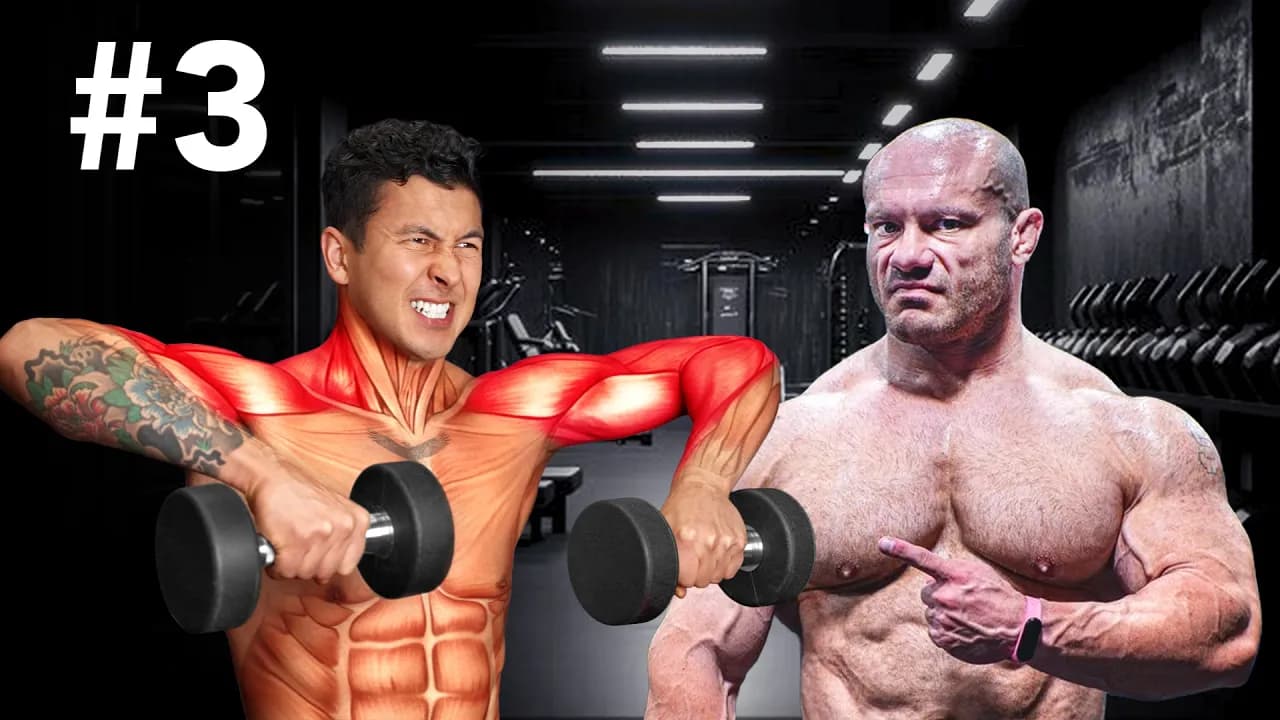
Side delts receive minimal direct attention because front delts dominate training through pressing movements. Shoulder presses in dumbbell, barbell, seated, standing, and machine variations serve as prime movers for front delts. These exercises feel satisfying due to heavy loads, leaving little energy or motivation for side delt work afterward.
Side delt training lacks exercise variety, with most people limited to dumbbell laterals. Front delts have six readily available exercises plus front raises, while side delts receive only a few sets of laterals before training ends.
Most individuals train delts only once or twice weekly. Three sets of laterals allow recovery within hours, making single or double weekly sessions insufficient for optimal growth.
Train side delts first in delt sessions to allocate maximum energy and stimulus. Perform two side delt exercises per session with three to six working sets each. Use dumbbell laterals in multiple variations including seated, standing, thumbs down, full range of motion, bottom partials on incline, and 15-degree lean variations.
Additional movements include upright rows, face pulls from knee-height cables, and dual handle cable Y raises. Train delts two to four times weekly. Start with two sessions per week of three sets across two exercises and progress volume and frequency as recovery permits.
Front and rear delts receive adequate stimulus from chest and back training. Developed side delts create the appearance of greater width in all outfits and make the waist appear smaller by altering shoulder-to-waist visual proportions.
Most people train biceps a few times weekly with one direct session and indirect work during back training using dumbbell curls, hammer curls, and similar movements. This volume proves insufficient for maximal arm development.
Biceps require more sets per session, more weekly sessions, and training in stretched positions beyond standard standing curls.
Use two exercises per biceps session with three to six working sets each. Include one stretch-focused movement such as low incline dumbbell curls, lying curls, decline curls, or dual cable cross free motion curls performed standing, seated, or inclined. Pair with a standard movement like dumbbell curls, cable curls, EZ-bar curls, or barbell curls.
Train biceps two to three times weekly. Four sessions are possible but stretch-position work may impair recovery for daily activities. Begin with six sets twice weekly and increase sets and frequency only when recovery allows. Progress by adding 2.5 pounds or one repetition per set weekly when soreness or weakness persists from prior sessions.
Triceps comprise approximately two-thirds of total arm size potential. Small triceps make even large biceps appear incomplete and disproportionate. Training triceps receives only incidental work from chest and shoulder presses plus basic pushdowns and dips on arm days.
Triceps require three distinct training approaches due to their complex structure with lateral, medial, and long heads.
Perform traditional extension movements to target lateral and medial heads using skull crushers, inverted skull crushers, and pushdowns for side thickness.
Train the long head in overhead stretched positions with overhead cable extensions, overhead EZ-bar extensions, overhead barbell extensions, and overhead dumbbell extensions.
Include pressing movements such as close-grip machine presses, dumbbell presses, barbell presses, dips, deficit close-grip push-ups, and overhead presses for high-force stimulus.
Structure two triceps sessions weekly, ideally after chest training. Each session includes one isolation exercise for three to six sets followed by one pressing movement for three to six sets. Alternate emphasis between overhead work and horizontal or downward extensions across the two weekly sessions for 12 to 24 total weekly sets.
Progress by adding weight or repetitions weekly. Larger triceps complete arm development and create the appearance of truly large arms.
Keep Renaissance Periodization in your library
Save the videos and channels worth coming back to, and find them again in one place.