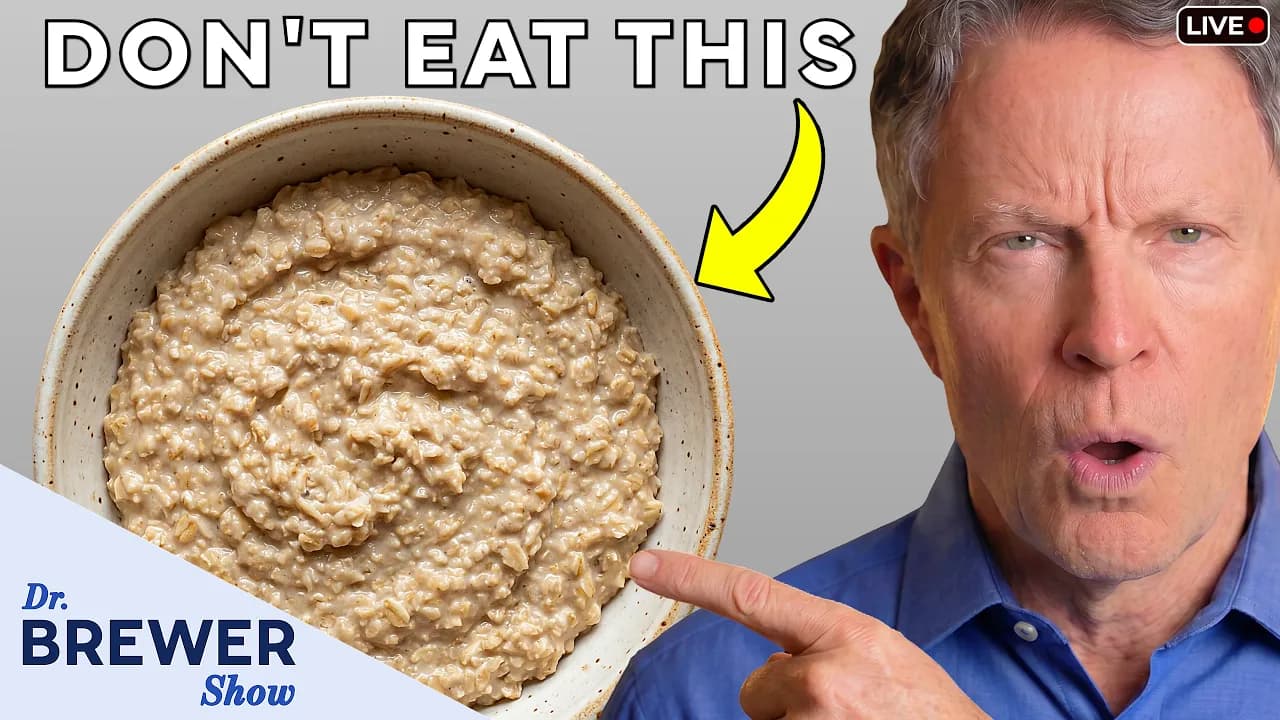
#1 WORST Meal that Clogs Arteries
In a Nutshell
Refined carbs like cereal and orange juice—pushed as heart-healthy since the 1960s—spike blood sugar above 140 mg/dL, damage artery linings, trigger inflammation, insulin resistance, high triglycerides, and low HDL, far worse than saturated fats. Avoid "naked carbs" with carb-to-fiber ratios over 7:1; test personal post-meal blood sugar under 140 mg/dL at 2 hours using a cheap meter. Opt for eggs with veggies/bacon, full-fat yogurt with nuts/berries, steel-cut oats with chia, lentils/beans, or non-starchy veggies to prevent plaque and support reversal.
These notes were generated by AI and may contain inaccuracies.
Have you ever been told that a healthy breakfast is a bowl of cereal and a big glass of orange juice? The breakfast of champions with Michael Jordan on the front or the juice from the Florida sunshine tree? You've been lied to. Research shows what foods really clog arteries and what to eat instead.
Since 1961, fat was the villain. Saturated fat raises LDL cholesterol, and LDL cholesterol causes plaque, so cut out fat. Fat has the most calorie density of any foods, more than protein, more than carbohydrates. Cereals, breads, pastas, crackers—these grain products became heart-healthy alternatives. The food industry reformulated around low-fat, high-grain products. Physicians reinforced it: low-fat, more grains.
Heart disease didn't go away—it went up. Obesity went up. Insulin resistance, prediabetes, metabolic disease went up, becoming a pandemic. Advice was making the problem worse for many patients.
Researchers separated refined carbohydrates (white flour, sugar, most cereals) from whole, fiber-rich foods. People eating the most refined carbs had the worst numbers: higher triglycerides, lower HDL cholesterol, more inflammation, more heart disease. The real problem was hiding in the cereal bowl.
Why does cereal still have a heart signal on the box? Marketing: whole grain, low-fat, fortified with vitamins and minerals—seems responsible, especially next to greasy bacon and eggs.
Most cereals are made from grain ground into fine powder, mixed with added sugars (sucrose, high fructose corn syrup, malt syrup), extruded, toasted, shaped. Natural grain structure and fiber covering are gone. It digests as fast as sugar water. Blood sugar spikes hard and fast; artery lining pays the price.
Portion size: serving on box is typically 30 to 40 g. Most pour 2-3 times that, especially with larger bowls, add low-fat milk, glass of orange juice (maybe two). Massive dose of fast-acting refined carbohydrates hits bloodstream all at once. People do this every morning for years, thinking it's virtuous.
Cereal is dangerous as a trusted daily habit, not a treat. Trust makes it hard to see clearly.
Even heavy bread eaters contributed to their own arterial plaque.
Refined carbs digest fast. Blood sugar rises sharply, often above 140 mg/dL—threshold for consistent damage to artery lining. Pancreas releases large insulin to bring it down. Once is fine; every morning for decades leads to cells becoming less sensitive to insulin (insulin resistance). Pancreas produces more insulin (hyperinsulinemia): high insulin in blood.
Effects: fat storage up, triglycerides up, HDL (healthy cholesterol) down. Common in patients eating 'heart-healthy' for 30 years.
High blood sugar damages inner lining of arteries (active, living layer controlling blood flow, inflammation, clotting, waste removal). Glucose like liquid sandpaper: every spike scrapes lining, triggers inflammation. Inflammation builds plaque, not fat.
Standard labs check fasting glucose—looks normal after overnight fast. But tells nothing about post-meal spikes. Cereal can push blood sugar to 200+ mg/dL. Postprandial (after meal) 2-hour window causes endothelial damage (artery wall lining). Repeated spikes above 140 reduce nitric oxide production, increase inflammatory signals, accelerate plaque.
Fasting labs can be normal while arteries take daily damage. Speaker's did.
One camp: fat's the killer (saturated fat, red meat, eggs, butter). Other camp (low-carb): fat fine, carbs only issue. Evidence: replacing saturated fat with refined carbohydrates (low-fat diet) raises triglycerides, lowers HDL, increases heart disease risk.
Fat in eggs doesn't trigger inflammation; refined carbs do. Speaker got plaque from 40 years of bread/carbs, not butter.
If cutting refined carbs, you're ahead. But avoid carbs is blunt. Not all carbs same: key is how fast they hit bloodstream, how high glucose goes. Responses vary by insulin resistance, metabolism, age, gut biome.
Goal: identify carbs your metabolism handles without damage cascade. Not eliminate all carbs.
Carb to Fiber Ratio
Under 7:1 (total carb grams ÷ fiber grams). Above 7 = naked carb, spikes blood sugar fast. Sugary cereals: 10-20:1. Lentils, non-starchy vegetables, steel-cut oats: 2-3:1.
Carnivores can skip fiber.
Postprandial Blood Sugar
Below 140 mg/dL, 2 hours after eating. Use home glucose meter (<$30). Personal filter: responses vary.
Build precise map for your body.
- Eggs with non-starchy vegetables and bacon: minimal glucose response, no insulin spike, sustained energy.
- Full-fat unsweetened yogurt with nuts and small portion of berries: low ratio, gentle blood sugar curve, satisfying. Not fruit juice (fiber removed, sugar concentrated—like cereal in glass).
- Steel-cut oats (not instant/quick) with chia or flaxseed: fiber improves ratio. Test response.
- Lentils, chickpeas, black beans: high fiber, low ratio, slower blood sugar than some non-carbs.
- Non-starchy vegetables at every meal (broccoli, spinach, peppers, cauliflower, zucchini): impossible to fail tests, support endothelium.
More options with personal framework. Explain to doctor/family.
Arteries damaged by refined carbs can respond to specific foods, supporting plaque reversal. Next video: single best meal for cleaning arteries, evidence, how to build it.
Growing old's not for sissies, but easier with healthy arteries. Team helped thousands. Click link or call number to talk to experts.
Keep Thomas Fordham Brewer MD MPH in your library
Save the videos and channels worth coming back to, and find them again in one place.