Don't Eat Junk Your Body Can't Handle
In a Nutshell
Metabolic disease and insulin resistance damage arteries through repeated blood sugar spikes from refined carbs, not dietary fat. Most people over 18 already have some degree of this problem, which standard tests miss. Stop eating fast-digesting carbs that your body cannot handle—testing for actual soft plaque and metabolic function beats guessing based on outdated public health guidelines.
These notes were generated by AI and may contain inaccuracies.
Live from Athens, Georgia, the Dr. Brewer Show focuses on preventive medicine where plaque is the enemy, testing beats guessing, and healthy arteries are the goal. Dr. Ford Brewer spent his career in preventive medicine, ran the program at Johns Hopkins, and now helps people avoid heart attacks, strokes, and early death.
Many people picture oatmeal and orange juice as a healthy breakfast. For decades, oatmeal has been promoted as cholesterol-lowering and heart-healthy, while orange juice is viewed as natural and beneficial. However, this breakfast may contribute to clogged arteries more than bacon and eggs. Many people eat sugar-loaded cereal instead of oatmeal, with some consuming it dry as a snack because they were told cereal is healthy.
Approximately 80% of Americans eat cereal. The show focuses on why so-called healthy foods are actually harmful to arteries and why most people's metabolism cannot handle them.
Most people picture bacon, eggs, burgers, sodas, and fried foods as artery-clogging foods. However, some of these are not as harmful as claimed, while others are problematic primarily due to refined carbohydrates rather than fat. Sweetened cereal labeled as whole grain often displays a heart on the box. Granola is promoted as healthy but is actually harmful. Orange juice, low-fat yogurt, and whole grain bread are commonly chosen as healthy options.
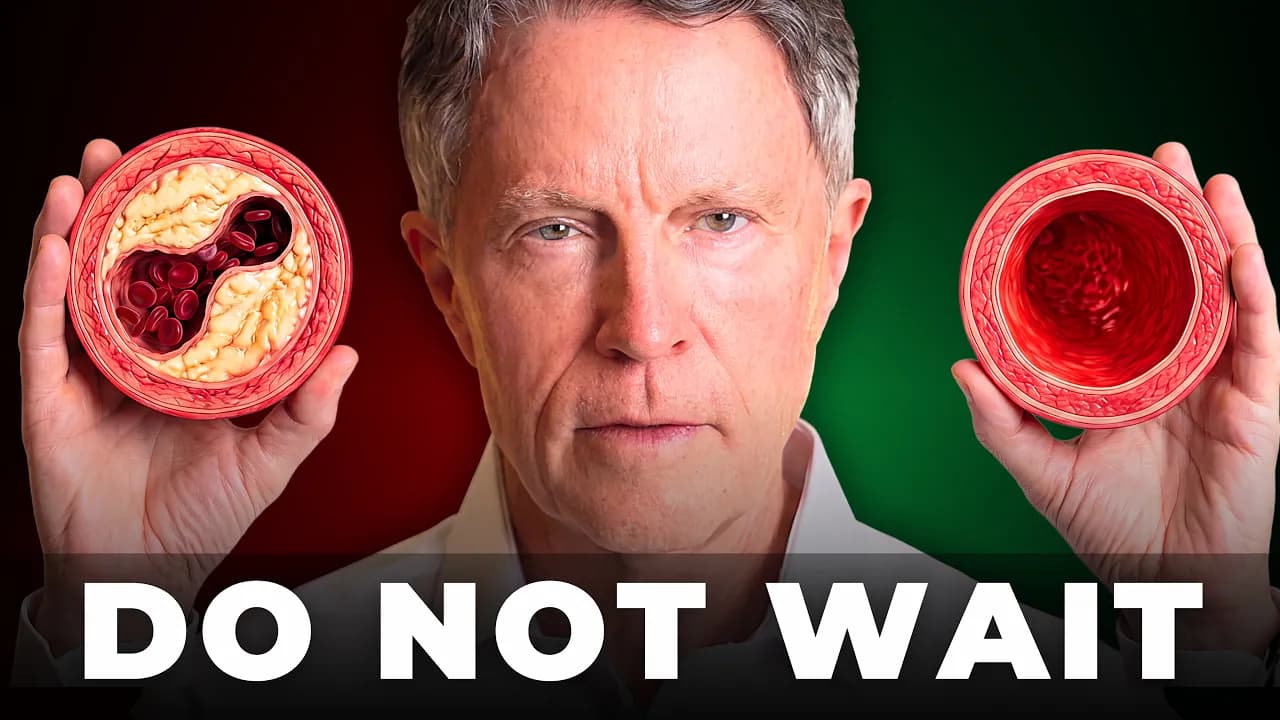
These foods share common characteristics: they are fast-digesting carbs with fiber mostly stripped out, leaving sugars behind. When consumed, blood sugar spikes occur, triggering insulin release. Repeated spikes throughout the day, over years, damage the glycocalyx, which is part of the endothelium lining artery walls. This damage creates inflammation where plaque begins to build, particularly soft plaque that can crack open and trigger clots leading to heart attacks or strokes.
By age 60, most people have some degree of insulin resistance. According to the NHANES (National Health and Nutrition Examination Survey) from the US census, over half of 18-year-olds already have some degree of insulin resistance, with prevalence increasing with age. The body's ability to handle large sugar loads deteriorates over time.
A food that a healthy 14-year-old or 18-year-old might tolerate can cause real damage to someone who has maintained health for 30 years.
James, age 43, received a CINT test with the following results: early event risk was normal at 1.0, IMT was 65 (normal), plaque burden was none, average CCA max region was 0.80, and arterial age was 50. He experienced chest pain while climbing stairs and walking uphill. A cardiologist determined the pain was not cardiovascular-related. An echocardiogram and calcium score were both normal.
Dr. Brewer explained that the critical information appears in the bottom half of the CINT report under plaque analysis. Discrete plaque is classified at 1.3 or higher. James's highest reading was 1.0 across the six measured areas (right and left internal carotid, external carotid, bulb, and common carotid), indicating he does not have discrete plaque and is in a favorable position regarding statin or aspirin recommendations.
Escape, age 63, weighing 165 pounds, has been following a whole food diet for over 60 days with daily intake of 149 grams protein, 70 grams fat, 66 grams carbs, 38 grams dietary fiber, and 13-20 grams sugar. Calorie intake ranges from 1,500-1,600 daily. He lost 25 pounds over 65 days and completed a five-day fast one week prior.
Using a Lingo CGM for 1.5 months, he experiences dawn effect glucose spikes. Fasting glucose ranges from 90-120 mg/dL, spiking as high as 170 mg/dL. Without morning exercise, spikes can reach 70 mg/dL upon waking. With 20-40 minutes of morning walking, glucose peaks around 40-50 mg/dL after 20-25 minutes. Highest recorded glucose reached 160-180 mg/dL.
Dr. Brewer identified this as the dawn effect, where cortisol or epinephrine from waking or exercise triggers liver glycogen release as blood sugar. The A1C test misses over half of metabolic problems. An oral glucose tolerance test with insulin measurements (fasting, 1-hour, and 2-hour glucose and insulin levels) provides better assessment of insulin resistance.
Dr. Brewer offered Escape a free Heart Reveal test to identify hidden markers predicting heart disease years before symptoms appear.
The Heart Reveal panel uncovers hidden markers that predict heart disease years before symptoms appear, enabling early intervention. The test can be accessed via the link in the video description.
Tom referenced the 2025 USDA guidelines stating that individuals with certain chronic diseases may experience improved health outcomes following a low carbohydrate diet, and should work with healthcare professionals to identify appropriate dietary approaches.
Tom questioned how patients can trust healthcare professionals, doctors, dieticians, and public health officials who continue recommending 4-5 servings of fruits and vegetables daily, 4 servings of grains daily, and saturated fat limited to less than 10%, appearing stuck in 1970s dietary recommendations despite new guidelines.
Dr. Brewer acknowledged the frustration with the 2025 guidelines, noting they took years to develop and represent a significant disappointment despite high hopes for meaningful change under the new administration.
The current public health agenda hands responsibility back to individuals and their doctors by asking if they carry a diagnosis. Approximately 90% of metabolic disease cases remain undiagnosed by typical healthcare providers. Guidelines direct patients to work with local healthcare providers who recommend eating whole grains and building plates based on grain products. These are the same providers who failed to diagnose the original problem and lack awareness of required dietary changes once metabolic disease prevalence is understood.
Dieticians referred by local providers emerged from the eat carbs environment. Multiple surveys from institutions like Johns Hopkins found that three quarters of local doctors, including internists, family practitioners, and cardiologists, cannot diagnose metabolic disease. The approach depends on diagnoses that three quarters of doctors failed to make appropriately.
The USDA guidelines now recommend stopping consumption of refined carbohydrates. However, the medical establishment still rejects the connection between continuous glucose spikes, insulin spikes, and arterial plaque formation. Patients must wait five to seven years for diabetes diagnosis, a situation described as preposterous. A senior mentor noted twenty years ago that while improvements occur, the question remains how many people will die before the situation is fixed. Current generations continue dying and becoming disabled due to mismanagement.
Tom, age 55, underwent triple bypass surgery four years ago during COVID without experiencing angina or heart attack. The cardiologist and hospital convinced him the procedure was necessary to save his life. He later developed stenosis in all three bypasses. Six weeks post-surgery, he contracted COVID and required a pericardial window due to pericarditis and myocarditis. He was placed on high-dose statins, developed frozen shoulder and adhesive capsulitis, and experienced kidney problems. When requesting a coronary artery calcium test, the cardiologist dismissed the need, stating he already had coronary artery disease and should return when symptomatic. The cardiologist follows a reactive protocol: return for stenting when angina or heart pain develops.
Once patients enter the procedural cycle, they face a flywheel of interventions. The recommended approach begins with testing rather than guessing. Required assessments include inflammation panels, glucose tolerance testing, and metabolic disease evaluation. A seven-step protocol book is referenced as guidance. Cholesterol is not the primary concern; inflammation from diabetes and metabolic factors drives disease progression. Patients from small towns often lack local options and must travel for specialized care.
Emily makes sourdough bread at home using store-bought flour and inquired whether switching to organic wheat berries ground at home would improve insulin response and glucose levels. Reference was made to a house calls video featuring Harlan, who had diabetes. Harlan's wife baked bread for him, which contributed to worsening his condition. When Harlan consumed one piece of her bread for demonstration purposes, his blood glucose rose to between 250 and 300 mg/dL. Grinding wheat berries creates an ultra-processed product. Alternative flours such as coconut flour and almond flour combined with fiber were attempted but produced different taste profiles requiring adaptation. Fermented sourdough bread is sometimes claimed to help due to fermentation, but individual testing is required rather than assumption.
Heart disease is largely preventable when causes are identified early through preventive medicine. Testing goes beyond standard panels to identify root causes. The core recommendation is to stop consuming foods the body cannot handle. A 15-20 minute consultation is offered to develop individualized plans. Dr. Brewer holds preventive medicine licensure across all 50 states.
Half of all heart attacks occur in individuals with normal cholesterol levels. Half of those heart attacks manifest as sudden death, meaning patients do not receive an opportunity to wait and observe outcomes.
Mark, age 74, was diagnosed with atrial fibrillation at age 51 and received a pacemaker in 2008. Sleep apnea was diagnosed in 2014 after unsuccessful attempts with multiple medical disciplines. Beginning in April, he eliminated refined carbs, starches, sugars, and seed oils, adopting a whole foods diet. His doctor added ezetimibe to his 40mg simvastatin regimen in mid-April. After 13 weeks, results included 17 pounds of weight loss, glucose reduction from 96 to 88 mg/dL, triglycerides decrease from 93 to 73 mg/dL, HDL increase from 34 to 44 mg/dL, and LDL reduction from 75 to 37 mg/dL. Sleep apnea resolved completely. An oral glucose tolerance test was recommended to assess current carbohydrate metabolism. The triglyceride-to-HDL ratio improved from 93/34 to 73/44, moving from 3 to less than 2, though optimal targets are below 1.
Beetroot powder provides nitric oxide benefits without the carbohydrate load present in whole beets. Regarding creatine supplementation, cystatin C testing is recommended prior to use. Creatine converts to creatinine, which doctors use to assess kidney function. Without proper testing, physicians unfamiliar with supplementation may misinterpret elevated creatinine as kidney failure when creatine supplementation is actually responsible.
Real people are calling in with their challenges, questions, experiences, and success stories. The approach emphasizes testing rather than guessing, recognizing that metabolic disease affects over half of people starting at age 5, worsening every year after 18.
Since metabolic disease is so prevalent, the next step after testing is cutting carbs that raise blood sugar. Every person has different metabolism, as demonstrated by Dr. Brewer's own experience with his wife where certain foods spike his blood sugar but not hers.
Quinn from Virginia called in with his medical history: morbid obesity with type 2 diabetes, gastric bypass surgery, significant weight regain, then 80 pounds lost on keto. He struggles with adherence and finds slipping up makes returning to keto difficult. He's working with a specialist in Florida who took him off statins and put him on colicine instead.
Dr. Brewer is a major fan of keto for Quinn's situation. Carbs that cause glycemic damage are essentially poisons for someone with his history, and he acknowledges the addiction aspect. Unlike alcohol, drugs, or cigarettes where you can stop completely, food addiction requires continued eating, making it uniquely challenging.
"You definitely have an addiction to food."
Keto addresses this by eliminating the bad carbs that trigger the addiction. Quinn wants to lose another 30 pounds and was encouraged to keep going.
Colicine is an anti-inflammatory option for those who can't take statins. Research by Paul Ricker and Gavin Blake at Harvard showed statins work partly as anti-inflammatories, leading to investigation of other anti-inflammatories. Colicine is typically used when inflammation is present, which can be determined through testing.
Ten years ago in medical school, the only cure mentioned for type 2 diabetes was bariatric surgery. This view has changed. Among 700-800 active patients, fewer than half a dozen have had bariatric surgery, while many have successfully gone keto, sometimes combined with GLP-1 medications.
Stan, a recovering type 2 diabetic, has lowered his blood sugar through diet and exercise including HIT training. His morning levels are in the 70s-80s, with dawn phenomenon bringing levels to 90-100. After a recent sinus infection with high fever, his blood sugar rose to 120-130 without eating.
Dr. Brewer reassures that 120-130 levels aren't concerning for arterial damage when baseline levels are normally much lower (80s) and the person isn't eating carbs. The elevation is driven by cortisol from the infection. These elevated levels typically last 3-15 days, anywhere from 3-4 days up to a couple of weeks.
Gentle, slow walks in zone two or lower can help decrease blood sugar spikes from dawn phenomenon, HIT training, or illness. Even fat-adapted people doing HIT training may see blood sugar rise to 120-140.
Don't worry excessively about levels below 140 when the body is making the sugar rather than dietary intake. The concern threshold is over 140 associated with eating foods. Slow walks can help cut the top off glucose spikes.
George has a calcium score of 1000 and a non-diagnostic CT angiogram due to calcium blooming. He's asymptomatic and wants to know whether to pursue photon counting CT to overcome blooming or PET perfusion with flow reserve to catch balanced ischemia, or whether to stop chasing anatomy and switch to function.
Dr. Brewer prefers not to pursue photon counting CT or PET perfusion scans, focusing instead on whether soft plaque remains rather than perfusion. He recommends testing for inflammation markers: elevated CRP, microalbumin creatinine ratio, elevated LP-PLA2, elevated MPO, and HSCRP. He also recommends OGTT with insulin response and a good CINT scan specifically looking for soft plaque.
A calcium score of 1000 or above can indicate metabolic disease is under control with less risk than lower scores, because soft plaque has stabilized into hard, calcified plaque.
The goal isn't arterial age or evidence of plaque generally, but specifically soft plaque that could rupture. George had a CINT scan showing one lesion of 1.9 on the right, with arteries equivalent to an 80-year-old at age 63.
Photon counting CT may minimize stent artifacts but isn't necessarily better than standard CCTA. If standard CCTA fails, the next step would be angiography via femoral artery catheterization, which has its own challenges especially with existing stents.
Lifestyle changes are more important than pursuing highest-end technology testing. Even without knowing soft plaque status, the interventions remain the same: eating properly, exercising, improving sleep, managing stress. Medications like low-dose statins, low-dose aspirin, low-dose colicine, and supplements can be added.
Many providers focus on perfusion and plumbing rather than plaque analysis. Getting the CD from a CTA and requesting plaque analysis specifically may provide valuable information even if the original provider deemed it non-diagnostic.
Dr. Brewer offers a free summary of the heart attack prevention protocol available for download through the link in the video description.
People who have successfully made lifestyle changes and eliminated their risk factors for vascular disease often find themselves subjected to unnecessary additional testing. Instead of recognizing their improved health status, medical professionals may recommend more CTAs, PET scans, and other imaging studies to assess perfusion and vascular function.
This approach creates unwarranted anxiety and concerns for patients who are already doing the right things with their health. The focus shifts away from lifestyle improvements toward additional studies, medications, and interventions.
Once patients become involved in the cycle of medications, stents, bypasses, and repeated studies, they lose focus on the lifestyle changes that are actually addressing the root cause. The answer to their health improvement is right in front of them through lifestyle modifications, yet the medical system may direct them toward more interventions instead.
Growing old's not for sissies.
Dr. Brewer shares that he recently turned 69 years old. He emphasizes that while aging presents challenges, it's significantly better with healthy arteries. Despite being 69, Dr. Brewer reports feeling young and attributes this to maintaining vascular health through lifestyle choices.
Keep Thomas Fordham Brewer MD MPH in your library
Save the videos and channels worth coming back to, and find them again in one place.