What Happens to Your Body if You Eat Sugar for 30 Days
In a Nutshell
Eating sugar or refined carbs multiple times daily pushes blood glucose above the 140 mg/dL arterial-damage threshold for hours, inflaming artery linings, lowering nitric oxide, and making vessel walls sticky. Within one week, excess glucose converts to visceral and intramuscular fat that drives insulin resistance; by week two the pancreas pumps out excess insulin, raising blood pressure and triglycerides while lowering HDL. By day 30 soft, rupture-prone plaque is forming silently—standard labs still look normal—while a practical grocery filter of keeping total carbs-to-fiber ratio below five prevents repeated spikes and reverses the damage.
These notes were generated by AI and may contain inaccuracies.
We all know sugar's bad for us. But what actually happens to your arteries if you eat a diet, typical standard American diet, Western diet with bread, pasta, breakfast cereal, juice for 30 days straight, because the evidence is really clear. Not only are most people crossing the threshold for arterial damage multiple times a day, they're staying there for hours and they have no clue. Your standard blood tests won't catch any of it until the damage is already done. So, in this video, we're going to go week by week through what's actually happening inside your arteries. Most of it completely invisible and none of it showing up on your last checkup.
The obvious ones, soda, candy, desserts, these are really just the beginning. Most people know these are bad. But here's what they miss. That's really the minor source of sugar for most people. White bread, whole wheat bread, whole wheat pasta, crackers, breakfast cereals. Your body breaks those things down into glucose just as fast as a can of Coke. The milling process that crushes it into a powder has already done the digestion for your body. By the time it hits your small intestines, it's essentially a liquid sugar moving into your bloodstream.
When food manufacturers pull that fat out, they had to replace it with something just to make it taste better. That something was sugar, starch, even maltodextrin. So the label says healthy. It's got a little heart on the image like Quaker Oats or low fat and your blood sugar spikes.
You remember Ranita Bryant? People my age do natural juice from Florida's sunshine tree. It couldn't be worse for you. You've stripped out the fiber. You've concentrated the fructose. And now you're drinking what is essentially a fructose delivery system.
Your arteries don't care if the spike came from a donut or a bowl of heart healthy oatmeal. The damage is the same. If it spikes your blood sugar, your arteries treat it as sugar. Full stop.
There's actually a specific number that your arteries are watching in terms of the level. Most people cross it, as I said earlier, multiple times a day without knowing it and stay over it hour after hour, inflaming, injuring the lining of their arteries. That number, 140 milligrams per deciliter. Now, that's the threshold, the point at which glucose stops being something your vessels can manage and starts becoming directly toxic to the artery lining. Each crossing is another round of stress on your arteries. The damage isn't from one spike and coming down quickly in 15 minutes. It's from the pattern. It's the accumulated hours that your arteries spend above that line.
Blood glucose typically peaks around 60 to 90 minutes after you start eating, not after you finish eating. So half an hour usually after you finish.
Someone who's insulin resistant, a little bit of metabolic disease, and that's only what about 90% of us, especially if you're over age 50, it's not unusual to see numbers like 160, 170, even 180 and more after a standard meal. Now, I'm not talking about a binge here. I'm talking about a normal meal with bread or pasta or rice or juice. And I didn't say bread and pasta and tomato sauce with a bunch of sugar in it. That would be a binge with a much higher number.
When this glucose hits your artery lining, the cells lining the artery react with a burst of oxidative stress. It's like an internal rusting. It's combination with oxygen and it's rust. It damages them from the inside.
When oxidative stress goes up, nitric oxide goes down. It's a molecule that tells your arteries to relax and dilate. That's get bigger. It keeps them flexible and responsive. So when nitric oxide drops, your arteries get tighter, less able to adapt to changes in the demands like when you stand up or when you exercise or when your heart rate climbs a little bit. Think about what happens to your blood pressure when your artery wall squeezes down.
At the same time, the surface of that inner layer of the artery wall gets stickier. That stickiness is one of the early steps in plaque formation. You're essentially rolling out a welcome mat to plaque. One high sugar meal can compromise your artery function for hours. You don't feel anything, but the damage is actually measurable.
Where does all that excess glucose actually go? Your liver and muscles store glucose as glycogen. That's the short-term energy reserve in your liver and your muscles. But those stores have a ceiling. They're not indefinite. Once they're full, your body has to do something with all that incoming glucose. And that something is fat production. The liver converts the excess into triglycerides and packages those triglycerides up for distribution in the bloodstream. That fat gets stored in three main places. Subcutaneous fat, visceral fat, and even inside your muscles.
Subcutaneous fat. Don't worry about that term subcut. It just means under the skin. It's like these love handles here, and it's visible.
The second is more important. Visceral fat. It's fat that accumulates inside the abdominal cavity around your liver, your intestines, and your other organs. You can't see it. You can't feel it. You have to get a DEXA scan or an MRI to actually understand how much you have. You need to have two pounds or less. Mine goes around a pound, a half a pound to a pound.
Third, fat inside the muscles. You never knew about that, did you? And that's just as bad as not worse. Visceral fat and fat inside the muscles. These are fat droplets that accumulate inside the muscle cells themselves. And you may not have heard of it, but you've seen it. Remember the term marbling in muscle on a steak? That's when they've fed the cow a lot of you call it grain finished or corn finished. They've fed the cow way too much corn for his health or grain. The cow it has generated diabetes or pre-diabetes in the cow. And part of what's going on there is forming fat inside the muscle. A lot of people think that tastes very good. It may taste good in your steak, but it's not good in your own muscle.
Visceral fat, it's not just storage. It behaves like an active endocrine or hormonal organ. It releases hormones and inflammatory signals, including something called resistin. That's a hormone. And it does exactly what the name says. It drives insulin resistance. The more visceral fat you carry, the more your metabolic system is working against you.
When fat and remember I mentioned the fat inside the muscle cells, when those cells become full of fat, they become less and less responsive to insulin. In other words, more and more diabetic just like the cornfed cattle. It's a signal to pull glucose out of the blood. That's what insulin is. And once you start getting all of that fat inside the muscle itself, it shuts off the signal. So your muscles, which should be the best internal safety valve for you against metabolic disease, for clearing post-meal glucose, they're becoming less and less effective at doing that job, which means more glucose stays in the blood longer and longer above 140. More fat in the blood, more insulin resistance, more blood sugar staying above 140, more insulin, more insulin resistance, more diabetes, more glucose in the blood. It's the insulin spiral of death. When the first week is done, your body's already parking fat in the places most likely to create metabolic disease. Fatten your muscle and fatten your organs.
By the second week, something more serious is now happening and your standard lab work is still not going to catch it. Here's why that's a problem. As your cells become more resistant to insulin signal, your pancreas responds the only way it knows how. It makes more insulin. The idea is to compensate. If one unit of insulin isn't enough, then send two or three or four or more. Your fasting glucose can still read completely normal, 85, 90, 95 milligrams per deciliter in the US and corresponding numbers outside. It looks fine on paper, but your fasting insulin may be two or three times higher than it was at the start of the month. Fasting insulin. So you're going from a healthy fasting insulin of four up to a very unhealthy fasting insulin or basal insulin of 16. You get these numbers, these basal insulin numbers above 10 and you find it very difficult to lose fat anymore because you can't burn that fat because insulin stops fat burning. Your pancreas is working overtime just to keep the glucose number acceptable. And that's what's called compensated insulin resistance. The glucose reading is the output and it looks okay, but the cost of producing that output of that lower glucose has gone way up. And that's the number your doctor is not measuring fasting or basal insulin. It's rarely included in a standard panel.
While this is happening, high circulating insulin is sending signals throughout your body. One of those signals goes to your kidney. And you know what it says? High insulin tells your kidney, retain more sodium. In other words, hold more water. And that raises the blood volume. Remember we talked about loss of nitric oxide causes those artery walls to constrict. And now the insulin hitting the kidneys tells the kidneys retain sodium. In other words, now the volume is going up while the pipe is getting smaller. What's going to happen to your blood pressure? It pushes the blood pressure up and up and up.
Another signal goes to your liver. Keep making and releasing triglycerides. Even in a fed state, even when it shouldn't happen, the liver under chronically high insulin levels keeps pumping triglycerides into the bloodstream. Your labs stay what your doctor thinks is normal, but your body's already running a stressed compensated system and your arteries are paying for it.
At this point, the changes in your blood chemistry start pointing directly toward plaque buildup. Triglycerides are climbing. HDL, the particle that performs reverse cholesterol transport, pulls that cholesterol out of your blood, pulling cholesterol away from artery walls. That HDL, the good cholesterol, is trending down. And rising triglyceride along with lowering HDL is a very bad sign. Even on Dr. Google or your one of your favorite AI doctor that it'll tell you triglyceride over HDL is a ratio that tells you about metabolic disease. It'll also say a ratio of two or lower is good. No, it's not. You need to get to one or lower. High triglycerides, low HDL is one of the most consistent markers of cardiovascular risk in the literature, in the science anywhere. Just ask anybody, no matter what side of that LDL debate or that APO B debate that they fall on.
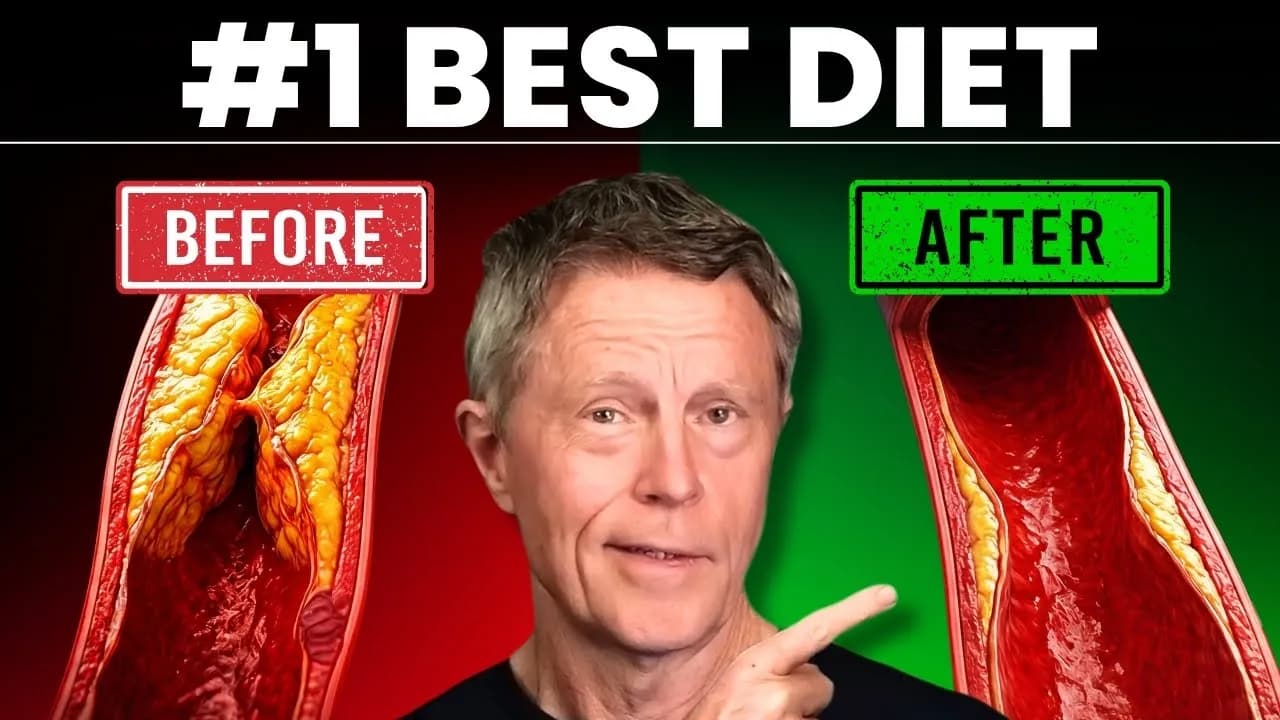
Vascular inflammation, visceral fat, which has been building since week one, is now releasing a steady stream of inflammatory cells into your circulation. It's more likely to initiate the immune response that drives plaque formation. And here's what matters about the type of plaque that forms in this environment. It's not the hard calcified plaque that shows up on a calcium score. It's soft plaque. It's full of fats. It's unstable. It's inflamed. It's covered by a thin fibrous cap. All of that makes it dangerous. Soft plaque can rupture at 20-30% blockage. It does not have to impact the flow in the artery before it causes an event. When it ruptures, it triggers a clot. And the clot is what causes that event, the heart attack or the stroke. It's not the slow narrowing, it's the sudden rupture. By week three, your blood chemistry has shifted into the classic pattern for plaque buildup. And the plaque forming now is the most dangerous kind. It's soft, inflamed plaque.
Day 30, here's what has changed. Most of it's invisible on a standard checkup. You have more visceral fat than you did 30 days ago. Your intramuscular fat is increasing. Your visceral fat is increasing. Both are driving insulin resistance. The visceral fats driving inflammation. The muscle fat is as well. Both are feeding that inflammatory signal reaching your arteries. Your fasting glucose may look acceptable. But post-meal, you're routinely crossing that 140 line. Sometimes 160, 180. Outside the US, 7, 8, 9, 10. Your arteries have been living above that threshold for hundreds of hours this month alone. Your triglycerides are elevated compared to where you started. Your HDL has trended down. The blood chemistry running through your arteries is more prone to plaque than it was at day one. And your artery lining has been in a state of reduced nitric oxide and increased stickiness for most of that month. Not occasionally, repeatedly, daily, after every high sugar meal. You keep building soft, squishy, dangerous plaque. It can rupture and create clots and therefore heart attacks and strokes and blindness and kidney disease and erectile dysfunction all silently without chest pain, without shortness of breath, without a single warning on your last checkup. You haven't had a heart attack in 30 days, but you've been quietly building the conditions for a heart attack without a single symptom to warn you.
Avoiding sugar really isn't specific enough to act on at the grocery store. We've got a lot of carnivores and ketos, ketoers, lion diet folks watching the show, but we've also got a lot of people who have more plant-based foods and you need a filter to use at the grocery store, not a long list of foods themselves. Now, one thing you need to know is that not all carbs push you above that plaque line. The ones that don't tend to share one feature. They have a high amount of fiber relative to their total carbohydrate content. Again, among plant-based foods, fiber slows glucose absorption. It's the structural difference between a food that damages your artery and one that doesn't. The number to look at is the carb to fiber ratio. Take the total carbohydrates on the nutrition label and divide by the grams of fiber. Total grams of carbohydrates divided by total grams of fiber. If it's below seven, it's acceptable. Below five is where you really want to be. Run that calculation on a slice of white bread or whole wheat bread. You're going to get 15 or 20, sometimes even higher. Breakfast cereals 15 or 20, even higher. Crackers, pretzels, 10 or higher. Instant oatmeal, same story. Now, run it on broccoli, lentils, strawberries, blackberries, blueberries, raspberries, steel cut oats. These numbers don't come in at 8, 10, 12, 15. They come in at three, four, sometimes even lower. The fiber content is why these foods don't spike your blood sugar the same way and why your arteries respond to them differently. This is your practical filter at the grocery store. You don't need to memorize a list of good and bad foods. Just look at the label. Do the division and keep it below five. Carb to fiber ratio below five, that's your practical filter for everything on your plate.
My team and I have helped thousands of people do exactly what I just described in this video. Now, if you'd like to know how we can personally help you, click the link in the description below or call the number on your screen now to talk to our experts. Now, now that you know what to do for shopping for foods at the grocery store, and now that you know what 30 days of sugar does to your arteries, the question is, what happens when you take that sugar away for 30 days? In the next video, I'll walk you through exactly what happens to your body when you quit sugar for 30 days, starting from day one. And remember, growing old is not for sissies, but it's a lot easier with healthy arteries.
Keep Thomas Fordham Brewer MD MPH in your library
Save the videos and channels worth coming back to, and find them again in one place.