2.2 Million People Nearby and I’m Still Lonely
In a Nutshell
A man recovering from long COVID in the Raleigh-Durham area (2.2M people) is using AI tools to find real-world hiking and AI groups after realizing loneliness—not illness—is now his biggest problem. He learned that asking for help and accepting support from others enabled gratitude and connection, and that social integration is non-negotiable regardless of introversion or preferences. The experiment tests whether AI can efficiently match him with compatible people and formats in a tech hub already aligned with his demographics and interests.
These notes were generated by AI and may contain inaccuracies.
The speaker identifies as an expert in artificial intelligence and has been suffering from a chronic illness for several years. Initial symptoms included exhaustion, followed by contracting the Omicron mutation during the coronavirus pandemic, which resulted in prolonged severe illness. After recovery, energy levels have been gradually returning through deliberate focus on rest, stress management, and exercise, including resumed hiking in the forest.
The speaker explicitly requests that viewers refrain from leaving comments suggesting the illness is related to vaccination or denying the existence of long COVID, stating such comments are neither helpful nor kind.
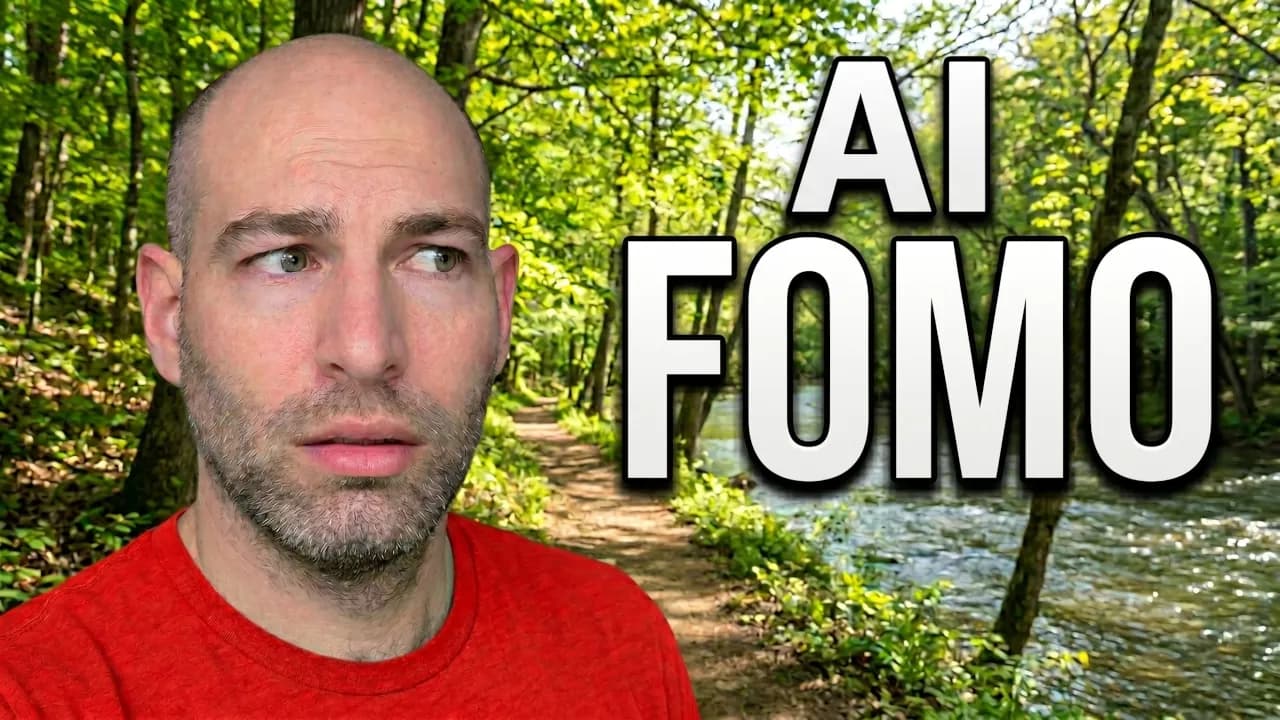
The return of energy has coincided with feelings of extreme loneliness. The speaker separated from his wife several months ago, which compounds the difficulty of recovery. The speaker poses the question of whether artificial intelligence can be used to solve the problem of loneliness, not as an AI friend, but as a tool to find real human connections.
The speaker lives in the Greater Raleigh-Durham area, specifically mentioning Wake, Durham, and Orange counties in North Carolina. A quick calculation shows approximately 2.2 million people in this region. The speaker notes this is a technology hub with a pre-selected demographic of people interested in technology, and North Carolina is known for its nature. The speaker concludes that if connections cannot be found in this location, the problem lies with the individual.
The speaker has queried Grok, Claude, and ChatGPT with specific requests based on personal interests: finding hiking groups and AI groups. The speaker reflects on why this approach did not occur earlier.
For new viewers, the speaker's research areas include life after work, the post-work economy, physical realism, and post-work life. The question of how to fill time after work is central. The speaker references research on cities as social reactors, where the number of possible interactions increases superlinearly with population size.
The speaker challenges himself: with 2.2 million people in a tech hub selected for his age group and interests, plus access to nature, if no connections are found, it is his own problem. The speaker emphasizes that sometimes you simply have to ask.
Going through a breakup was described as a really difficult and painful experience. The speaker connects this to research in health and wellness that emphasizes gratitude. Brian Johnson is referenced in this context. The speaker notes that when sick, it is very difficult to feel grateful because pain and fatigue leave no mental or emotional room for gratitude.
The speaker discovered that being humble enough to ask for help and then accepting that help enables gratitude. During the separation, many mutual friends provided support to both the speaker and his ex-wife. This experience transformed the speaker's worldview, countering the feeling of being alone with no one to rely on.
The speaker learned that if one is humble enough, transparent enough, and comfortable being vulnerable, it is possible to ask for help by stating "I am hurting, I don't know what to do, and my life feels like it's falling apart." The speaker notes the importance of regulating one's own emotions, as being too intense can cause people to distance themselves. People did respond with questions and conversations, creating a significant positive difference.
When sick for three years, people stop calling and stop inviting one out. The speaker has a friend who lives seven minutes away, and reconnecting went well, though timing is complicated by the friend having children.
The speaker works a few hours daily on YouTube videos and consulting, leaving the rest of the day free. The speaker questions whether he can conduct experiments in living a post-work lifestyle. Without immediate financial concerns and with free time, one might end up alone in the forest, which is not a real way to live.
Research for the speaker's book on life after work identified social integration as essential. The speaker references a physical reality video and states that humans are social primate creatures by nature—there is no escaping it. Loneliness is harmful regardless of whether one likes people, is introverted, or has autism.
The question is how to connect with people: first, how to find the right people, and second, how to connect in formats and settings that suit one's values and nervous system. An example is given of a close friend's Halloween party with approximately 200 people where everyone knew each other and there was a DJ—this was more than the speaker could bear. The speaker enjoyed the time but had to push himself hard, and energy ran out after only two hours.
The speaker prefers being in the forest. The speaker asked AI to find a picnic group for millennials and realistic AI teams. The speaker notes that AI is intelligent but requires properly phrased questions—requesting a "meetup" causes the AI to search only on the Meetup platform.
For AI groups, the speaker had to be smart enough to ask the right questions because there are many universities and technology companies in the region. For hiking groups, beyond Meetup.com, the speaker considered groups organized by city, county, churches, and community centers.
The speaker acknowledges the video may seem to lack real purpose to some but frames it as a visual blog documenting current thinking, identifying loneliness as the main life problem, and explaining the approach being tried.
Keep David Shapiro in your library
Save the videos and channels worth coming back to, and find them again in one place.