AI is critical for humanity’s survival: Cisco President on the AI revolution | Jeetu Patel
These notes were generated by AI and may contain inaccuracies.
Survival of humanity depends on successful AI. Birth rates are going down. If 60% of population is older without enough people to care for them, it causes human suffering. When taking new job, zero chance of success without AI due to lack of knowledge in many domains. Companies adjusting to new world. Distinguish mega trend from hype cycle: AI is a mega trend, one of most foundational movements in human history. Turning Cisco from older, slower, traditional enterprise to AI-forward company is difficult. AI moving fast: fast forward 6 months and prepare for that world. Manages 30,000 people. Disagree with praise in public, criticize in private: establish trust for public critiquing and debating. Stamina trumps intellect: smart people important, but curiosity, hunger, staying power, persistence make you smart. Can't teach hunger.
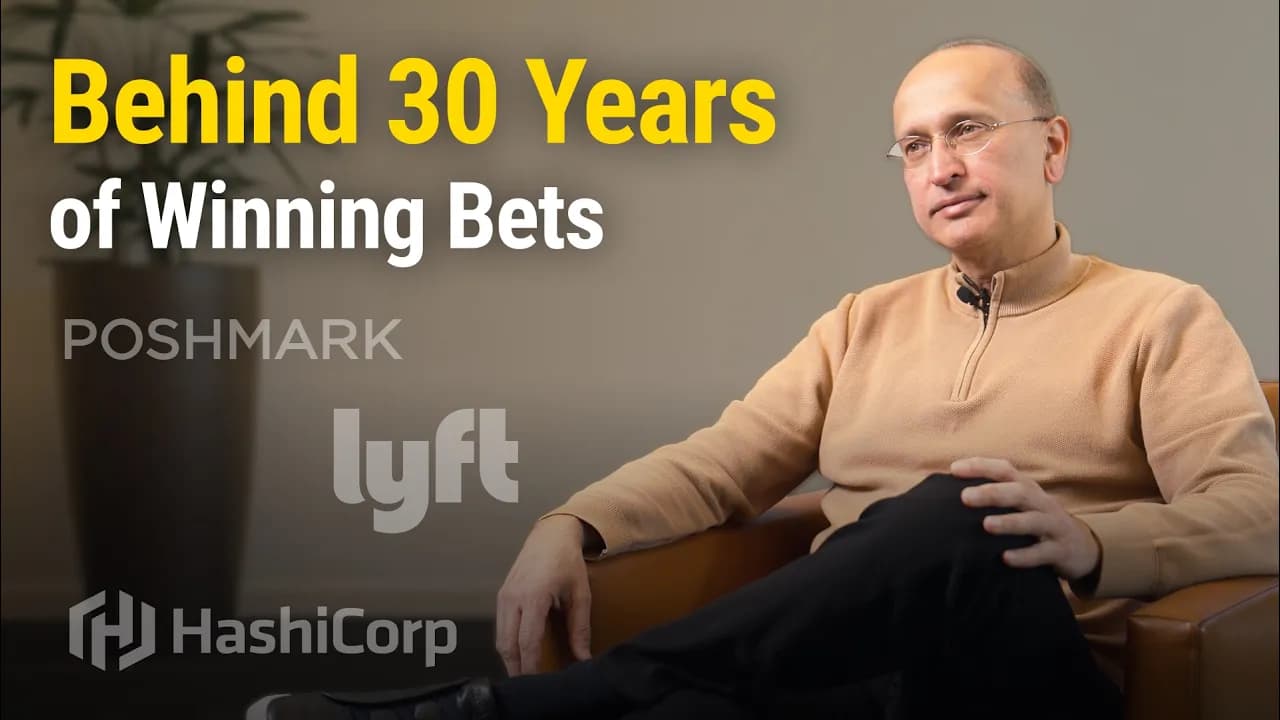
Guest: Jeetu Patel, chief product officer and president at Cisco. Cisco massive part of AI infrastructure buildout worldwide. Jeetu transformed Cisco culture to AI-first, achievement big company leaders dream of. Jeetu incredible human with warmth and wisdom.
Applications break with crashes, slowdowns, regressions, issues visible with real users. Sentry catches all, shows what happened, where, why down to commit, developer, exact code line in one view. Better than tabs and Slack threads. Shows request movement, what ran, slowed down, user view. Sentry's AI debugging agent uses context for root cause, fix suggestion, opens PR. Reviews PRs, flags breaking changes with fixes. Try free at sentry.io/lenny, code lenny for $100 credits.
Marketing website sets brand tone, touchpoint for all customers. If hard to make changes, doing it wrong. Companies from startups to Fortune 500s (DoorDash, Zapier, Perplexity, 11 Labs) use Framer. Works like design tool with real-time collaboration, robust CMS for SEO, advanced analytics with AB testing. Changes live in seconds without engineering. For launching sites, testing landing pages, migrating .com. Programs for startups, scale-ups, enterprises. Learn from Framer expert or build free at framer.com/lenny. Lenny's product pass subscribers get year of Framer Pro free.
Recent Cisco summit with AI thought leaders: Jensen (Nvidia), Sam (Altman), Marc Andreessen, Fei-Fei Li, Intel CEO, AWS, Mike Krieger, Kevin Weil. Fire hose of information from interviews. Post-summit insight: amazing to pull off 12-hour fireside chats from 9am-9pm with breaks; everyone engaged, could have gone to 11pm due to quality conversations and caliber guests.
-
Capabilities overhang real: Paradox of progress—solving amazing problems but enterprises struggle with adoption. Need help for organizations. Goal of summit: understand industry, help customers maximize foundational movement in history.
-
Harder beyond obvious use cases: Coding excellent (first product 100% AI-written in next 2 weeks). Harder in other business functions, requires nuance and business understanding.
-
Demographic shift: Birth rates down, more older than younger people needing care. Survival of humanity depends on successful AI—if 60% population needs care without enough workers, causes suffering. Not discussed enough, critical for collective success.
AI coming just in time to save us from not enough workers. Signal we are in simulation—things working out perfectly. Older get, more believe in simulation.
Cisco: 90,000 employees, 43,000 watched stream. Turned older, slower traditional enterprise to AI-forward. Innovation is choice, not size-dependent: binary choice every minute to be creative. Cisco to be iconic and innovative per CEO Chuck Robbins. Innovate within constraints.
-
Clear on non-debatable bets: Avoid pocket vetoes in large companies. Large companies experiment but don't double down when successful—they hedge. Didn't hedge on AI, went all in. Aligned personal and company success with AI dexterity. Reassured AI won't take jobs, but non-use will make jobs irrelevant. Top-down deliberate: entire company AI-first since ChatGPT in November 2022.
-
Redefined success: Shift from everyone wanting to be GM running silos (own sales, marketing, product, engineering teams) in $45B business—breaks into small $40M businesses. Become platform company: tightly integrated, same emotion/expectations (reliability, trust, elegant design, efficient problem-solving) across products. Loosely coupled ecosystem—not buy everything, but products work like magic together.
-
Mental model shift 5.5 years ago: From walled garden to open ecosystem. Comfortable partnering with competitors. Not zero-sum: invest in customer success with other vendors for flowthrough success. Principles: build great products as platform in open ecosystem, AI-first top-down.
Cisco critical infrastructure for AI era. Constraints holding AI back:
- Infrastructure: not enough power, compute, network bandwidth.
- Trust deficit: hallucination bad for predictable systems; models non-deterministic, need safety/security.
- Data gap: ran out of public human data; differentiate on proprietary enterprise, synthetic, machine data (Cisco role).
Cisco connects GPUs (Nvidia, AMD): from single GPU to server (8 GPUs), rack, cluster, data centers hundreds of km apart operating as one coherent cluster in sync for training. Provides networking, optics, safety/security, observability, data platform.
Met Ray Kurzweil (Google chief scientist), book Live Long Enough to Live Forever. Impact of 15 generations living simultaneously: everything changes (housing, agriculture, transportation). Kurzweil: humans think exponentially on single dimension, but it's multi-dimensional; solve with 3-day crop cycles, 5,000-story skyscrapers.
AI today seen as productivity tool, data aggregation via language (0.00001% tip of iceberg). Reality: original insights beyond human knowledge; physical world augmented to language, capacity augmented to humans—do what you care about. Shift framing: AI as teammate, not tool (realization with Codex/OpenAI after 3 months).
Safety/security risks real: AI self-ambition matters, need guardrails in service of humans. Avoid polarized narrative (jobless or useless). Reconstruct society: solve diseases, eradicate poverty, compound learning/joy. Elon Musk (former AI doomer, now steering positively): best scenario, humanity as house cat—AI takes care.
Allowed daughter full access to technology rather than restricting it, a passive choice that worked well. Recognizes importance of being able to put down phone and have conversations, a skill to preserve as AI handles more notifications, enabling presence in the moment.
Daughter turned 15. Night before her birthday, she said: "Hey, Dad, just so you know, I feel really good right now about having a very strong value system." Asked her to name five things she feels convicted about even if the entire world disagreed. She has a core set of beliefs where she remains confident regardless of opposition. Coaches her to stay open-minded to new data.
Best approach: expose to technology while instilling right values. Not insulating from world's reality. Focus on values like kindness, not being arrogant, hard work, work ethic, taking risks, creativity—timeless qualities. Daughter used technology to raise her EQ; acknowledges it can go sideways.
Gives zero credit to self; credits daughter and her mother.
Anthropic's constitution for Claude's values mirrors raising a great person. Values are long-lasting, unlike beliefs or systems. Culture is a set of behaviors exuded, especially when solving problems. Be intentional about cultural norms and guardrails for humans and machines with automation.
Concept from Aaron Levy (former boss at Box): right to win—do you have permission to play in a market? Ensure logical entry points and route to market for mass scale distribution. Building amazing product alone isn't enough.
Ask: Is it logical for Cisco to build this versus another company? Leverages existing strengths like networking GPUs for trusted AI systems, natural extension of 40 years of infrastructure expertise.
Learned from Aaron: persistence beats intellect; stamina beats intellect. Aaron succeeds due to staying power and convictions through hard times.
Easy to build now with AI code generation, but need human judgment, intuition, instinct for right problems. Avoid AI slop; be selective on important problems.
At Cisco scale, constantly reject 99% of new ideas. Be selective with caloric expenditure—focus yields outsized results; dissipation across areas fails.
Not entering B2C tech: no distribution channel in DNA, no permission to play. Better returns investing where operating from strength.
Chuck Robbins (Cisco CEO): "If you don't care about who gets the credit, you just go a lot farther in life." Confident, knows strengths/weaknesses, assembles great teams.
Maintains close relationships: daily contact with Chuck (morning texts, evening talks, 4-5 touches/day). Dinners every 6 weeks with Aaron Levy and Jeff Queisser for 6 years. Coaches like Rick Devanney (every 2 weeks); neighbor Jeremy Burton.
Absence of scale harder than presence. With 30k people, allocate internally for new ideas vs. startups needing to raise/pivot.
Challenge: communication lossiness (telephone game) in large companies. Advice from board member Wes Bush: Treat company story as foundational, not marketing. Be custodian of the message; don't delegate to avoid distortion across layers.
Own storytelling: stand on stage 90 minutes. Simplifies broad business—can't be expert in everything, but must convey core story clearly for 20k sellers and customers.
Storytelling precedes product: build to make story real, backed by evidence.
Maintain intensity of ideas across levels (echoing Matt McEnerney at Rippling).
Analogy: Avoid packet loss in storytelling like in networking—direct connection to front lines preserves soul of business.
Preserve intensity, sanctity, clarity of message.
Clarity of thought enables clarity of communication: sweat details on what/why. Minimize asymmetry between top and bottom layers. Provide maximum context (within legal limits like quiet periods). Treat people like adults; avoid sterile facts.
Sometimes it's okay to say, "Hey, we screwed up here. This was really bad." Contrary to management books that say praise in public and criticize in private, establish enough trust among the team to critique and debate in public. In private, build trust by assuring them you have their back and creating psychological safety. In public, focus on problem-solving, not posturing. Avoid perfunctory compliments when dashboards are green but growth is only 1-1.5%—something's broken.
Be direct in public: respectful but factual about what's not working and why. In private, be clear that you have their back—don't be stingy with those words. Don't be stingy with critique in public to solve problems collectively. Without knowing the play, there's no collective progress, and compliments feel hollow. Treat people like adults: tell the facts, watch your tone. Conflict is necessary for business, but productive conflict requires trust, built by spending time on it. Then focus on the best idea winning through debate.
Coming from apps at Box and EMC, infrastructure is different: you don't get the glory but always get the blame. Be comfortable with others getting glory. Orient on ecosystem success, not just your own. At Cisco, realized if infrastructure fails, outcomes suffer—like in healthcare where failure means people don't get dialysis or surgery. A medical institution doubled down on Cisco because "when the infrastructure doesn't work, people die." Shift focus to customer and ecosystem outcomes, not self-promotion. No one thanks you when the network works, but they call when it fails and patients suffer.
This connects to a lesson from Cisco CEO Chuck: don't expect praise or credit; be comfortable with others getting it. Chuck, with 26-28 years at Cisco, is conditioned to focus on others succeeding.
Networking offers metaphors for leadership and life, like Dunbar's number: how many nodes before a network slows (around 150)? Intel's "Intel Inside" campaign cleverly broke through the no-glory infrastructure challenge. Lip-Bu Tan and Pat Gelsinger (former EMC mentor) embody this mindset.
Life's too short not to be friends with good humans. Minimize time with those whose energy doesn't vibe, regardless of success. Ego manifests as insecurity—be self-aware when it turns counterproductive. Life is fun when surrounded by loved people.
Mother passed away 2.5 years ago after 8 weeks in hospital. Very close—grew up as only child with rough childhood; dad was abusive high-stakes con man like Bernie Madoff. Left India in 1991, didn't return until 2017 due to trauma. Bonded deeply with mom; became parent to her, then roles flipped at end.
At 1:00 AM bedside, crying profusely; she wakes and says, perplexed, "I had no idea that you loved me so much." Everything he did was for her, but she didn't know his thoughts. Lesson: people don't know what's in your mind—be explicit. Don't be stingy with words. Even mom didn't fully know. In business, tell people explicitly when you value them; it energizes and expands your circle. Most at AI summit are dear friends—isn't that a better way to live?
Tell people how you feel and make clear you appreciate them—many assume others know.
Don't make it fake: if you don't love someone, don't say it.
Mother-in-law's advice for grandson Jude: if you love someone, tell them as much as you can.
Grew up in Bombay, India; now leads product at 90,000-person Cisco, managing 30,000.
- Choose the right platform and quality of problems—harder problems attract better people. Business is a team sport; best teams win exponentially.
- Can't teach hunger (different from passion). 30% of work you'll hate—find what intrinsically hungers you to show up daily for the mission.
Taj Mahal story (2017 with daughter): Guide Raj spoke 12-14 languages, learned one yearly to honor tourists in their language. Smarter than execs/salespeople making $10/day vs. their amazing lives—due to platform access. Much success is luck + preparation. Seek platforms (America, education, tech, mentors) that compound. Be obsessed with preparation, avoid intellectual laziness. Build community vested in your success—life's more fun shared, not lone wolf.
Add value first, non-transactionally. People love to help—ask, but share burdens. Persistence wins; don't lose hope.
Arnold Schwarzenegger's book title: Be useful.
Stackranked in descending importance—all six required to win:
- Timing (most important, least controllable): Amazing products fail without it.
- Market: Large enough, prosecutable chunk-by-chunk, expanding.
- Team: Well-rounded; complements weaknesses (e.g., indispensable partner good at what speaker lacks—always joint offers).
- Great market pulls mediocre team up; bad market drags great team down.
- Product: Soul of company; unethical to sell mediocre one.
- Brand: Hard to resurrect once lost (mentor Mark Lewis: avoid companies that lost brand mojo; e.g., no Kodak comeback).
- Distribution: They won't come if you build it—need scaled mechanism.
Timing > market > team > product > brand > distribution.
Operationalizes decisions: e.g., right time to double/triple down? Distinguish mega trend (embrace, like AI) vs. hype cycle (avoid vanity). Pattern recognition improves with miles. Mega trends are understandable without PhD; if PhD needed, not outsized impact (e.g., Web3 lacked clear use cases; AI is intuitive).
When evaluating ideas, timing is the first variable. An amazing idea with the right team and product may fail if timing is off. Steve Jobs shelved the iPad because he prioritized the iPhone, making the right call on timing. The iPad succeeded due to the iPhone's success; reverse order might not have worked. When timing is wrong, put the idea on ice, don't scrap it. Many current AI-enabled projects were attempted too early, now viable with AI.
Anticipate rapid AI progress: fast-forward 6 months and prepare for that world, not today's. Don't let current assumptions bias you against moving forward. Over-reliance on experience can create bias; unlearning is key. Combining experience with inexperience creates magic—experience for pattern recognition, inexperience for asking bold questions and charting new territory.
Young graduates are most open-minded about AI, harnessing it without legacy coding biases. Experience can jade people. Never stop hiring entry-level talent; shutting them out blocks fresh ideas. A leader today cannot think like they did at 19, but surrounding oneself with that youthful thinking, combined with experience, yields better outcomes.
Top books: The Innovator's Dilemma and The Innovator's Solution by Clayton Christensen—Bible of tech, reread every few years. The Hard Thing About Hard Things by Ben Horowitz—manages psychology during tough times. Focus on retaining essence of a few books rather than reading thousands; retention matters more as one ages.
Favorite recent movie: Brad Pitt F1 movie (nominated for best, features Zack Brown; Jeetu supports McLaren).
Favorite recent product: ChatGPT, Gemini, Claude—changed lives, including Jeetu's learning. Zero chance he could run all Cisco product without AI; accelerated training across unknown domains in 3 months, working around the clock. Grok tied to Twitter is also amazing. AI enables experiences at every level, from entry to executive, especially for networking/hardware background.
Favorite motto: Stamina trumps intellect. Smartness is trainable via curiosity, hunger, persistence; stamina and learning-to-learn are more important and harder to teach. AI exemplifies this by relentlessly trying until succeeding.
Early job at Sizzler Steakhouse: $4.25/hour (below minimum wage, but with tips). Favorite dish: Malibu chicken. Overcame stuttering there—had to entertain customers for tips, breaking out of shell. Cleaned toilets, washed dishes, waited tables. Recommends everyone work hospitality young; shaped him profoundly. Sad daughter uninterested.
Find Jeetu on LinkedIn (shares work and non-work openly; uses it for mentoring at scale, out of 1:1 cycles). Also on Twitter.
How listeners can be useful: Pay it forward. Help the next person. Example: LinkedIn post inspired someone to visit parents in India every two months and say "I love you"—ultimate reward when inspiration creates joy.
Keep Lenny's Podcast in your library
Save the videos and channels worth coming back to, and find them again in one place.