AI Will Create New Wealth, But Not Where You Think | Carnegie Mellon University, Po-Shen Loh
These notes were generated by AI and may contain inaccuracies.
AI can solve advanced math problems instantly, replacing even sophisticated math coaches. In a high-poverty rural elementary school in South Carolina, Po-Shen Loh entered a fourth-grade classroom posing as a substitute teacher. He wrote on the blackboard: "what is 1 + 3 + 5 + 7 + 9 equals?" Kids immediately yelled "25." This was one of the best classrooms he ever taught, 95% African-American, with kids suggesting ideas respectfully and listening to each other.
These kids don't have phones or internet due to cost, yet they create their own games for fun. Similar curious, self-challenging kids exist across rural America, untapped because the world doesn't know about them. Standard curricula focus on routine problems, but the future needs solvers of non-standard problems—these kids are authentically poised for that.
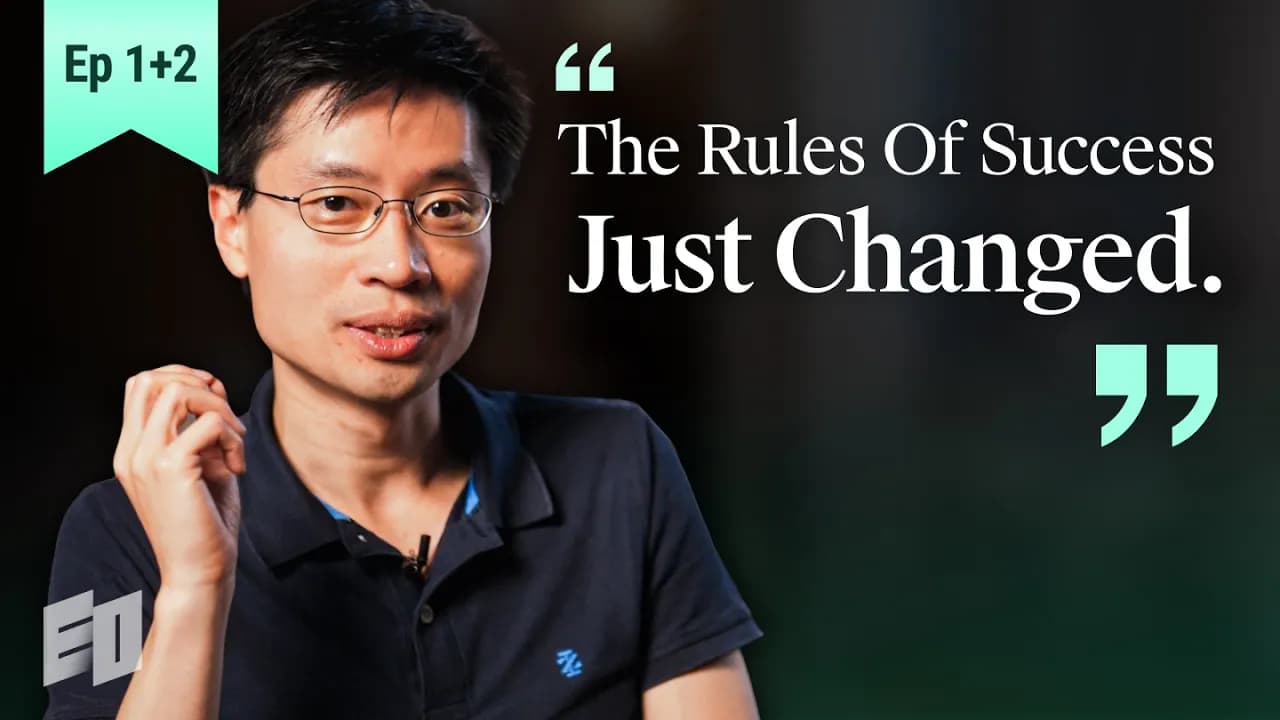
Hi, I'm Po-Shen Loh, a mathematician distracted by the real world, now focused on building a thoughtful world to help humanity survive after AI.
Emphasis on bringing opportunities to rural and urban areas lacking them, especially rural US communities. Repeated the South Carolina story: impoverished area, amazing fourth graders solving odd-number sum instantly, respectful, creative without tech.
In December, visited Africa—not to propose solutions but to learn—noting capable people despite weak economic development. Issue: outsiders don't know how to connect with these great individuals; resources go to generic channels rather than specific talented people.
System pairs high schoolers from anywhere (selected for caring about people and on-the-spot thinking) with partners from Rwanda, Ethiopia, etc., to co-teach middle schoolers in pairs. Builds personal knowledge: partners realize mutual talent. In 5-10 years, remote work enables hiring through these ties.
Economic arbitrage: Wage differences between countries; splitting the difference benefits both—lower costs for developed side, high earnings for developing side. Talented people detected via trust get remote jobs, safety to start companies, or resources via networks.
Creates direct resource flow from developed to capable individuals in developing countries, bypassing inefficient systems. Works in developed countries too. As a network theorist, emphasizes high-trust networks of people who love helping others and thinking hard.
This might just be what we need for the 21st century after AI.
AI excels at all human skills eventually. Blue-collar jobs unsafe: humanoid robots proliferating (e.g., Boston Dynamics acquired by Hyundai for manufacturing, not dancing).
Humans' unique trait: doing something for them builds care, trust, and big-picture concern—readable in their eyes, unlike robots. EVs as "computers with four wheels" vulnerable to hacks via software updates (e.g., mass acceleration glitch). Interconnected world amplifies risks; AI-written code increases errors.
Post-AI jobs for trustworthy, flexible people who care beyond self, resist bribes, oversee safety. Hire those with great intention, learning capacity, hard work toward meaningful goals—not narrow-task specialists replaceable by cheap AI.
The more automation there is, the more things that can go wrong. We don't have enough good people to watch out for all this stuff.
AI enables universal learning access (e.g., querying Quran). Tip: On overnight bus, used Claude Opus 4.5 to solve old math contest problems, generate hints for new math video game—replaces math coaches.
In China school, AI app drills exam problems for high ranks—critiqued as creating "human robots." Better: genuine curiosity to engage deeply.
Danger: AI sounds authoritative but can be wrong—must think critically.
Old motivation (ranks → university → job) fails post-AI, risking mental health crisis after 20 years of effort. Healthier: real intention bigger than self, helping others—visible in kids' eyes, fuels endless curiosity/improvement.
Thoughtful people (helpers + deep thinkers) naturally bond, form strong trusted networks—motivates via fun of connection. Connect them to spark value creation; some become entrepreneurs spotting/solving pain points for profit.
Superior to test-based systems favoring top rankers. Seen in countries where exam scores dictate futures.
Practical advice:
- Learn English to fluency for global opportunities.
- Cultivate "thoughtful" vibe: others see you care, want to pull you into programs taking all great people (likers/doers for others).
Break systems via entrepreneurship; stable life gone—"good luck because AI is going to take that."
Mihail's Stanford class "The Modern Software Developer"—first focusing on AI across the SDLC—filled 100+ students within hours.
AI integrates into every software part, birthing AI-native engineers treating AI as a language. Junior developers entering workforce: first such generation.
Future: single developer as manager of agents—mastering multiple agents marks top 0.1% users.
Keep EO in your library
Save the videos and channels worth coming back to, and find them again in one place.