All Fitbits Are Better Now!
In a Nutshell
The Fitbit Charge 6 and Fitbit Air deliver nearly identical heart rate tracking (0.98-0.99 correlation on cardio) and sleep stage accuracy (70-90% agreement) when worn on the wrist, thanks to shared optical sensors and firmware updates. The Charge 6 often sells for $70-80 versus the Air's $99-100, making older Fitbit models like the Inspire 3 ($50-70) better value for wrist-based use. The Air only outperforms when worn on the bicep during exercise, where screen-equipped devices struggle with initiation.
These notes were generated by AI and may contain inaccuracies.
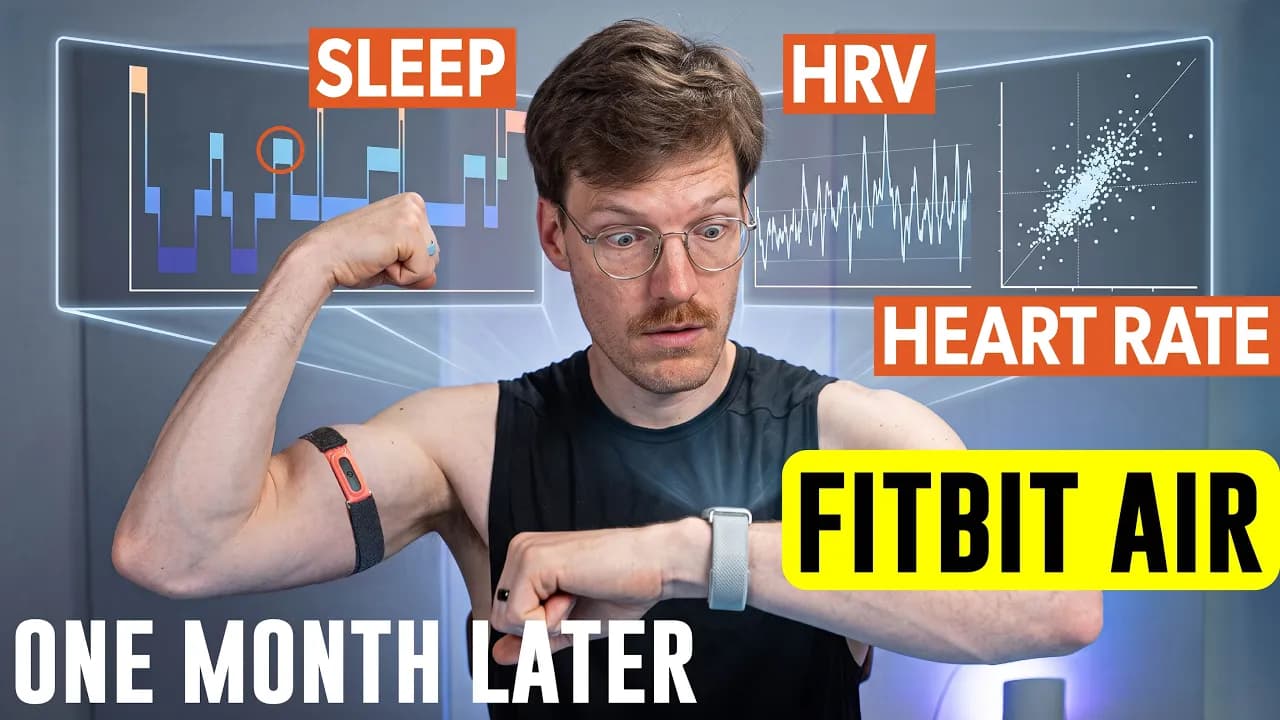
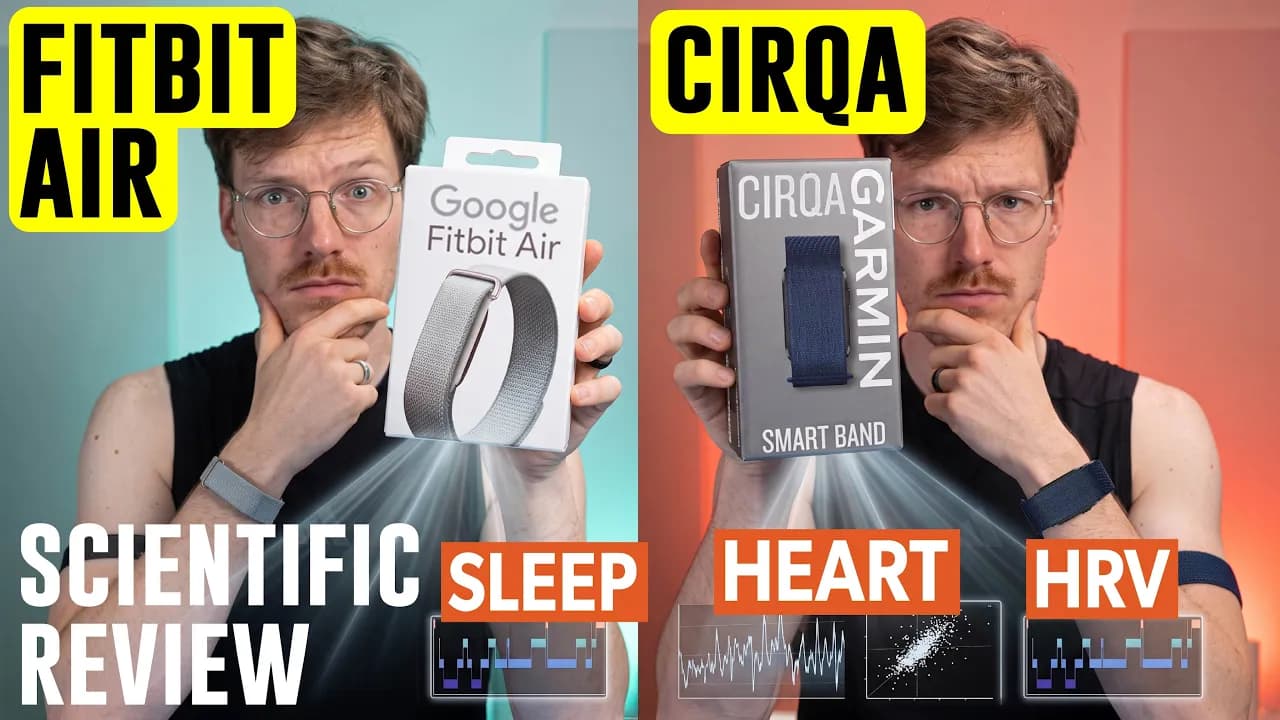
The Fitbit Air is currently selling in high volumes with a two-month wait time. The sensor in the Fitbit Air is identical to the optical heart rate sensor found in older Fitbit devices including the Fitbit Charge 6. This raises the question of whether the Charge 6 delivers comparable performance to the Fitbit Air. The same logic extends to the Inspire 3 and other Fitbit models that received firmware upgrades, potentially offering better value than the Fitbit Air. The Inspire 3 sold for less than $50 during Prime Day sales.
An in-depth test was conducted comparing the Fitbit Charge 6 with the new Google Health app and upgraded firmware against the Fitbit Air. Performance was evaluated using a reference ECG chest strap for heart rate tracking, sleep tracking, and sleep stage tracking. The testing focused on data and data science analysis.
For indoor cycling, the Charge 6 achieved a correlation of 0.98 with the ECG reference device. Most data points aligned closely with the reference line, though some minor deviation was observed. The Fitbit Air achieved a correlation of 0.99 with slightly less deviation. Both devices showed similar struggles at the beginning of cycling sessions. The Fitbit Air performed slightly better overall, though differences were minimal when using a comparable Velcro strap on the Charge 6.
Outdoor running proved more challenging due to running frequency introducing periodic signals. The Charge 6 achieved a correlation of 0.98, with one instance of detecting too high heart rate likely from locking onto running frequency instead of heart rate. The Fitbit Air performed slightly better with a correlation of 0.99 and less deviation. Individual run analysis showed both devices performing similarly, with the Charge 6 detecting some heart rate dips that the Air missed.
Outdoor biking presented significant challenges due to bumpiness and wrist tension from handlebars. The Charge 6 achieved a correlation of 0.94, while the Fitbit Air on the wrist achieved 0.92. Both devices showed similar performance patterns with some high and low heart rate deviations. Individual session analysis revealed both devices struggled similarly during certain bike rides.
Weightlifting showed the lowest correlations for both devices. The Charge 6 achieved 0.89 correlation while the Fitbit Air achieved 0.93. Both devices struggled during sets when wrist tension was highest, with the Charge 6 under-detecting peaks at higher heart rates. Individual session analysis showed the Charge 6 detected peaks reasonably well while the Air sometimes performed worse at detecting peaks.
When compared against other tested devices across four exercises (indoor cycling, outdoor cycling, running, weightlifting), the Fitbit Air ranked in the 64th, 57th, 80th, and 71st percentiles respectively. The Charge 6 showed very similar performance across exercises with correlations of 0.98, 0.94, 0.98, and 0.89. The average heart rate score over cardio exercises was 97 for the Fitbit Air and 96 for the Charge 6, both receiving "great" heart rate tracking performance scores.
The Fitbit Air costs $99-100 while the Charge 6 often sells for $70-80. Both provide similar heart rate tracking performance when worn on the wrist. The Fitbit Air can be worn on the biceps for drastically improved performance, which is more difficult with screen-equipped devices like the Charge 6. For biceps wear, the Air is recommended due to easier exercise initiation.
Nighttime heart rate measurements showed very good agreement between the Charge 6 and reference device within the narrow 40-55 BPM range, with the device detecting small differences accurately. Performance was very similar to the Fitbit Air. Heart rate variability measurements showed mostly consistent agreement with slightly lower measurements in the higher HRV range for both devices. Pattern detection over time remained very similar between devices.
Sleep stage tracking was evaluated against the ZMAX EEG reference device. The Charge 6 achieved 90% deep sleep agreement, 78% light sleep agreement, and 70% REM sleep agreement. The Fitbit Air on the wrist achieved 85% deep sleep, 80% light sleep, and 73% REM sleep agreement. Both devices showed very similar performance with no clear superiority. Example night analysis showed both devices detecting most deep sleep correctly while also detecting some additional deep sleep periods. REM sleep detection was similarly accurate for both devices with minor misses.
Both the Fitbit Air on the wrist and Fitbit Charge 6 ranked among the best sleep stage tracking devices tested. Five brands performed best overall: all Google/Fitbit devices, Apple Watch, Oura Ring, Whoop strap, and Eight Sleep Pod. The sleep stage tracking between Charge 6 and Air was essentially identical when worn simultaneously. Both devices received a sleep score of 79, earning a "great sleep stage tracking" rating.
Older Fitbit devices with the same sensor as the Air (Inspire 3, Charge 6, Charge 4, Charge 5) likely provide similar sleep stage tracking performance. The Inspire 3 can be found for $50-70, offering excellent value. The Charge 6 provides similar performance to the Air for wrist-based tracking. For biceps-based heart rate tracking during exercise, the Air is more convenient due to easier exercise initiation compared to screen devices.
The Fitbit Charge 6 and Fitbit Air deliver essentially identical performance for wrist-based heart rate tracking and sleep stage tracking. The same sensor combined with firmware updates enables older devices to achieve comparable results to the newer Air. Both receive "great" ratings for heart rate tracking and sleep stage tracking. The heart rate tracking on the wrist isn't the absolute best available but performs well for the price point.
Keep The Quantified Scientist in your library
Save the videos and channels worth coming back to, and find them again in one place.