America’s Paper Economy Is Breaking
These notes were generated by AI and may contain inaccuracies.
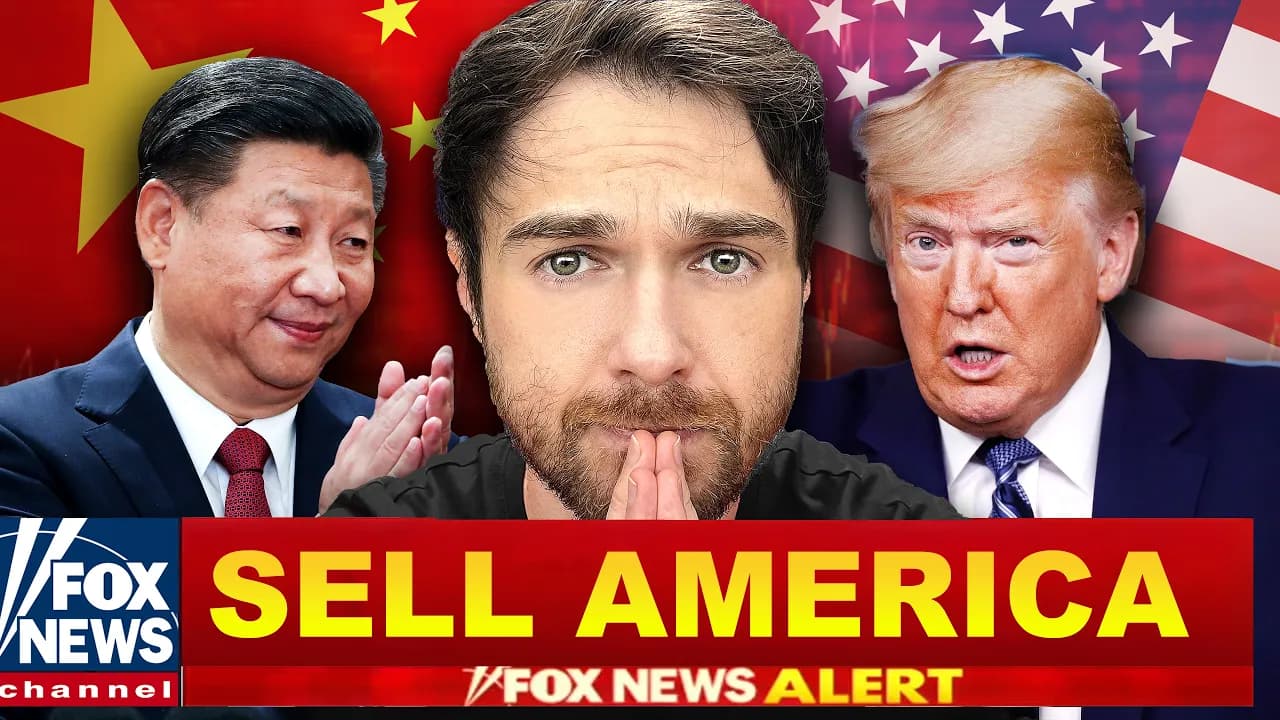
During the last phase of an empire, there's a tug of war over power: who controls money, trade, and makes the rules. In 2025, President Donald Trump signed an order for 25% tariffs on imports from Canada and Mexico, and 10% on goods from China. A tariff is a tax placed by a government on imports. Stock market reacted negatively as US corporations paid these taxes, but tariffs raised billions for the US government. Recently, Supreme Court ruled 6-3 that the president cannot use emergency powers to impose tariffs, striking down most of Trump's global tariffs—a major blow to his economic agenda. All tariff revenue must theoretically be refunded to corporations.
While the legal battle played out, a corporation allegedly bought rights to potential tariff refunds at 20-30 cents on the dollar. For a $100 tariff payment, claims bought for $20-30 could be worth $100 if refunded, yielding 3-5x returns. If tariffs stay, claims worth nothing. The company allegedly betting on Supreme Court ruling against tariffs was Cantor Fitzgerald, with close ties to Secretary of Commerce Howard Lutnick. Designers of tariff policy financially positioned on its outcome—called crony capitalism. Company denies it. This exemplifies sovereign power asserting itself while financial power profits regardless of outcome by betting on both sides.
Hi, my name is Andre Jick. Power is about incentives; different groups represent different interests that sometimes overlap. Players use leverage:
- Political leverage: Getting votes to stay in politics.
- Financial leverage: Banks tightening lending slows economy; bond holders selling US Treasuries raises rates, making mortgages and government debt payments more expensive.
- Military leverage: Controlling shipping lanes, energy routes, defense capabilities.
- Technological leverage: Semiconductors, AI infrastructure, social media. During stable times, leverage is invisible; in transitional periods like the fourth turning, strategies expose themselves intentionally to transition power.
- Sovereigns: Nations, elected government, president, Congress, courts representing US. Want leverage over other countries in multi-polar world via tariffs/sanctions.
- Financial Industrial Complex (FIC): Wall Street, banks, hedge funds, crypto lobby. Transnational capital—leverage via capital flows; doesn't care who wins.
- Military-Industrial Complex (MIC): Defense contractors, proxies for destabilization; leverage via instability, profiting from defense/destruction.
- Technological Industrial Complex (TIC): Big tech, AI, social media; leverage via technology like AI models, digital payments, digital IDs built for governments/militaries/banks.
US trying to shift economy from financialization (exporting dollars, no manufacturing) to industrialization (building things). Tariffs are sovereign tool for national power. To FIC, tariffs create volatility—stock market fluctuations, opportunities if you have information.
"Our company loves volatility. The busier it is, a little chaos, a little excitement that creates volume."
Howard Lutnick, former chairman/CEO of Cantor Fitzgerald, became Commerce Secretary in early 2025. He divested holdings, transferring control to family trusts (sons Brandon as CEO/chairman, DJ as executive vice chairman). Avoids conflict of interest from informational advantage. Yet Cantor allegedly bought refund claims at 20-30 cents/dollar, potentially 2-5x returns if refunded at 100%. Lutnick advised president on tariffs. Even if legal, shows movement between sovereign and personal financial interests—Cantillon effect: those closest to power benefit first/most.
SoFi giving away $100,000 in Bitcoin weekly through March 31st, 2026. First national chartered bank for retail to buy/sell/hold 25+ cryptocurrencies (Bitcoin, Ethereum, Solana) in same app as checking/savings/investing. Crypto risky; use link for account.
Tariffs/Cantor/Lutnick are symptoms. US 40-year model: export dollars, financialize everything, offload manufacturing. Made Wall Street powerful, asset prices explode, dollar strong via MIC. Hurt domestic manufacturing/middle class. Now reversing to industrialization because China ahead: used trade surpluses for military/infrastructure/BRICS/alternative payments with gold/commodities. Global rules-based order over—US offshored industries, relies on China for military components. Ukraine war: outproduced by Russia on shells/Stinger missiles; borrowed from China to build weapons against China using Chinese parts.
Creates uncertainty/volatility, especially in stable assets like gold. Insiders front-run it. Empires with trade imbalances/rising debt have three options:
- Austerity: Spend less/tax more—politicians avoid as unelectable.
- Fiscal dominance: High debt forces low rates; inflation erodes debt value gradually.
- Devalue dollar: Makes exports competitive, lowers real debt value. Governments historically raise gold price to revalue reserves, recolateralize debt, enable changes without blowing up system (Luke Gromen's theory).
Tariffs rebalance trade without weakening dollar directly—protect industry. US walks line between reserve currency (strong dollar) and trade competitiveness (curse of the world's reserve currency): strong dollar makes exports expensive, so outsource, then adversaries control supply chains/military parts.
Congress not unified sovereign force—represents districts, industries, donors, foreign interests. Tariffs help domestic manufacturers but hurt transnational corporations/retailers/exporters/FIC.
"They're very unpatriotic and disloyal to our constitution. It's my opinion that the court has been swayed by foreign interests and a political movement that is far smaller than people would ever think." Forces within nation oppose national needs. Tariffs may get blocked; insiders profit from volatility/refunds. Check portfolio at funst.com.
Smash like, subscribe.
Keep Andrei Jikh in your library
Save the videos and channels worth coming back to, and find them again in one place.