Apple Lost the AI Race
In a Nutshell
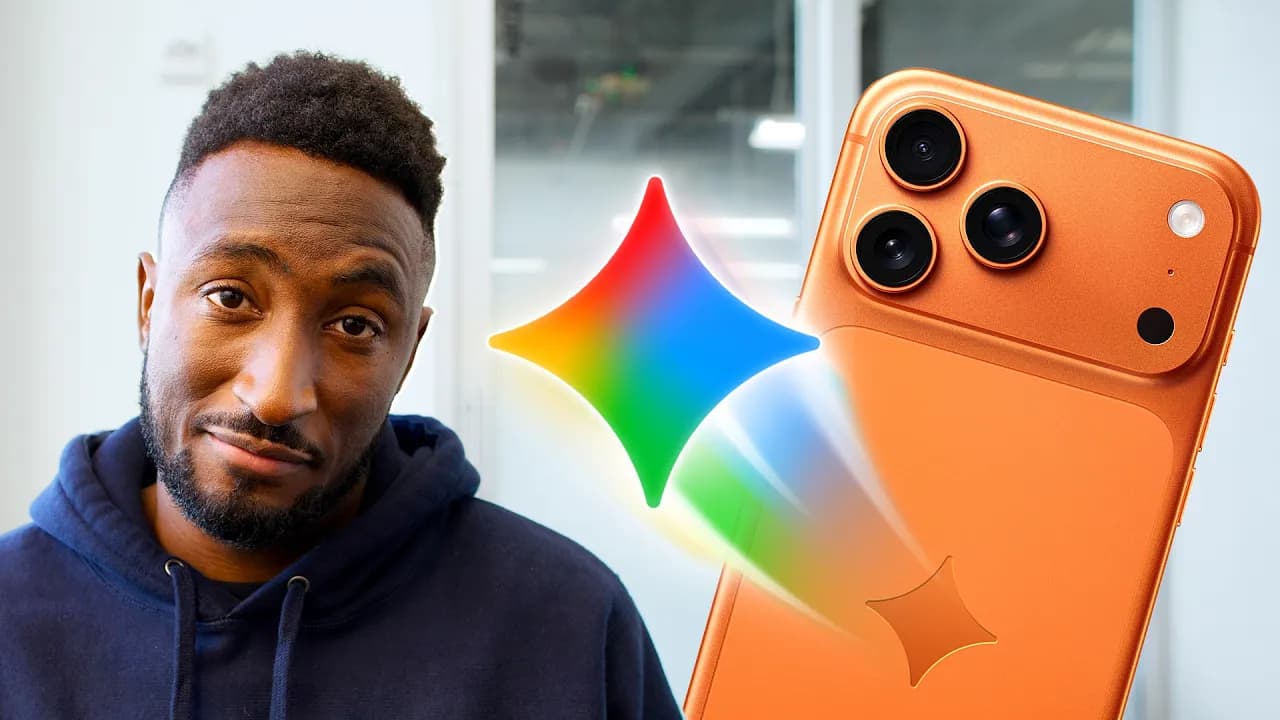
Apple has already lost the first AI race—the one for advanced models and features—by relying on partnerships like Google instead of building competitive capabilities in-house. However, they maintain a strong position in the second race by selling the hardware where on-device AI will ultimately run, since iPhone users are unlikely to switch based on AI quality alone. For AI-focused users, superior alternatives already exist on Android devices, while Apple Intelligence mainly serves as minimal investor theater without threatening the company's core hardware business.
These notes were generated by AI and may contain inaccuracies.
The discussion begins with contrasting views on whether Apple has won or lost the AI race. One perspective claims Apple won by focusing on hardware that runs AI, while the opposing view points to Apple's struggles with Apple Intelligence, including the delayed new Siri that required starting over with help from Google.
The argument centers on whether the AI race definition is too narrow if it only considers companies like OpenAI with ChatGPT. The counterargument emphasizes hardware as a separate but critical dimension. Apple's lag is highlighted by their initial refusal to mention AI in events for months after ChatGPT's release, while competitors like Google, Meta, and Bing moved quickly.
Apple's strategy has historically avoided being on the bleeding edge of technology. Instead, they allow early adopters to identify pros, cons, and bugs before entering with a refined version for their ecosystem. This approach is questioned in the context of AI, with skepticism about whether Apple Intelligence represents waiting for the technology to mature for mainstream users.
Apple's position as primarily a hardware company, specifically the iPhone company, is emphasized. The discussion notes that AI developments were never viewed as a direct threat to their core business model. Despite having trillions in resources, Apple did not immediately respond to the emergence of ChatGPT, Gemini, Claude, and Meta's AI initiatives by building a cohesive ecosystem version.
A hot take suggests Apple Intelligence does not need to be exceptional. It only needs to be good enough for investors to perceive Apple as competitive or engaged with AI. The argument maintains that users will continue purchasing iPhones regardless of AI quality, as the core product remains the hardware.
For users prioritizing AI capabilities, alternatives like Google phones, Samsung phones, and Xiaomi phones offer superior AI assistants, writing tools, and photo editing features compared to Apple's current offerings. These features are dismissed as gimmicks that do not drive actual phone purchases.
The future trajectory of AI is described as moving toward on-device processing for the fastest and most secure generative AI tasks, with larger models handled in the cloud. As on-device models improve, reliance on cloud services decreases. In a future where all processing happens locally on devices with substantial memory, Apple is positioned to sell those devices.
Apple's role is compared to their existing position with search engines—they do not build the software but sell the devices used to access it. Nvidia's interest in RTX Spark is cited as evidence that hardware remains the valuable component in the AI landscape, particularly outside the US.
The discussion identifies two separate races. In the first race, competitors are significantly ahead, and Apple has assembled enough AI features to avoid embarrassment, though partnerships like paying another company a billion dollars annually indicate they have already lost this race. The second race has a distant finish line where Apple maintains a head start through iPhone dominance and will defend that position aggressively.
OpenAI is mentioned as potentially entering hardware with rumors of developing a phone that could challenge the iPhone. Apple's historical approach to new categories involves deep integration with existing products, as seen with Apple Intelligence features where Siri accesses iMessage, Apple Calendar, and Photos in ways the ChatGPT app cannot.
Current limitations of the new Siri are detailed: it does not excel at tasks already handled by ChatGPT or Gemini, cannot code applications, does not operate in the background for large requests, and lacks personal context without manual notes in the iPhone Notes app. These capabilities are already available in the ChatGPT app on iPhone.
The core question posed is whether an AI company can create hardware compelling enough to cause users to switch from iPhone, or whether Apple can improve their AI sufficiently to retain their user base. The discussion concludes with one participant claiming victory in the argument.
Keep Marques Brownlee in your library
Save the videos and channels worth coming back to, and find them again in one place.