Ben Sasse: The 60 Minutes Interview
In a Nutshell
Ben Sasse, dying of metastatic pancreatic cancer at 54 and extended by a miracle drug (Durvalumab), urges rebuilding local communities over tribal national politics, regulating AI and adapting to the digital revolution's job disruptions, and reforming the performative Senate into a deliberative body. A former Nebraska senator who quit early to lead the University of Florida, he criticized Trump-era personality cults and January 6 lies, prioritizing family, faith in Reformed Christianity, and truth-telling amid mortality over political ambition. Bipartisan colleagues praise his future-focused independence, as he reflects gratefully on cancer forcing humility and focus on life's essentials.
These notes were generated by AI and may contain inaccuracies.
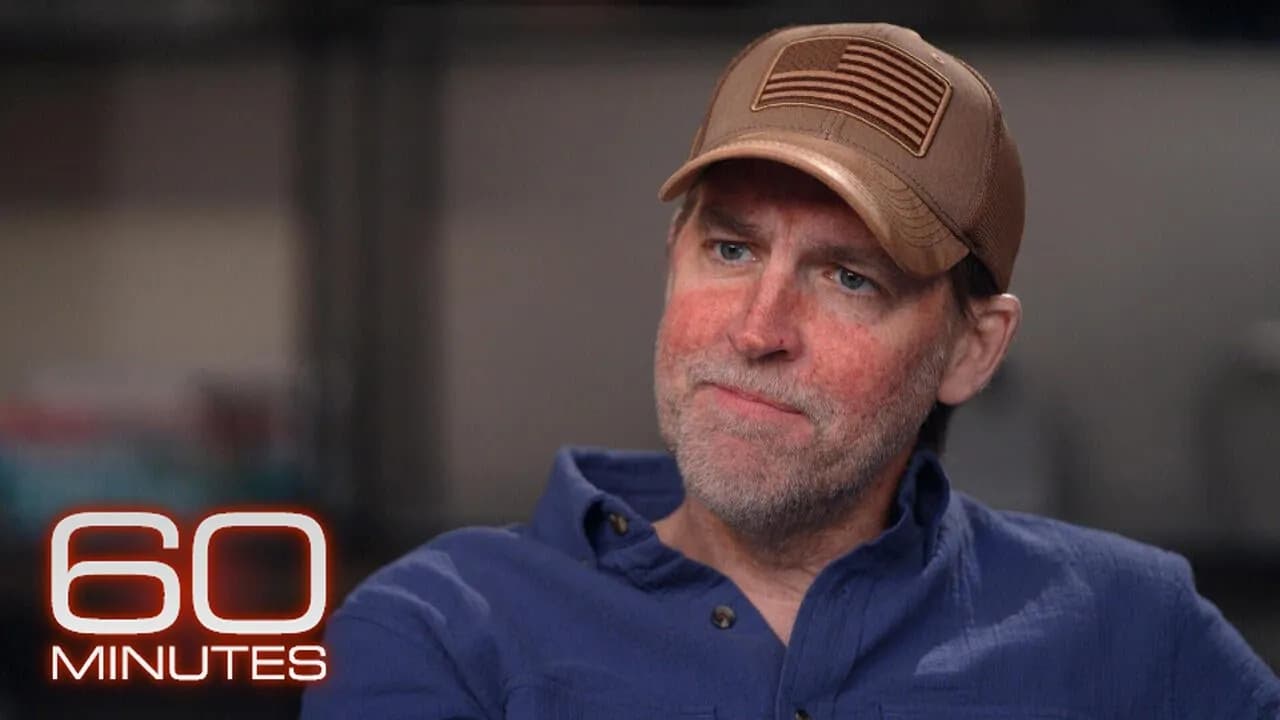
Ben Sasse, former US senator from Nebraska at age 54, is dying of pancreatic cancer. A new drug gives him extra time to appeal for reason in Washington and community at home. Sasse is a conservative Republican with independent thought and a PhD in American history. He once told fellow senators, "The people despise us all because we are not doing our job." His cancer therapy leaves him looking seriously sunburned, but he remains insightful, passionate, and hopeful.
I love America and I think there's a lot of big and meaty things that we should have been talking about and we still can talk about and having a terminal diagnosis isn't really that unique. We're all always on the clock. Some of us have the benefit of knowing our time is finite and defined and it becomes an opportunity to talk about bigger stuff. And you have focus from that.
Yeah. I mean, it's weird to be in your early 50s and get a terminal diagnosis and people all of a sudden act like you're 93 or 94 and you have a lot of wisdom. I don't know that I have a lot of wisdom. But I have a lot of things that I think we should be reflecting on together.
Reflecting on rebuilding communities neighbor to neighbor, regulating artificial intelligence before it overwhelms us, and mending broken politics.
Neither of these parties really have very big or good ideas about 2030 or 2050 at a national security level, at a future of work level, at an institution building level. The Congress is not wrestling with big or important questions right now.
Living through a digital revolution that is both glorious and horrific. It accelerates almost everything about the human experience. Anything that can be reduced to a series of steps, most economic activity, will be routinized, become really cheap, fast, and ubiquitous.
We've never lived in a world where 22 year olds couldn't assume that the work they did they would be able to do until death or retirement. And we're never going to have that world again. And Congress doesn't talk about any of those kind of most fundamental issues. The disruption of work for good and for ill should be front and central. Congress doesn't even know how to have that conversation.
In 2014, Ben Sasse was college president in Nebraska when recruited to run for Senate. Became one of the most popular politicians in state history. During Senate recesses, worked as a garbage man and vendor at Corn Husker games to stay in touch with Nebraskans.
What makes you a Republican? I'm a Republican because I think the Lincoln Reagan continuum does the best job of building constraint on thinking Washington is our fundamental political community. I think your fundamental political community is your neighborhood and your city hall and maybe even your state legislature. And right now we are sacrificing a lot of our national politics to weird folks who want their main community to be their political tribe at a federal level. And that should be like the ninth thing or the 15th thing you care about, not the first or second thing.
You ended your Republican pantheon with Ronald Reagan, and I wonder when you look at the Trump administration today, what do you see? It's no secret that the current president and I wrestled on lots and lots of issues, but I don't spend much time commenting on our current politics because I don't really think our current politics are driving what's happening. I think it's mostly an echo of what's happening. I think we have really thin, shallow community right now and unless people know the thickness of their local community, it's hard to make sense of what national politics are for. I think our national political dysfunction is an echo of larger problems.
In 2020, Sasse reelected with more votes in Nebraska than Donald Trump. On January 6th, called out "the screamers who monetize hate."
You can't do big things together as Americans if you think other Americans are the enemy.
Later, in Trump's impeachment over January 6th, Sasse was one of seven Republicans who voted to convict. His stand offended the Nebraska Republican Committee.
Personality cults aren't conservative. Conspiracy theories aren't conservative. Lying that an election has been stolen, it's not conservative. Acting like politics is a religion, it isn't conservative.
In 2023, with four years left in his term, Sasse quit to become president of the University of Florida. Too little substance in the Senate and too much absence from wife and three children.
Many senators I know would not be able to breathe without that job. It would kill them to leave. I don't want what you said to be true, but I fear that that is true. And that is a sign of a much, much deeper problem. We got a lot of people who serve in government who really do think the highest and greatest thing you can ever do is have the title senator or congressman. Bull. The best thing you can do is be called dad or mom, lover, neighbor, friend, governor, senator, house member. It's a great way to serve. It should be your 11th calling or maybe sixth, but never top.
His calling left bipartisan consensus: voice of Ben Sasse is missed. Democrat Mark Warner worked with Sasse on intelligence committee.
He never really thought about things as conservative liberal. He much more thought about issues as future past. Somebody who was fearless, passionate.
Republican John Thune of South Dakota, Senate majority leader:
Concern not just for today but for tomorrow and the future and someone who wasn't distracted by all the noise that goes around us on a daily basis. An example of what the Senate should be. Yes. And hopefully an inspiration and example that many of us can learn from and follow.
The Senate needs to be less like Instagram. The Senate needs to be more deliberative and that means less smackdown nonsense. One of the fundamental mistakes we've made over the last 30 or 40 years is putting cameras everywhere in Washington DC. This is not an argument against transparency. We should have reporters around. We should have pen and pad. We should have people recording what's happening. But we should make the Senate less of an institution that is built as a backdrop platform for people to get sound bites. That's not what the Senate is for. The Senate should be plotting and steady and boring and trustworthy.
To be too frank, you were expected to be dead by now. That's Frank. I like it. Let's be blunt. What changed? Let's go with Providence, prayer, and a miracle drug. In mid December, I was given a 3 to four month life expectancy. I am on extended time already. I have pancreatic origin cancer that is metastasized a number of places. So I've got lung, vascular, liver, other liver is pretty far along. You have five cancers. Yes, sir.
In a clinical trial for drug called Durvalumab (rasid? - new therapy). In many cancers, defective gene signals cells to grow nonstop; drug blocks that signal.
I have much, much less pain than I had four months ago when I was diagnosed and I have a massive 76% reduction in tumor volume over the last 4 months.
Just this month, drug maker Revolution Medicines reported patients who had 6 months survived a median 13 months.
Completely devoted to faith in reformed Christianity or Calvinism. One tenet: God ordains everything.
Why you think God has put you to this test. Death is wicked. Death is evil. Death is not how it's supposed to be. And me getting a cancer diagnosis again is pretty small on the grand scheme of things, but it's a touch of grace because it forces me to tell the truth. And the lie I want to tell myself is that I'm the center of everything and I'm going to be around forever and I can work harder and store up enough that I can atone for my own brokenness. I can't. And so I hate cancer, but I'm also grateful for it. I tell a lot more truth to myself than I used to do it when I thought I was super omnipotent and interesting.
Lived life in a hurry with more careers than most; ends with favorite: teacher.
Interviewer references 9/11 moment at World Trade Center knowing he was dead; only thought was leaving family behind.
Yeah. I'm incredibly blessed. My wife Melissa has we've been married 31 years. We're going to be apart for a time. But she's tough and gritty and theologically rooted and she's going to be fine. My daughters are 24 and 22 and they're extraordinary. I want to walk them down the aisle when they get married. That's not likely to be. That's not the math of my time card. My son, we have a providential surprise. He's a decade younger than big sisters. He's 14 and he's going to be fine. And he'll have other wise men and women to put a hand on his shoulder. But I'm super bummed to not be there at 16 and 18 and 20 years old in his life. Want to give him more advice than he wants and I want to put my arm on his shoulder and I want his shoulders to get taller. But it's not a surprise to God. And God you believe has a plan. Absolutely. There are no maverick molecules in the universe.
Decentralize a lot.
More with Ben Sasse and Scott Pelley in CBS News Things That Matter conversation. Watch on 60 Minutes YouTube channel, brought by Bank of America.
Keep 60 Minutes in your library
Save the videos and channels worth coming back to, and find them again in one place.