Extended interview: Ben Sasse on lessons for America
In a Nutshell
Ben Sasse, facing terminal pancreatic cancer at 54 after a 76% tumor reduction from experimental drug darovasertib, urges America to prioritize community-building, lifelong learning, and deliberative discourse over performative Washington politics amid AI-driven economic revolutions and social media-fueled tribalism. He critiques Congress's low productivity and high reelection rates, calls for expanding the House to 2,000 members, laments peer segregation, declining birth rates, and dopamine distractions, and left the Senate in 2023 to focus on family as University of Florida president. Optimistic about the republic if citizens rebuild "little platoons" of family and neighborhood over federal tribalism, he embraces mortality as a grace forcing humility, truth, and gratitude.
These notes were generated by AI and may contain inaccuracies.
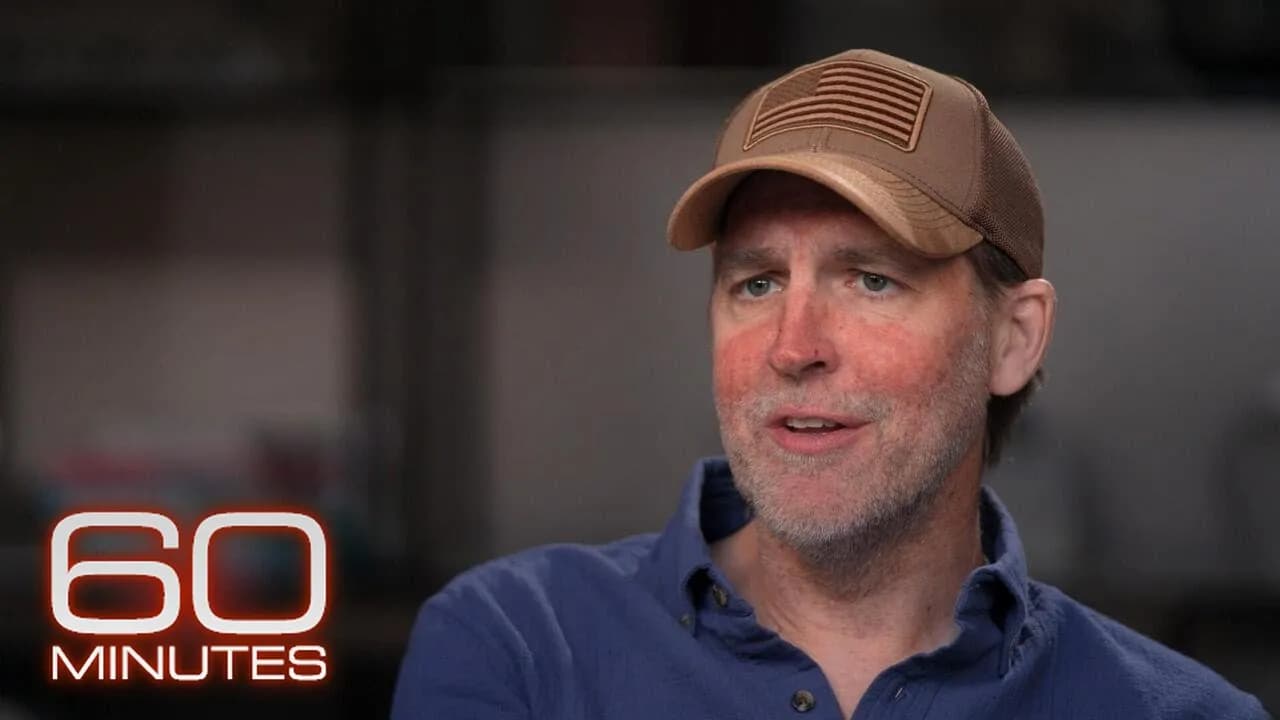
Ben Sasse was told today probably wouldn't come. By the time doctors found his pancreatic cancer, it had metastasized. They gave the former senator and conservative Republican three to four months. That was in December. In confronting the time he has left, Sasse has found wisdom for the country he loves.
Sasse has spent his life teaching as a college president and as a Nebraska senator who served his district by collecting garbage back home during Senate recesses. And finally, as a man who walked away from power because he believed a nation is not shaped in its chambers, but in its communities. Sasse has a degree in government from Harvard and a Ph.D. in history from Yale. Now, at 54, a remarkable new cancer therapy is buying him time for one last lesson, even if it comes at the cost of his appearance.
You don't have much time, so why are you spending time doing this? You invited me, so I assumed you needed to fill some time. But you said yes, and I wonder why this is so important to you.
I love America, and I think there's a lot of big and meaty things that we should have been talking about and we still can talk about. And having a terminal diagnosis isn't really that unique. We're all always on the clock. Some of us have the benefit, maybe, it's a weird word, but the benefit of knowing our time is finite and defined, and it becomes an opportunity to talk about bigger stuff.
And you have focus from that. It's weird to be in your early 50s and get a terminal diagnosis, and people all of a sudden act like you're 93 or 94, and you have a lot of wisdom. I don't know that I have a lot of wisdom, but I have a lot of things that I think we should be reflecting on together. And when you're in this life stage moment, you spend a lot of time thinking about theology and a lot of time thinking about your neighbors and the institutions we need to build and rebuild.
When Americans look to Congress, what do they see? It's a weird time, right? We're at 250 years in this glorious experiment. This republic was something that the founders wondered if it could last a generation. A generation was defined at the time as 19 or 20 years, basically the age of a woman's first birth. Thomas Jefferson was very skeptical about whether or not we'd last a generation. So at one level, despite the pessimism of what they see when they look at Congress, we should start with gratitude that this experiment is 2½ centuries in.
Nonetheless, when your approval ratings are high, they're 8 percent or 11 percent or whatever they are, and yet reelection rates are in the mid-90s, something is wrong. And that breeds a kind of cynicism. The public wonders why Congress doesn't do a smaller number of big and important things and stop grandstanding and then go back home for a while or for good.
Cincinnati was George Washington's model for what it would look like to go home. And think how many times Washington tried to resign at the end of leading the Revolutionary War as General Washington. He went back home. And then the most famous thing Washington did as president was December of 1796. Hamilton made it famous, but it was really Madison (likely Madison, as Washington's muse) to give the farewell address and go back home.
We need a lot more people in Congress who have a servant leadership sense of why they were sent there, and then they need to go back home. But we aren't doing big things in Washington right now. It feels like a kind of Instagram for middle-age not fully attractive. But when voters look to the Congress today, what picture do they see? A lot of self-serving. A lot of hyperbolic language but limited substance. All hat, no cattle. Let's grandstand and pretend if you don't pass my piece of legislation this Tuesday or if I don't demonize somebody on the opposite side of the political spectrum, the country's going to come apart.
The public knows that the challenges we face are actually a lot bigger and more interesting than anything legislation can really touch. What I think historians will think 50 or 75 or 100 years from now when they look back on our moment is that politics weren't really very important.
We're living through a technological revolution which is creating an economic revolution. Let's be clear. We're the middle-class, median Americans are the richest people any time and place in all of human history. And yet the economic revolutions that we're living through are unsettling culture and place. And so people are incredibly rich at a material level statistically and yet we're pretty impoverished spiritually and communally in that we don't have thick community. We don't know our cousins. We don't know the people who live two or three years away from us and we don't feel like we're in a common cause with people right now.
And politics wants to trivialize that by screaming there's some bad political actor somewhere. And if only that person were ripped out of the public square, politicians could fix all this. Now neighbors are going to have to fix this.
If Congress is looking at the wrong things, what is it missing? We are living through a digital revolution which is both glorious and horrific at the same time. When I give speeches, inevitably, no matter what my topic was, it can be the future of college athletics. Question one, two, or three after I speak is some version of do you think AI is going to bring heaven or is AI going to bring hell? And the right answer is yes. It's going to bring both because what the digital revolution does is it accelerates almost everything about the human experience.
Anything that can be reduced to a series of steps, which is most economic activity, is going to be routinized and become really, really cheap, really fast, and really ubiquitous. And so we're going to drive the cost of quantification either all the way to zero or so close to zero that we won't bother metering it anymore. We are going to have, I don't know if it's three years from now or 13 years from now, but we're all going to have a robot that builds robots for us. And so economics has historically been a discipline about scarcity, and we are going to deal with the problems of ubiquitous abundance.
And that is really great at one level. At the level of consumption, we're all going to have lots and lots of stuff and lots of services, Uber for everything and Amazon for everything, and those things are going to become higher quality, cheaper, faster. But at the level of human meaning and production, it's pretty scary to not know what you're going to do to add value for your neighbor 10 or 25 years from now.
We've never lived in a world where 22-year-olds couldn't assume that the work they did they would be able to do until death or retirement, and we're never going to have that world again. Everybody is going to have the opportunity. Everybody is going to have the experience of being 35, 40, 45, 50 and have to figure out how to add value in the world again. And we've never had a civilization of lifelong learners, and we have to build it right now. And Congress doesn't talk about any of those kind of most fundamental issues.
The disruption of work, for good and for ill, should be front and central. The educational institutions we need, and not just schools or colleges as they exist today, but all of the kind of institutions we should have for the experiences of being 14 or 18 or 20 years old. We don't have the right institutions right now. And Congress doesn't even know how to have that conversation.
If Congress is whistling past these graveyards, what's at stake? A reductionistic tribalism that distracts us with a stupid, fake conversation. Neither of these parties really have very big or good ideas about 2030 or 2050 at a national security level, at a future of work level, at an institution-building level. The Congress is not wrestling with bigger emotions. It's wrestling with more important questions right now. You're talking about your own party. Both, yeah. And it's more than two, right? Like, there's a—we should probably have 2,000 members of the House of Representatives, not 435.
In the 100 days that the Constitutional Convention met in Philadelphia, Washington spoke one time, and the only issue that he spoke about was he wanted to make sure that a congressional district was only 25,000 to 30,000 people. Today, a member of the House represents about 700,000 people. Washington wanted to be sure that everybody could know their Congress as a congressman or congresswoman. So the House should probably be much, much bigger than it is.
But the Senate should be the world's greatest deliberative body. And the 100 people in that institution should have a brotherhood and a love and a friendship among them that they can help bring to the American people a rank order of the three or four or five most important questions. It's not screaming that somebody else is the devil because they didn't pass my post office naming bill today. And that's the level of most congressional action. That's the level of social activity right now.
Is it social media that's destroyed the politics that we've known? It's a central piece of it. Capitalism is the most glorious economic system the world has ever known. Capitalism is not the same as consumerism. And one of the things about the largesse that post-1945 global capitalism has created for really rich American middle-class folks is a sense that maybe more and more consumption can make you happier. And that's definitely not true. And yet we're really rich, and so we're distracted by consumerism. And one side effect of consumerism is peer segregation.
And so I think one of the fundamental things that's wrong in America is young people don't know old people, and old people don't get to serve young people. There's a lot that's glorious about being 13 or 17 or 21. But one pretty terrible thing would be to be 15 or 17 and think 15 and 17-year-olds have wisdom, because 15 and 17-year-olds don't have fully formed frontal lobes. They don't have wisdom. And one of the things 15 and 17-year-olds need is 60-year-olds and 80-year-olds in their life. And so peer segregation is, I think, a fundamental sociological problem in America, and social media is like dumping gas on that, where we create incredible short-term incentives to do and think and kind of bubble yourself into something that implies only your narrow demographic cohort or identity politics or market niche is where life is lived. And so I do think social media is one of the fundamental problems that we're dealing with right now.
Right now, almost all politicians' impulses and incentives because of social media or because of just the cheap barrier to entry to any kind of media is to go narrow but deep and to do a lot of fan service. It doesn't encourage a lot of social media. It doesn't encourage a lot of self-scrutiny. It doesn't encourage a lot of humility. It doesn't encourage someone saying, you know what, I used to believe this, but I listened to somebody else and I realized I was wrong and I've learned this new thing. There's no audience for that. You want to just say more of we're definitely right and they're definitely wrong, and that tribalism makes us pretty stupid.
Fan service. What do you mean? Tell your audience whatever your impulse is, it's definitely right. Confirming information, what you already think is right. And the reality is learning requires a humility that says, actually, I'm wrong about a lot. I'm ignorant about even more, and I get a chance to learn.
One of the glorious things about the American experiment is believing in souls that can do deferred gratification. We can do deliberation that says, maybe I don't have all the answers right now at my fingertips, and maybe the glories of a big and diverse creation is I can learn a lot from my neighbors.
You walk into a room full of people these days. They're not talking to each other. They're right here. Cut off from one another, standing shoulder to shoulder. And it's true of people our age. Think about what it's like for the digital natives who've only grown up in this world. How weird and tragic is it that teenagers and 20-somethings don't know how to date? They don't know how to ask somebody to go have a meal together, including the risk and the awkwardness of being rejected in that approach. But there's a lot of scar tissue for future character in being rejected. It's one of the reasons why a lot of people who are successful in their work lives are people who've done sales at some point along the way, because you just get to be rejected over and over and over and over again, and it toughens you up, and it also teaches you how to present ideas in a new way.
How does America set a better course? First, let's be a little bit agnostic about where this lands, because I don't know. In 2040 or 2050 or 2060, does the republic survive? I suspect yes, and I would bet yes, but it's not a 90-10 bet. But I do think I know this. If the republic survives, we will learn how to have public discourse, even in an environment with near ubiquitous information, fire hose, fire hydrant spray coming from every side, and we'll learn how to get back toward wisdom about what voices we should diminish and ignore.
We're going to need a deliberative republic again where people are able to say, we're able to do long-term processing of information about higher-value things over lower-value immediate things. And right now, we know that the average 15- to 35-year-old male is more likely to have current online gambling debt than to read a book this year. A republic actually requires people who do deliberative long-form discourse learning, humility, and community building. We're not doing that right now.
You seem to be saying that right now is an inflection point on whether the republic survives. I do believe that. I think the only way we have a portion of this conversation right now is the jobs apocalypse debate. Is AI going to bring ubiquitous economics? Yes. Lots of economic growth. Is AI going to end a lot of jobs or unbundle a lot of jobs? Also yes. And we're going to need to figure out how to help our teens and 20-somethings become 30 and 40-somethings that can be lifelong learners and can get retrained for the new job in a sector and an industry that doesn't even exist yet.
We're having a little tiny bit of that debate. But bigger and broader than that, we should be talking about what educational institutions we need for 10, 15, 20, and 25-year-olds. What in the world is happening with the natalism crisis? All across the industrialized rich world, people have just stopped having babies in the last couple of decades. We're at replacement rate birth rates nowhere in the industrialized world except Mormons and Jewish populations in Israel and in some parts of the US. Except for those two categories, every other industrialized nation has stopped having babies. That is super weird.
We've stopped having sex. Sex has collapsed. Demographically. Premarital, extramarital, marital. It is very weird, that we carry around these super devices in our pockets that have distracted us from some of the most fundamental human activities and aspirations. Having a baby is a bet on the future. And almost everywhere in the world, and the world is richer and richer and richer statistically than it's ever been, people have decided, eh, actually babies are kind of an inconvenience. Babies have always been an inconvenience. And the most glorious thing you can do to enrich your family and to make a bet on the future.
How weird that we've stopped having sex, we've stopped making babies, we've decided that being distracted by a dopamine hit around Candy Crush might be a good way to spend your time. Not if you're a full human.
I have never been in politics before. It was 2015 when Ben Sasse came to Washington. He voted conservative more than 80% of the time and in 2020 he was re-elected. With more votes in Nebraska than Donald Trump. Then came January 6th. That day, Sasse called out, quote, the screamers who monetize hate. You can't do big things together as Americans if you think other Americans are the enemy.
Later, in Trump's impeachment over January 6th, Sasse was one of seven Republicans who voted to convict. His stand against the insurrection offended the Nebraska Republican Committee. So he sent them a message. Personality cults aren't conservative. Conspiracy theories aren't conservative. Lying that an election has been stolen, it's not conservative. Acting like politics is a religion, it isn't conservative. January 6th was grotesque and stirring people up was a terrible thing.
But it's against a bigger and more important backdrop, which is the glories of the peaceful transition of power. Like when I, history nerd, say we don't do enough civics, I'm sincere that I think the fact that March 1801 is not something that all of our 5th, 7th, and 9th graders know, that's a tragedy.
Let's review the amazing thing that happened. Washington leaves office and it isn't clear after Adams and then Jefferson, both in his cabinet, when they run against each other in 1800, we think that our politics are brutal now. There were charges of everybody going to hell, North versus South, and Adams versus Jefferson, Federalists versus Democratic-Republicans, and they really believed across the globe that America would end in civil war immediately.
And Adams leaves office in March 1801. He doesn't attend Jefferson's inaugural and he moves back to Massachusetts. And King George in England said, obviously these people are going to go to civil war now. And Adams goes back home and peacefully hands over military power to Jefferson. Adams and Jefferson were of opposite parties. And this is the first time perhaps in world history that a party in power handed it over to a party that was against their view.
It's, we should make sure your viewers understand, inauguration because of snowstorms back then used to happen in March. Now we can do it in January because we know the travel's going to work out. But in March 1801, we're four months after the election and it wasn't clear that you would have a peaceful transition of power. We thought there might be a civil war right away. We should at every inauguration, this was some of the tragedy of January 6th, is that we should at every inauguration use it as an occasion to teach the American people, we don't have kings.
In 2023, with four years left in his term, Sasse quit to become president of the University of Florida. There had been too little substance in the Senate and too much absence from his wife and three children.
What was it about the Senate that led you to quit in your second term? The Senate should be the world's greatest deliberative body and I think it can be again. But I was flying away from my family four or five nights every week and most weeks we were not getting anything done. In the Senate? In the Senate. We just, we didn't do real things. And it felt like the opportunity cost was really high.
I want the Senate to be a grand and glorious calling for people. Right now it's pretty tough to justify if some random guy or gal calls me up and says, I got kids at home, should I fly away from my family five weekdays every week and go to the Senate? Will I be able to do enough to make a difference? That institution isn't that productive right now.
Many senators I know would not be able to breathe without that job. It would kill them to leave. I don't want what you said to be true, but I fear that that is true and that is a sign of a much, much deeper problem. We got a lot of people who serve in government who really do think the highest and greatest thing you can ever do is have the title senator or congressman. Bullshit. The best thing you can do is be called dad or mom, lover, neighbor, friend, governor, senator, house member. It's a great way to serve. It should be your 11th calling, or maybe 6th, but never top.
What makes you a Republican? I'm of the party of Abraham Lincoln and Ronald Reagan. First of all, let me say I'm a constitutionalist first. What I love about America is the idea that we don't believe government gives us rights. We have rights from God via nature pre-governmentally, and then government is our shared project to secure those rights. John Locke. John Locke is great. The Founders Constitutional Convention builds out some of the glories of this debate that every American school kid should be aware of. We should be reading a lot of James Madison.
The modern political spectrum from this version of the Republican Party, or let's say the 80 years version of the Republican Party and the last 80 years version of the Democratic Party, it's kind of an inside-the-family debate until the last 10 or 15 years about one cheer for government intervention in the economy versus two cheers. The right place to begin our conversation is zero cheers for government or three cheers for government are both un-American ideas.
Zero cheers for government is to say we don't need government at all. Well, that's just anthropologically naive. Human nature is broken. There's somebody who wants to take your life and your liberty and your stuff, and so we need government to hold evil things at bay and to protect people's lives and liberty and stuff. You ought to be able to walk home from a restaurant in the evening and not be worried about being mugged. That's a shared project for us to have government against the backdrop of a sinful, broken world.
Three cheers for government is soul-denying, because it implies that power is the center of life, which isn't true. The center of life is your neighborhood, your dinner table, and your loves. It's your family and your community, right? Like, that's the meaning of life, and that can't be solved by power. Edmund Burke. Little platoons.
Because at the end of the day, we are a 330-million-person nation, which is a glorious inheritance, but it's only 4% of the global population on the globe. We've got 8 billion souls on this globe. 330 million sounds small as a share of the Earth, but 330 million is still way too big for anybody to get their heads around. You can't love 330 million people.
You can love your immediate family. You can love your cousins. You can love your neighbors. You can love your coworkers. You can love your co-religionists at church or at synagogue this weekend. You have to learn in the little platoons how to love real flesh-and-blood people that you can hug, that you can cry with, that you can break bread with. And then the maturity of that love can be transferred onto something larger like your nation. But you can't start at a 330-million-person nation and decide who I supposedly love and who I supposedly hate and then figure out how to become a good neighbor.
You need to actually coach Little League. You need to actually throw up at the Rotary Club or the Lions Club. You need to shovel the driveway of the widow next door to you because she can't do it when the surprise storm came, right? And so we build out from there.
You asked why I'm a Republican. I'm a Republican because I think the Lincoln-Reagan continuum does the best job of building constraint on thinking Washington is our fundamental political community. I think your fundamental political community is your neighborhood and your city hall and maybe even your state legislature. And right now, we are sacrificing a lot of our national politics, to weird folks who want their main community to be their political tribe at a federal level. And that should be like the ninth thing or the 15th thing you care about, not the first or second thing.
You ended your Republican pantheon with Ronald Reagan. And I wonder, when you look at the Trump administration today, what do you see? I mean, it's no secret that the current president and I wrestled on lots and lots of issues. But I don't spend much time commenting on our current politics, because I don't really think our current politics are driving what's happening. I think it's mostly an echo of what's happening. I think we have really thin, shallow community right now. And unless people know the thickness of their local community, it's hard to make sense of what national politics are for. I think our national political dysfunction is an echo of larger problems.
When you speak of the thickness of community, is that possible in a secular society? Or is God necessary for that? Wow, that's fun.
I am a Lutero-Calvinist Christian who believes deeply in my theology. I don't want the state to constrain theology at all, because I don't want it to compel or prohibit. I believe the sole dignity of every American comes with the freedom to worship God. I want to defend the right of everyone to believe what they believe and to assemble with their co-religionists, whether I agree with it or not. The state's job is to take violence out of the public square so people can wrestle with more important questions.
God is absolutely essential to all of these questions. But as a secular American citizen or officeholder, my job is to prohibit violence so that all 330 million Americans come to the conversation on an equal plane to then have that debate.
Citizens Fixing Broken Politics
Citizen is a great word. Friend, neighbor, co-laborer. There are so many big and profound callings that we have. We are living through a period of profound change. We are meant to hug. We are meant to make babies. We are meant to break bread together. We are going through a moment of profound confusion about what it means to be human. We're not preparing ourselves or the next generation for that. Our citizenry is going to need to do that together. Little bits and pieces of that are going to touch on politics. But the vast majority of it is going to be about grit, gratitude, entrepreneurship, family.
Before him being a politician, John Thune is my friend. It is the responsibility of the Senate, as it has been for more than two centuries, to be the saucer where the boiling tea overflows and needs to cool down. The Senate needs to be less like Instagram. The Senate needs to be more deliberative. And that means less smackdown nonsense. One of the fundamental mistakes we've made over the last 30 or 40 years is putting cameras everywhere in Washington, D.C. This is not an argument against transparency. We should have reporters around. We should have pen and pad. We should have people recording what's happening. But we should make sure that we make the Senate less of an institution that is built as a backdrop platform for people to get sound bites and own the libs or own the conservatives or have some smackdown short-term sound bite. That's not what the Senate is for. The Senate should be plodding and steady and boring and trustworthy.
We need to have more deliberation about our mortality and our finitude to therefore get back to wisdom about what living a life of gratitude looks like. I'd like a lot more dinner tables to turn off the devices, put them out of the room, pour a big glass of wine, break bread together, and wrestle with some really grand questions about what you're building for your family and your next generation.
Optimism for the Republic
Optimistic or pessimistic about the republic? The right answer should always be optimistic and pessimistic about the complexities of human nature. For the republic, I'm optimistic if we do the work that is available for us to do as neighbors. I'm not optimistic about Washington, D.C., but I am optimistic about what a free people and a republic can build if they start with the little platoons of their family, their extended kin network, their neighborhood, their workplace, and their place of worship.
You were expected to be dead by now. What changed? Providence, prayer, and a miracle drug. In mid-December, I was given a three- to four-month life expectancy. I am on extended time already. I have pancreatic origin cancer that is metastasized. Diagnosed in a number of places: lung, vascular, liver (liver's pretty far along). You have five cancers. Yes, sir.
He's in a clinical trial for a drug called daraxanracid, a new idea in therapy. In many cancers, it's a defective gene that signals cells to grow nonstop. The drug blocks that signal. I have much, much less pain than I had four months ago when I was diagnosed, and I have a massive 76% reduction in tumor volume over the last four months. So maybe I'm going to crank and live a year instead of a handful of months, and I feel incredibly blessed.
Do you pray for a miracle? Sure. It's not my biggest prayer because mortality is not news, right? We're all mortal. We're all on the clock. We're all going to be pushing up daisies eventually, and I think wisdom requires us to grapple with our death and our finitude early, but I do pray for a miracle as well. Just this month, the drug maker Revolution Medicines reported that patients who had six months survived a median 13 months.
Completely devoted to Reformed Christianity or Calvinism, one of the tenets of that faith is that God ordains everything. Why do you think God has put you to this test? Death is wicked. Death is evil. Death is not how it's supposed to be, and me getting a cancer diagnosis, again, is pretty small on the grand scheme of things, but it's a touch of grace because it forces me to tell the truth, and the lie I want to tell myself is that I'm the center of everything, and I'm going to be around forever, and I can work harder and store up enough that I can atone for my own brokenness. I can't. And so I hate cancer, but I'm also grateful for it. I tell a lot more truth to myself than I used to do it when I thought I was super omni-competent and interesting.
Tim Keller, a pastor in New York City, in my denomination, died of pancreatic cancer a couple years ago. He said, "I hate pancreatic cancer. I would never wish it on anybody, but I also would never want to go back to a time in life where I didn't know the prayer of pancreatic cancer," and I feel that to be true.
Started being symptomatic the last couple weeks of October. Wasn't diagnosed until mid-December. Had trouble figuring out what was going on because I was training for some sprint triathlons, and I was doing some stupid stuff in my training, so I thought I'd pulled a bunch of muscles in my abdomen. Was in really bad pain. For a number of weeks, I'm now on a lot of morphine, and I've also got the benefit of this drug, which has miraculously reduced my tumor volume enough that I have a lot less tumor pressure on my spine. So the combination of a great drug and morphine, I'm in so much less pain now than I was Halloween to Thanksgiving. But at that point, I was on the floor in the shower, running the water, trying to remove a valve on my shower to make it hotter. I'd be five times a night up in the middle of the night in the shower trying to scald my back to try to make the throbbing of what turned out to be tumors pushing on my spine cease. It was horrible. I'm super grateful that I had that pain.
Cancer has made you closer to God. Definitely, because I can acknowledge my dependence in a new way.
If you had another 30 years, what would your priority be? I wish we'd had more babies. We have three great kids. I wish we had four or five. If I had 30 years left from now, I'd be working hard to take my zealous achiever daughters and try to figure out how you build something that's a little bit like a family compound. How do you build something where you can have different generations come and go from it and have a thickness and a support system? How could you spend more time around your cousins or build the opportunity for your kids and your grandkids to spend more time around their cousins?
I would travel a little bit less for work. I have kind of three different work histories, but one of them was I was a road warrior as a strategy consultant and private equity guy for a while. Spent way too many nights in hotel rooms. I never really threw away any of my hotel keys. I'd come back from every trip, and I threw them in a box in a closet in my office. There are thousands and thousands of hotel room keys. Sometimes I just look at it and feel a heaviness of regret.
If I had another act at a work level, I think I might pursue my long-term dream of being a football coach. Dad was a football coach, and he was dang good at it. What a chance to mold young men.
I would continue to think and write about the digital revolution that we're entering and going to pass through, because I think we come out on the other side richer and more textured, but it's going to be a big bifurcation. We talk a lot in our politics about socioeconomic difference. I think the great coming divide is going to be between people who figure out how to use these tools, and people who outsource their attention and their affections and their habits to these tools. And it's going to be disastrous for the latter category. I want that latter category to be small. I want all Americans to benefit from some of the glories that we're going to get out of the digital revolution. But the idea that you could outsource your attention and your affections and your habits to these things is disastrous.
A casino might be a fun place to go for March Madness weekend, but it would be a hellacious place to live. We're all walking around with casinos in our pockets right now, and they want to steal our attention and reduce our humanity.
We need a big shared project where we lock arms. This isn't a governmental or regulatory project chiefly, but we need a communal conversation about how you use the technology instead of letting the technology use us.
There was a moment on 9/11 at the World Trade Center that I knew I was dead. In that lightning flash of an instant, the only thing that crossed my mind was leaving my family behind. How do you reconcile that? I'm incredibly blessed. My wife, Melissa, we've been married 31 years. We're going to be apart for a time. But she's tough and gritty and theologically rooted, and she's going to be fine. My daughters are 24 and 22, and they're extraordinary. I want to walk them down the aisle when they get married. That's not likely to be. That's not the math of my time card. My son, we have a providential surprise. He's a decade younger than big sisters. He's 14. And he's going to be fine. He'll have other wise men and women to put a hand on his shoulder. But I'm super bummed to not be there at 16 and 18 and 20 years old in his life. I want to give him more advice than he wants. And I want to put my arm on his shoulder. And I want his shoulders to get taller. But it's not a surprise to God. And God has a plan. There are no maverick molecules in the universe.
Keep 60 Minutes in your library
Save the videos and channels worth coming back to, and find them again in one place.