Best Historical Argument for the Resurrection and Why Scholars Can't Dismiss It | Wesley Huff Ep 232
In a Nutshell
Wesley Huff, a New Testament manuscripts expert, defends the Bible's historical reliability with superior manuscript evidence (e.g., 2nd-3rd century papyri like P66 matching modern texts) compared to ancient works like Alexander the Great's biographies, and argues Christianity's core claim—Jesus's resurrection—via disciples' transformation from cowards to bold martyrs, unlike failed messianic movements. He affirms monergistic salvation (God's sole work), perseverance of true believers, rejection of suicide/MAiD as devaluing God's image, cessation of normative sign gifts post-apostolic era, and dismisses late Gnostic gospels as heretical fabrications. Modern translations like ESV outperform KJV due to vast new data; apologetics removes intellectual barriers but requires Spirit-enabled faith.
These notes were generated by AI and may contain inaccuracies.
There are other messianic movements in the ancient world, but most individuals involved are unknown, unlike Jesus of Nazareth compared to figures like Simon Bar Kokhba. Wesley Huff is a trained historian working primarily in New Testament manuscripts and ancient scribal culture, studying features like parextual features and reader aids in manuscripts from the second and third centuries. He differentiates between private personal copies (e.g., Gospel of John) and those for public liturgical reading through comparative analysis with ancient literary works. His work crosses into early church history and broader antiquity.
Grew up as a missionary kid in Pakistan and Jordan, and pastor's kid. In teen years, sifted through beliefs, reading Quran, Book of Mormon, Bhagavad Gita to evaluate worldviews. Christianity solidified due to logical consistency, empirical adequacy, experiential relevance, and historical accuracy. Quran raised red flags: even skeptical scholars affirm Jesus crucified under Pontius Pilate (denied in Quran 4:157), with Muslim interpretations like survival not aligning well.
Christianity hinges on Jesus as a historical figure; unlike Buddhism, where philosophy could stem from another, it had to be Jesus. Historical information around Jesus is sufficient.
How does the Bible compare to other ancient documents we trust? Depends on definitions of trust and compare. For Alexander the Great, first comprehensive biography by Arrian is 450 years later, yet trusted for significant details. Not unusual in ancient world; best biographies of Roman emperors by Velleius Paterculus, Tacitus, Suetonius, Cassius Dio come centuries later. Jesus material within decades is closer in proximity and within cultural/literary memory than most ancient figures.
As time goes on, we get closer to original wording due to more evidence, mainly manuscripts. Modern translations vs. King James (1604-1611): KJV based on printed editions like Bomberg Hebrew text and seven Greek NT editions (five by Desiderius Erasmus from ~31 manuscripts ~11th century, updates by Stephanus, Beza). Erasmus consulted Codex Vaticanus (4th century) via Bombasius.
Today, over 5,000 more Greek manuscripts analyzed. Modern translations like ESV consider full breadth, including 2nd-4th century papyri unknown in 17th century, and Dead Sea Scrolls (1946-1957). KJV excellent for its time, but more data now.
English Bible changed for clarity, not corruption. Archaic KJV words changed meaning, e.g., 'halt' in Elijah vs. prophets of Baal (1 Kings 18): KJV "How long halt ye between two opinions?" means 'limp/go back and forth' (ESV), not 'stop suddenly'; NT uses 'halt' for lame/disabled.
Mark Ward's book The King-Only and Abuse of the King James Bible lists outdated/changed words. 2 Chronicles 26:18: KJV "Parbar westward, four at the causeway and two at Parbar"; ESV clarifies as courts/road via Semitic language advances (parbar = court).
Recommendation: Modern translations (ESV, NIV, NLT) best for understanding essential truths.
Scripture shows true believers (heart of stone to flesh, empowered by Spirit) cannot lose salvation. John 6: All Father gives me, I raise on last day; no one snatches from Father's hand. Parable of sower: some on rocky ground sprout but don't endure.
Seen people with apparent conversions later reject faith. Angel to Mary: Jesus will save his people (emphatic). John 6: My sheep hear my voice (non-believers don't). Genuine believers persevere; possible dark nights of soul, but perseverance of saints holds.
Salvation is God's work entirely: from enemies/children of wrath to children of God (Romans). Spirit opens eyes; flesh fights until then. Jesus knocking: Spirit empowers hearing amid lust of flesh/eyes, pride of life.
Salvation is entirely a work of God. Apart from God breaking into a person's life, taking their heart of stone and giving a heart of flesh, the natural desire is to choose sinful things. Humans are actively trying to swim down to the bottom of the ocean, not just needing to grab a life preserver.
Even people without understanding or desire for God can do good things because they bear the image of their creator. The question is not whether non-believers can do good, but what grounds the standard for good or not good.
Jesus uses language like "if you have ears to hear, listen" and "if you have eyes to see, see," paralleled with miracles like opening a blind man's eyes. His sheep hear his voice; others do not understand. After raising Lazarus, Pharisees schemed to kill Lazarus.
Theological term is monergism: God's single act reaching into lives, renewing minds to understand.
Post-salvation, the Bible reads like a different language with deeper meaning; previously skipped parts, like extensive demonic references, become noticeable and terrifying.
Tension between Jesus's Great Commission to make disciples of all nations and 1 Peter 3:15-16: "But in your hearts honor Christ the Lord as holy, always being prepared to make a defense to anyone who asks you for a reason for the hope that is in you; yet do it with gentleness and respect, having a good conscience, so that, when you are slandered, those who revile your good behavior in Christ may be put to shame."
Salvation is a work of the Spirit, but believers are commanded to give an apologia (Greek legal term for defense).
Conversations remove intellectual barriers, leading to admission of a decision: follow God or rebel. Salvation is not purely intellectual; proving God completely would eliminate need for faith.
Greek pistis (faith) translates as trust, based on evidence. Example: trust in wife parenting children in Canada based on her character and evidence.
God uses evidence in judgment: Romans says God's invisible qualities revealed in creation leave no one without excuse (anapologētous). Creation communicates a decision must be made.
Evidence supports Christian worldview.
People try to rationalize something too big to fully rationalize; faith is required. Historical evidence helps but is insufficient alone. Salvation shown that humans cannot understand God completely; a weight lifts upon realizing this.
Default is heady, but deep Bible knowledge does not toggle faith switch. Paul says faith is a gift through grace. Cannot argue anyone into kingdom; that's the Holy Spirit's job.
Excited to share verifiably true things despite divine mysteries.
Suicide wrapped in pain and suffering. Example: injured soldier in battle, in agony, takes own life.
Protestant Reformation: Martin Luther raged when a young congregant (20s) who committed suicide was denied church burial as damnable sin. Luther dug the grave himself, saying Satan led the person to murder their own image.
Book by Euan Gallagher (MD/PhD, Toronto), How Then Shall We Die?, addresses suicide, assisted suicide, relevant to Canada's MAiD (Medical Assistance in Dying).
Human life has intrinsic worth bearing God's image, not based on societal contribution. MAiD risks implying those in pain/depression lack worth and should be removed.
Sympathetic to terminal cases (e.g., chemotherapy pain, stage 4 cancer, last 6 months), quality of life tension, but life sacred regardless.
Example: Church member Carol (40s, Toronto) with MS—declining, not lucid, immobile, in pain, yet joyful when communicating, convicting.
Do not buy culture of death; God cares deeply. Command not to murder applies to self. Far be it to judge individuals in suffering.
Canada's MAiD: ~5% of deaths (stat from X), shockingly high; offered as alternative to long healthcare waits (e.g., 2-year surgery wait). Marginalizes value, especially without options.
US: MAiD in some states for decades limited to terminal cases, less controversy until expanded.
New Testament tongues almost exclusively actual languages.
Pentecost: Apostles preach gospel at crucifixion site weeks after resurrection, to Jewish diaspora in Jerusalem (religious gathering). Spirit descends as tongues of fire; they speak in hearers' native languages.
Pauline epistles: Tongues require interpreter.
Supernatural: communicating in known language one does not know.
Caveat: Paul mentions "language of angels," capitalized on in charismatic communities (wary of excess).
Spiritual sign gifts (tongues, healing, prophecy) unique to apostolic period for church foundation. Not normative now; apostles built foundation (like architecture, no repeated foundations).
Jesus appeared resurrected to disciples, breathed Spirit, gave authority codified in New Testament.
Miracles/healings still happen (personal healing story), but not normative as in NT.
Paul requires interpreter in church life.
Charismania: Caution against getting swept up, potential cons damaging Christianity's name. Local Scottsdale churches claim future-seeing.
Cumulative approach; tangibleness that discussion continues 2,000 years later.
Other messianic movements existed in the ancient world, but their leaders like Simon Bar Kokhba are not well-known because his revolt failed and movement died with him. Jesus's movement is unique and requires explanation. Disciples were scared and hiding after crucifixion: Peter denied Jesus three times despite being his right-hand man. The 11 disciples (Judas having hung himself) cowered in an upper room. They transformed into a missionary force, returning to Jerusalem on Pentecost proclaiming the resurrection to people who could have seen Jesus crucified.
Secular scholars grant disciples had some experience motivating this change. Liars make poor martyrs: people die for what they believe true, not lies.
Suicide bombers or 9/11 hijackers are murderers, not martyrs. They believed but did not know definitively; disciples were present at Jesus's death and claimed to see him resurrected, unlike hijackers absent from Muhammad's 7th-century events.
Historical case for Gospels' credibility shows disciples believed truly. Alternatives like group hallucinations or body theft are implausible given subsequent events.
Post-Pentecost, Stephen (inner group, not disciple) proclaimed gospel and was stoned to death, warning disciples of costs. They did not slow down but were more empowered. CS Lewis's trilemma in Mere Christianity: Jesus is liar, lunatic, or Lord. Jesus predicted his death and resurrection, then fulfilled it. People who rise from dead have more credibility than those who don't.
Peterson Academy is novel, tapping into potential amid traditional academia's troubles: AI-written assignments, diploma mills, fuzzy education. Room for affordable, approachable post-secondary education.
AI issues: student submitted AI assignment (got zero), then AI apology letter. Solutions: hand-written essays, oral examinations to confirm understanding, or AI detection tech.
Course on Bible's historical reliability aimed at everyone, relevant to secular or Christian. Presenter believes Bible inspired with mark of divinity but hopes fair-minded see reasonable grounds for truth, early eyewitness testimony in Gospels, verisimilitude (appearance of truth/probability/authenticity).
Presents opposing views fairly; debates are over conclusions from evidence, not data itself.
Took intro theology at Concordia in Montreal (art school, 2012-2013): class of 65-70-year-old men and her, over her head, sought Bible reliability info, dropped it. Also took Latin (psychology/classics), found etymologies interesting but dropped due to illness and memory issues.
Secular universities: Buddhism/Islam classes taught by practitioners; Christianity by atheists/agnostics, biasing presuppositions materialistic/secular.
Studied under non-believers, strengthening belief. Detractors' arguments built confidence in original texts, eyewitness New Testament accounts vs. later pseudepigrapha.
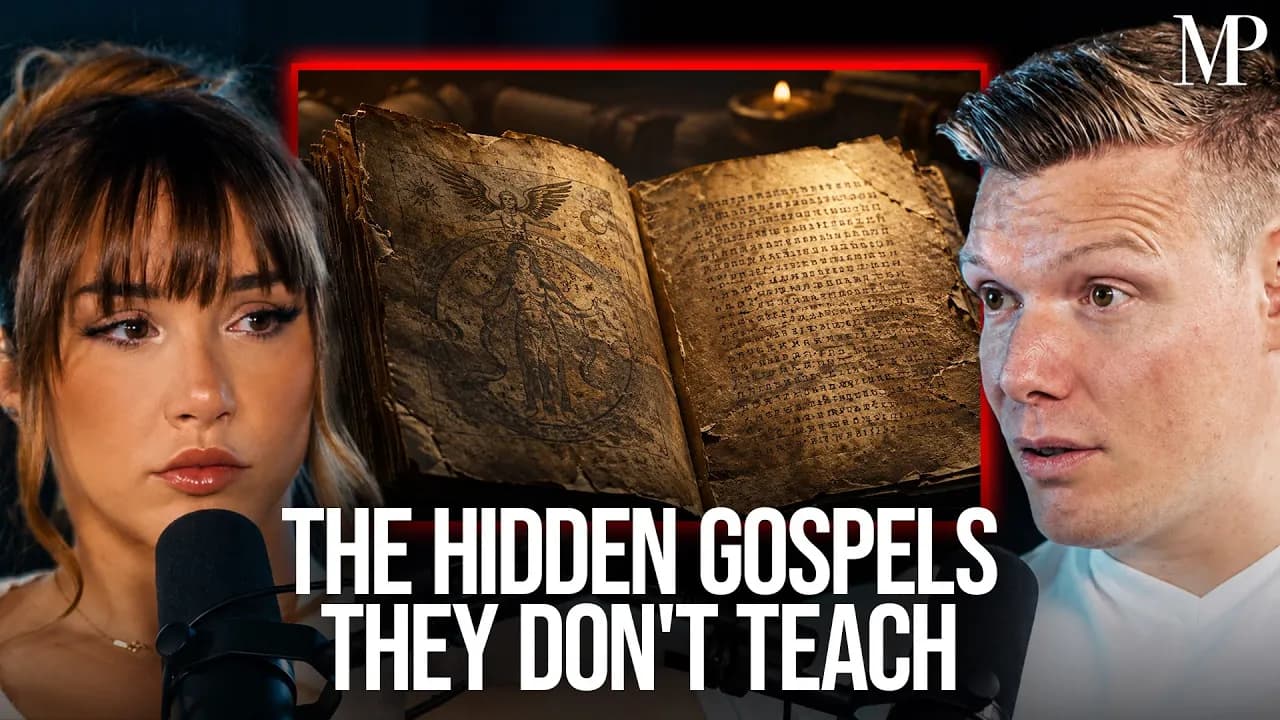
Gnostic Gospels: Gospel of Peter, Mary, Judas, Thomas (Nag Hammadi, 1945). Not by named eyewitnesses (all long dead). Later groups appropriated Jesus into philosophical systems, portraying him as pagan mystic (vs. 1st-century Jewish rabbi from Bethlehem/Nazareth/Galilee).
Gospel of Thomas: 114 sayings, not narrative gospel. Gnosticism (from gnosis=knowledge): salvation innate via secret knowledge unlocking divinity (you are divine like Jesus). Jesus secretive, whispers to minor figures (Judas, Thomas, Philip, Mary Magdalene) to undermine apostolic leaders.
Example: Final line—disciple: "Let Mary leave us for women are not worthy of life." Jesus: "I will make her male so she enters kingdom." Every woman making herself male enters kingdom.
Early Christians like Irenaeus (Against Heresies) rejected as heresy/nonsense.
Gospel of Peter: 19th-century discovery. Church leader in Turkey warned Rhossus church it's heretical (denies physical body). Gnostics: physical evil/spiritual good, so deny incarnation/bodily resurrection (Jesus floats on cross). Ancient world accepted divine Jesus but rejected humanity.
Acts 17: Paul at Areopagus—Greeks track until anastasis (resurrection), reject bodily resurrection (want escape from "meat prison" via Platonic thought adopted by Gnosticism).
Apologetics Canada (apologeticscanada.com, YouTube): Can I Trust the Bible series—visits Egypt (Nag Hammadi, Coptic Museum, Gospel of Thomas), Turkey/Italy. Episode 3 on Council of Nicaea myths at ancient site. More episodes soon.
Personal site: wesleyhuff.com (social, blogs, videos).
Gift: Leatherbound facsimile of Papyrus 66, earliest near-complete Gospel of John, for presenter's dad.
P66 comes from the late 2nd or early 3rd century and preserves the vast majority of the Gospel of John. This is what John's Gospel looked like that Christians were reading potentially in the second century. It is in Greek uncial or majuscule text, referred to as scripta continua: all capitals, little spaces, and little to no punctuation between words. This is how Greek, Latin, Coptic, and many ancient languages appeared.
In the ancient world, scrolls were preferred over codices or books. Christians preferred books, with no clear explanation why. The downside of books is that the front and back are most vulnerable, so many ancient manuscripts preserve middles of books. P66 preserves the beginning of the Gospel of John, including John chapter 1, from the late 2nd or early 3rd century.
Wesley Huff can sight-translate it, and it sounds like any English translation of the Gospel of John. > In the beginning was the word and the word was with God and the word was God. (John 1:1)
Handwritten manuscripts are vulnerable to scribe mistakes. This manuscript has a decent number of mistakes because the scribe prioritized aesthetics over accuracy, making about 300 corrections to his own text. However, in verses 1-4, there are no differences between this Greek text and modern critical Greek texts used for translations. It matches exactly right down to verse 14.
There is beauty in reading what a second-century Christian read: > In the beginning was the word and the word was with God and the word was God... and then the word became flesh and made his dwelling among us. (John 1:1,14) Nearly 2,000 years later, one can say amen to that in conjunction with that ancient reader.
Wesley shares a photocopy of the actual manuscript, originally in Geneva, Switzerland. Most manuscripts are more fragmentary, especially at the back.
Wesley offers prayers for the host's dad, family, and upcoming family growth. He had been praying for the host's dad years ago while studying at the University of Toronto during the protests there. It has been a crazy 10-year period.
Thanks to Wesley for coming on and for the course, which will be linked along with everything discussed.
Keep Mikhaila Peterson in your library
Save the videos and channels worth coming back to, and find them again in one place.