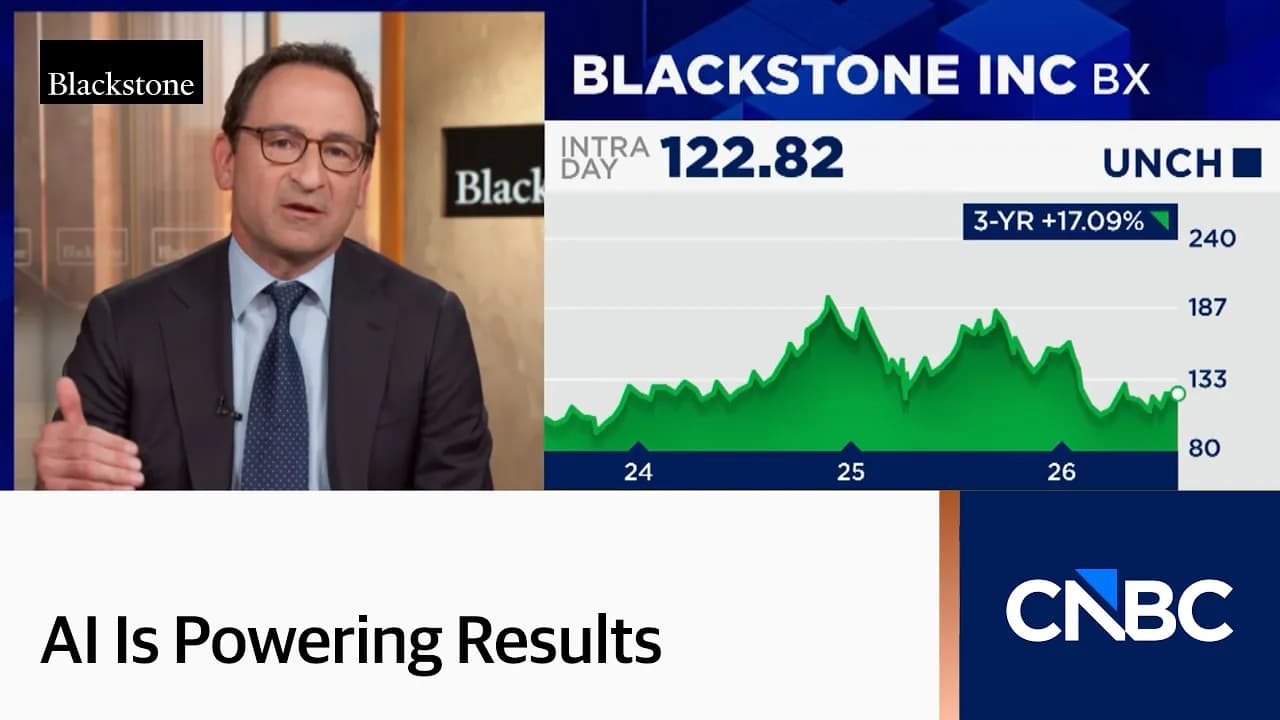
Compute Scarcity, Higher Rates, and Where We’re Investing | Jon Gray’s Market Views Q3 2026
In a Nutshell
Rising rates and AI demand are driving a supply crunch in power, chips, and data centers, making scarcity the key investment theme. In this environment, physical assets tied to irreplaceable human experiences—sports, beachfront real estate, art—gain premium value, while faster-growing sectors and markets absorb higher capital costs. Long-term, disciplined selection of strong management teams and assets outperforms reacting to short-term volatility.
These notes were generated by AI and may contain inaccuracies.
This quarter featured significant market volatility with energy prices rising 30% and the 10-year Treasury increasing 80 basis points. The premium for investing with people who take a long-term view and execute in a disciplined manner is extremely important. There is substantial concern around AI and AI infrastructure, with many questioning whether current spending patterns are sensible and the term bubble being used frequently. However, there remains a very significant supply-demand imbalance where AI infrastructure is struggling to keep pace with demand, which is viewed as positive for AI infrastructure investments.
The combination of AI-driven capital demand, geopolitical conflict, and inflation is pushing the cost of capital higher globally. This impacts asset values and multiples while creating a premium for investing in faster-growing sectors. Selection of strong investment areas like life sciences, logistics, defense, and energy, as well as markets like India with faster growth that can absorb higher capital costs, is critical.
The firm made substantial investments during the third quarter, primarily in the physical world. This included investments in a renewable energy company, a waste management business, and a Pan-European hotel portfolio. Notable financing activities included airline loyalty program financings and a chip financing announcement with Nvidia. Energy infrastructure financing continued throughout the quarter.
The firm sold several businesses including a European gaming business and an events business. Two companies were taken public, most notably Jersey Mikes. The wealth platform continued to expand, with the Wellington and Vanguard partnership growing into a broader range of products. The CIO conference featured a presentation on AI infrastructure. The firm outperformed public indices across flagship strategies for the quarter.
A classic investment bubble involves massive capital expenditure to build capacity ahead of estimated future demand, as seen with railroads in the late 19th century and telecom infrastructure at the end of the 20th century, both financed with significant leverage. The current AI infrastructure situation presents the opposite dynamic.
Demand is exploding upward with companies spending 20 times more on AI models and individuals increasing usage through tools like Instinct and Muse. Supply remains constrained and is being contracted primarily by the largest, most well-capitalized companies globally. Multiple bottlenecks are causing supply to fall further behind demand: entitlement difficulties, community opposition, turbine shortages, power plant construction challenges, chip shortages, and the need to amass tens of billions of dollars in capital.
The scarce resource in the current environment is AI infrastructure itself, which cannot keep pace with rapidly growing demand. In a world of abundance driven by artificial intelligence, scarcity shifts to human experiences that cannot be replicated virtually. This includes attending sporting events, owning beachfront properties, and experiencing art. Investment opportunities in physical assets surrounding these experiences, such as sports teams, intellectual property, and brands, hold particular value.
Rising cost of capital creates headwinds for investing by reducing the present value of cash flows. Rate increases make market participants more cautious, slowing M&A activity and sometimes closing IPO windows temporarily. The key strategy is identifying faster-growing sectors that can absorb higher capital costs.
Real estate faces headwinds from higher rates but benefits from several tailwinds: debt availability is positive, spreads are reasonable, and fundamentals remain strong due to limited new supply combined with a robust economy. Record leasing volumes are occurring in logistics, and hotel same-store sales increased 6% this year compared to flat performance last year. The data center business is experiencing tremendous leasing activity.
The anticipated private credit crisis at the beginning of the year did not materialize. Fundamentals in credit markets were healthier than widely discussed, with only a small tail of problematic deals from 2021-2022, while overall revenue and cash flow growth remained healthy. For floating rate lenders, higher rates increase returns, creating an inverse relationship to equity investing. Credit is viewed as an attractive alternative in a higher rate environment, with growing interest in asset-based credit including lending against aircraft, railroads, and physical infrastructure. Credit metrics remain healthy with returns expected to rise due to the higher yield environment.
The most important takeaway from a quarter marked by high volatility, geopolitical conflict, higher rates, and market swings is the critical importance of long-term thinking. Disciplined investing involves identifying long-term trends and strong sectors rather than reacting to daily news, assembling the right management teams, and maintaining a longer-term perspective. This approach focuses on value compounding over extended periods rather than day trading, with discipline in process, people, and forward-looking analysis providing a competitive edge.
Keep Blackstone in your library
Save the videos and channels worth coming back to, and find them again in one place.