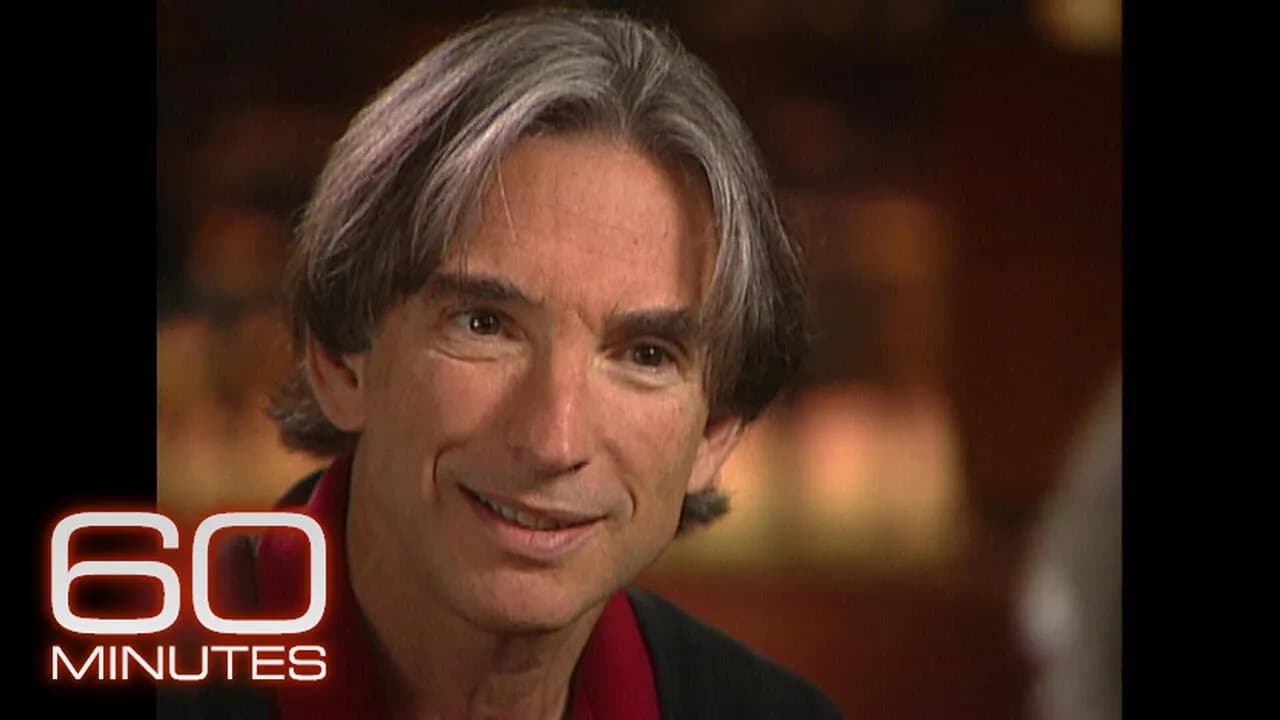
Conductor Gustavo Dudamel in 2010 | 60 Minutes Archive
In a Nutshell
Gustavo Dudamel, 29, became the youngest music director of a major orchestra when he took over the Los Angeles Philharmonic, bringing with him "El Sistema," the Venezuelan youth orchestra program that uses classical music education to transform children's lives in poor neighborhoods. Through YOLA and similar programs like Baltimore's OrchKids, the system has spread across U.S. cities including Chicago, New York, and Miami, providing free music education to hundreds of kids while building discipline, teamwork, and academic commitment. The core message is that music education can change individual lives and entire communities, with Dudamel demonstrating this by expanding the model from Venezuela's 600 orchestras serving 250,000 children to American cities.
These notes were generated by AI and may contain inaccuracies.
At 29 years old, Gustavo Dudamel has become classical music's reigning rock star. Critical international acclaim and recording contracts have marked his rapid rise. Last fall, he took over the Los Angeles Philharmonic as its music director, making him by far the youngest maestro of any major orchestra in the world. His distinctive approach includes primal energy that makes people describe him as a "conducting animal." He coaxes, inspires, and amuses musicians during rehearsals.
"There's something about Gustavo that is primal, something that makes people describe him as a conducting animal."
Dudamel describes music as fundamental to his existence, comparing it to air, water, and food. He states he needs music and must always be around the sound and the magic.
"It's something that I need. It's like the air. It's like water. It's like food. I need music. I have to be, you know, always around the sound and the magic."
His first rehearsal on his first day as music director of the Los Angeles Philharmonic marked a huge day for the kid from Venezuela. He was rehearsing Gustav Mahler's first symphony for the most anticipated conducting debut in decades. When asked if he was nervous, he responded that he was never nervous. He stated he had never been scared about music.
"If you ask me if I'm nervous, I'm not nervous. Never."
Dudamel chose Los Angeles in part because he thought it was a good place to transplant "the system" to the United States. He and his wife Eloisa believe that teaching classical music can transform the lives of thousands of LA kids.
"I know. Can you imagine classical music for everybody? No, this is a crazy dream, but it's true because it's happening."
"What do you want to build for the future? To build a better life through the music. And I think speaking with music, you can do many things."
Dudamel wanted and got YOLA - the Youth Orchestra of Los Angeles - an orchestra with an ambitious social agenda. The goal is to develop extraordinary human beings one by one. Gretchen Nielsen, the LA Philharmonic's education director, runs YOLA. The program aims to change the landscape of Los Angeles by helping kids graduate and connect to the world in ways they might not have otherwise. The program started from nothing three years ago and has grown into a free music education program that operates after school four hours a day, four days a week, teaching the basics to 300 kids from South LA, one of the city's poorest neighborhoods.
The program teaches everything from the language of music to the fundamentals of rhythm to instrumental technique. On Saturdays, all the kids get together in an orchestra. Dudamel has been conducting youth orchestras in Venezuela since he was 13 and has his own way of getting musicians to understand the music, using analogies like describing music as "a man talking to a girl."
South LA was selected because there are kids in that neighborhood who never leave its boundaries. The program aims to help them bust out of the confines of that neighborhood. The program builds character, discipline, and teamwork while keeping kids off the streets.
Two days after a Hollywood Bowl rehearsal, the musicians performed at a music festival welcoming Dudamel to town before 18,000 people. Dudamel's vision for YOLA is to multiply the program in Los Angeles and go around the country.
"We are here because all these children, they are the future."
Dudamel went to Chicago last year to help promote the system at a symposium. The head of the system in the US stated it's already spreading to Chicago, Los Angeles, Baltimore, New York, Miami, and Boston. Venezuela's Simon Bolivar Youth Orchestra was flown in for the symposium to promote the program.
Dudamel has been conducting the Simon Bolivar Youth Orchestra for 11 years. All musicians in this orchestra started out as youngsters in neighborhood orchestras. When researchers visited Venezuela, they found 600 orchestras and choirs in schools, abandoned buildings, juvenile detention centers, and even jails. This massive national program serves more than a quarter of a million kids.
Dudamel started in the system when he was five years old. When first met 10 years ago, he was already doing well. He says the system kept him out of trouble. The message of El Sistema is that through music and through art, it is possible to change the life of thousands of children and change the life of a complete society.
"I have to give the message of what we are doing in Venezuela."
"That through music, through art is possible to change life of thousand of children's, change the life of a complete society."
West Baltimore, where poverty, drugs, and shootings are endemic, represents a place that needs this change. Since last fall, young children carrying musical instruments to school has become a common sight. About 150 pre-K to third graders at Lerman Bundy Elementary School belong to a new privately funded music program called Orchestra Kids or OrchKids, started by Marin Alsop, the conductor of the Baltimore Symphony Orchestra.
The Baltimore program emphasizes exposure at a very young age. The skill sets developed include coordination, ear development, and brain development. Like learning a foreign language, the younger students start, the more fluent they become. The program kicked off in October when a truck delivered $50,000 worth of musical instruments to the school.
Parents must sign a contract promising that kids will attend, get good grades, and take care of their instruments. When the regular school day ends at 3:15, the kids start making music. If they stick with the program, they'll participate from kindergarten to fifth grade. A staff of about 15 teachers, including some musicians from the Baltimore Symphony, work with the kids.
Music creates discipline from the beginning of life. When giving a little violin to a little kid, it feels like doing something life-transforming. Desine Parker, a single mother with three children in the program, reports that her children want to come to school every day and don't want to miss days from the program. Bringing instruments home teaches them to be better children and more responsible.
Kids in Baltimore are already picking up the baton, which could one day take them to major venues like the one where Dudamel made his debut as music director of the Philharmonic from the city of angels and stars.
Keep 60 Minutes in your library
Save the videos and channels worth coming back to, and find them again in one place.