What is Normal Cholesterol (What Your Doctor Doesn’t Tell You)
In a Nutshell
Cholesterol guidelines have been repeatedly lowered over decades—often by panels with pharmaceutical conflicts—pushing millions more people onto statins despite CVD remaining the top killer. Standard LDL tests miss the real threat: insulin resistance drives small, dense LDL particles that inflame arteries, and these particles aren't measured by routine panels. Statins show modest absolute risk reduction, while addressing root causes like insulin resistance, inflammation, and thyroid function offers comparable LDL improvements with fewer downsides.
These notes were generated by AI and may contain inaccuracies.
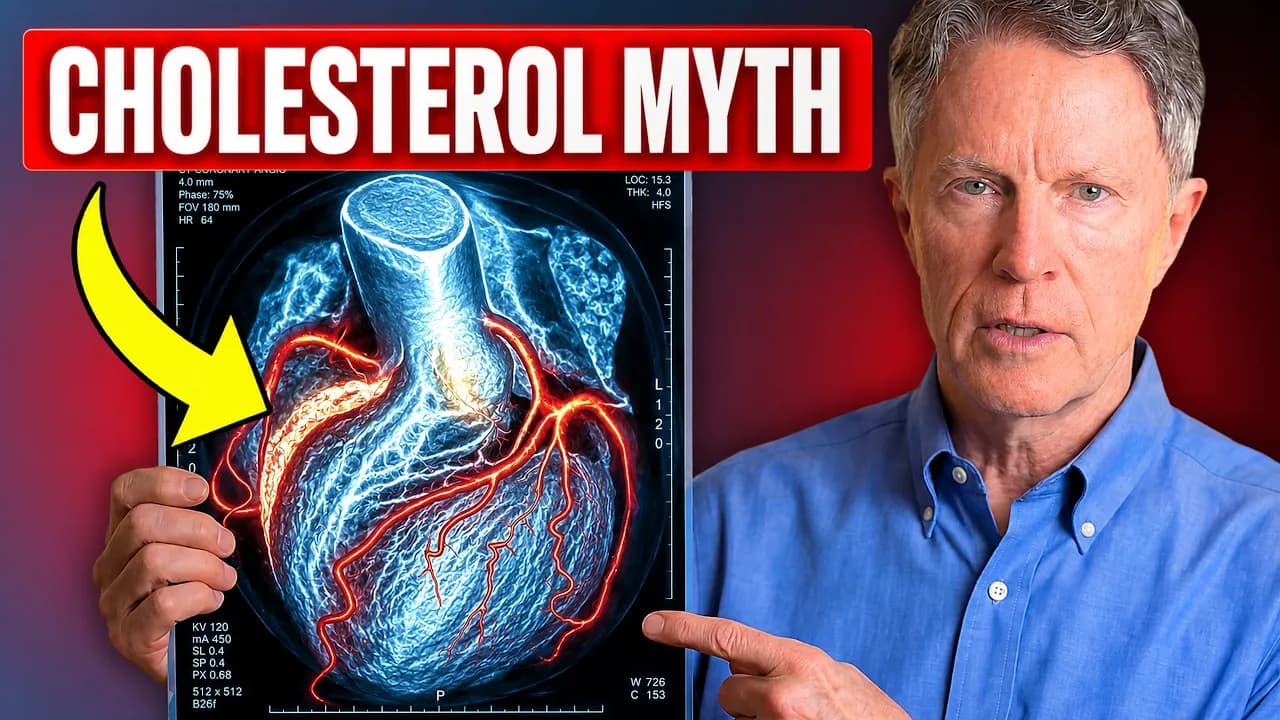
The number that defines normal cholesterol is not the same number that defined it normal 20 years ago, or even 40 years ago, or even 60 years ago. That number has been changing repeatedly. Every single time it moves, millions more people are suddenly diagnosed with high cholesterol.
When you treat cholesterol without investigating the cause, you are just turning off the fire alarm. You might be suppressing the beeping sound, but what about the fire? What caused this LDL cholesterol to increase in the first place is not investigated too deeply.
In 1963, the New England Journal of Medicine published its official table on normal cholesterol levels with a range between 150 and 280.
In 1988, the National Cholesterol Education Program released its official guidelines stating anything over 240 was not normal, and at this point millions of people were put on medication.
In 1987, Lovastatin, the first statin drug, was approved by the FDA a year before they changed the guidelines.
In 1993, the threshold dropped again to 200 as the target for everyone.
In 2001, the focus shifted from total cholesterol to LDL, with targets under 130, or under 100 if you're at risk.
In 2004, LDL targets were lowered to under 70.
Currently, guidelines recommend LDL under 55, and mention having conversations with your doctor at age 30 for statins for high-risk people.
If lowering cholesterol is the answer, why is cardiovascular disease still the number one cause of death in America for four decades? The drugs do work and bring down LDL to a certain level, but the deaths keep increasing.
Between 2002 and 2013, statin use in the US nearly doubled. Cholesterol levels fell, but cardiovascular deaths did not fall in the same proportion.
LDL is not cholesterol. LDL stands for low-density lipoprotein. It's a protein carrier that also carries vitamins so the body can take those from the liver deep into the cells. Every single cell in the body needs cholesterol. The brain is 60% fat and needs cholesterol. Cholesterol is also needed to make vitamin D.
A standard lipid panel tells you how much cholesterol is being carried by the LDL trucks, but does not tell you how many trucks there are or the size of the trucks.
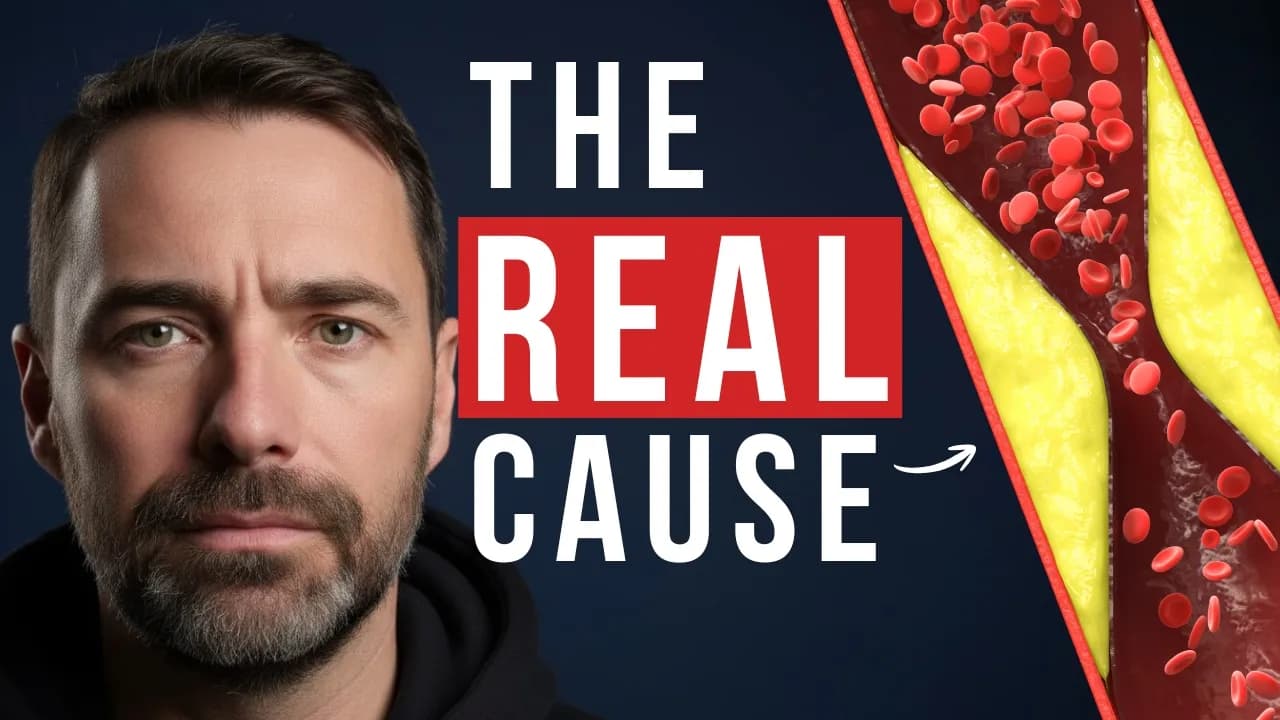
There are two very different versions of LDL particles: large buoyant LDL particles that float in the bloodstream and do not tend to invade the arteries, and small dense LDL particles that tend to trigger inflammation where the placking starts.
Two people can have the exact same LDL number of 160 and have completely different risk factors, depending on whether they have more large buoyant LDL or more small dense particles. An advanced lipid profile test is needed to differentiate these two types, as the standard cholesterol panel does not provide that data.
The primary driver of small dense LDL particles is insulin resistance. Insulin resistance occurs when you've eaten too much glucose from sugar or starches for too long, too frequently. Over time, the cells become resistant and no longer allow the cell to pull in glucose, causing the fuel door to get jammed shut. The body compensates by producing a lot of insulin, and too much insulin causes too much small dense LDL.
In July 2004, the National Cholesterol Education Program issued an update that lowered LDL targets and widened who qualified for statins, pushing millions of Americans into the need for treatment category.
Eight out of the nine authors failed to disclose financial associations with the makers of cholesterol lowering drugs. The Center for Science in the Public Interest organized a formal petition asking the NIH to create an independent review panel free of these conflicts of interest to reevaluate the data behind the update.
In 2013, the ACC and the American Heart Association cholesterol guidelines drew the same criticism, with eight out of 15 panelists, including the chair and both co-chairs, having past or current ties to pharmaceutical companies.
The Archives of Internal Medicine looked at 17 ACC and American Heart Association guidelines issued in 2008. Across nearly 500 committee members, 56% disclosed conflicts of interest.
When drug companies claim statins will cut your heart attack risk by 36%, they use relative risk reduction rather than absolute risk reduction. In a group of 100 people over several years, without the drug, maybe three people would have a heart attack, and with the drug the number drops to two people. Because two is roughly 36% less than three, they get to print 36% risk reduction, when in reality the drug protects one out of 100 people.
Comparing LDL reduction effectiveness:
- Best-case scenario statin drug: 45% reduction
- Bergamot extract: 15 to 40% reduction
- Berberine plus red yeast rice: 35% reduction
- Berberine by itself: 22% reduction
- Low-carb diet: 15% reduction
- Intermittent fasting: variable depending on eating patterns
The question of what causes LDL, especially the small dense lipoproteins, to go into arteries and create inflammation and placking is driven by insulin. Insulin resistance is the biggest primary driver of high LDL. A fasting insulin test is recommended.
Chronic consumption of carbohydrates in the form of sugar and starches causes insulin resistance.
Inflammation is another driver of LDL. Thyroid function should be evaluated beyond just thyroid stimulating hormone - T3 and T4 should be checked because the problem could be in the conversion. Chronic stress can also drive up LDL. A fatty liver can also drive up LDL.
The next most important thing to understand is insulin resistance.
Keep Dr. Eric Berg DC in your library
Save the videos and channels worth coming back to, and find them again in one place.