Could lasers help fend off Iran's cheap drones? | 60 Minutes
In a Nutshell
Iran's cheap Shahed drones ($20,000 each), used in asymmetric warfare, overwhelm expensive US interceptors like Patriots ($4M/shot), prompting development of cost-effective lasers like AeroVironment's $8M Locust system ($3-5/shot), which detects drones up to 7 miles, auto-tracks via AI, and melts them in seconds with a beam director controlled by Xbox-like joystick. Deployed against Shaheds worldwide and now along the US-Mexico border to counter drug-smuggling drones, Locust excels in swarms but faces limits from weather and scaling production. No single solution exists; lasers complement layered defenses amid competition from Lockheed, Raytheon, Israel, and China.
These notes were generated by AI and may contain inaccuracies.
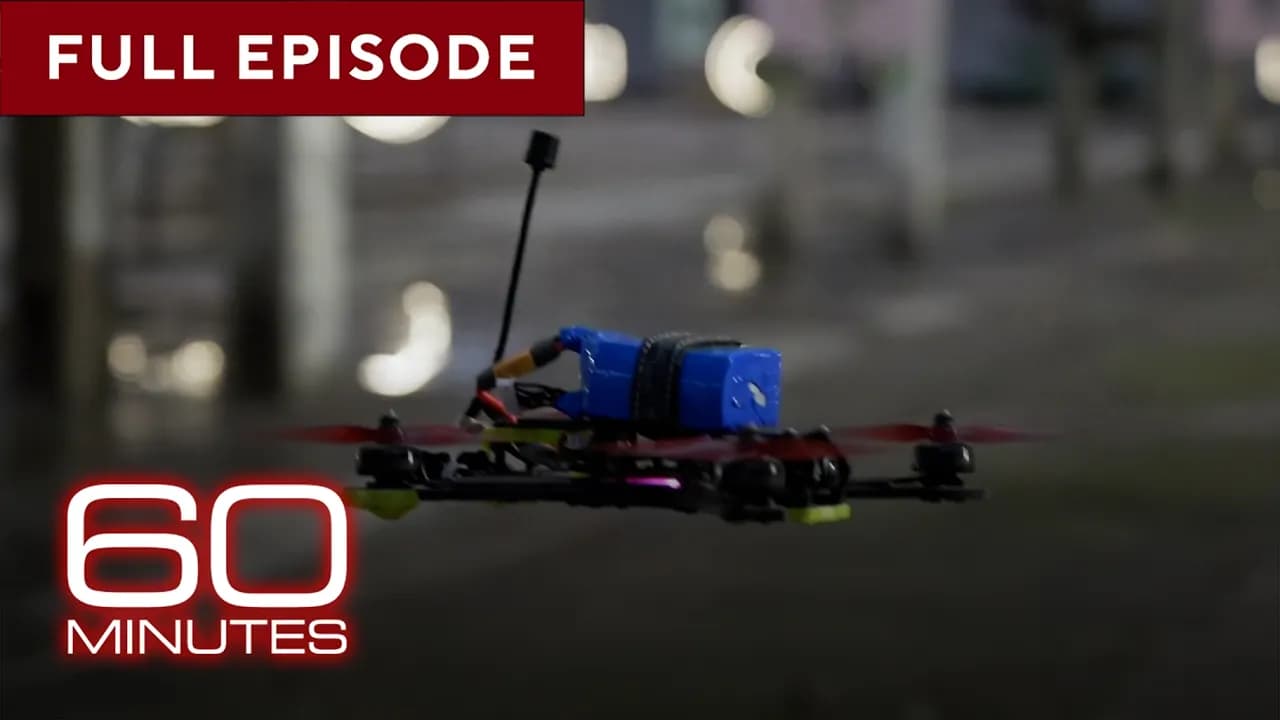
Asymmetric warfare pits highly sophisticated US interceptor missiles like Patriots and THAADs against Iran's low-tech drones made from materials available at hobby stores. Iranian drone attacks decreased this past week but caused significant damage, including the first American casualties when a drone killed six soldiers in Kuwait. These drones drain US weapon stockpiles and threaten the Strait of Hormuz. Counter-weapons resembling science fiction, such as lasers that zap drones out of the sky, are in development.
Iranian propaganda shows its drone arsenal menacing Gulf States, blasting apartment buildings, airports, and oil refineries. Shahed drones are faster, stronger, operate in swarms, and are cheap—often made of flimsy plastics, costing as low as $20,000 each. US counters with anti-missile interceptors costing millions per shot.
Lasers change the economics of defense against these mass-produced threats. Wahed Nawabi, CEO of AeroVironment (AV), explains:
A Patriot missile battery costs about a billion dollars to procure one system. Each missile costs about $4 million a shot. Compare that to a laser. The cost per shot goes from $4 million a shot to less than $5 a shot. In most cases, about $3 a shot.
The price difference is like buying a mansion versus a cup of coffee.
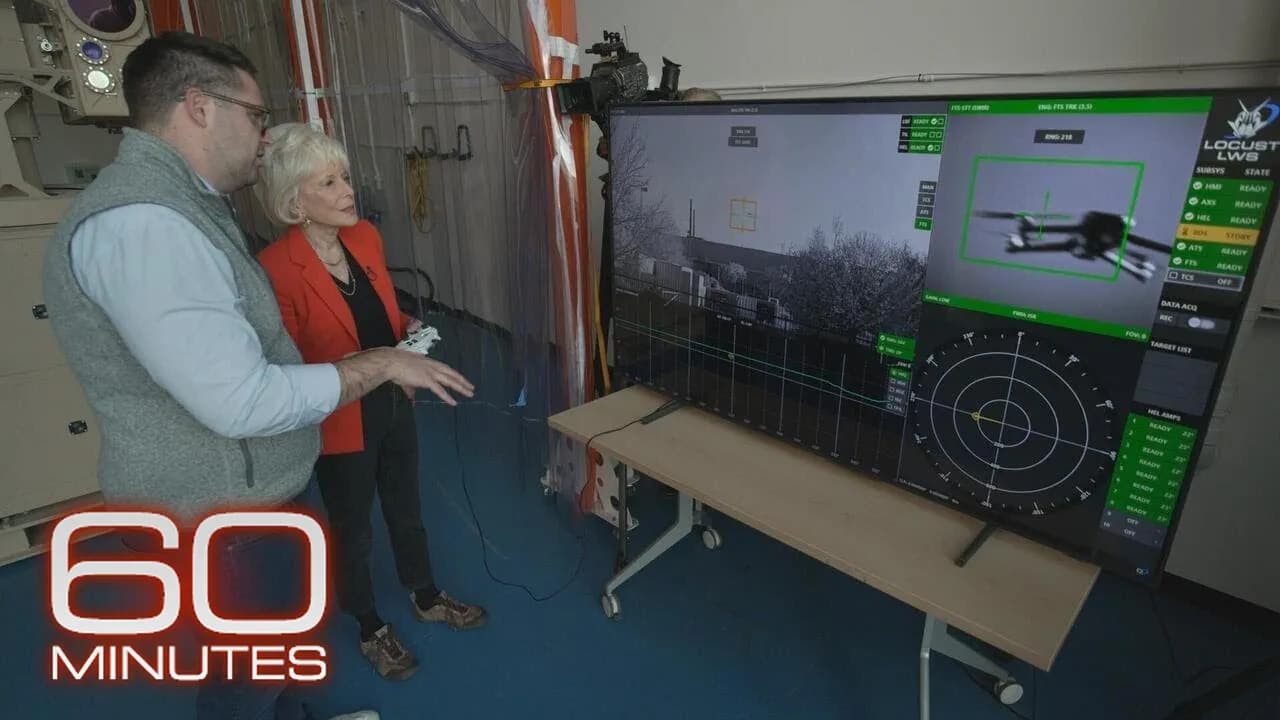
At AV in Albuquerque, the Locust laser system is built. The top part resembles Wall-E; the beam director blasts the deadly ray from one of the eyes. The base has batteries and a cooling system. Each unit costs roughly $8 million, can be stationary or truck-mounted. Deployed in multiple battles worldwide, including against Shaheds, but not in the current war. Exact locations undisclosed.
US entered the war prepared for missiles but not drones hitting soft targets. Mara Carlin, former Pentagon Assistant Secretary of Defense for strategy, plans, and capabilities (served in Democratic and Republican administrations), notes:
If anyone were to war game this out, you knew there were a couple things the Iranian regime would do. They would always look at how to use cheap, tough-to-counter capabilities like drones in as many spots as possible.
No single magic solution exists; warfare involves multiple counters, with enemies adapting.
AV leads in drones and lasers, facing competition from Lockheed Martin, Raytheon, Israel's Iron Beam (part of Iron Dome), Ukraine, and China (revealed in military parade).
John Gity, Locust program lead, demonstrated:
- Radars detect enemy drone up to 7 miles away.
- Operator locks on using Xbox controller.
- AI tracks drone automatically.
I don't have to touch anything. It's going to follow the drone wherever it goes.
At 2-3 miles, the laser destroys by heating and melting drone materials like plastics.
In a hangar, a drone was destroyed. Operator pulls trigger; invisible beam at speed of light pierces drone, causing instantaneous flames.
That is out of the sky. It is no longer a threat.
Replay shows beam through infrared cameras. Can dwell on target until destroyed. Kills in 1 second or less depending on range, enabling rapid handling of swarms like 100 drones.
Locust effective against Shaheds; new version targets them specifically.
Laser tech is young and experimental. Concerns: performance, accuracy, battery weight, energy needs, weather effects (rain, humidity, sand, fog, dust).
Traditionally drones aren't flying in rain.
AV systems deployed in battles, never removed for weather.
Mara Carlin on lasers in arsenal:
Valuable now, but in 6 months, unsure. Need intelligence for targeting and physics to work.
Not a magic bullet.
US Army requested $100 million worth of Locust systems this fall. Used since last month against drug cartel drones along Mexican border, shooting down drones smuggling drugs and cash (easier than tunnels). Army cooperates with Customs and Border Patrol near West Texas.
FAA shut airspace near El Paso twice, causing cancellations, due to interference fears with commercial planes—not true. FAA tests confirmed no harm to airliners.
The system is designed to not make mistakes like that.
Pentagon and State Department approval needed for sales to Gulf States due to national security. Production bottleneck: cannot scale without contracts.
Not tomorrow. There's a chicken-and-egg thing. So far, only authorized for US military.
Even with approval, months to scale for e.g., Bahrain wanting 500 units.
Keep 60 Minutes in your library
Save the videos and channels worth coming back to, and find them again in one place.