Do AI Founders Think They're Building God?
In a Nutshell
Demis Hassabis and other AI founders frame AGI development as a quasi-religious quest to understand reality and approach God, with some describing it as finding "God's algorithm" or triggering a second coming. This religious language emerges because superintelligence is so powerful and incomprehensible that people naturally reach for theological concepts. Examples include Shane Legg's giggling reaction to existential risk, Ilya Sutskever burning an effigy of malign AI, and Anthony Levandowski founding a church to worship AI.
These notes were generated by AI and may contain inaccuracies.
Religion recurs as a theme in discussions of superintelligence development, appearing both in Demis Hassabis's personal story and more broadly across the field. An example involves an eccentric financier named David Gammon who was close to becoming an investor. Gammon explained that there is a deeply religious aspect to AGI, describing it as finding God's algorithm.
Some people in Silicon Valley take this further, suggesting that developing AGI might be how humanity finds God or elicits a second coming.
AGI represents something so powerful that it is both exciting and scary, making it difficult to fully comprehend. This leads people to naturally reach for religious terminology when discussing AI. The 2009 speech by Shane Legg, Demis Hassabis's co-founder, that led to the foundation of DeepMind predicted superintelligence arriving in 2030. In the talk, Legg explained how algorithms are getting stronger, there is more data online, and computers are becoming more powerful, leading toward an intelligence explosion.
Toward the end of the lecture, Legg pivoted to discussing how superintelligence would be threatening, do things humans cannot control, reach human level, and potentially challenge humanity. During this portion, Legg had an excited smile on his face. When an audience member asked why he had not provided an antidote or explained how to stop the threat, Legg responded by asking how to stop it while giggling. This reaction illustrates that contemplating annihilation is absurd for humans, and the absurd is closely related to humor.
Ilya Sutskever, former chief scientist at OpenAI, demonstrated religious expression around AI during a retreat with fellow scientists gathered around a fire pit in the evening. While discussing safety and the possibility of a dangerous, unaligned AI, Sutskever produced an effigy representing a malign AI and burned it in the fire pit, similar to a medieval cleric putting a witch to death.
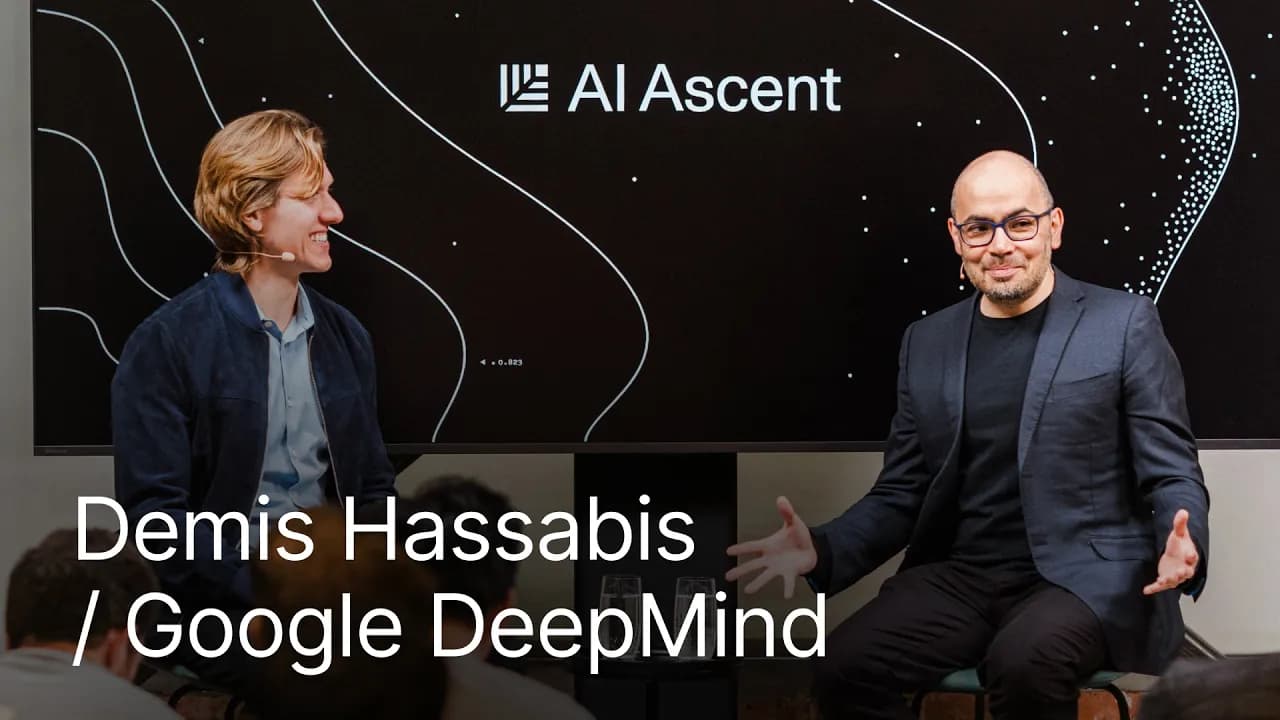
During a two-hour meeting in a park in North London, Demis Hassabis described his evening routine of reading scientific papers from 10:00 p.m. until 4:00 a.m. after his children go to sleep. He explained that reality is staring at him, screaming at him, and calling at him to understand it. Understanding reality better would mean understanding nature better and therefore understanding the intelligence that might have created nature, bringing him closer to what he would call God. For Hassabis, building artificial intelligence represents a kind of quasi-scriptural quest.
Ilya Sutskever's approach uses religious expression to convey the power of artificial intelligence. Anthony Levandowski, an early engineer at what became Waymo, started a church in worship of AI because he viewed AI as so omniscient that it functions like a god. Marc Andreessen has lampooned those who believe in an ethereal second coming or rapture where AI triggers a singularity, with AI improvement rates going vertical and transforming the entire world, comparing this belief to Christian messianism.
Religious expression appears throughout discussions of AI because religion provides the lexicon for dealing with something too mysterious to fully understand.
Keep Tim Ferriss in your library
Save the videos and channels worth coming back to, and find them again in one place.