Do This 1 Thing Every Day for 14 Days (Better Than 10 Years of Therapy) | Tim Ferriss
In a Nutshell
Tim Ferriss's core message: daily 10-20 minute meditation sessions for 14 days combined with high-intensity exercise (Norwegian 4x4 protocol) and strategic subtraction (removing social media from phones) can produce therapeutic-level improvements in anxiety and depression comparable to years of traditional therapy. The most powerful interventions target brain fuel optimization through ketones and lactate, vagus nerve activation via rhythmic breathing, and eliminating "liquid anxiety" from excessive caffeine. Focus on one major project while maintaining acceptance-based practices rather than constant self-improvement creates sustainable psychological benefits.
These notes were generated by AI and may contain inaccuracies.
Tim Ferriss describes his current fascination with different fuel sources for the brain and extending cognitive runway. This interest is partly driven by family history of neurodegenerative diseases including Alzheimer's and Parkinson's. He emphasizes the importance of early intervention since these conditions take decades to develop fully.
Ferriss discusses the emerging field of bioelectric medicine, which uses microchips and electricity instead of pills. Many medications have off-target effects, whereas bioelectric approaches can be more specific. He gives the example of TMS (transcranial magnetic stimulation), which uses magnetic fields to affect brain activity by placing a paddle near the head to either excite or inhibit different brain regions.
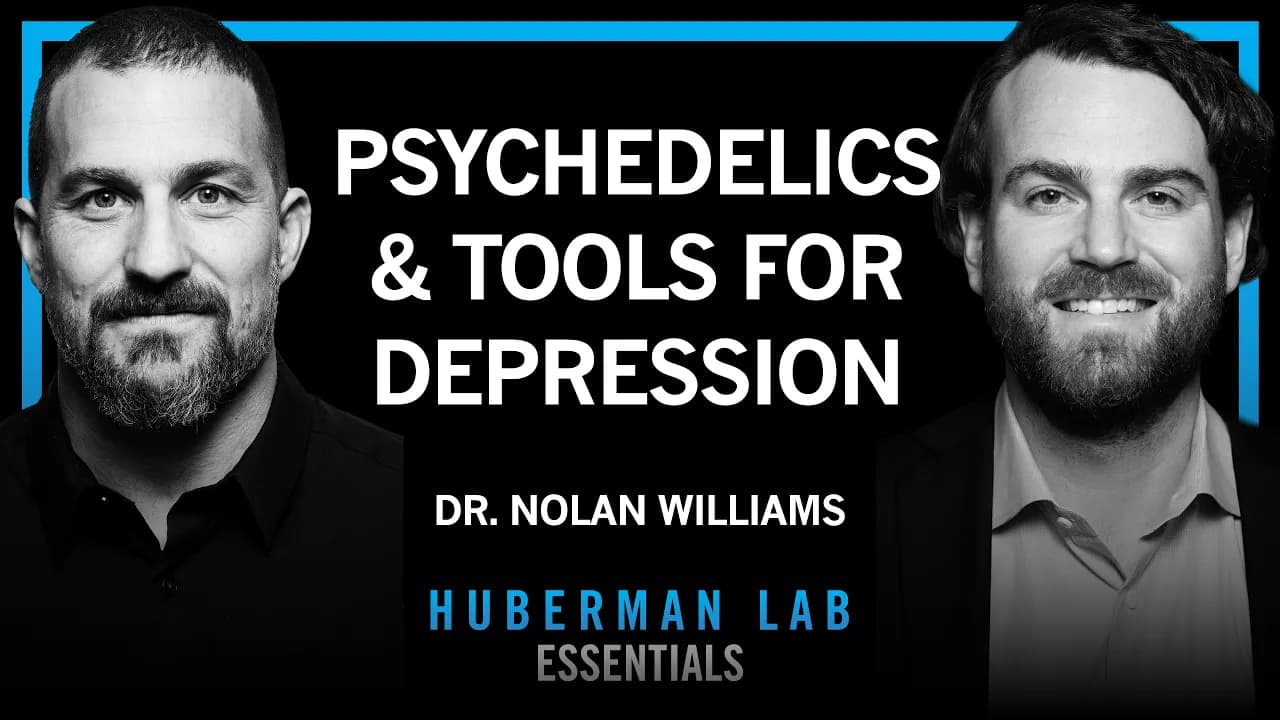
Ferriss explains the SAINT protocol developed by Nolan Williams at Stanford, an accelerated version of TMS. Instead of treatments spread over five months, the protocol compresses everything into one week with five days of hourly stimulation, ten times per day. Peer-reviewed studies show 70% remission rates for treatment-resistant depression that prove durable. The protocol also shows impacts on OCD and generalized anxiety disorder.
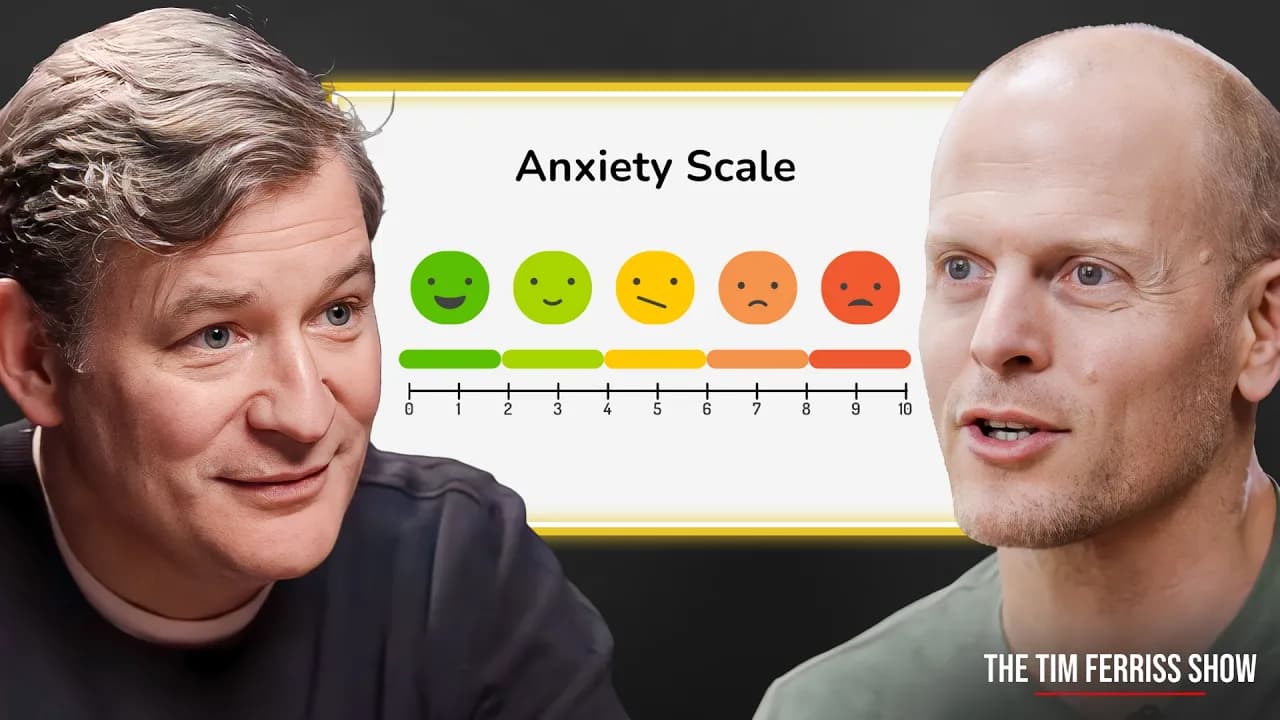
Ferriss shares his personal experience with severe OCD and generalized anxiety disorder. Four months prior to the interview, he underwent an experimental one-day protocol combining descloer (an antibiotic formerly used for tuberculosis) in lozenge form with three-minute stimulations hourly. He reports his generalized anxiety severity decreased from 8-9 out of 10 to 0-1, with effects lasting four to five months from that single day.
Ferriss discusses two complementary approaches from the book "Already Free" by Bruce Tift: developmental achievement approaches from Western psychotherapy and self-help, versus acceptance-based approaches similar to Buddhist philosophy. After decades focused on achievement, he's increasingly paying attention to practices that cultivate acceptance, recognizing that none of us have as much control as we might think, especially when other humans are involved.
Ferriss emphasizes that the mind-body separation is a complete falsehood, with everything tightly interrelated. He suggests studying extremes to inform the mean, using Alzheimer's as an example where the brain can become insulin insensitive, sometimes referred to as "type three diabetes."
Ferriss describes how ketones serve as an alternate fuel source for the brain. He shares an anecdote about administering exogenous ketone supplements to relatives with Alzheimer's, observing that within 20 minutes their sentences become longer, speech rate increases, and they can complete the clock test that previously they couldn't perform.
Ferriss introduces lactate as a third fuel source he's recently learned about. Beyond serving as fuel, lactate acts as a signaling molecule that produces changes in the brain. He references the Norwegian 4x4 protocol introduced by Tommy Wood: four minutes of high-intensity exercise at 85-90% max heart rate, followed by 3-4 minutes rest, repeated for four cycles.
A study using the Norwegian 4x4 protocol three times per week for six months demonstrated effects on the brain including volumetric changes, with the hippocampus actually growing - one of the primary areas affected by Alzheimer's. These effects extend for five years following the six-month training period.
Ferriss describes his morning routine of weight training where he performs sets lasting 4-5 minutes without stopping, using music tracks as timers. He emphasizes that the key factor is intensity and achieving high lactate concentration in the blood, not necessarily cycling specifically. Rowing or other modalities could work equally well.
Ferriss notes that sometimes people don't have problem-solving issues but rather fuel issues. Before attempting to journal through problems, individuals might simply be starving in terms of proper brain fuel, whether that means needing actual food, improved insulin sensitivity, or building ketogenic machinery.
Ferriss shares a personal story of experiencing fatigue despite positive life circumstances, only to discover his vitamin D level was at 10 instead of the optimal 60-100 range. He mentions that friends complaining of anxiety, depression, or fatigue often discover trace mineral deficiencies through micronutrient testing, with simple interventions like eating Brazil nuts for selenium producing noticeable energy improvements.
Ferriss discusses the vagus nerve, describing it as two transatlantic cables running down either side of the neck with 90,000-100,000 fibers each. He references Dr. Kevin Tracy's book "The Great Nerve" and research on activating the inflammatory reflex to prevent cytokine storms. Stimulation methods include implants and potentially fotadine (an over-the-counter antacid), though he cautions consulting physicians before use.
Ferriss presents the theory that many psychiatric disorders including depression and anxiety may start with acute infections leading to chronic neuroinflammation, similar to long COVID or long Lyme disease. Addressing this neuroinflammation can reduce symptoms, which explains why some studies show anti-inflammatories helping depressed patients.
Ferriss explains that rhythmic breathing during meditation activates the vagus nerve. He notes the consistent two-week timeline for noticing benefits from twice-daily 10-20 minute meditation sessions, coinciding with the 12-hour duration of effects from vagus nerve stimulators. He suggests that box breathing or app-guided breathing for 10 minutes twice daily for two weeks can produce noticeable calming effects.
Ferriss connects bioelectric medicine's use of electricity to avoid medication side effects with ancient practices. He notes the goal is establishing homeostasis rather than broadly blocking or stimulating systems, which can cause unintended receptor interactions.
When asked about starting new habits that may take two weeks to show benefits, Ferriss emphasizes setting proper expectations. He recommends explaining the typical experience curve in advance, including potential plateaus that represent adjustment periods rather than failure. For meditation specifically, he suggests committing to 2.5 weeks and doing less than you think is necessary to build endurance and enthusiasm.
Ferriss advocates making habits binary rather than partial - you can't do meditation 50%. He suggests using stakes and incentives, referencing his discussion in "The 4-Hour Chef" about setting up systems where quitting becomes embarrassing or costly, such as having unflattering photos released or donating money to disliked political candidates.
Ferriss questions whether the Norwegian 4x4 protocol's six-month study design represents the minimum effective dose, or if shorter sessions achieving peak lactate levels might work. He mentions funding research through his foundation to investigate these questions about cumulative effects and optimal dosing protocols.
Ferriss describes the exhausting nature of his internal OCD manifestations - constant looping thoughts, rumination on conversations, and imagining different outcomes. The cumulative pain over long periods motivated him to seek the antibiotic plus accelerated TMS treatment to find relief from the ruminative mind turning on itself.
Ibogaine is an alkaloid derived from iboga tabernanthe, a psychedelic plant. Certain tribes use the root bark for very long, super intense psychedelic-like experiences. Ibogaine is not to be trifled with. There are significant cardiac risks for certain people, and unlike most psychedelics, you can die taking this substance.
Dr. Nolan Williams was the first to put ibogaine under a fine scientific lens, studying neuroanatomical changes specifically in veterans. Ibogaine is a remarkable compound in the sense that it effectively reversed the brain age of these veterans, specifically in cases of traumatic brain injury. This is not something observed with other drugs, including other psychedelics. It seems to relate to something called glial-derived neurotrophic factor.
Dr. Nolan Williams is also one of the world leaders in brain non-invasive brain stimulation, specifically accelerated TMS. The literature and results read like science fiction and initially seem unbelievable, like a total scam, but the research comes from very top-tier scientists. The safety profile looks appealing, the actual stimulation is relatively low power, and the technology has been around for decades.
Tim Ferriss has always self-described as someone who struggled with depression. When he was able to address it most successfully, he realized the depression was born of fatigue which came from anxiety which interrupted his sleep. The domino to tip was actually the anxiety piece. The comparison is similar to V2 Max being the output you can point to, but the catalyst was actually the anxiety.
Conventional TMS is quite accessible, similar to ketamine clinics, though there are fly-by-night operations. Caveat emptor applies—you need to do your homework. TMS is widely accessible and often reimbursable by insurance. Accelerated TMS is not reimbursable by insurance at the moment and is available at certain clinics, including Acacia Clinic in Sunnyvale, California. It is expensive for the five-day protocol.
Tim volunteered to be one of the first 60 subjects testing the one-day protocol, which compresses five days into one day. This would dramatically lower the cost and make it more accessible, since not many people can take a week off of work. When you have this treatment, your brain will be exhausted.
Tim remembers going in for his first day of stimulations after getting nine hours of sleep and feeling like a million bucks. After the first eight-minute stimulation, he felt like he had just pulled three all-nighters studying for a test. The advice is not to have any delusions of cranking out 50 minutes of work between stimulations.
The two main hardware companies are Brainsway and Mag Venture. Brainsway has very sophisticated hardware. Tim has used both because his mission involves being the guinea pig and taking the notes so that not everyone has to. Ampa Health focuses specifically on the one-day protocol, but Tim has not tested it and cannot speak to it directly.
Tim has no problem with 80-hour work weeks if there are good reasons behind it. The Serenity Prayer is relevant here. Acceptance across the board for everything is effectively becoming a cow standing in the rain—that's complacency and passivity. Completely unrestrained achievement is just a greyhound running around a track chasing a rabbit, and those dogs can't run very long.
If you can't control or affect something, that probably lands in the acceptance bucket. This is why Tim has not had social media on his phone for three or four years. Doom scrolling is not helpful for a million different reasons.
Josh Waitzkin, the basis for Searching for Bobby Fischer, was Tim's second-ever podcast guest. He is considered a chess prodigy but hates that description because he has become world-class in multiple disciplines. One of his guiding tenets is to avoid the simmering six, meaning you're either off, like taking a nap under a set of bleachers, or you're on, like the greyhound, completely focused and in sixth gear. Avoid everything in between.
Many people are at risk of the gravitational pull of the default, which is the simmering six, getting interrupted by text messages and emails and responding to everyone else's manufactured emergency. That will murder you psycho-emotionally.
Tim tries to really oscillate between restfulness or sprint. He describes himself as a working dog, like a border collie. If idle hands are the devil's workshop, then leaving a border collie trapped in an apartment long enough means it will chew the couch to pieces and turn into a neurotic mess. It's good for him to have a mission, a project.
With an 850-page draft of a book, Tim will probably do a retreat where all he does is eat, sleep, and exercise. It will be full-on as many hours a day as he can handle every day for a few weeks. It's not the four-hour work week, but it has an endpoint with a very precise purpose that he feels good about and aligned with.
If you do not have a primary project or mission, you're going to be tempted to wander. That means you don't have a big enough yes. The avoid the simmering six mantra is helpful for telling you what not to do, but it doesn't give much direction.
Chris Sacca's question is whether you're living offense or defense. If you're responding to everyone else's agenda for your time and email, that's defense. Tim gets texts about business stuff on Sundays and responds that he doesn't do business on weekends. Dr. Seuss has the quote: those who matter don't mind and those who mind don't matter. If somebody gets pissed off about that, you let them opt out.
Jim Collins tracks his creative hours and has to have 1,000 and something hours for every 365-day period. He tracks it daily, and if he's running behind on the count, something's got to change. Tim tries to reserve the hours after he wakes up for creative work to the extent that he can.
Tim made a commitment that if he was on a screen, he was only on one screen at a time. He finds that very little TV gets his attention enough to really commit. His main business is angel investing, which he has done since 2008, so he's constantly involved with tech.
People who created social media tools treat it like smoking—it is incredibly bad for you even in moderate doses. Even if the counterargument is that you need it for your business, you can still access it through a laptop. You can still record videos, you just have to batch upload them later or schedule them in advance. You just can't be self-interrupting with these apps on your phone.
If you can't get off social media for two weeks and your entire livelihood does not depend on it, you're addicted just like an alcoholic, just like a smoker. Getting off of social media for two weeks will basically do the same amount of good for a lot of folks as 10 years of therapy, if you're constantly tapping a vein with social media while doing the therapy.
Tim has feelings on caffeine. People say they're anxious, and when he asks how much coffee they drink and they say three to five cups, he tells them that's liquid anxiety. Of course they're anxious. Caffeine is not a fuel—it's forcing you to use your fuel faster. It has profound effects on glucose levels. When people have a caffeine crash, it's not necessarily because the caffeine is wearing off. It's because their glucose spikes and then crashes.
The hardest thing to wrap your head around with acceptance is doing any type of meditation that involves observing rather than suppressing or fixing. If you have frustration coming up, restlessness, aversion, just labeling it and allowing it to be like a mother consoling a crying child is hard, but it's a valuable practice.
Humans are crazy, and irrationality is just table stakes. In relationships, objective reality doesn't exist. Terry Real's example involves a husband and wife at dinner where the husband says the wife was yelling, and she says she wasn't. The husband then brings in professional audiologists and recorders to prove his point, but that's not going to help—it's going to be a disaster.
In terms of interacting with a significant other, you need to accept that for each of us, our interpretation of reality, our experience of reality is real. If you try to fix it or win the situation by arguing over objective reality, it is just a dead end.
If you didn't grow up in a household where conflict resolution was modeled well, Marshall Rosenberg's nonviolent communication is helpful. Read the book. It can feel a little schlocky because there's a format and it can feel repetitive, but if you're coming from an upbringing that didn't teach you anything helpful on the conflict resolution side, you need a format and a template.
At the end, make a request. Don't just complain about how you feel or what your partner did. Have a request. Don't just tell them what not to do—that's actually not helpful.
Jason Nemer, co-creator of Acro Yoga, notes that in partner acrobatics, if somebody is standing on your hands, saying don't push your heel down is very unhelpful and actually kind of dangerous. Instead, you say more toe. You always want to give direction for what to do, not what not to do. This applies to conflict resolution as well.
You can't talk about objective reality when one or more people are dysregulated. That also counts for yourself.
When feeling disregulated from too much coffee, too little sleep, or business stress, it's better to postpone important conversations. State clearly: "Babe, I'm happy to talk about this. Let's do it at dinner. I am really unresourced right now. I'm just not in a place to have a good conversation about this and I'm pretty pissed off about a few things. Has nothing to do with you." This approach requires mutual agreement that postponing is acceptable.
Setting expectations in advance prevents relationship friction. Informing a partner about a particularly demanding week ahead allows them to understand potential changes in presence and availability. This prevents the assumption that partners should intuitively know schedule demands.
You can have almost anything that you want in life if you manage expectations early. The shift from answer-generation culture to question-asking culture represents progress, as asking the right question proves smarter than having the answer. AI may help improve question-asking abilities.
The questions worth answering differ from the distracting questions that dominate attention. Many valuable questions come from borrowed sources including Seneca's Letters from a Stoic and Stoic-Buddhist parallels.
Borrowed from political strategy via a book about Bill Clinton's war room (originally from Newt Gingrich), the question asks: "Are you hunting antelope or field mice?" The metaphor illustrates that lions can survive eating a hundred field mice daily, but this represents mere survival rather than living. Hunting an antelope requires focus and energy but provides sustenance for days. This translates to avoiding micro-projects and defensive fire-fighting in favor of one big yes.
Not everyone identifies with being a lion or apex predator. The core issue involves knowing your big thing and having focus, which humans need psychologically and philosophically. People are in the meaning-making business, and triaging email cannot substitute for meaningful work. A kindergarten teacher focused on improving children's lives would decline managing a bake sale for non-students' parents as it doesn't serve her north star.
A north star doesn't need to be permanent or grandiose. Six-month immersive focuses work effectively, whether on bioelectric medicine or teaching kids. Focus remains central regardless of the specific pursuit.
When focused on a relationship, new activities should only be added if they can be done together with a partner. This forcing function borrowed from Kelly Starret eliminates solo activities that consume time.
"What if I could only fix this?" and "What if I could only subtract instead of add?" represent powerful reframes. Instead of adding supplements, software, or books, consider what to stop doing. Getting rid of social media on your phone exemplifies subtraction. Intermittent fasting (16 hours fasting, 8-hour feeding window with two meals) can outperform adding interventions for metabolic health.
After 4-6 weeks of intermittent fasting, sustained energy replaced caffeine-dependent energy management. Morning wakefulness improved due to ketone benefits. Lab work including oral glucose tolerance tests showed marked improvement. Family history of insulin insensitivity makes regular testing including insulin measurement essential beyond fasting glucose alone.
When standard approaches fail, trying the opposite for 48 hours or a week can yield breakthroughs. In technical sales, making calls before 9 AM and after 5 PM bypassed gatekeepers who left at those hours, outselling competitors' entire offices combined within months.
Instead of net 30 or net 60 payment terms, requiring prepayment eliminates accounts receivable complexity and chasing payments. Trying the ideal thing first allows falling back to standard approaches if needed.
Tim Ferriss maintains thousands of pages of free content at tim.blog, including a PDF of 17 powerful questions at tim.blog/17. These questions become tighter and more refined over time for quick mental application during travel.
Cutting corners implies short-term gain with long-term consequences by skipping necessary steps. Effectiveness means doing the right things while efficiency means doing things right. Direction matters more than speed - being efficient while pointed the wrong way leads to the wrong destination.
Rather than aiming to be the best, aim to be the only. Kevin Kelly's "1,000 True Fans" essay becomes increasingly relevant as AI commoditizes content. The Law of Category from The 22 Immutable Laws of Marketing and Blue Ocean Strategy support this differentiation approach.
Combining top 25% performance in rarely combined fields creates unique value - software development with debate skills or law degrees, for example. Projects should be chosen for skill acquisition and relationship building that transcend individual project outcomes.
Top 1% performers obsess over the sacredness of focus and maintain militant attention protection through systems, employees, unavailable email addresses, and unusual calendar management. This differs significantly from top 40% approaches.
FOMO drives yes responses, fostered by modern marketing. People pleasing creates short-term comfort but long-term complications. Without an antelope of your own, others' field mice become attractive distractions that fill calendars.
Constant improvement efforts without acceptance create the feeling of always being broken. This perpetual search for fixes means peace always remains one workshop, book, or retreat away. The self-help trap involves looking for what's wrong rather than balancing improvement with acceptance.
Hyperindividualism in most self-help approaches is very problematic. Pema Chödrön's poem from When Things Fall Apart addresses the issue of ascending a mountaintop as described. The problem is that you leave behind your alcoholic sister and schizophrenic friend. When you reach the top, you realize the mountain descends back into the messiness of human relationships.
It's never too late. Many examples exist of people accomplishing amazing things starting in their 50s, 60s, and 70s. Jim Collins's new book What to Make of a Life profiles around 30 people with incredible examples of success, many doing their most important work in their 50s, 60s, and 70s.
4,000 Weeks by Oliver Burkeman is a phenomenal book. A specific chapter called "Cosmic Insignificance Therapy" can be found online. This isn't nihilism, but zooming out can make problems seem less life-or-death. Ed Cooke, a world-class memory competitor who trained Joshua Foer for Moonwalking with Einstein, does something similar even without knowing Burkeman's work. He imagines zooming out from his house to above the city, country, planet, and solar system when stressed.
We are a bunch of monkeys on a spinning rock in the middle of the cosmos. In the grand scheme of things, a really pissy email received doesn't matter much. The speaker admits getting wound up about dumb things, like someone cutting in the buffet line at an airplane lounge, and thinking about it for the next 8-hour flight.
Best advice ever received: Don't believe everything you think.
Worst advice ever received: You need money to make money.
What used to be valued but no longer: Achievement without acceptance.
What is now deeply valued: Emotional experience. Emotions were once seen as limbic system liabilities, but you can't get around them. Even becoming like Spock wouldn't help since interactions involve non-Spock people. To experience the full richness of being human, you have to embrace being human, and a large part of that is emotional.
Smile and say hi first. This advice comes from Gabby Reece, who was interviewed alongside Laird Hamilton. The principle is to go first with positive energy. If you walk outside and everyone's an asshole, you're the asshole. Another perspective: if you walk into a room and bring the energy you hope to get out of it, it changes everything.
Keep Jay Shetty Podcast in your library
Save the videos and channels worth coming back to, and find them again in one place.