Dr. Andrew Huberman — Peptides, Performance, and Protocols
In a Nutshell
Dr. Andrew Huberman shares his minimalist resistance training protocol—training each body part once weekly to true failure with 2-3 sets across 2-3 compound and isolation movements—while emphasizing the critical importance of morning cortisol spikes through sunlight, caffeine, and exercise to ensure low evening cortisol for optimal sleep. He explores peptides including BPC-157 for injury repair, growth hormone secretagogues, and GLP-1 agonists for weight loss, while stressing that neuroplasticity requires both chemical enhancement and deliberate skill practice rather than either alone. The core message centers on mining endogenous compounds and established principles over experimental protocols, with the key framework of "shut up, suit up, show up" for mental resilience and daily connection to one's authentic desires.
These notes were generated by AI and may contain inaccuracies.
Jim Hollis emphasized the necessity of shutting up, suiting up, and showing up while stopping complaints, recognizing that others suffer more, and maintaining gratitude for being alive. He stressed how critical this mindset is to the psyche and feelings of self-worth. Hollis also highlighted the importance of getting out of stimulus-response patterns, ideally once a day but at least a few times per week, to connect with one's heart's desires.
The Dark Wizard is a four-part documentary about Dean Potter, who began as a climber before moving into parachuting and what he called freebasing - climbing then jumping off rocks while parachuting, eventually progressing to wingsuiting. Potter's story involves his mental health challenges and how he channeled high-dopamine manic states into extraordinary performance feats while managing the lows. The film explores energy as a distinct resource separate from time and longevity, examining how some individuals possess greater amounts of this energy that, when focused, enables exceptionally high performance levels. Potter demonstrates that competing against others represents a misuse of energy that can cause harm, whereas seeking beauty - pursuing pure experience and channeling energy into activities one loves - produces truly impressive feats and forward progress. Competition ultimately limits output and performance rather than raising the bar as commonly assumed.
Dorian Yates, six-time Mr. Olympia winner, trained with a minimalist approach that science has since validated. His method involves a couple warm-up sets - a light set to familiarize with movement, a medium set at approximately 50% of working weight, followed by a work set of 5-12 repetitions taken to failure. Dorian advocates for two sets per exercise with 2-3 exercises per major body part. The training produces tiredness at workout completion but recovery within a couple hours, with consistent strength gains every session provided deloads occur every 6-8 weeks.
Mike Mentzer promoted one all-out set to failure, though this typically proves insufficient for most people due to the extreme focus, intensity, and systemic neural fatigue required. Dorian's approach differs from high-volume training like Schwarzenegger's two hours twice daily. While all top bodybuilders use anabolics and growth hormone, and possess exceptional genetics with long muscle bellies, Dorian maintains remarkable muscle density at age 65.
The three-day resistance training split trains legs including calves one day, followed by rest, then chest and back, rest, then shoulders and arms with neck training. This accounts for additional activities including three weekly cardio sessions: one 60-minute long slow run, one high-intensity interval session of 30-second sprints repeated 6-8 times, and one moderate 20-30 minute session. The science indicating 48-72 hours of protein synthesis post-training assumes no concurrent cardio, creating conflicts when applying higher frequency recommendations to active individuals.
Training everything directly once weekly with indirect stimulation a second time provides sufficient stimulus while accommodating cardio demands. For quads, this means 10 sets per week distributed across sessions plus sprinting and running, creating overlap that supports rather than hinders recovery.
True failure differs from stopping one or two reps short. Under extreme duress, individuals can generate far greater output than they typically access in training. The mental intensity required to reach genuine failure proves difficult to summon consistently. Dorian's training each body part directly once weekly with indirect stimulation the second time, using 4-8 sets per body part across 2-3 exercises, proves effective despite contradicting higher-volume recommendations from studies conducted without concurrent cardio.
Historical precedents include Arthur Jones, Mike Mentzer, and Ed Coan, whose recovery schedules overlapped significantly with Dorian's approach. Casey Viator's gains with Arthur Jones demonstrated muscle memory effects, though minimalist training applies broadly beyond such cases.
Leg day occurs Monday or Tuesday with flexibility for schedule demands. The workout includes 2-3 warm-ups followed by 2 hard sets to failure on leg extensions, lying hamstring curls, and belt squat as the primary movement. Additional work sets may include hack squat. A rest day follows legs, ideally incorporating sauna and cold exposure. If systemic exhaustion persists, a 20-30 minute zone 3-4 cardio session follows instead of resistance training.
Chest and back workouts incorporate low incline press, fly movements or continued incline pressing, weighted dips using weight vests or chains, low rows or one-arm dumbbell rows, and chinning movements. A Nautilus pullover machine from 1976 provides direct lat work. Neck training follows using a four-way Hammer Strength neck machine or plate-wrapped towel method demonstrated by Jeff Cavalier. Nasal breathing throughout neck work with tongue on roof of mouth prevents jaw clicking and disc slippage risk.
Neck training addresses both postural stability - potentially explaining absence of shoulder issues despite long arms - and aesthetic proportions where neck width should align with outer jaw line. Core work includes hanging L-sits and pikes performed for 3-5 sets, plus 45-degree hyperextension work without training to failure. The complete workout concludes within one hour.
High-intensity cardio utilizes an Airdyne or assault bike for max heart rate intervals. The assault bike's reformatted design and improved ergonomics explain its broader adoption compared to the original Airdyne used by athletes like Dan Gable. Upper body fatigue during arm-inclusive intervals requires consideration when programming Norwegian 4x4 protocols or similar interval structures.
Naming is very important not just in health and fitness but in science as a field. The culture of a scientific field often determines how quickly it advances, and nomenclature is important because if more people are doing something and they can talk about it to more people using the language, it tends to accelerate a field.
The assault bike provides a lot of lat work in addition to cardio. When training chest and back the day before, the assault bike ends up being a second kind of stimulus. The workout is not a hypertrophy workout but creates a pump-type feeling when done correctly. Norwegian 4x4 on the assault bike is described as torture. Sprinting outside is preferred when possible, and rowing or track work with 400s can be substituted. The key is applying max effort without getting hurt.
The weekly training structure includes shoulders and arms on the day following the assault bike workout. This involves some form of pressing for shoulders, couple work sets of bicep curls, incline curls, hammer curls, overhead tricep extensions for the long head, and bench dips. The following day, typically Sunday, involves long slow movement ideally outside - walking and hiking, rucking while listening to podcasts, jogging in the sand, or long bike rides. Starting the week after spending time moving outdoors the day before is beneficial. The program results in six workouts per week, with resistance training sessions completed in about an hour.
A key principle is that compound movements are essential. Isolation movements alone like leg extensions and leg curls to failure once a week are insufficient. Hack squatting, belt squatting, hat squatting, and front squatting to failure for couple sets are necessary. The Yates style training incorporates many compound movements, and this approach remains important.
Previous discussions about psychedelics focused on MDMA. Early experiences with psychedelics taken recreationally at a very young age included LSD and psilocybin without consideration of long-term consequences. One bad trip created lasting caution about psychedelics for many years. Later, clinically supported MDMA therapy following MAPS protocol was pursued to resolve long-standing psychological traumas. Sessions involved approximately 125 milligrams with talk therapy before, during, and after. The experience was tremendously helpful for feeling emotions and recognizing whole body sensations. MDMA is technically an empathogen rather than a psychedelic, raising both dopamine and serotonin simultaneously while dramatically increasing oxytocin.
After MDMA sessions, a break was taken before participating in high-dose psilocybin experiments. Psilocybin is described as receding the waterline on the unconscious mind. The experience revealed the structure of thinking patterns, including eight forms of self-seduction through future outcome promises. Journaling afterward was crucial for understanding thinking patterns. The hardest work involved combining MDMA and high-dose psilocybin in the same session, done only twice. This combination eliminated the typical two-day drop experienced with MDMA alone, resulting in some of the best workouts and work weeks.
MDMA creates a state where focus on anything produces positive feelings, which can be dangerous as it may pull attention toward things that seem important during the session but aren't afterward. A trained guide is essential. Psilocybin alone was described as very dark and harrowing with significant purging and vomiting. Doses ranged from 4 to 5 grams of dried psilocybin mushrooms. The combination provided support similar to having a trusted friend present, enabling engagement with difficult emotional work that standard therapy couldn't access.
The combination session led to exploration of things that didn't happen in childhood and life - experiences that couldn't have been accessed through conventional therapy. The outcome was the realization that these missing experiences could now be created. The work revealed both what needed attention and allowed real-time processing, resulting in a clear mission for daily life that has served well for over a year. The experience demonstrated that combined pharmacology can be appropriate even when single-compound approaches are typically preferred.
The goal is neuroplasticity directed toward outcomes that standard therapy cannot identify. The experience reminded that combined pharmacology with brain-machine interface and stimulation may amplify effects. Daily outcomes matter more than brain imaging metrics - feeling better and making better decisions are the real measures of success. Current feeling is positive without immediate drive to repeat the experience. Ayahuasca has not been tried. The resurgence of one-shot theory in Silicon Valley, where founders take ayahuasca and quit companies, raises questions about incentive structures and life satisfaction versus investor expectations.
When inducing plasticity, heating up the clay doesn't guarantee better outcomes - caution is needed in reshaping. Gül Dölen at UC Berkeley has studied critical periods and reopening after psychedelics, focusing on MDMA and exploring ibogaine. Her research reinforces that the 2-3 weeks following sessions represent a golden window for reformatting behavior and patterns. The medicine acts as a catalyst opening a period during which the work must be done.
Combining MDMA with psilocybin tends to blunt or eliminate the energetic hangover typical of MDMA. This approach is common in formatting weekends with breathwork leading into empathogens followed by classical psychedelics the next day. Transcend Therapeutics has commercialized methylone, described as the shorter-acting softer cousin of MDMA with much less body load. They separated the compound from psychotherapy entirely, which proved successful enough to result in acquisition.
Psychedelics are not a panacea and won't be one-and-done solutions for most people. The process resembles complicated knee reconstructive surgery requiring careful doctor selection, due diligence, and extensive rehabilitation afterward. Contraindications include bipolar disorder, family history of schizophrenia, and borderline personality disorder. Cannabis taken with or near these substances presents underestimated risks. Daily microdosing for seven days with undetectable subjective effects may shift the brain more quickly while doing hard things.
A one-day protocol refined by Dr. Jonathan Downar at University of Toronto uses the antibiotic minocycline to induce neuroplasticity. The protocol involves taking 125 milligrams orally one hour before stimulation, compressing a five-day protocol into one day. This approach has produced 90% reduction in generalized anxiety disorder and OCD symptoms for 3-4 months at a time, with some experiencing 18 months of durability.
Some patients with major depressive disorder have experienced 18 months of durability after one day of accelerated TMS protocols enhanced by descarte DCS for short. The focus is on neuromodulation writ large as opposed to just psychedelics, because if the only tool you have is a hammer, a lot of things start to look like nails. Psychedelics are not useful for everything. If you look at any historical use of these compounds, having thousands and millions of people taking psychedelics is a brand new experiment. Most indigenous cultures who consume substances like psilocybin mushrooms or ayahuasca reserve it for a very small percentage of the population, typically for the ethnobotanist, pharmacist, medicine man or woman. In the case of ayahuasca, two things stand out: patients seldom drank, and the principal uses were for warfare and hunting. The idea that putting LSD or psychedelics in the water would create world peace is not a real thing.
Psychedelic conferences reveal obscene infighting, which undermines claims about their universal benefits. What these compounds do alongside descarte DCS and many other compounds is induce neuroplasticity, which affords a window of opportunity within which you can do some pretty cool stuff.
All the stuff about exercise increasing brain derived neurotrophic factor (BDNF) is tied together with alertness. You're using your own chemistry to wake you up through some BDNF, but people assume you just have to do the exercise part. You actually have to go try and learn something to get the plasticity. It doesn't matter if you could quadruple the amount of circulating BDNF in your brain. Nothing's going to change without precisely timed neural firing pre- and post synaptically. You can do this with sensory input like reading, math, or learning to write code. Whatever it is that you want to rewire, you have to go do that hard work. Just getting the chemicals increased doesn't do it. You need alertness, these chemicals circulating, and it helps to have an emotional rise for certain kinds of work, though more analytic work probably requires less of an emotional rise.
Having sat down with experts in psychiatry, psychology, and self-help, themes are starting to fall out. We're starting to almost get to principles. The book Principles of Neuroscience by Kandel, Jessell, and Schwartz is filled with facts about receptors and neurotransmitters, but what you learn as a graduate student and postdoctoral researcher is what the principles of how a nervous system builds itself through attractants and repellents. The principles by which neural circuits change include needing coordinated firing. You can actually unwire things if they're mismatched firing. How do you build a memory and then move it someplace else so you don't have to fill the memory making area to its capacity? These principles eventually emerge and are very useful in the fields of health and wellness.
Social media and podcasts have helped people hear that exhale emphasized breathing slows you down and calms you down, while inhale emphasized breathing wakes you up. Resistance training to or near or past failure scales the number of sets. People are starting to understand the sunlight thing. The big eye opener was an episode on cortisol, the quote unquote stress hormone. Cortisol is involved with stress, but cortisol mobilizes glucose from the liver and elsewhere into the body. It's an energy deploying hormone. When you wake up in the morning, it's because of a rise in cortisol, called the cortisol awakening response. Adenosine is very low, melatonin is dropping, and cortisol goes up. You wake up, and if your alarm goes off, it spikes even more.
Viewing bright light, ideally from sunlight first thing in the morning, increases that morning cortisol spike by about 50%. Cold water, caffeine, and exercise also increase cortisol. Exercise will triple or quadruple your baseline cortisol levels at any time of the 24-hour cycle. The principle is that if your morning cortisol is high and you can make it higher doing any number of the things described, it ensures that your evening and nighttime cortisol is low, and that's what sets you up for an increase in melatonin. It's what helps ensure a great night's sleep.
The real principle is you want to bookend the day with high cortisol in the morning, whenever your morning happens to be. It doesn't matter if it's 6:00 a.m. or 10:00 a.m. Bright light, caffeine, hydration, exercise, and a little stress will help. You want the end of your day to be low cortisol, high melatonin, high adenosine. The more movement you get during the day, the better off you are. It doesn't really matter if you have access or the time to do all of the things described. It's not about morning sunlight per se. Morning sunlight in your eyes is the best way to ramp up that morning peak, and that ramped up morning peak is the best way to make sure that it's low at night. If you experience any stress in the evening at night, it's a quick blip in cortisol and that's reduced. Otherwise, it's a blip on top of a high baseline.
This principle applies to kids, pregnant women, perimenopausal, menopausal, and men. You want high morning, low evening, and nighttime cortisol. Aim for that principle. Whatever you have available to do that. If you're on a plane, it looks different. If you're in California, it looks different than if you're in Scandinavia, different times of year. Whatever you do to try and ensure that bookending, high and low cortisol, respectively, morning and night, you won the day and the night. It doesn't really matter what the individual protocols are.
The most important and exciting thing about where the field of health and wellness and public discourse about health has taken us is that we finally have some principles to work with. If people don't like cold showers, that's fine. If they don't like resistance training and want to do powerlifting instead, that's fine. Choose a different tool, but the principles are what count.
Peptides are all the rage. Everybody and their brother has a peptide startup. For people who have heard the word but don't know exactly what folks are talking about, there is a broad spectrum of stuff that people are experimenting with. Half the time, depending on what they're trying to do, the response is that you can't just be a grown-up and inject testosterone or HGH instead if you're trying to get there directly.
If you're expecting cypionate HGH type results from peptides, you ain't going to get them, at least not with respect to anabolic growth or feelings of well-being. Peptides are short chains of amino acids. Insulin's a peptide. For many hundreds if not thousands of years, people have been searching for medicines in plants. Pharma companies still do this. Now people are starting to look for medicines within the body, and peptides are a great example of that.
GLP drugs that increase GLP do so to thousandfold levels over the levels of circulating GLP that you would have, and they result in robust weight loss. The GLP drugs that increased levels of GLP 100-fold were used to treat diabetes for a while and still are, but they didn't induce much weight loss. The ones that raise GLP levels thousandfold or more lead to robust weight loss, including muscle loss. There's discussion about maybe increasing some apathy. They reduce craving for alcohol and perhaps cravings more generally at the recommended dosages. In some people, they can create nausea, which is why some people are taking less of them and still getting the weight loss benefits, but less nausea.
Retatrutide made by Lilly hits the GLP, GIP, and glucagon system and leads to the most robust weight loss. It seems to spare some muscle. People should always resistance train anyway to offset that. It's the most effective of the weight loss peptides, even though it hits these other systems. The gray market for research purposes only stuff that you can buy online is perfectly legal to sell for research purposes only, not for animal or human use. The concern is about contamination with things like lipid polysaccharide or you're not getting what you think you're getting. Many people are already taking retatrutide even though it hasn't been formally released because it's pretty easy to synthesize.
A second category would be things to increase growth hormone, so-called growth hormone secretagogues like sermorelin, ipamorelin, tesamorelin. These are all variants on the theme of getting the brain neurons that project down to the pituitary to stimulate release of growth hormone at night. Typically, you don't eat a couple hours before sleep. Then you inject this stuff. Typically, it leads to maybe a three to eightfold increase in growth hormone and IGF-1. Some stimulate appetite quite a bit like MK-677. Some don't.
Sermorelin dramatically increased slow-wave deep sleep but nuked REM sleep. It spiked prostate specific antigen (PSA). After coming off it, PSA went back to normal. There was no mechanistic explanation for that. There wasn't much fat loss from it, and it didn't seem worth it given the PSA issue. A lot of people take these things and they're going to get these really dramatic increases in growth hormone, but whether or not they're meaningful in terms of fat loss doesn't really seem they're that robust, especially given that you have all the GLPs now.
The growth hormone secretagogues also include things like CJC and there are some variants on these which can lead to some insulin resistance but maybe spike GH a bit more. None of those really seem worth it personally, just given the effects aren't that great. If someone can afford it and they can get a script for it, probably better to just take pharmaceutical grade somatropin or omnitrope growth hormone. In the trials that have been done with metformin and GH, typically people are taking one to two IUs five nights per week. That will dramatically increase deep sleep and probably sleep overall, with effects on fat loss, tissue repair, healing, feelings of well-being, and cognitive function. Anecdotally, people say they feel so great, getting up in the morning with joints feeling good and being ready to go. It's not anabolic as much as something like testosterone.
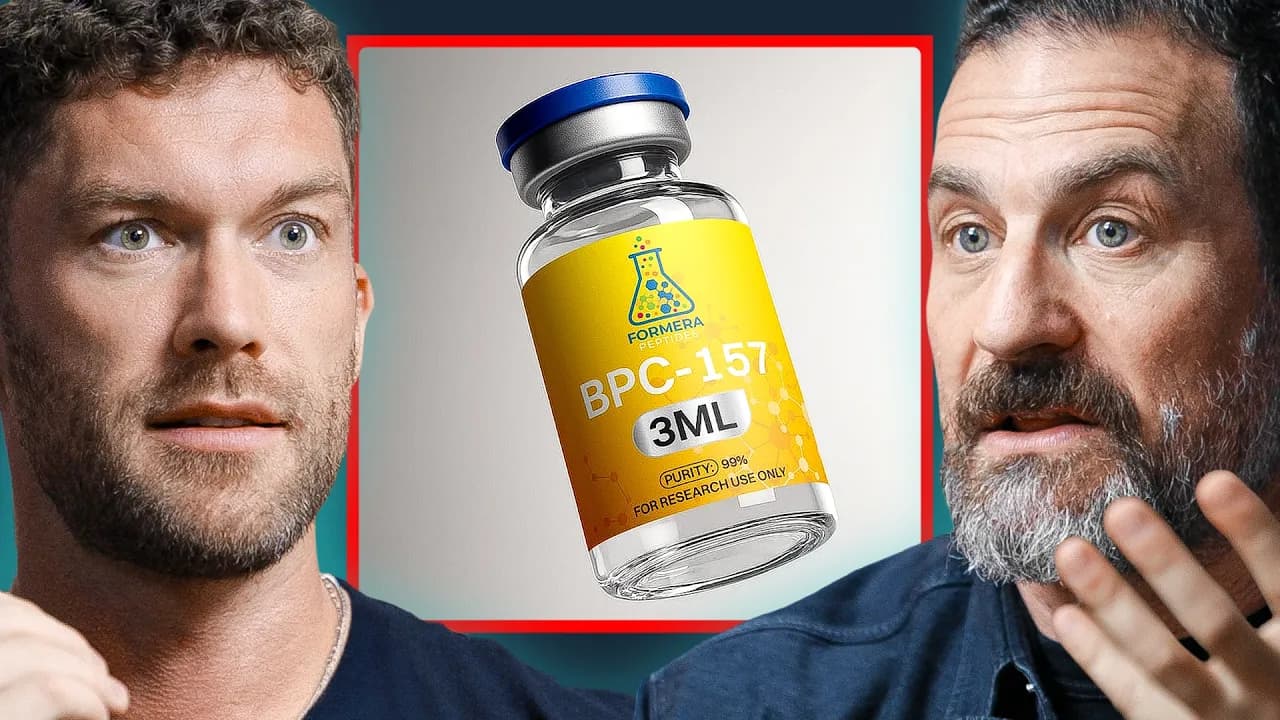
There's a category of things like BPC-157, body protection compound 157, which is an amino acid chain that is in gastric juice. It's the isolated amino acid chain that seems to be the most popular. It's the one for which most people probably are taking it for all the wrong reasons. After a pain or strain, recovery seems faster, but you can't do the control experiment because it goes systemic. It's not like you could hurt both biceps, inject into one bicep and not the other, and assume that it's just acting locally. It's going to go systemically. There are capsule forms of BPC that people claim are just as good. Do you have to inject locally close to the injury? It seems that might be helpful.
The animal data on BPC are really impressive. Cartilage regrowth, fibroblast migration, angiogenesis, nerve regrowth. There's not a single published human trial. The most interesting use might be for animals. If a dog had a spinal injury, BPC would be worth considering. You have to work out the appropriate dosage. You can get it from compounding pharmacies now. You need a doctor to write that script. Depending on your risk tolerance, you could go to the gray market for research purposes only, but that wouldn't be recommended. Peptide Sciences shuttered their doors a few months back. They sensed the heat coming on and they're out.
Nowadays, you can find doctors that will prescribe it. There's also pentadecapeptide, which is just a different form of BPC that seems to have same function. It's easier to find and getting it from a compounding pharmacy. Compounding pharmacies vary in stringency, but it's going to be cleaner than the gray market sourcing. Some better known and trusted compounding pharmacies include Tailor Made, Upstate, Revive Pharmacy. Compounding pharmacies were allowed to compound drugs that are still under patent during shortages and can compound generic drugs. They'll also truly compound peptides.
You could get BPC with another one, TB-500, the so-called Wolverine stack. The challenge with so much of this stuff is you can't do the control. After elbow surgery, it's impossible to know if it helped. Used a few times in very short runs, not interested in using it as a general recovery tool or every day. There are no gut issues like so people have used high doses of BPC to resolve gut issues. That was the original use. In a clinical trial, they did BPC enemas at very high dosages. Gastric juices contain a number of beneficial peptides, but that doesn't mean you should take BPC unless you have an injury. Maybe in that case, you get clean compounded pharmacy BPC and you inject it locally or you take it systemically. You try it, see if it helps. But why would you take it ongoing? That just doesn't make any sense.
If you really want to recover quickly from exercise, take an IU or two IUs of GH every night before sleep and you will recover magnificently well. In the enhanced games, the swimmer with massive lats put his stack out and it was 200 milligrams of cypionate per week. That's one cc of standard cypionate. That's a lot. Most people are experimenting with much slower microdosing if at all. He's taking 200 plus, doing two IUs of growth hormone per night or five nights per week, and he's taking EPO. They can only take FDA approved drugs.
Some powerlifters like Thor were very open about the fact that they were not allowed to use the things they would normally use because they weren't FDA approved. It seemed like they were running the middle of the road. That's a lot of juice. The Australian swimmer was quoted many months before the actual competition saying he was going to juice to the gills. A female runner got popped for Deca and she claimed it came from a burrito that she ate. Deca is non-aromatizing. It doesn't convert to estrogen as far as we know. People use it for joint healing and things of that sort. The hope is that she used it because if she didn't and she got nailed for it from a burrito or some other source, that sucks because there's a huge stigma that goes with that.
Canelo Alvarez got popped for clenbuterol and he claimed it came from some food he ate in Mexico, the clen cow hypothesis. Back when modafinil was fair game if it were prescribed, the majority if not all of the finalists in some of the track and field events were all diagnosed narcoleptics. What are the chances that these mutants would all be narcoleptic? BPC would be very hard to detect because your body makes it naturally. As with the GLPs, they stimulate such a massive increase in action at those receptors that you probably detect it.
There are the kind of miscellaneous category things like epitalon which actually comes from the pineal, which is weird because there's also a peptide called pinealon which doesn't come from the pineal. Epitalon is thought to allow for preservation of histone and DNA structure. It's very vague. There is some decent data on visual repair for animal models of retinitis pigmentosa.
There are some decent data on visual repair for animal models of retinitis pigmentosa. Pinealon combined with some sunlight in the morning for the first two days did seem to shift the clock more quickly, though the speaker is uncertain about jet lag applications. A frequent traveler from Japan to the US who comes for just a few days and then heads back provided a tip about fasting on long flights, and going to Asia appeared easier than coming back with this approach.
The central circadian clock is the SCN, which the eyes connect to directly, making sunlight and other forms of light efficient at shifting the clock. Peripheral clocks exist in the liver and gut, and these are usually the last to shift, which is why people often feel their stomach and digestion are off when traveling. Fasting may allow for shifting those peripheral clocks because meal times are very robust in raising levels of arousal.
Pinealon is spelled P-I-N-E-A-L-O-N. The nomenclature in this area is confusing, as pinealon does not come from the pineal. Epitalon comes from the cortex and neocortex, with two different spellings appearing: epithelal and epital. Pinealin comes from the cortex.
A couple of things will increase REM sleep with no pharmacology. Heating up the sleeping environment in the final two hours of sleep will result in much more REM sleep, with the protocol being cool at the beginning of the night, cold in the middle of the night, and warm toward morning. Using a heated blanket, weighted blanket, socks, and a wool cap, or waking up about two-thirds of the way through sleep to use the bathroom can improve REM. Alpha GPC at 900 milligrams can increase REM sleep while still allowing sleep that night.
High cortisol in the morning and low cortisol at night is the optimal setup. High-intensity resistance training or any kind of workout will triple or quadruple cortisol levels. The increase in cortisol from deliberate cold exposure is trivial compared to what working out with weights will do. Late day cortisol spikes are not problematic if the levels come up and down, but caffeine should not be added on top of that to avoid sleep disruption. Alpha GPC serves as a good stimulant alternative for late day workouts while also increasing REM sleep.
Pinealon can provide three hours of REM sleep without disrupting slow-wave deep sleep. The compound works that night and appears to have carryover effects to subsequent nights. Based on animal data, the hypothesis is that it can help regenerate the pineal, though this is a dangerous term because cell proliferation is not desirable. Pinealon is used every once in a while. Some people take it in the daytime for cognitive enhancement, with one company founder reportedly having all employees on it for daytime work. A songwriter uses it during daytime for the hypnotic state it creates.
Pinealon has oral forms available, though only the subcutaneous injection has been tried. A doctor prescription is needed from a compounding pharmacy. Blood work has been monitored throughout use of various peptides including sermorelin, though GLP-1 agonists have not been used.
There is curiosity about low-dose tirzepatide or retatrutide at a tenth of the prescribed dose, not just for weight loss but for cognitive well-being and potential neuroprotective effects. The mechanism of action may be separate from metabolic effects, and correcting insulin resistance could itself be neuroprotective, especially regarding vascular dementia. There is some interesting data that tirzepatide may reduce eye pressure, which could be relevant for glaucoma.
BPC-157 has an asterisk next to it because it will cause angiogenesis. There is concern about vascularizing a tumor and accelerating cancer growth by supplying more blood nutrients. However, it is not mutagenic or carcinogenic per se, which is an important distinction.
The prescription GLP-1 agonists and massive growth in that area have made the general public comfortable with injections. Most people taking peptides are not gym-going men but women who want low-dose retatrutide or low-dose tirzepatide, often combined with NAD and GHK copper. GHK copper has studies showing wrinkle reduction when combined with red light therapy or sun exposure. The biggest market for peptides is women.
The concept of natural versus enhanced becomes complicated when considering altitude training versus EPO, altitude simulation tents, or blood reinfusion versus testosterone cypionate. Testosterone cypionate will increase red blood cell count and improve cardio and recovery even without muscle addition. The recommendation is to always talk about everything taken or not taken.
Dermatologists in Los Angeles and Northern California recommend laser resurfacing to reduce cancer risk while also reducing wrinkles. The GLP-1 world made sticking tiny 31-gauge or 30-gauge needles into skin acceptable. The first person to sell pharmaceutical-grade compounded pharmacy peptide pens where users just dial in the dose will make significant money, as people are much more comfortable with pens than syringes.
Melanotan makes people tan but can make them excessively tan and can cause priapism, which is a dangerously long erection, while greatly increasing libido. Vyleesi is an FDA-approved drug for female hyposexuality that lowers the orgasmic threshold and stimulates libido, and it also works in men. There are many interesting pro-libido drugs for men that will never get marketed because society does not seem to want more men wanting more sex.
The approach to peptides is that individuals should decide their own risk thresholds but be logical about it. BPC-157 should not be taken without an injury, as it will not accelerate recovery as much as getting better sleep. Pinealon should not be considered until everything else has been tried, including getting the relationship to light and caffeine correct. The magnesium threonate, apigenin, and theanine stack has provided great benefit, and pinealon makes sense only after trying everything else given the limited data available.
Suvorexant (Belsomra) is being taken primarily because Alzheimer's runs in the family and is super prevalent. It does help with sleep, though there can be morning grogginess. The medication has been cycled on and off. Quviviq, another DORA, produced zombie sleep where waking occurred in the same position as falling asleep without feeling rested despite sleeping through the night.
A paper published in Proceedings of the National Academy of Sciences showed that short meditations can increase glymphatic clearance in the daytime. Long exhales focusing on breathing during meditation increase clearance of waste products from the brain during the meditation and increase clearance during sleep that night. The best way to increase nighttime HRV, assuming no apnea or other issues, is to do exhale-emphasized breathing practice during the day, as even a few deliberate exhales during the day can increase nighttime HRV.
Glymphatic clearance is intertwined with psychedelic science. TMS has been observed to produce HRV changes, which is interesting to explore further.
People feel safe trying peptides because they are enough like supplements and enough like drugs. There is much more data on pharmaceutical-grade options, and small dosages are always better than big dosages. The fertility impact of anything that increases testosterone is real, and anyone wanting to maintain fertility will need to take HCG while taking testosterone, or use post-cycle therapy with clomid.
BPC-157 can have potential roles in healing for some people, but there are no trials and none will be done properly. Running clinical trials requires knowing endpoints and is expensive, with no party willing to pay for it. The big opportunity is American-made clean peptides with verified sourcing so people can trust what they are getting.
Unlike anabolic steroids in the 1980s and 1990s, which had outrageous adverse events including murders, massive acne, deaths, and brain tumors, there has not been a reported adverse event that can be tracked back to one of the non-FDA approved peptides. This absence of evidence does not equal evidence of absence, and there is no real reporting mechanism for gray market, research-use peptides, or psychedelics. Infected injection sites are sometimes reported, but proper hygiene with alcohol swabs and careful technique prevents this.
The old lore was that men want high testosterone and low estrogen, but estrogen should be as high as possible without getting side effects for libido, endothelial health, brain health, cardioprotection, and bone density. Taking tamoxifen or anastrozole to quash estrogen levels is a mistake, often resulting in reduced libido, dry skin, and increased injury vulnerability. Almost everyone doing testosterone replacement therapy now avoids aromatase inhibitors because they feel better without them, though gynecomastia requires careful monitoring.
HCG increases both testosterone and estrogen, which has profound impact on libido. For skin vitality, testosterone that is too high with low estrogen does not produce good-looking skin, resulting in thin chicken skin. Heavy anabolic users are not known for having attractive skin. People want injectable peptides because it feels more real than capsules, which feel more like supplements. Oral forms are not necessarily safer than injectable forms.
Just because something is oral also doesn't mean it's safer than injectable. For example, Anadrol 50 versus injectable testosterone cypionate - oral anabolics can cause significant liver damage. People should not run around doing anabolics, particularly young men in their 20s, 30s, and even 40s who think they need it.
Blood work has gotten relatively inexpensive, with companies bringing the cost of blood testing way down. People are now comfortable having someone take their blood and sending them their blood work. The vision is to get blood work done and then receive a 3D printed blister pack with morning and afternoon or morning and nighttime supplements tailored to individual blood work. Three months later, repeat blood work to see whether markers are moving into range better, then update the 3D printing with ideally pharmaceutical-grade supplements.
Legislation around peptides is changing constantly, and the next administration could revamp regulations entirely. The field is not well-defined yet.
There is a typical lack of reporting in wide population adverse events. The approach should be to measure twice and cut once. When choosing between something with 50 or 100 years of research where adverse events and their probability are known with some certainty versus the latest and greatest experimental treatment, the established research is preferable.
A colleague in the health field received an injection of stem cells into his spine and ended up with paralysis and almost died. Grateful to neurosurgeons at UCSF, specifically Chair of Neurosurgery Eddie Chang, whose department performed surgery that allowed the person to become mobile and healthy again. Even with attempted best practices and stem cell injections, there is always potential for local infection and rejection.
Even stem cell injections from the most vetted sources at every step of the process, from young donors, involving medical doctors, can have complications. A doctor gave stem cell injections around the medial collateral ligament but injected the fat pad in the knee instead, causing structural damage. The knee still has residual pain a year or two later from physical damage with the needle. This occurred despite the doctor having thousands of injections of experience, making it a routine injection with well-established injection paths.
Helen Blau's lab at Stanford School of Medicine published a paper with mouse data and human data showing that inhibiting a specific molecule allows cartilage regrowth in the knee. This is headed to clinical trials and pharma, with incredible demonstrated effects. There is an active inhibitor of cartilage regrowth, and inhibiting the inhibitor can bring back cartilage.
The focus should be on mining the body for its own medicines. Plant derivatives that mimic neurotransmitters, such as psilocybin, represent examples of compounds that did not occur naturally in humans but were learned from plants. Drug companies bioprospect from plants.
AI is an incredible medical tool for self-directed medical exploration. AI can look at food intake, habits, and supplementation to make recommendations. A friend with MS who takes various supplements and eats various foods discovered that certain forms of mustard can flare up MS symptoms. AI can help people understand their blood work, sleep score trajectories, and other health data.
The most interesting application of LLMs is for health purposes. Friends with the best doctors and most expensive care have still caught issues because no one takes health as seriously as the individual themselves. Even when doctors take it seriously, they will not have the time that an individual will dedicate to their own health. People have uploaded genomes, added wearable data, and taken PDFs of labs, finding material insights that had not surfaced in decades. LLMs can mine everything and look for interrelated components to surface actionable insights.
All current LLMs are trained on the internet, which is the output of neural activity. The next big step is recording brain activity non-invasively and building AI tools from brain activity data. This could show what brain activity looks like during focused modes, after taking 100 milligrams of a stimulant, or other states. The goal would be to modify pharmacology, behavior, and sleep to get brain activity working optimally.
Current wearables like Whoop, Oura, and Eight Sleep measure heart rate and body motion mainly through accelerometers and HRV. HRV reflects how often the descending branch of the vagus nerve slows heart rate down. Every time HRV increases, heart rate slows down - this is the vagal reflection in Whoop scores and sleep scores from Oura. However, this is not a direct readout of the autonomic nervous system.
Future possibilities include a sticker that can non-invasively record the number of nerve impulses traveling up a branch of the vagus nerve, with many traveling superficially behind the ears. Non-invasive brain stimulators that look like baseball caps are also being developed. Previous attempts like Halo were designed to ramp up neural activity and accelerate plasticity but did not stick commercially.
Many big AI companies are acquiring biotech companies. This interest in biotech is not about advanced search engines but about controlling neural activity, brain states, and bodily states.
Commercial vagal stimulators to calm people down have not worked well. Most are garbage and do not actually stimulate the vagus nerve specifically or robustly enough.
Sleep is likely to be the first place where writing to the nervous system happens. Sleep states and measuring sleep states have gotten good even with heart rate and body motion, and Eight Sleep uses AI to make temperature adjustments. Future applications could dynamically change room temperature, seat comfort, and provide vagal stimulation during waking states to maintain optimal zones.
Studies show that mechanical slow rocking of a bed remarkably accelerates transition into sleep and improves sleep depth. Similar research on how fast parents need to walk back and forth while rocking babies found specific paces that parents figure out intuitively, closely mimicking bedrocking requirements.
To fall asleep, forgetting body position is a huge important step. A method published in Reader's Digest involves closing eyes and slowly moving eyes to one side, then the other, then counterclockwise, then clockwise, then crossing eyes to look at nose, followed by a long exhale.
MIT researchers developed a sleep mask that measures REM directly by looking at eye movements and can induce sleep in under six minutes through stimulation behind the ears that affects the vestibular system. The eyes are linked to the vestibular system to control retinal slip, involving pitch, yaw, and roll movements through space to stabilize retinal images via cerebellar and vestibular ocular pathways.
Sleep interventions are more objective than plasticity or focus interventions. If a sleep intervention does not work, it is clear and measurable, whereas many interventions for plasticity and focus are subjective and subject to placebo effects.
The book "Protocols: An Operating Manual for the Human Body" contains seven mini-books. It begins with an introduction defining how to use the book, personal backstory, and the energetic and spiritual drive behind creating a science-based health and performance book.
The first chapter covers sleep science and protocols from most important and effective to still effective but lesser important protocols. Each protocol includes explanations of why they work based on the science.
The exercise chapter defines a program with sections on mobility, walking and steps, cardiovascular exercise structure, and resistance training. The goal is to provide principles that work for anybody rather than requiring specific classes.
Cardiovascular training includes getting heart rate close to maximum once a week in a controlled, safe way, with specific protocols and their benefits explained through science.
Resistance training research shows that anywhere from 5 to 30 repetitions can produce the same hypertrophy results as long as sets are taken to failure. However, practical considerations include difficulty maintaining perfect form with high repetitions, making moderate to heavy weights easier for most exercises.
The light chapter discusses how LEDs are not necessarily problematic, but lack of long-wavelength light can be problematic for mitochondrial health and retinal health. Long-wavelength light is a way to think about natural light quality.
The sun is full spectrum from UV to red, near-infrared, and infrared. When the sun is low in the sky, more long-wavelength light and less UV is received due to Rayleigh scattering, making the sun appear more yellow or orange. Long-wavelength light can penetrate through clothing like t-shirts and enhance electron chain movement in mitochondria because it is absorbed by water.
Long-wavelength light bounces off greenery, which reflects it despite appearing green. Red light therapy may be beneficial when under LED lights or in front of screens at night. Getting sunlight during the day offsets shortwave LED light exposure, which without long-wavelength light in the 24-hour cycle can lead to myopia through lengthening the eyeball, causing images to focus in front of the retina.
The neuroplasticity chapter covers behavioral tools, pharmacology including Adderall and senolytics, historical use of caffeine and nicotine, and the real science of neuroplasticity. Learning new skills creates internal friction that is important for brain longevity.
Examples exist of people learning complex skills from complete beginner to extreme performer in three days, including hardest clarinet songs, juggling soccer balls for 100 kicks, and other challenging tasks. Multilingualism correlates with longer health span.
[01:,57:02] Final Chapter on Personal Development
The final chapter focuses on personal development and structuring available information, including a section on navigating grief based on science and practices. Grief is an activation of reward circuitry that cannot be fulfilled, like dying of thirst while trying to reach for water that cannot be obtained.
Grief operates as a perpetual feeling of yearning where individuals cannot access the sensory presence of someone lost, such as being unable to smell a person or interact with their glasses. This creates a need to remap grief circuitry in a healthy way. The process involves reframing lost individuals or pets in the mind as a relationship that is no longer actionable but still exists conceptually.
Self-help literature and psychology contain a contradiction where approximately half the content emphasizes action-oriented advice like fulfilling roles in life, exercising, and avoiding laziness, while the other half stresses not drifting from one's true self, core self, or essential self. Huberman reflects that he could have used guidance on sleep issues, stress management, and other topics, but the science was not available at the time.
Psychoanalyst Jim Hollis, who appeared on the podcast at age 84 and is now 86, provided this framework when Huberman expected more abstract discussion about essential self and heart's desire. Hollis authored Under Saturn's Shadow about healing and trauma of men, and The Eden Project about relationships.
Shut Up
This does not mean literally shutting up but rather practicing gratitude. When suffering, individuals should reach the level of recognizing they are alive and that someone is definitely suffering more than they are.
Suit Up
Preparation extends beyond basic tasks like cleaning one's room. Individuals must prepare themselves mentally, develop processes that allow them to show up in different roles, and get into the appropriate headspace for their responsibilities.
Show Up
Role fulfillment is critically important to the psyche and feelings of self-worth. Many people have extensive experience with role fulfillment throughout their lives.
Hollis emphasizes the importance of getting out of the stimulus-response pattern ideally once a day but at least a few times per week. This involves quieting the mind without feeling obligated to do anything specific, allowing things to emerge from the unconscious.
"Is the 40-year marriage I've been in really the one I want to be in?"
This practice enables individuals to identify who they really are and what they really want. Many people reach the end of long marriages realizing they did not want to be in them, representing a tragedy that could be avoided through earlier self-examination.
The work sounds simple but represents important and difficult work. Any number of self-help books could be categorized into these frameworks or different chapters within them.
Protocols serves as an operating manual for the human body with a publication date of September 15.
The Huberman Lab website contains AI links to episodes and provides specific timestamps for topics like dopamine and exercise. The team has done substantial work developing these resources.
Huberman advocates against preventing younger individuals from advancing, referencing the Dean Potter movie as an example of why it is counterproductive to kick out the rungs of the ladder behind oneself. He specifically mentions Alex Honnold in this context.
Huberman expresses tremendous respect and admiration for the host, stating he would not be podcasting or present without this influence. He considers the host both a fan and friend relationship. The host suggests breaking bread together during an upcoming visit to the area.
Keep Tim Ferriss in your library
Save the videos and channels worth coming back to, and find them again in one place.