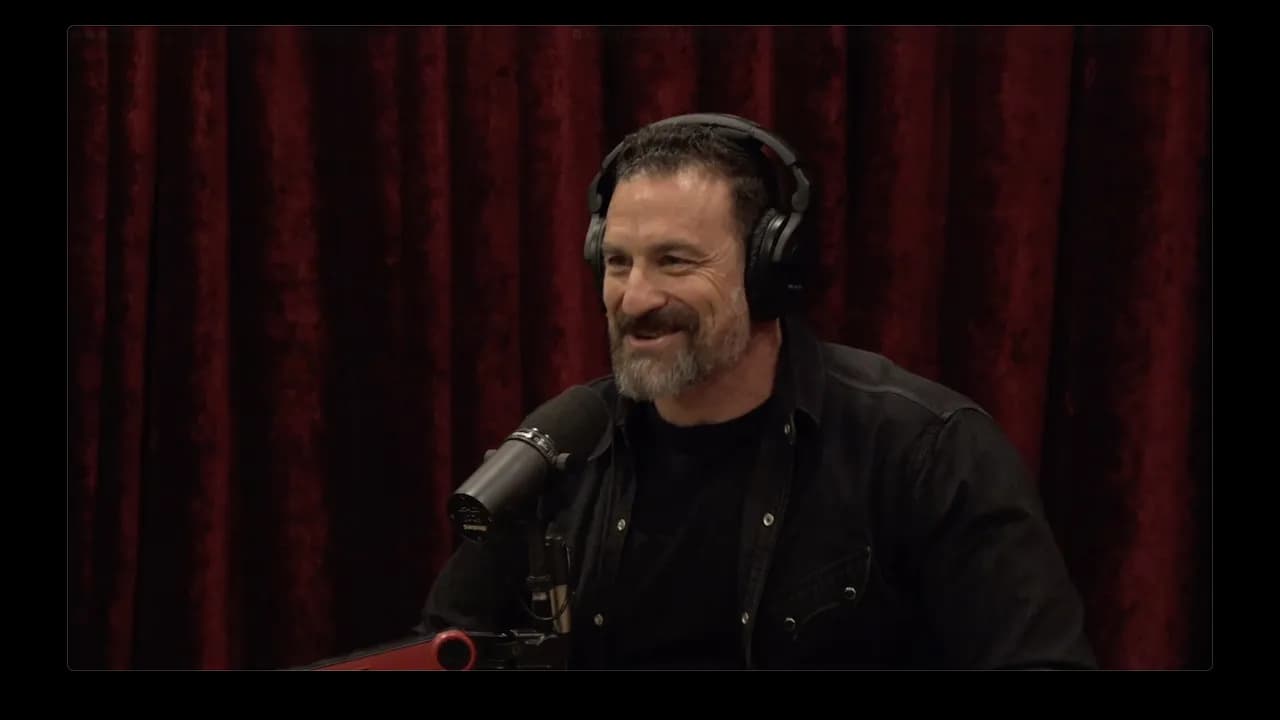
Andrew Huberman: My Exact Routine To Optimize Brain & Body, I Do All Of These Every Day!
In a Nutshell
Morning sunlight exposure within 60 minutes of waking, combined with consistent sleep timing and side-sleeping position, establishes the optimal cortisol curve for mood, focus, and nighttime melatonin release. Daily protocols of hydration, 45-minute weight training, physiological sigh breathing for acute stress, and 5-minute meditation create synergistic effects on metabolic health, stress resilience, and glymphatic clearance. Avoiding bright artificial light after 6 PM, maintaining proper protein-to-calorie ratios, and incorporating 1% daily progress toward meaningful challenges compound these benefits across decades.
These notes were generated by AI and may contain inaccuracies.
Bright nights increase risk of dying early. Studies show people getting artificial LED exposure after 6 p.m. on devices live shorter lives with higher cancer rates and metabolic unhealthiness. A generation of kids are metabolically sick while clinging to iPads and devices, and most things are designed to make people do less of what's good for them.
These 10 protocols are well-established and move the needle most in terms of mental health, physical health, and performance. Protocols are sequenced throughout the day from start to finish and they synergize and ratchet together. How well you slept last night dictates how well you feel now, functioning like gears in a larger system.
Get sunlight exposure each day to the skin, which increases testosterone and estrogen in both women and men and is important for libido. UV exposure on skin is crucial for these hormonal benefits.
This is a key protocol for reducing stress quickly, with specific methods explained later.
Work out with weights for 45 minutes, taking sets near to failure. This will triple or quadruple cortisol levels. Cortisol is not just a stress hormone but a preparation hormone for adversity and great things.
This is one of the most valuable skills that requires only 5 minutes per day and leads to significant improvement in mental and physical health.
Sleep on your side, which is very important for offsetting dementia and getting rid of bags under the eyes.
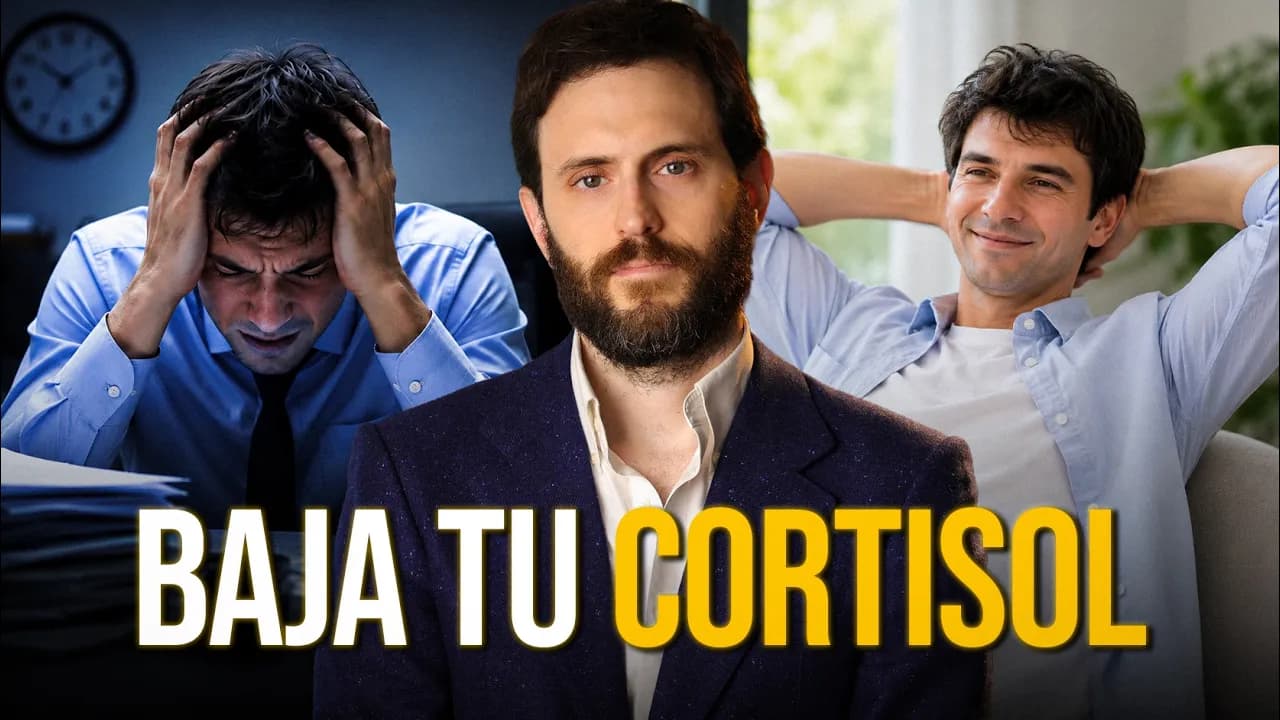
You wake up because of a rise in cortisol, called the cortisol awakening response. This peak can be matched to external stimuli. You want this peak in cortisol as high as possible in the first 60 minutes of your day. High morning cortisol provides elevated mood, focus, attention, and learning ability. It also establishes low cortisol in the afternoon and night, which is required for falling and staying asleep.
A healthy cortisol curve features high morning cortisol and low nighttime cortisol. Stressful events create brief cortisol spikes that come back down to normal. If morning cortisol is lower or flat, stress bouts last longer because they're riding on a higher baseline. A flattened cortisol curve correlates with shorter lifespan and less recovery from every kind of illness.
There's an indirect but very important interaction between cortisol and melatonin. Sleepiness hormone doesn't come on and function as well when cortisol patterns are disrupted, leading to disrupted sleep.
Most people think they don't want morning cortisol high. Women in particular have been told not to spike cortisol as it leads to excess visceral fat and moon face. Cushing syndrome is a rare condition involving massive overproduction of cortisol. Most people actually have morning cortisol that's too low and afternoon/nighttime cortisol that's too high.
Hydrate first thing in the morning. The mind is exceedingly more sharp when well hydrated. Hydration also helps boost morning cortisol. There's an ascending pathway along the vagus nerve that serves to wake up the brain, partly related to hydration first thing in the morning.
Consume 16 to 32 ounces of good clean water after waking. Electrolytes can be added if desired. Total daily water consumption should be about 80 ounces. Everything you want to do in the early part of the day should be done more, and less in the evening part of the day.
View sunlight or 10,000 lux artificial light in the first hour of the day. This activates melanopsin intrinsically photosensitive ganglion cells that extend axons into the hypothalamus where the master circadian clock resides in the suprachiasmatic nucleus.
When viewing low solar angle sunlight, the specific wavelengths coming from the sun when low in the sky are the optimal stimulus for melanopsin cells that tell the central clock it's time to wake up. Viewing bright light in the first 30-60 minutes establishes the cortisol peak and creates brief stress responses that return to baseline.
There are two pathways by which the brain's circadian clock wakes you up. One pathway activates the HPA axis (hypothalamus, pituitary gland, adrenals) to release adrenaline. There's a unique window after about an hour following waking where the suprachiasmatic clock can trigger an alternate pathway down the spinal column to release additional cortisol.
Viewing sunlight in the first hour takes the cortisol peak higher. Without bright light in the first hour, the cortisol peak would be lower, leading to bigger and longer stress responses. Daylight is the key even on overcast days, as brightness at 8:00 a.m. differs from midnight.
Spiking morning cortisol through sunlight viewing establishes low cortisol and high sleepiness hormones at night, buffers stress, kickstarts the immune system to protect against bacteria and viruses, and benefits metabolism, mood, and learning ability.
If you don't have access to sunlight or daylight, 10,000 lux artificial lights can be beneficial. These lights have been shown to significantly offset symptoms of seasonal affective disorder. Bright days and dark nights are additive for health benefits.
Having bright days significantly improves mental and physical health across many parameters. Having dark nights makes people healthier even if they were in dim light all day. The risk of dying early if you have bright nights goes up immensely.
If you miss a day of morning light exposure, get outside for twice as long the next day. You don't need to see the sun cross the horizon. The UV index is much lower when the sun is low in the sky due to Rayleigh scattering, with much lower risk of sunburn and eye damage.
Screens are not nearly bright enough to kickstart the morning cortisol increase, but they are very capable of increasing cortisol levels at night. The low level of cortisol at night makes you vulnerable to big increases in cortisol.
Sunlight exposure to the skin is a separate protocol from eye exposure. Long wavelength red light on bare skin or through a t-shirt during glucose tolerance tests showed more than 25% reduction in blood glucose peak and rate of rise.
Long wavelength light can go 8 centimeters into the body and pass all the way through. It makes conformational changes in mitochondria, allowing them to function more effectively and efficiently. This infrared light from the sun is the heat you feel.
You need ultraviolet light on skin to make vitamin D. Full spectrum balanced light is optimal, but not so much UV that you get sunburn. You don't want a lot of short wavelength light in the absence of long wavelength light. Best way to get this is sunlight in early and later parts of the day when UV index is low.
Beyond pineal gland melatonin that makes you sleepy at night, most cells have melatonin that serves as an antioxidant. Long wavelength light liberates this cellular melatonin to protect against oxidative stress and damage to cells.
People over 40 who experience age-related vision loss show improvements when viewing long wavelength light for one to three minutes a couple times a week, but only in the first 3 hours of the day. Photoreceptors are the most mitochondrial-rich and metabolically active cells in the body.
Your eyes, body, and brain are not the same in the first third versus middle third versus last third of the day. Sensitivity to bright light causing bad effects after sundown increases gradually. The need for bright light in eyes in the early part of the day is immense.
Get out two to three times per week when UV index is low to get sunlight on skin. You don't need to be naked. A t-shirt works because long wavelength light goes through. Sunlight has UVB exposure that increases testosterone and estrogen in both women and men and is important for libido.
Sunlight exposure reinforces romantic relationships for reasons beyond sexual interactions and attractiveness, with strong effects.
Greenery reflects long wavelength red and infrared light. On hot days, the coolest place is under a tree because it's reflecting heat. When out in greenery, you're getting all that long wavelength light that bounces around and goes through you.
A Swedish study showed that the more sunlight people got, the longer they lived. Smokers who got a lot of sunlight lived longer than non-smokers who didn't get enough sunlight.
Night shift workers live shorter lives with higher cancer rates and metabolic unhealthiness. It's very hard to mitigate these effects. People who are on devices after 6 p.m. getting artificial LED exposure qualify as night shift workers.
Night shift work occurs when working at night at home, not just when working all night. A generation of kids are metabolically sick due to these patterns.
As the sun goes down, getting daylight in your eyes during the late afternoon or evening buffers cells in the eye against the negative effects of artificial light at night. This serves as a "Netflix inoculation" that allows working on computers at 9 or 10 at night without damaging melatonin levels as much or disrupting blood glucose levels and sleep. When working indoors from after lunch until nightfall, position near a window, go out on a balcony, or take a quick walk to get sunlight in the eyes without sunglasses.
Adolescents represent one population for whom late-day sunlight exposure doesn't buffer against the negative effects of screen light at night. Screen use at night causes big bumps in cortisol, and while some people can fall asleep fine after screen exposure, the blood glucose effects and next-morning cortisol effects are problematic. High cortisol in the evening sets up low cortisol the next morning, and low cortisol sets up high cortisol.
Teens socialize through devices and resist having phones taken away. Getting outside for a few minutes even when overcast and taking a walk improves sleep quality.
Cardiovascular or resistance training in the first 3 to 4 hours of the day provides huge advantages, though exercising in the afternoon is acceptable without problems. An entire chapter in the book is devoted to exercise programming for people wanting muscle, definition, strength, endurance, and sprint ability without needing to be the most jacked or run marathons for records.
The exercise program alternates lifting and cardio days with three total lifting days. Warm up with reasonably low volume work sets of two to three work sets per exercise, emphasizing compound movements involving multiple muscles and multiple joints moving at once like pull-ups, rows, and dips rather than isolation exercises like preacher curls or tricep kickbacks. Include hip hinge movements such as squats, hack squats, and deadlifts.
Three total cardio days include one long slow session for about an hour, one moderate intensity session for about 30 minutes, and one short high-intensity session using max heart rate training with intervals of easy pedaling for one minute followed by all-out effort for 30 seconds, easy for 10 seconds, repeated. Warm up for 5 minutes of cardio before resistance training or skip cardio entirely on those days.
Deliberate cold exposure does not raise cortisol significantly. The same people suggesting moderate to high-intensity exercise often claim cold exposure raises cortisol, but this is not true. Data show trivial increases in cortisol from deliberate cold exposure but magnificent increases in adrenaline, norepinephrine, and dopamine. These catecholamines promote alertness and focus.
Exercising in the first three hours creates the desired cortisol inflection. For those exercising later in the day, cortisol returns to baseline naturally. Long exhale breathing slows heart rate, and hot showers paradoxically lower core body temperature to improve sleep by triggering the medial preoptic area's thermostat response.
Exercising at roughly the same time early in the day changes cortisol entrainment mechanisms. The suprachiasmatic nucleus clocks activities throughout the day. Consistent early exercise creates anticipatory responses where people wake up feeling more willing to exercise, with energy starting to build 15 minutes before the scheduled time.
The anterior mid-singulate cortex activates when facing pressure and deciding to lean into challenges rather than avoid them. This brain area represents tenacity and has connections throughout the brain with reward systems. It collects information about what activates it and circumstances that create feelings of pressure versus willingness to push back. The structure is highly subject to plasticity.
People who successfully diet show larger and more active anterior mid-singulate cortices. Beginning new exercise programs, including mobility work for those who have become stiff, causes this area to grow and become more willing to engage in challenging activities going forward. Every hard thing overcome neurologically equips people for harder challenges in the future.
Cold exposure trains the ability to remain calm when the system is flooded with adrenaline and norepinephrine. This carries over to maintaining composure when other circumstances trigger adrenaline involuntarily. Training involves learning to think, breathe, and stay calm during voluntary stress exposure.
Arousal represents how alert or sleepy someone is, ranging from coma to full-blown panic. The autonomic nervous system consists of parasympathetic and sympathetic components that connect to most organs. Parasympathetic tone reflects relaxation while sympathetic tone reflects stress. As sleepiness increases, parasympathetic dominance increases.
The ability to navigate all types of stress depends on controlling the tightness of the autonomic seesaw hinge. Training involves learning to think and breathe calmly when the system is flooded with adrenaline from non-voluntary circumstances. The prefrontal cortex, involved in strategy setting and making meaning, shows greatly suppressed activity during the first 20 to 30 seconds of stressful circumstances.
During the initial 20 to 30 seconds of stress, people experience a brain-damaged state where physical reactions might occur but verbal responses are typically inadvisable. The prefrontal cortex slowly returns online after this period. Stress feels harder to manage at night because prefrontal cortex activity is already diminished.
Top-down inhibition represents the ability to feel an impulse but resist acting on it. The prefrontal cortex is greatly expanded in humans compared to other mammals. Frontal damage impairs this capacity, leading to violence or inappropriate statements. Tiredness, stress, and alcohol suppress prefrontal cortex activity and worsen impulse control.
Voluntary difficult activities like cold exposure or learning new languages represent neurological investments in future capabilities. These can be cognitive, physical, or emotional challenges that create internal resistance. The anterior mid-singulate cortex connects to both cognitive and emotional capacities.
Exchanging money, time, or convenience often means giving up neurologically useful experiences. While occasional convenience trades like food delivery are acceptable when time is limited, awareness of the trade-off enables better decisions about how to use additional time gained.
Meaning comes from striving, which includes struggle and the release from struggle. Some people experience significant improvements from doing just two recommended practices for five minutes each daily, while others with high vigor may not notice dramatic changes from basic practices like hydration and sunlight exposure.
The optimal diet involves not too many or too few calories, getting high complete protein to calorie ratio proteins like eggs, lean meat, and fish rather than requiring large calorie volumes from beans and rice to achieve equivalent protein. Everyone needs fiber from vegetables and fruits for micronutrients.
Low sugar fermented foods like sauerkraut, kimchi, and beet kvass lower the inflammatome. Some people find that removing starches or vegetables entirely resolves autoimmune issues, though most people benefit from some vegetables and fruits. Too much fiber can be pro-inflammatory for some individuals.
Use olive oil rather than engaging in seed oil debates. Small amounts of butter are acceptable. Starches fuel muscles through glycogen and support brain function but shouldn't be overdone, particularly when combined with large amounts of fats.
Starches lower cortisol, which is beneficial at night for falling and staying asleep. Cortisol's job is mobilizing energy in the body by releasing glucose and other fuels during stress, not dealing with stress itself. Eating starches buffers cortisol by elevating blood glucose, preventing the body from tapping into survival systems to mobilize glucose.
People who increase starch intake in final meals often feel more even psychologically and experience more physical energy. Some with chronic stress issues notice reduced shaking, and autoimmune symptoms sometimes resolve due to cortisol buffering.
Cortisol is not inherently bad. Physical stressors like workouts or cold plunges have clear onset and offset, but psychological stressors tend to persist and cause rumination. The idea that cortisol is universally harmful will likely be disproven by 2027. Cortisol is fundamentally an energy-promoting hormone that mobilizes energy for both adversity and positive experiences.
Spiking cortisol before, during, or after learning enhances memory formation. Studies by James McGaw and Larry Cahill demonstrate that trauma creates unforgettable memories because of cortisol elevation, and the same mechanism can be leveraged for positive learning. Exercise makes people more alert rather than directly smarter, and this heightened alertness facilitates learning.
Intense weightlifting or high-intensity interval training creates a 4-hour window of enhanced learning capacity due to elevated stimulatory molecules. Long slow cardio is less beneficial for brain function compared to intense training sessions.
Performance follows an inverted U curve where both insufficient and excessive alertness impair function. The goal is reaching the peak of this curve. Learning involves moving from reluctance to optimal arousal, then avoiding excessive stress.
Physiological sighs provide immediate stress reduction. This breathing pattern consists of a double inhale followed by a long exhale. The pattern was identified by Jack Feldman at UCLA, involving the pre-Bötzinger complex and parapontine nucleus in the brain.
The double inhale maximally inflates alveoli in the lungs, allowing maximum carbon dioxide offloading during the subsequent long exhale. This triggers respiratory sinus arrhythmia, which slows heart rate through vagus nerve activation. The vagus nerve is bidirectional, carrying both ascending and descending signals.
A study compared four 5-minute daily interventions: meditation, box breathing, cyclic hyperventilation, and physiological sighs. While all groups showed benefits, physiological sighs produced the greatest improvements in heart rate variability and stress reduction. A single physiological sigh can immediately reduce stress.
Waking at 2-3 AM often involves rumination. Ten long deliberate exhales can help return to sleep. A technique to fall back asleep involves shutting down proprioceptive circuits in the cerebellum by moving closed eyes slowly side to side, up and down, then in counterclockwise and clockwise circles, followed by pointing eyes toward nostrils while performing a long exhale.
This pattern of eye movements exploits the connection between eye movements, optic flow, and cerebellar function to reduce awareness of body position, facilitating sleep onset.
MIT-developed sleep masks can generate specific eye movement patterns through electrodes behind the ear to induce and monitor REM sleep directly. Future devices may allow users to specify desired amounts of deep sleep and REM across shorter sleep durations.
Pinealon is a peptide that may support pineal gland health and melatonin production. Taking small amounts every third night can increase REM sleep both on the night of use and subsequent nights. Peptides represent an emerging category requiring foundational behavioral practices like sleep, hydration, sunlight, exercise, and nutrition before considering pharmacological interventions.
Retatrutide, which targets GLP-1, glucagon, and GIP pathways, showed approximately one-third body weight loss in phase three trials over one year. Microdosing these medications may reduce side effects and costs. Concerns include potential vision loss in people with certain eye structural abnormalities and possible apathy with excessive dosing. These drugs increase GLP-1 levels a thousandfold beyond normal human exposure levels.
GLP-1 agonists tell the brain mechanisms for satiety to ramp up their activity. The brain signals that it doesn't really want food, and these compounds also make people feel full. This mechanism forms the basis of some side effects like nausea. Patients report their energy returning, inflammation markers becoming significantly lower, and overall feeling much better despite not being cured.
People are starting to realize they can microdose peptides, though randomized control trials won't push this notion because it is terrible for business.
Growth hormone secretagogues like tesamorelin, ipamorelin, and CJC-1295 promote more growth hormone release and sleep. They have a negative feedback effect that shuts down some natural production. People claim they get leaner, their deep sleep improves, and they experience increased insulin sensitivity.
Personal experience shows these compounds nuke REM sleep while providing substantial deep sleep, which is not desirable. Pinealon has been tried intermittently.
BPC-157 (body protection compound 157) is made in the gut. Users report accelerated recovery from injury, and animal data supports this claim across Achilles tendon transection, nerve regrowth, tendon, ligament regrowth, and vascular healing. The concern is that it could vascularize tumors.
The principle is to ask what effect in your life you are trying to achieve before considering peptides. BPC-157 has a very high, possibly infinite LD50, meaning no one has figured out how much can kill you, but that is not a good way to run your life. It exists somewhere between a drug and a supplement.
The concern around GLP-1s is that they have not been around long enough to know the side effect profile over extended periods. For people with serious obesity issues, tirzepatides, Mounjaro, Ozempic, and retatrutide could potentially save their life.
Vision loss is a serious consideration. David Sinclair recently went on Rogan and said the amount of blindness caused by GLP-1s has doubled, which scared people. However, there is a structural abnormality in the eye of a subset of people for whom this is true.
Light comes in through the cornea, and the lens focuses light onto the retina, which is a pie crust-like structure lining the back of the eyes. This three cell layers thick structure catches and absorbs light. Photoreceptors turn light into electricity through phototransduction. This electricity is cast forward to retinal ganglion cells that line the inner part of the retina. They send their axons out the optic nerve into the brain, coursing along the bottom of the brain and entering the brain including the circadian clock.
Where the axons exit the eye is called the optic nerve head. If the optic nerve head is too big or too tight, the wires get pinched off. This is part of what happens in glaucoma, where eye pressure goes up and the axons die away. Glaucoma is the second leading cause of blindness in the world.
In some people with a structural abnormality of the optic nerve head, GLP-1s put them at greater risk for causing cinching off of these cells, and there have been cases of blindness. Everyone should get this area of their eye imaged. It is easy to get an eye pressure test from an ophthalmologist or optometrist, and insurance usually covers it.
Personal experience includes taking DMT in a location where it was legal, along with psilocybin. The experience felt indistinguishable from reality in terms of vividness and realness. The concept that a tiny inhale of smoke could completely change material reality led to the conclusion that material reality is literally a small amount of chemicals being uninterrupted.
Most all of biology is just compartmentalized chemistry. Whether it is the flow of electricity along neural circuits to generate tenacity or learning, you are guiding chemistry in particular ways. There are two ways to change brain function, behavior, and chemistry: mechanical forces like breathing differently, getting a massage, or being poked with a knife, and chemical forces including pharmacology, things we eat, and chemicals within us like serotonin.
There are things outside of our conscious understanding in biology that DMT might give access to, or that prayer or faith might give access to. Biology and psychology are extraordinarily good at accomplishing certain things, but there are things outside their abilities. Asking psychology and biology to satisfy something they cannot satisfy means missing out on potential meaning in life.
Embracing the idea of faith in a god relieves the pressure to control everything internally and externally. A force outside of us, whether called God, the universe, or Jesus, might hold power in how we could behave and become better. Embracing the notion of God and having faith is liberating and educating about the human brain.
God came into life very early, though the notion was suppressed for many years. Prayer happened in private and was hidden. Observing enough hardship, both personally and in the world, led to realizing that we are not all meat and potatoes in the brain, and there is something else that might not all come from us.
A father who is a theoretical physicist explained that understanding quantum mechanics requires relying on the math, not logic or human understanding. Anyone who talks about the quantum field without showing the math and proofs is lying. Quantum biology has gaps in logic where the math does not line up.
At some point, having faith in a higher power requires departing from the notion that the logical brain can go from A to B to C. Just as quantum mechanics allows building and engineering real-world things despite the brain not understanding it, faith works similarly. There is no math to prove the existence of God, and it is not worth torturing yourself over.
Embracing the practice of prayer and opening the aperture of beliefs for just a moment to believe in God for 10 seconds started producing beauty and peace around not trying to control things obviously not under control. Miracles began to appear, where praying for indication of the right path would result in seemingly unrelated events bringing answers days later.
Prayer happens every night before sleep, and if falling asleep, getting out of bed to pray. If waking in the middle of the night, prayer happens then. This practice has not been missed in nearly 3 years.
A former director of neurosciences at Stanford conducted experiments linking neuronal activity to perception, showing that stimulating certain brain areas causes people to perceive things a certain way regardless of what is happening in the world. A brain area can be triggered to make people see dots moving up or down.
Understanding of the world is an abstraction occurring inside the skull based on photons coming through eyes, sound waves hitting ears, mechanical forces hitting skin, and chemicals going into nostrils and mouth. Reality gets abstracted with enough accuracy to interact with the physical world.
We do not see infrared because we lack the sensors, though pit vipers do. This does not prove God exists, but proves we only have access to physical events we have filters to extract. There will never be god goggles. The emotional goggles come from faith, which serves as the infrared goggles of human understanding about why we are here.
People fall into categories regarding religion: those who had religion forced on them in a bad way and hate it, those who never had access in a way that gently pulled them toward it or experienced it as a disturbance, and those absolutely convinced it cannot be real, viewed as a kind of spiritual anorexia.
There are brain regions that when stimulated produce a godlike experience. There are brain regions for thirst, which philosophically proves the existence of water. A thirst circuit exists for gaining understanding of life and whatever comes after it.
When feeling anxious, the prayer is for help removing anxiety and putting energy in to do the right things and serve people. Prayer happens before every podcast guest or host, asking for ego to be moved out of the room, for useful information to be learned and propagated, for humility and clarity to be maintained, and for something unpredictable and beneficial to happen.
Science is about mysteries and solving mysteries, but also about being in awe of the mystery. Life is still hard, but the practice is liberating.
The way society has been designed over recent decades promotes individualism, loneliness, nihilism, materialism, and low-level narcissism through social media. People have become islands. The idea of God and meaning appears as an antidote, with anchoring needed from self to family to community to city to country to planet to something above.
The biggest thing is a nonhuman force in the universe that wants goodness and can exemplify perfection. Humans are wired with an animal part of the brain and a conscious thoughtful part. Ascending as a human to live in a controlled, thoughtful, peaceful way requires work. This comes from trying not to control every aspect of every process.
Neural development shows sperm meets egg, cells divide, and a human forms. While induction factors, cell migration, axon guidance, mesoderm, and ectoderm are understood, there are gaps in understanding and magic in the orchestration that goes beyond what science can understand. It is nothing short of spectacular.
Awe occurs when going from small aperture to big aperture and back. This transition induces awe, and it can be heard in sound too, like walking into Stanford's Memorial Church with its high ceiling and incredible beauty.
Huberman describes his approach to spirituality, explaining that he doesn't need to understand the exact form or mechanism of divine influence. He notes that while there are multiple religious texts to choose from, one may call to a person more than others, and atheism may work for some people. He draws a comparison between "spiritual anorexia" - where people get reinforcement from avoiding spiritual belief - and religious belief, suggesting both can represent extremes where circuits become inverted.
Huberman shares that his former chair and director of neurosciences at Stanford, a brilliant neuroscientist, encouraged him to discuss these topics and has faith himself. He explains that his life is better when he prays, and this gives others permission to investigate spirituality while maintaining scientific rigor.
Huberman draws an analogy from childhood development: children initially think parents are perfect, then realize they're flawed, and finally understand that perfection exists outside of humans. This belief that perfection exists outside ourselves and that we can strive for it through practices and works is compelling to him. He embraces the woes and beauty of being human while also embracing God.
Huberman explains that big goals can feel psychologically uncomfortable, like standing at the foot of Mount Everest. The solution is breaking goals into tiny small steps, which they call "the 1%" philosophy. This approach has been highly responsible for their success. They've created 1% diaries to help people accomplish big goals, with new colors and minor tweaks available.
At night, keep the sleeping environment as dark as possible with a good eye mask and possibly earplugs. If you wake up, use long exhale breathing or the wacky eyes technique (eyes to the side, then up, counterclockwise and clockwise). Dim lights at night because bright lights stimulate cortisol release, and you want cortisol low at night. In addition to suppressing melatonin, bright lights increase cortisol.
For the last 30 minutes before sleep, avoid screens entirely. The first 30 minutes after waking should include looking at the sun, exercising, and hydrating. Some people benefit from bed cooling systems if they tend to run warm.
A study found that people can focus just fine with their phone off, upside down on the table, in their bag, or in another room. However, if the phone is anywhere in the room, cognitive flexibility is diminished. Even without calls or notifications, there's a subscript running in the brain anticipating the phone reaching for them. Getting the phone out of the room is a key way to increase focus and cognitive capacity.
Visual field also matters for focus. The kid in school with the hoodie who's not actually asleep demonstrates how narrowing visual field can help concentration.
Do 90 minutes to two hours of work daily that involves striving to learn something difficult. This friction feels like a fight and is actually adrenaline, which is critical for focus ability. The errors made during deliberate attempts stimulate neuroplasticity. Every experience does not change the brain - only being alert but making genuine attempts and failing some of the time triggers plasticity.
The appropriate level of difficulty is around 15% error rate on average. There are two kinds of practice: practicing things you already know (aiming for 100% performance) versus learning new skills where you need to make genuine attempts and fail some of the time. Those failure signals go to the cerebellum, which propagates networks that signal change.
To induce neuroplasticity, you need to be: alert (using pharmacology, supplements, or behavioral tools), focused (using tools that can be devoted to anything), and experiencing friction and errors. Then you need to stop, come back a day or two later, and reinforce what you learned. Self-testing is the best way to learn and not forget. Huberman uses ChatGPT to generate tests at Stanford graduate student level about topics like neuroplasticity.
Studies show that reading a passage once and self-testing a week later leads to much more stable learning over time compared to reading the same passage multiple times with highlighting or note-taking.
Huberman has written a book called "Just Do It" about being a human being and learning, including effort followed by learning and reward. It covers things that may not immediately benefit you but enrich your mind. He references the anterior midcingulate cortex in the book.
Mentally and physically active people who stay socially enriched do much better with dementia. There are people with all the diagnostic features of Alzheimer's (plaques and tangles) but no memory loss or dementia because they exercise and stay engaged in learning. The physical ramifications of Alzheimer's and their consequences in neurons are somewhat separable.
Huberman's book includes a chapter on personal development and relationship to self. He discusses grief and how to navigate it. He references Martha Beck's concept of the "essential self" and James Hollis, an 84-year-old Jungian analyst, who provides three daily practices written on the refrigerator:
- Shut up: There's always somebody suffering more than you. Practice gratitude by both giving and receiving it.
- Suit up: Prepare for life by taking care of health, getting organized, and doing homework.
- Show up: Fulfill outward roles for the world as father, mother, sister, brother, teacher, mechanic, engineer, or podcaster.
However, if you only do these things for 10-20-30 years, you can end up quite miserable. The missing piece is once a day getting out of role fulfillment, preparation, and gratitude practices to exit stimulus-response mode. This could be meditation, drawing, or listening to music - not trying to accomplish anything, just letting the unconscious mind feed information about your deepest heart's desires.
You find your calling while working hard doing something else, gradually moving toward things you hate less until you're pulled forward to your key self. Passion isn't necessarily singular - you can handle five-year chunks of different pursuits.
Andrew Huberman structures his long-term planning around five-year chunks, reflecting his academic background where degrees and postdocs typically span three to five years. At age 50, he focuses on navigating from 50 to 55, maintaining certainty about what he will carry forward including exercise, faith, and hydration, while acknowledging uncertainty about future life stages he has never experienced.
During sleep, the brain performs a washout of waste products through lymphatic clearance, which is critical for offsetting dementia, achieving restorative rest, and reducing bags under the eyes. Sleeping on your side with your head slightly elevated appears to improve this process. The previous understanding favored a slightly inverted position, but current research supports slight elevation.
Upon waking, movement helps lymphatic drainage since the lymphatic system operates through one-way valves that require muscle contractions to move fluid from the feet upward. The brain lacks this mechanism, relying instead on astrocytes and glial cells to create extra space between neural tissue during sleep, allowing waste products (called glymph) to flow out.
A study published in Proceedings of the National Academy of Sciences demonstrates that short meditation increases glymph clearance during daytime hours. Regular meditators may reduce their sleep needs by approximately one hour through 20 minutes of daily meditation, as this practice provides glymph clearance benefits. The drive for glymph clearance contributes to increased sleep duration during illness.
Huberman's meditation routine begins upon waking with 10 breaths of focused meditation before getting out of bed. He uses this practice to assess his ability to concentrate and organize his thoughts for the day ahead. This brief meditation precedes his morning sequence of bathroom use, hydration, sunlight exposure, movement, caffeine consumption, and exercise.
When asked to identify five essential supplements, Huberman outlined his core recommendations:
- Magnesium: Either magnesium 3-and-8 or magnesium bisglycinate for sleep improvement when needed
- Omega-3: At least one gram daily of EPA, preferably through prescription Lovaza for high concentration and heavy metal clearance
- Vitamin D: 5,000 to 10,000 IUs daily, exceeding RDA levels for additional benefits including hormone health, verified through blood work improvements
- Alpha-GPC: 600-900 milligrams to increase choline and acetylcholine for focus enhancement, taken with 600 milligrams of garlic capsule to mitigate TMAO cardiovascular risk
- Creatine: 5-10 grams daily for cognitive enhancement, particularly beneficial during sleep deprivation or stress, while supporting strength maintenance
He notes that caffeine consumption (200-400 milligrams daily) shows correlative data for dementia offset and continues his yerba mate and coffee intake.
Walking after meals provides significant blood glucose regulation through low-level repeated muscle contractions. Research on the soleus muscle (comprising only 1% of total musculature) demonstrates outsized glucose utilization capacity. Studies using seated calf raises (soleus push-ups) showed powerful blood glucose regulation, buffering glucose peaks and reducing energy crashes.
The target is 7,000-8,000 steps daily rather than the commonly cited 10,000. Walking after meals flattens glucose peaks more effectively than remaining sedentary, potentially improving metabolic health over time. Research comparing 30-minute post-meal walks versus 10 air squats every 45 minutes showed comparable benefits.
People who maintain higher spontaneous movement throughout the day burn significantly more calories through non-exercise activity thermogenesis (NEAT), with some individuals burning up to 1,800 additional calories daily through increased movement. Research published in Science indicates that the commonly observed metabolic decline with aging results from reduced movement rather than age itself, provided muscle mass is maintained.
Huberman observes that mentally sharp, physically lean individuals in their 80s demonstrate consistent movement patterns, proper breathing (avoiding chronic mouth breathing), and mental engagement. Mouth breathing at rest deprives the brain of oxygen and should be avoided during sleep and wakefulness.
Excessive caloric intake can overload cellular systems, causing mitochondria and energy management systems to become dysfunctional. Caloric restriction or maintenance at appropriate levels may provide benefits by preventing this overload. Movement addresses both caloric balance and glucose regulation simultaneously.
CO2 levels above 1,000 parts per million correlate with declining cognitive performance. Proper ventilation becomes critical in enclosed spaces, particularly when combined with appropriate lighting conditions. Full spectrum sunlight exposure provides benefits that complement controlled indoor environments.
Huberman's ability to reference specific study authors stems from years of academic training emphasizing proper attribution. This rigorous approach to citing sources reflects institutional standards from his educational background.
The hardcover copy discussed represents the first and only version Huberman had seen or touched at the time of recording, which he gifted to the host as a token of gratitude for their professional relationship and mutual support.
Keep The Diary Of A CEO in your library
Save the videos and channels worth coming back to, and find them again in one place.