Dr. Boz Can’t Believe What the Amish Did
In a Nutshell
Amish teenager Vera eliminated years of nightly epileptic seizures within weeks by following a strict ketogenic diet tracked with Dr. Boz’s ratio (glucose ÷ ketones). Dr. Boz’s mother reversed advanced cancer and regained her energetic personality through the same metabolic approach, inspiring Dr. Boz to teach the method widely. The story shows that lowering insulin, producing steady ketones, and using the ratio as a simple daily target can reverse seizures, cancer, depression, and other insulin-driven diseases across diverse communities.
These notes were generated by AI and may contain inaccuracies.
Carrie from "The Healing Society" shares a story about an Amish family in Wisconsin whose 17-year-old daughter Vera had suffered from epileptic seizures for years. In the last two months before the intervention, Vera was having terrifying seizures every night. The family tried natural remedies and then conventional medical care. A doctor prescribed medications, but nothing worked.
William, the father, called Carrie in desperation. He remembered Carrie discussing her healing through a strict keto diet and asked if this might help his daughter. Carrie confirmed that strict ketogenic diets have been used to treat seizures for about a hundred years.
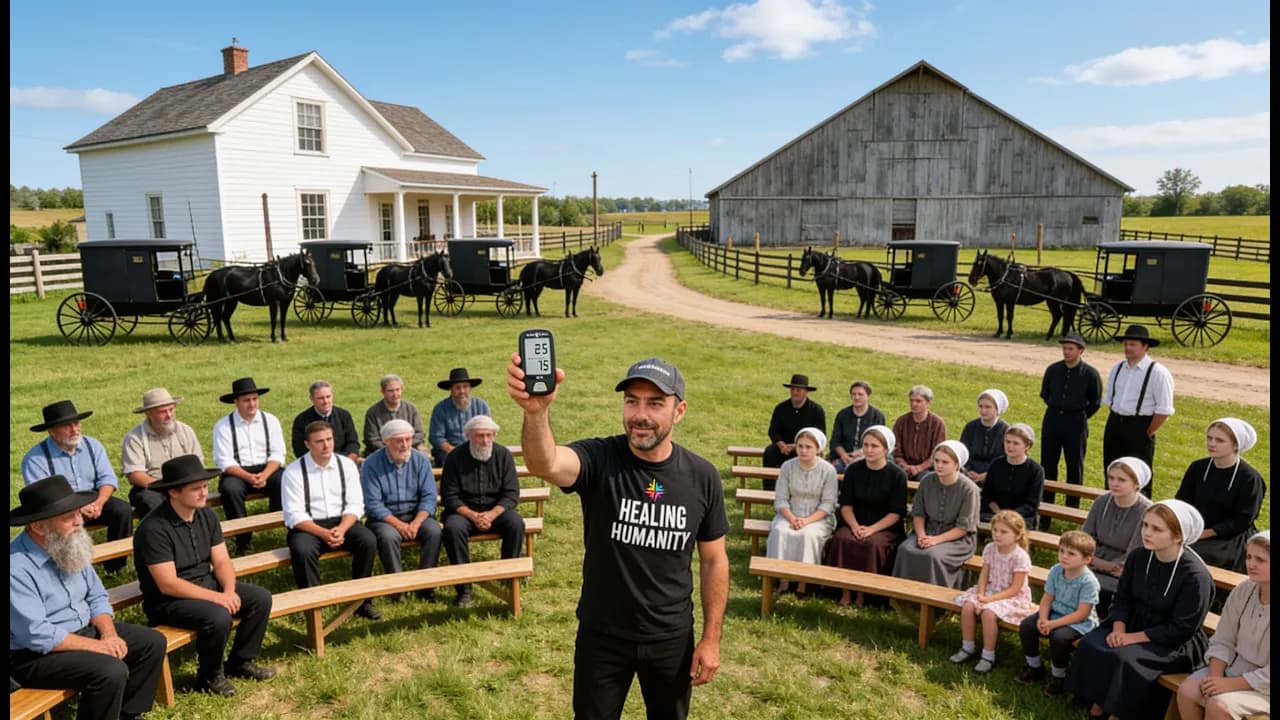
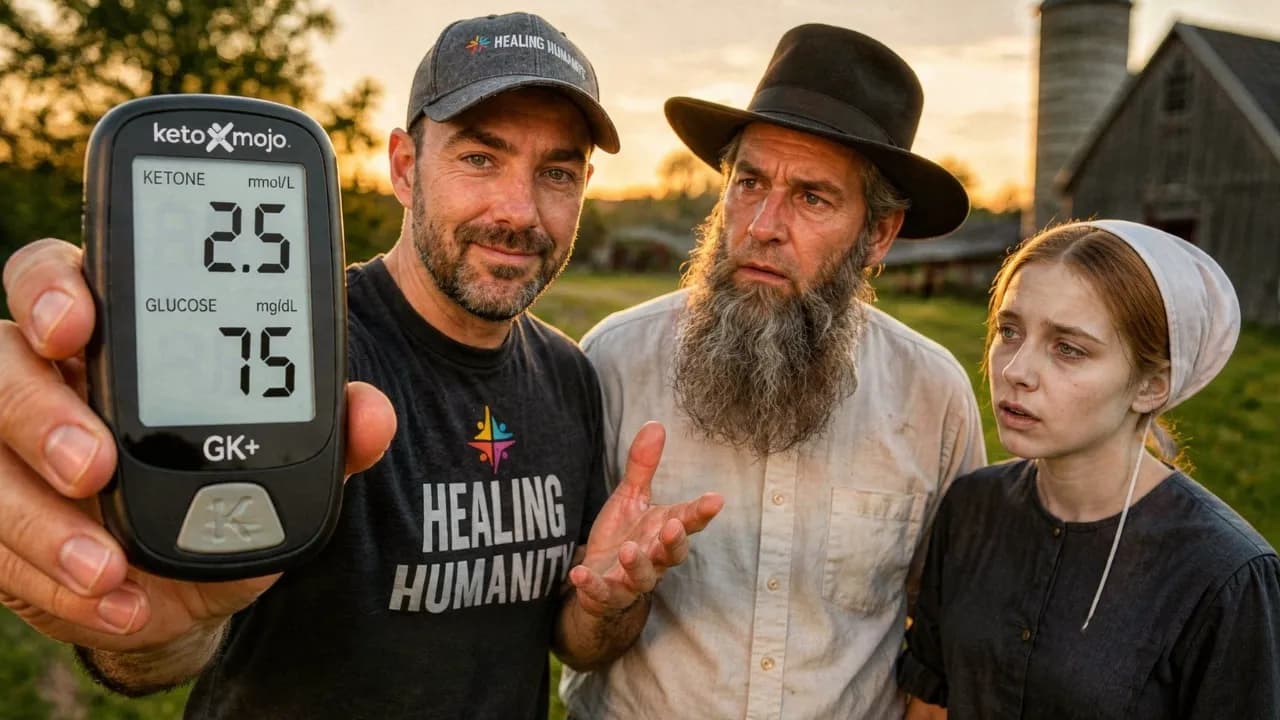
Carrie and her wife Jane visited the Amish family along with Bob Briggs. They brought a Keto Mojo device to teach them about the strict keto diet and Dr. Boz's ratio. The Amish family agreed to use the battery-operated device despite their traditional lifestyle.
Two weeks later, William called Carrie sounding distressed. When Carrie and her wife arrived, William sat at a picnic table and said: "This saved her." He explained that Vera no longer suffered from epileptic seizures - she had not had a single seizure since starting the strict ketogenic diet.
Vera fully adopted the Keto Mojo system and Dr. Boz's ratio. Despite being only seventeen years old, she demonstrated wisdom beyond her years, stating: "If I cannot keep track of it, it will be difficult to improve it." She noticed that increasing fat and decreasing protein affected Dr. Boz's numbers. She also observed that skipping meals and extending periods without food (intermittent fasting) improved her numbers.
Vera identified that stressful events every Friday caused her numbers to drop sharply. She began working on improving her sleep and other factors.
William, previously a patient and reserved Amish man, transformed into an advocate similar to Carrie. He became a "missionary" for the diet, telling everyone in his community about the therapeutic possibilities of the keto diet. He submitted an article to the Amish newspaper, which they type on a manual typewriter, stating that everyone should know about the healing possibilities his daughter experienced.
William explained that many sick people exist in the Amish community despite getting sun and exercise, because the traditional American diet dominates their eating habits.
William organized an Amish-style meet-up at his house for people wanting to learn about Dr. Boz's ratio and the meat-based keto diet. Approximately 30 people attended instead of the expected 5-6. Carrie spoke for 2.5 to 3 hours and distributed papers with Dr. Boz's ratio information.
Dr. Annette Bosworth (Dr. Boz) is a former assistant professor of medicine with 1.3 million subscribers and over 200 million views on her content. Her "CEO Diaries" episode has over 6 million views. She is the author of "Any Way You Can" and "The Keto Series," and creator of the Dr. Boz ratio.
Dr. Boz's mother had cancer that spread throughout her body. Modern medicine was making her condition worse. Dr. Boz researched metabolic approaches secretly while maintaining her medical credentials.
Dr. Boz explains that the solution may be as simple as following a meat-based diet. Most people will overcome insulin-related problems this way. When there is risk of epileptic seizure or cancer spreading, the need for systematic reversal becomes critical.
Dr. Boz credits Dr. Seyfried and his team for research on cancer as a metabolic disease. The approach involves more than random guesswork - it requires a real procedure capable of reversing health problems.
Dr. Boz mentions her experiences with the Hutterite community (similar to Amish), noting they are very committed to their religion and community but suffer from over-baking, over-canning, and overconsumption of processed foods.
Dr. Boz's ratio is a measurement of two types of fuel highly affected by insulin: glucose and ketones. The calculation uses two different units - glucose measured in milligrams per deciliter and ketones in millimoles - making the mathematics complex.
The ratio represents the mathematical equivalent of the glucose and ketone index (GKI) used in research. The calculation involves converting glucose level from milligrams per deciliter to millimoles, then calculating the ratio of ketones to glucose.
Dr. Boz simplified this for her mother by saying: "Take the big number, divide it by the small number, and we'll look at the result."
Different health conditions require different Dr. Boz ratio targets:
- Weight loss: at least 80 or less
- Autoimmune disorders: around 40 or less
- Cancer treatment: 20 or lower
For the 17-year-old epilepsy patient, Dr. Boz recommends keeping the ratio at 50 or lower for six weeks before raising it slightly, because maintaining continuous ketone production is difficult.
When insulin levels are too high, individuals are not in ketosis despite following a ketogenic diet - there are no ketones in the bloodstream. By reducing carbohydrates, managing stress, and extending periods between meals, insulin levels gradually decrease until fat cells activate and release stored fats for use.
In the epilepsy case, glucose levels might not change significantly, but ketone levels would rise from near zero (0.1-0.2) to around 1 or 1.2 to control seizures.
For beginners, Dr. Boz recommends focusing on morning fasting blood glucose measurements rather than getting distracted by all data points throughout the day. The most important factor for predicting epileptic seizure likelihood is how well the brain achieves deep sleep and repair, particularly in the three hours before waking.
Continuous ketone monitoring devices are not available in the United States. Finger prick testing for both glucose and ketones is recommended, especially for beginners.
Dr. Boz tested a device years ago with poor accuracy results, but recent testing showed improved accuracy. An FDA-approved device for measuring glucose and ketones simultaneously was mentioned, with Dom D'Agostino referenced as a source.
Vera experienced additional benefits beyond seizure elimination, including improved mental state, better sleep, increased energy, and relief from depression. Dr. Boz notes that people often pursue this approach for cancer or autoimmune diseases but experience powerful unintended positive side effects.
Dr. Boz's mother shaped her worldview growing up in a small town with a population of 800.
Dr. Boz describes her mother as a modern-day Mary Poppins, full of energy, a prairie woman who knew how to do everything. Their small town needed a Sunday school teacher, so she did it. She needed an auditor, so she did that too. She did not run for mayor, but she was the unofficial mayor of this small town because of her energy and positive lifestyle.
When Dr. Boz went to medical school and became a doctor, she went home when her mother got cancer. The woman in front of her was not the same. She was gloomy, sad, and quiet. She didn't like going out. She was like Eeyore from Winnie the Pooh.
One of the best moments was when following the keto diet was a desperate attempt. Dr. Boz didn't have enough experience. Today there is strong evidence that enables her to say she has applied it with this type of patient, but at the time she had no experience. She had some research to do and had a book by Dr. Seyfried.
Dr. Boz told her mother, "Perhaps you shouldn't trust me right now, Mom, but this is what I think we should do." Six weeks later, her mother returned—she was 100 miles away from where her cancer was being treated—and Dr. Boz lives in the city where all medical services are available, while her mother lives in a small, remote farming town.
They had mobile phones, and they didn't have the FaceTime app at that time. Dr. Boz could hear in her mother's voice that she had become more cheerful. But what happened during the six weeks, when she entered the hospital, was as if an angel had transformed this pale, heavy woman into a beautiful, 71-year-old mother, walking with lightness and grace.
Dr. Boz said to her mother, "My God, you've been cured of so much more than just white blood cells, Mom. Look at yourself!"
Dr. Boz explains that if you ever see how ineffective evangelism is when you try to bring people into your religion, you may simply alienate them with your excessive enthusiasm. She doesn't know how to suppress her feelings when she hears stories like this young woman's. She feels deep regret for having found out about this out of desperation and selfishness to help her mother.
Had it not been for her mother's tragedy and then her amazing comeback to life, she would not have done that. Dr. Boz would take care of her mother and go back to writing prescriptions and say, "Well, I did this simple thing." But it wasn't just about curing her cancer; it was about restoring to her children the image of the perfect grandmother.
They saw this woman who loved people excessively. Dr. Boz is very generous, and this is thanks to the One who raised her. Her mother's story remains, and she tells it to the next generation, and then the one after that, and then the one after that.
The Amish cannot use the internet. But the book reached the hooters community, and Dr. Boz thinks it sold about a thousand copies, not just because the first book was about her mother's story, but because the second book was asking: "How do you run a clinic if you're trying to teach a very large number of people who want to know more about the keto diet?"
The second book Dr. Boz wrote is called "The Keto Series" and comes with an exercise booklet, the same worksheets she used to hand out in her clinic when she lived in South Dakota to say: "You don't need your insurance company to pay me to teach you this. All you have to do is learn how to do some of these simple steps. A 17-year-old girl figured it out without me even telling her."
Dr. Boz has exceeded the limits of what she thought was possible. Her mother's healing has had a great impact; she is now recovering, and they are spreading this recovery throughout the Amish community.
The interviewer really loved Dr. Boz's mother's story and her passion for this. This was his story too. This is what motivated him to produce the documentary film "The Healing Community." His mental health has improved; he used to suffer from severe depression.
He had been taking all kinds of antidepressants, including selective serotonin reuptake inhibitors, for many years, and he had never heard anyone express it like Dr. Boz does. That made him lose everything. He felt like a zombie without feelings. He was just going along with them, while at the same time his children were growing up without a father. His wife was living without a husband.
When he said to himself, "I've lost 100 pounds," as William said to him when he saw how much weight he had lost, he said, "I don't care." He feels great. He is grateful, thankful, and blessed. He would have done anything when he was suffering from that terrible depression to be normal like everyone else.
The interviewer is now the complete opposite of that hopeless depression. He wasn't joking when he said he woke up this morning. He wakes up in the morning ready to start his day, excited to get going. And he says to himself: "This is how all human beings should be."
He remembers hearing Dr. Boz's story for the first time. He was in the middle of a crowd of people and she was telling her story, and on some of these occasions he cried because he said to himself: "This is the voice of many of the patients I stood with at their funerals. I held their mothers' hands and said: 'I am so sorry.' I am very sorry." They came to him asking for help, then committed suicide, saying, "You are failures at this." "I'm fed up with you all."
When Dr. Boz took that story and said, "Let me show it to more people," the interviewer wants her documentary to be as successful as possible. He wants her story to go beyond just that one story, because she has gathered a collection of stories, and it's clear that God has given her the gift of telling good stories that people want to hear, and that should be on Carrie's mind.
The interviewer thinks Dr. Boz recognizes that in that blessed energy she wakes up with saying, "I'm going to tell someone's story today." "I'll listen to another story today." And this, he says, is God giving her everything she needs.
Dr. Boz thanks him and says she's glad he's doing this. She honestly wishes she lived in a world where all doctors were like him, treating the root cause of the problem. That's part of the reason for the film, too. They have all these stories about individuals, and also about doctors.
Dr. Boz is a big fan of Professor Seyfried. They filmed him for the documentary as well. He's truly amazing. Incredible. But as a layperson, when the interviewer read his book, he thought to himself, "Oh my God!" "Even the GKI program, for me, let alone the Amish, was much easier with Dr. Bosworth."
The interviewer says that Dr. Boz's ability to take Professor Seyfried's approach and teach it to people like him or the Amish shows she has a real knack for that. He doesn't think God is finished with her yet. He thinks she has more stories waiting for her. And he would be happy to be a part of that.
The interviewer really thinks it's a place where Dr. Seyfried teaches interested people, scholars, and researchers about that language. But it takes people like Dr. Boz and himself. The world needs an interpreter, it needs a storyteller. And when that's the talent, and the ketones are coursing through the veins, they'll be busy for years to come.
The interviewer just remembers how excited he was to be back alive. Changing his diet completely saved his life. Quite simply, he wouldn't be here today. He's got his life back. He has a feeling, and the really beautiful thing about this world that he sees, is that he's trying to be objective because he's close. It's very much from him, but its far-reaching effect, like Dr. Boz's mother's healing, his healing, even Vera's healing in the Amish community.
People see that, and they're tired of the illness, and they wonder, "What is this person doing?" "I truly feel these stories are so powerful for this reason. Science is amazing and certainly necessary, but to inspire someone to change, Vera's peers need to see it, and they need to empathize with someone struggling with similar issues."
The interviewer tells Dr. Boz that this is their first interview together, but now he knows her number. He says she's always welcome. He appreciates everything she does, and he truly appreciates her tremendous efforts in raising awareness about the documentary. She didn't have to do it, but it means so much to them.
His goal, his purpose, his mission in life is to get this message to the millions of people who need it, who are living in hopeless depression, who would do anything for an extra tool. Dr. Boz and he have that tool. It's just a matter of spreading it widely.
Dr. Boz truly appreciates the interviewer coming and sharing his story, and she's sure everyone knows where to find her. She'll put the links in the description below, but asks if there's anywhere else they can find her or anything else she'd like to mention before they wrap up.
Dr. Boz shares a little trick she announced recently. If you type ask.drboz.com, you'll find a new tool they just piloted, which shows they have a lot of videos. It can be hard to find answers. It simply helps people access resources on what they've taught, and it's free. Give yourself at least 30 seconds to think, because it searches through about a thousand, maybe 1,200 videos, but it's just another tool to help people find the answers they're looking for, and they're trying to make as many of them as possible free.
The interviewer thanks her for hosting, and thanks for the stories she tells. Dr. Boz says absolutely. She'll put the links in the description below for all of that. She thanks him so much and really appreciates everything he does. He says definitely. God bless you. God bless you. But then they get stuck. Sometimes they even gain weight. They crash when they stop. There's definitely a tsunami of that coming their way.
Keep HomeSteadHow in your library
Save the videos and channels worth coming back to, and find them again in one place.