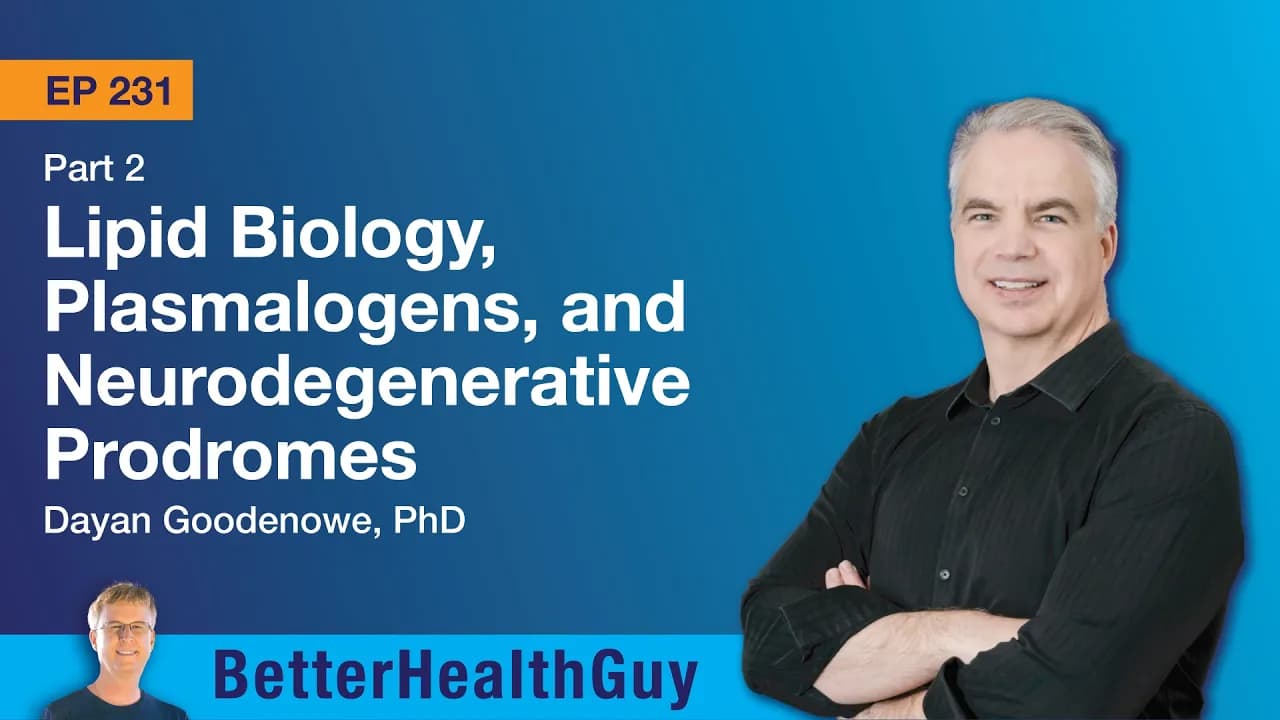
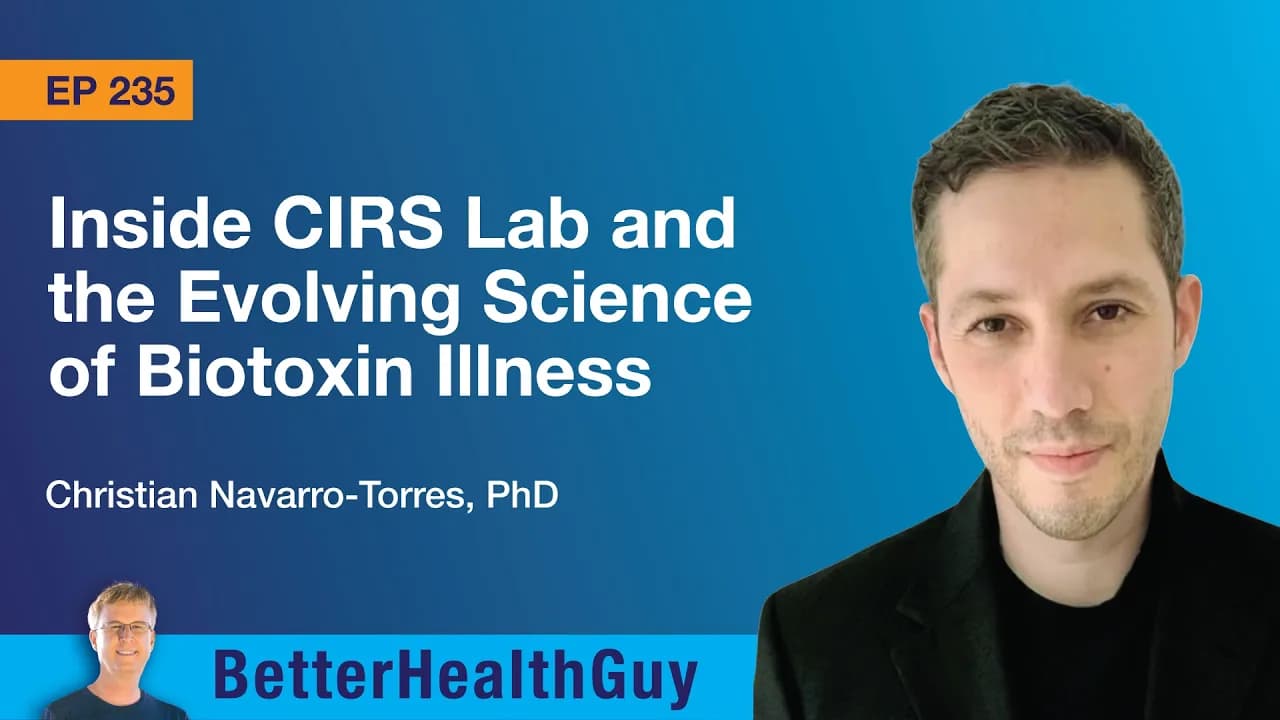
EP230: Lipid Biology, Plasmalogens, and Neurodegenerative Prodromes - Part 1 - Dayan Goodenowe, PhD
In a Nutshell
Dr. Dayan Goodenowe explains that plasmalogen deficiencies in cell membranes, driven by peroxisomal dysfunction and oxidative stress, underlie neurodegeneration, inflammation, and chronic diseases like autism, dementia, and heart disease. His patented alkyl-acyl glycerol precursors—Plasmalogen N3 (DHA/omega-3 for vitality, cognition, and reverse cholesterol transport) and N9 (omega-9 for structure, myelination, and calming neuroinflammation)—bypass gut breakdown, restore membrane fluidity and antioxidant capacity, and outperform dietary plasmalogens. Optimal use involves N9 first for sensitive cases (night dosing), N3 mornings, alongside mitochondrial supports (NAC, thiamine, fasting) and animal-sourced PC-plus products; monitor via blood plasmalogens, HDL >50, triglycerides <100.
These notes were generated by AI and may contain inaccuracies.
Welcome to the Better Health Guy podcast, exploring complex chronic conditions, resilience, vitality, and better health. Sign up for newsletter in show notes to support the show. Subscribe, rate, or review to reach more listeners. Content is informational only, not medical advice; consult personal medical authority.
Episode 230 features Dr. Dayan Goodenowe, neuroscientist, biochemist, inventor, and clinical research expert. In 1999, invented and patented ion cyclotron resonance mass spectrometry for comprehensive human biochemistry monitoring. Analyzed blood from tens of thousands of individuals across ages, races, countries. Compared healthy vs. diseased biochemistry in over 20 conditions: autism, dementia, colon cancer, heart disease, others. Examined age-related differences and all-cause mortality associations. Identified early biochemical patterns for disease and mortality risk, leading to patent portfolio for diagnostics in cancers, neurological disorders, psychiatric conditions, cardiovascular disease. Author of Breaking Alzheimer's, documenting research on neurodegeneration and lipid biology.
Part 1 covers lipid biology and plasmalogens; Part 2 (Episode 231) dives deeper into neurodegenerative prodromes. First guest on relaunched Better Health Guy podcast. Previously discussed in Episode 186.
Body has ~30 trillion structural cells plus ~30 trillion gut microbiome cells. Cellular membranes provide biological structure via phospholipid bilayer. Phospholipids have hydrophilic polar head and hydrophobic lipophilic fatty acid chains that self-organize into walls separating cells.
External membranes more rigid for protection; internal organelle membranes (mitochondria, peroxisomes, Golgi, nucleus, ribosomes) less rigid. Lipid membrane matrix is fundamental to vitality.
Membranes not homogeneous: thicker structural regions have more sphingomyelins, saturated/monounsaturated phosphatidylcholines; dynamic regions have more polyunsaturates and plasmalogens.
Composition varies by cell purpose: myelin (axon protection) impervious; synapses dynamic. Same neuron has different compositions in axon, cell body, dendrite.
Disruption by nutritional deficiencies or oxidative stress impairs ion channels, signaling.
Membranes store fatty acids, lipid mediators; release upon stimulation (e.g., inositol triphosphate activates protein kinase C).
Free cholesterol (~50% outer membranes for rigidity; ~10% inner like mitochondria/peroxisomes). Major components: phosphatidylcholine (PC) and phosphatidylethanolamine (PE), each in phosphatidyl and plasmalogen forms. Sphingomyelins structural; phosphatidylserine, inositol smaller.
Supplementing healthy lipids (PC, plasmalogen precursors) restores natural composition, not exactly an "oil change" but like switching oil viscosity (e.g., 5W30 winter to 20W40 summer).
Oxidized membranes trigger inflammation, preferentially lose polyunsaturates, become thicker/less pliable, reducing activity. Body uses phospholipases (e.g., PLA2) to remove oxidized lipids.
Oxidized LDL/Lp(a): lipids oxidize (e.g., arachidonic acid), disrupt structure; PLA2 cleaves, leads to malondialdehyde. Elevated PLA2 indicates oxidized phospholipids, atherosclerotic risk.
Restoring lipids revives cells; no toxic peroxide accumulation, but disrupted phospholipid distribution impairs function.
Fluidity/rigidity affects transport. In CDR1 (Naviaux), membranes stiffen defensively.
CDR from mitochondrial stress (e.g., exercise). Mitochondria convert hydrocarbons + O2 to CO2, H2O, ATP via electron transport chain. Overwhelm leads to anaerobic ATP production (cancer-like survival).
Plasmalogen deficiency disrupts cholesterol regulation, increases glucose influx, oxidative stress.
Fix hand-in-hand: strengthen mitochondria (B1/thiamine, B2/riboflavin, B3/niacin, NAC for glutathione, alpha-lipoic acid, minerals: Mg, Se, Zn, carnitine, CoQ10) + restore membranes.
Biochemical engineering ensures pharmacokinetics; nutrition insufficient if deficient.
Peroxidized membranes stimulate macrophages/microglia (MS, autoimmunity trigger). B-cells create personalized epitopes/memory; flare-ups from chronic stress. MS treatments: B-cell depletion reduces relapses but impairs new responses.
Hyperbaric O2 induces oxidized phospholipids for beneficial flushing/vasodilation.
Prodrome Neuro (now Plasmalogen N3, omega-3/DHA precursor); Prodrome Glia (now Plasmalogen N9, omega-9 precursor). Invented 2006 for plasmalogen replacement therapy; dietary supplements (alkylglycerol/alkyl acyl glycerol absorbed, converted in cells).
Naturally in breast milk (omega-9), shark liver oil (omega-3). No disease claims as supplements; structure/function only.
Distinction: intended use. E.g., L-DOPA dietary supplement or Parkinson's drug via IND/FDA path.
Dr. Goodenowe Dietary Therapeutics pursuing FDA IND for N3 (dementia, autism claims); N9/Glia to follow. Simplifies naming: N3 = omega-3, N9 = omega-9.
N9 (omega-9): core for heart membranes, myelination, anti-inflammatory. Restores structure before vitality; tunes "radio static" (noisy signals from inflammation/CDR). Improves sleep, reduces neuro noise. Emergency molecule.
N3 (omega-3): activity/functions (reverse cholesterol transport, endothelial tight junctions, vasodilation, parasympathetic flexibility, ion channels, synapses, neurotransmitter release, neuromuscular junctions). Boosts cognition, reduces depression (e.g., Parkinson's, long COVID).
Microglial activation from peroxidized brain membranes. Measure via advanced MRI (NODI: neurite orientation dispersion/density index) distinguishes axon/cell body water; shows inflammation reduction post-treatment.
Animal models (cuprizone, microglial-mediated) prevented/resolved by precursors, esp. omega-9.
Mast cells: supportive (all membranes have plasmalogens); reduces inflammation but address histamine/mitochondria separately.
Individual sensitivity varies; hypersensitive start low (1 capsule/day, titrate up); pause if sensitized (reactivates dormant/senescent cells, releases intracellular toxins).
Autism/ADHD: N9 first (95% positive parent reports in 200+ families on neurosupport program). Some added N3 successfully despite advice; worsens before improves, faster gains.
Normal/high doses: 20-30 mL Neuro (~20 gel caps)/3 days + Glia to reverse brain aging (speaker tracks brain/plasma). Serious diseases: half bottle/day each.
N3 morning (activating), N9 night; standalone or smoothie fine.
100% vegan (except PC+ from egg yolk). High-purity algae oil (45-50% DHA) for N3: saponify to remove fatty acids from glycerol, purify to 95% omega-3s. Synthetic backbone from chimyl/batyl alcohols (established since 1960s). Secret combination into alkyl acyl glycerol (2006 patent invention).
Traditional molecules are well established but not effective at elevating plasmalogens except in extremely high doses. Alkyl-acyl glycerols were invented to create high-potency products. The n3 product uses extremely high potency DHA without distractions. The same process is applied to the omega-9 (n9) product using high oleic acid sunflower oil (85+ percent), a high-quality cooking oil with high flash point, virtually no omega-6.
These are purified, sterilized vegan products with no trace metals from the cleanup procedure.
Plasmalogens are made by peroxisomes inside cells. Precursors are taken up by cells to make plasmalogens, which become part of cell membranes.
Plasmalogens made in one cell do not always remain there; cells share them, but each cell primarily makes its own. Synthesis occurs in two compartments: alkyl glycerol (ether bond) made exclusively in peroxisomes, then ether lipid moves to endoplasmic reticulum for final plasmalogen formation.
Plasmalogen precursors (alkyl-acyl glycerols) bypass peroxisomes and work in the endoplasmic reticulum, effective even in peroxisomal diseases to restore plasmalogens.
Cells normally get precursors from peroxisomes and make desired amounts/types. Precursors provide the branch point molecule. Blood plasmalogen levels reflect cellular production; healthy levels mean cells are making them properly. Cells share via LDL receptor and LDL particles, but primary phospholipid transfer is limited (flipases exist but not much). Daily precursor intake provides pulsing effect, especially for brain (plasmalogens do not cross blood-brain barrier; only precursors do).
Plasmalogen precursors convert to plasmalogens virtually in everyone, even children with rare peroxisomal diseases; higher doses may be needed for deficiencies. Multiple ubiquitous systems ensure conversion.
To maximize endogenous production: increase peroxisomal function, critical for healthy aging (weak link in aging). Stimulated by fasting state and exercise (especially resistance training).
Blood work indicators of good peroxisome function: HDL >50 (ideally >60), triglycerides <100, cholesterol 220-240.
PPAR alpha agonists like fibrates stimulate peroxisomes. Omega-3s lower triglycerides as PPAR agonists (peroxisome proliferator activator receptor). In fed state, peroxisomes shut off (high glucose/glycogen; body stores fat as triglycerides). In fasting (4-12 hours), free fatty acids from adipose flow in, peroxisomes turn on. Intermittent fasting and low glycemic index diet maintain cycle. Constant snacking/high glycemic foods shut down peroxisomes.
N3 plasmalogen precursor (high DHA) restores plasmalogens and stimulates peroxisomes, lowers triglycerides.
Uptake is both dose- and duration-dependent. Precursors reach cells via circulation: first gastric mucosa/small intestine, then liver (first-pass), then brain/muscles via chylomicrons. In brain, concentrates in choroid plexus (CSF production site), then to brain cells via CSF. Brain regions absorb at same rate. Every cell gets it (eye, bones), slight differences but not dramatic.
Dietary plasmalogens (e.g., squid, octopus, shrimp, scallops, krill, shark oil, muscle) have low bioavailability due to breakdown and composition issues. Hydrochloric acid breaks vinyl-ether bonds; plasmalogenase enzyme prevents intact absorption. Radiolabeled studies show intact plasmalogens do not survive gut/intestines or enter circulation significantly. Even IV intact plasmalogens do not cross blood-brain barrier or have cellular transport mechanisms.
Plasmalogen precursors (alkyl-acyl glycerols) are non-polar, diffuse through membranes, preferred for brain/other tissues.
Breast milk contains omega-9 plasmalogen precursors (alkyl-acyl glycerols), ideal for human myelination. Colostrum has high levels, decreases over days (still 10x cow's milk by day 15). Pregnancy/breastfeeding is metabolic load on mom (depletes her precursor supply, lowering her plasmalogen load). Recommend supplementing mothers; improves milk production, baby health.
Heating destroys vinyl-ether plasmalogens (heat/acid-sensitive), but precursors are stable (heated to high temperatures pre-bottling).
Shark liver oil has alkyl glycerols (anti-cancer, immune modulation, endothelial function) but impure (squalene, saturated fats, arachidonic acid; low DHA).
IV plasmalogen precursors bypass gut, cross blood-brain barrier quickly; useful with photobiomodulation/focused ultrasound. Upcoming product.
IV phosphatidylcholine excellent for lecithin-cholesterol acetyltransferase, reverse cholesterol transport, anti-atherogenic.
In chronic diseases/cancers: low plasmalogens (indicator of peroxisomal stress). Phosphatidylcholine deficiency reproducibly causes cancer (e.g., pancreatic/liver). Measure plasmalogens, phosphatidylcholine, cholesterol (low cholesterol = poor cellular health). Independent systems. Turbo cancers from mitochondrial dysfunction → extra-mitochondrial ATP → pseudo-fed state → peroxisome shutdown → stress markers, low plasmalogens, fatigue.
PC plus products: phosphatidylcholine + N3 or N9 + nutrients (soon renamed Plasmalogen N3 PC Plus, Plasmalogen N9 PC Plus). Separate/additive from standalone precursors. Do those also contain any of the phosphatidylserine, ethanolamine or inositol, or do we generally not find we need to supplement those? How do you decide when to use the standalone plasmalogen precursors versus the combined
Plasmalogen precursor enriched egg yolk oil products are being considered for testing. Egg yolk derived lipids are potentially better than those from soy or sunflower for brain-related activity due to the structure of the phosphocholine. Phospholipids have two fatty acids at SN1 and SN2 positions. SN1 is the conserved anchor position, especially in the brain; SN2 is dynamic, modified by PLA2 (phospholipase A2) which removes the SN2 fatty acid (arachidonic acid, DHA, oleic acid).
Brain phospholipids enter as lyso-PC, retaining SN1 but with free alcohol at SN2. Animals have saturated fats (palmitic, stearic, oleic) at SN1; plants put linoleic acid, DHA, oleic at SN1, which is not bioavailable to the brain and recognized as toxic. Brain lacks high phospholipase A1 (PLA1); liver has it. Peripheral systems handle seed-based phosphocholine, but for brain health, animal-based sources (eggs, liver) with PLA1 are needed.
- Most people: Plasmalogen N3 PC Plus in morning (most potent brain-enhancing lipid matrix), pure Plasmalogen N9 at night.
- Inflamed or cell danger response: Start with pure Plasmalogen N9, upgrade to Plasmalogen N9 PC Plus (more activating), then switch to Plasmalogen N3 PC Plus once stabilized.
Recommend PC-plus products in morning (especially), not at night due to activating effect. Pure N9 preferred at night.
Egg yolks provide healthy lipids but absorption is slow due to proteins and digestion. Lipids are stable even when cooked. Extracts are pure fat/oil for peak pharmacokinetic response. Number of eggs irrelevant; extracts provide rapid peak vs. slow release.
Pharmacokinetics is critical... peak amount... designed to be more pharmacokinetically and pharmacodynamically active.
Against all seed oils (corn, soy, canola high in omega-6). Olive, avocado oils fine. High oleic sunflowers are engineered, not natural seed oils. Issue is molecular structure: seeds contain plant starter materials for cell walls (not membranes), waxy cuticles; plants aren't squishy like animals.
Omega-6 linoleic acid critical for plant cell walls, ubiquitous in human diet (even eggs, animals fed corn/soy). Focus on omega-9 and omega-3; minimize omega-6 (impossible to be deficient).
Alpha-linolenic acid (ALA) from flax converted to omega-3s (DHA), not stored in membranes. Linoleic acid (omega-6) used in membranes, precursor to arachidonic acid. Human membranes use DHA (from ALA) and arachidonic acid for fluidity. Body maintains total composition; omega-3 deficiency increases arachidonic acid.
Seed oils create linoleic acid → arachidonic acid → inflammatory mediators (prostaglandins, leukotrienes).
Plant-based omega-3s ineffective; animal-based DHA essential (not EPA, a DHA byproduct; low in membranes). ALA to DHA conversion complex (elongation 18→24 carbons, peroxisomal beta-oxidation). Arachidonic acid from linoleic easy (one elongation, two desaturations, no peroxisomes needed).
Prefer high-DHA algae (quality-controlled, no mercury) over fish oil.
Avoid/supplement omega-6 unnecessary (ubiquitous in avocados, olive oil).
Not essential; made by ruminant microbiomes (cows). Human body cannot use, treats as toxic via alpha-oxidase in peroxisomes (converts odd to even chain). Benefits from sour cream/cottage cheese are peroxisomal stimulation (PPAR agonists), 10-100x stronger than DHA due to low baseline exposure → upregulation.
Positive as peroxisomal stimulator, enhances endogenous plasmalogen production if understood as such.
Risk depends on metabolic regulation. Against pure keto; favor natural cycles, intermittent fasting, balanced fat/protein, non-glycemic sugars (e.g., Trello's prebiotic). Excess fat → peroxisomal overload → peroxide production → oxidative stress.
Fatty liver from liver making fat (fatty acid synthase, stearoyl desaturase → oleic acid), not blood fat deposition. Requires good cellular energy capacity.
Phosphatidylethanolamine levels in blood shoot up with non-alcoholic fatty liver disease.
Precursors have zero antioxidant capability. Final plasmalogens antioxidant via vinyl ether bond (sensitive to peroxides, H2O2; neutralizes membrane peroxides). Orders of magnitude more powerful due to massive membrane quantities vs. vitamin E (hot potato electron holder inside bilayer).
Plasmalogens first line (outer membrane surface); get consumed/"blow up" completely neutralizing peroxide. Activated in cell danger response by phospholipase A2.
There are different types of phospholipase A2, including a plasmalogen-specific phospholipase A2. This enzyme releases not just the free fatty acid (often DHA or others) but also lyso-plasmalogen into the soluble interface. The lyso-plasmalogen, with its vinyl ether bond, acts as an oxidative stress neutralizer, making it extremely powerful. It works on the step after superoxide dismutase and peroxynitrite, which occur upstream. All oxidative stress originates from mitochondrial insufficiency, specifically the inability to neutralize electrons.
When consuming energy, plants store sunlight energy in hydrocarbons like glucose from sunlight, water, and CO2. The body breaks these apart, releasing energy as electrons. NAD+ (inactive) becomes NADH (energy-containing, neutral charge) by collecting high-energy electrons. NADH charges the electron transport chain in mitochondria, where oxygen is converted to water. If NADH cannot be utilized, it reacts with oxygen, forming superoxide anion (O2 with an extra electron).
Superoxide dismutase (ubiquitous and inducible) neutralizes superoxide anion into hydrogen peroxide, which causes vasodilation but should be short-lived. Prolonged hydrogen peroxide leads to peroxynitrite (superoxide + nitric oxide). Plasmalogens work on hydrogen peroxide afterward.
Lyso-plasmalogen acts as an antioxidant. After use, it is consumed. To preserve plasmalogens and reduce oxidation loss, the biggest factor is glutathione, along with peroxidases. Maintain glutathione levels with N-acetylcysteine (NAC), selenium (typically not deficient in glutamate or glycine). Long-term glutathione maintenance requires NAC at 2 grams daily (morning and night). NAC restores glutathione in the brain.
Glutathione supplements work for blood but do not cross the mitochondrial membrane; cysteine is needed. NAC is a prodrug to cysteine (smells like rotten eggs due to sulfur).
No concerns about long-term NAC use as a biofilm disruptor disrupting healthy biofilms or gut mucin layer. NAC is simply the amino acid cysteine. Plant proteins are deficient in sulfur amino acids (cysteine, methionine); whey protein best maintains sulfur balance. Pure cysteine works without needing NAC or ethyl ester forms—no advantages seen in data using magnetic resonance spectroscopy (restores brain glutathione easily). Combine with methylfolate and methyl B12 for methyl transfer support.
Plasmalogens in mitochondrial membranes have indirect effects. Mitochondria are extremely oxidatively demanding (converting hydrocarbons + oxygen to CO2 + water, "literally on fire"), producing high superoxide and peroxide. Maintaining plasmalogen levels keeps mitochondria healthy, allowing normal function, ATP production, and mitochondrial genesis (mitochondria have own DNA and transcription). Measure mitochondrial function simply with Progen Scan or BioScan.
SNPs (e.g., MTHFR) indicate weaknesses but are irrelevant with proper support like creatine, phosphocholine, and methyltransferase molecules (e.g., methylfolate, methyl B12). Core biochemical systems must function properly regardless of SNPs.
Epigenetics reflect health, not drive it—functionality changes epigenetics. Sick cells alter epigenetics to survive longer. Epigenetic changes adapt to lifestyle (e.g., high calories for marathon running vs. low for dieting). Restoring health reopens epigenetic and methylation clocks (may have time lag). Epigenetics modify gene expression in response to physiology—you are the "clockmaker" driving epigenetics via actions.
Optimizing plasmalogen levels increases function, which optimizes epigenetics.
They've shown this with vitamin C and other health improvements.
Part 1 of interview with Dr. Dayan Goodenowe on neurodegenerative prodromes and his lens on complex chronic conditions. Learn more at betterhealthguide.com; available on YouTube, Spotify, Apple Podcasts, Amazon Music, iHeart, and more.
Keep BetterHealthGuy in your library
Save the videos and channels worth coming back to, and find them again in one place.