Essentials: How to Assess & Improve All Aspects of Your Fitness | Dr. Andy Galpin
In a Nutshell
Dr. Andy Galpin outlines nine physiological adaptations from exercise—skill, speed, power, strength, hypertrophy, muscular endurance, anaerobic capacity, VO2 max, and long-duration endurance—and provides practical field tests for each. Key benchmarks include a broad jump equal to your height, dead hang of 30+ seconds, FFMI ≥20 for men/≥18 for women, 25+ push-ups for men/15+ for women, and VO2 max ≥35/30 mL/kg/min for men/women. The main takeaway is to identify and correct your weakest metrics once per year so no single deficiency caps overall fitness progress.
These notes were generated by AI and may contain inaccuracies.
Welcome to Huberman Lab Essentials, where we revisit past episodes for the most potent and actionable science-based tools for mental health, physical health, and performance. Andrew Huberman, professor of neurobiology and ophthalmology at Stanford School of Medicine, introduces Dr. Andy Galpin, an expert on physical training and optimizing for specific goals and outcomes.
When it comes to exercise, people generally have two major goals in mind. Goal number one is achieving some sort of appearance. This includes wanting to be big, not too big, or lean. There is an aesthetic component to almost everybody. The second goal is functionality, which can mean being better at strength, mobility, or having energy throughout the day. The key is understanding where to focus exercise training to achieve both immediate goals and long-term wellness.
The physiological adaptations from exercise can be bucketed into nine areas:
- Skill or technique - Running more effectively, practicing skills like shooting a ball, swinging a golf club
- Speed - Moving at higher velocity or with better rate of acceleration
- Power - Speed multiplied by force
- Force or strength - Maximum amount of force you can produce one time
- Muscle hypertrophy - How big your muscle is
- Muscular endurance - How many repetitions you can do of a movement (typically 5-50 rep range)
- Anaerobic capacity - Maximum amount of work in 30-45 seconds up to 120 seconds of all-out work
- Maximum aerobic capacity - 8-15 minute range reaching maximum heart rate and true VO2 max
- Long duration endurance - Ability to sustain submaximal work for 20-60 minutes with no breaks
To assess movement skill, the gold standard is to consult a highly qualified physical therapist or movement specialist. For self-assessment, use a four-step solution examining major joints: shoulder, elbow, low back, hip, knee, and ankle.
- Do representative movements: upper body press (push-up), upper body pull (pull-up or bent row), lower body press (squat), lower body pull (deadlift)
- Record frontal and side views, 3-10 repetitions per angle, slow and controlled
- Look for four key things: symmetry (front to back, left to right), stability (controlled movement without shaking), awareness (knowing proper positions), and range of motion (full joint movement without compensation)
Scoring system: 0-3 scale. Zero indicates high acute injury risk. One indicates minor flaws requiring caution with load and volume. Two indicates acceptable movement for reasonable protocols.
Pure speed testing is generally not necessary for most people unless they are high-performance athletes. For athletes, a 40-yard dash or velocity transducer on a barbell can be used.
Power assessment uses a simple broad jump:
- Stand in normal position, jump as far forward as possible
- Measure distance from starting point to the back of your heel where you land
- Target: Jump distance equal to your height (5'5" person should jump 5'5")
- For females, reduce target by about 15%
- No running approach; can use arm swing and bounce
- Red flag indicator: If you can jump your body height, you're in good shape
Grip strength can be measured two ways:
- Hand grip dynamometer: Minimum score 40 kg for males, 35 kg for females. Ideal range above 60 kg. No more than 10% variation between hands
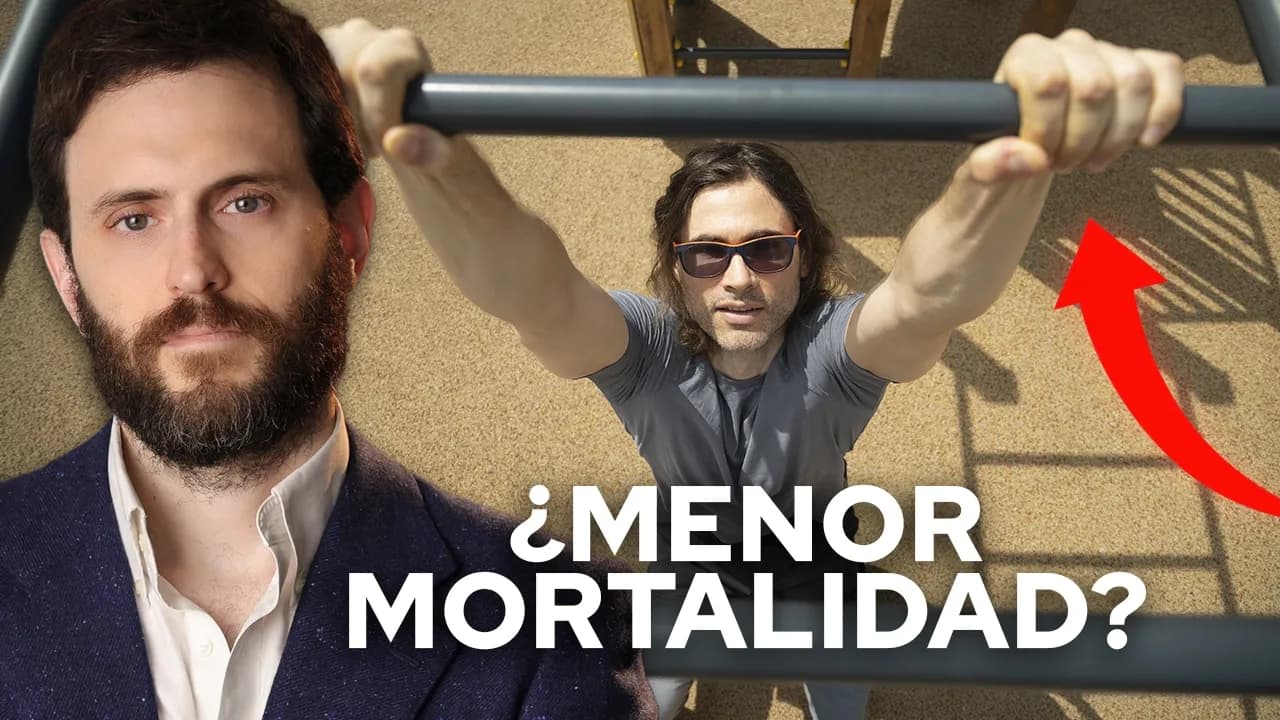
- Dead hang: Hold pull-up bar for minimum 30 seconds, good range 30-50 seconds, above 60 seconds is excellent
- Note: Exceptionally large individuals may struggle with dead hang due to body weight
Leg strength options:
- Leg extension test: Target body weight for younger adults, reduce 10% per decade after age 40
- Front squat or goblet squat hold: Hold half body weight at bottom position for 45 seconds (introductory: one-third body weight for 30 seconds)
Use repetition conversion equations for estimating one-rep max if not comfortable going to true maximum. Do 5 or fewer reps, then use online calculators for estimation.
Important caveats: Only perform maximum testing if technically proficient. Standardize warm-up protocols for consistent results.
Use body composition testing (DEXA scan is gold standard, bioelectrical impedance also acceptable). Calculate FFMI (fat-free mass index):
- Target for men: 20 or higher
- Target for women: 18
- Severe detriment below 17 for men, below 15 for women
- Assumes body fat under 30% for men, under 35% for women
- FFMI of 24-25 indicates significant muscle mass if reasonably lean
Required inputs: total body weight, body fat percentage, height. Online calculators provide grading rubric.
Plank tests:
- Front plank: 60 seconds
- Side plank: 45 seconds
Push-up standards:
- Males: 25+ consecutive full push-ups (full elbow lockout at top, chest touches ground)
- Females: 15+ consecutive push-ups (5-15 range acceptable, below 5 indicates problems)
Repetition endurance test:
- Take your strength test load, reduce to 75%, perform maximum repetitions
- Target: More than 8 repetitions
- Below 8 repetitions indicates muscular endurance problem
Laboratory testing uses either:
- Wingate test: 30-second maximal test
- Bosco protocol: 60 seconds of maximum vertical jumps on force plate
Field testing alternatives:
- Sprinting, air bike, rowing for 30-60 seconds maximum effort
- Focus on completing the test and assessing post-test fatigue level
- No universal standards due to equipment variability
The predicted maximum heart rate formula is 220 minus your age. For a 50-year-old, this gives approximately 170 beats per minute. This number is extremely generic and does not indicate fitness level - getting higher or lower does not mean being more or less fit. The better metric is heart rate recovery rather than maximum heart rate achieved. To test heart rate recovery, reach absolute exhaustion and maximum fatigue, then test heart rate recovery. The target is approximately half a beat recovery per second. Within 60 seconds, heart rate recovery should be 30 beats per minute. Within the next minute for two-minute recovery, it should be approximately 60 beats. Three-minute recovery should be half of that again. If heart rate recovery is worse than these targets, it indicates a problem in anaerobic capacity or cardiovascular capacity.
VO2 max is the gold standard for measuring maximal heart rate and cardiovascular capacity. The laboratory gold standard involves wearing a mask to collect gases while running a specific protocol to true maximum. Without laboratory access, the 12-minute Cooper test can be used: run for 12 minutes covering maximum distance possible, then use online calculators to estimate VO2 max from the distance covered. The Rockport one-mile submaximal walk test is a gentler alternative that requires a stopwatch or heart rate monitor. Walk one mile, record the time and heart rate at completion, then enter these values into standard calculators for VO2 max estimates.
Long duration steady state exercise is not assessed by a standard number. The test requires maintaining consistent work output for over 20 minutes. Select a familiar protocol or loop and test the ability to maintain work without stopping. Ideally, perform this test with nasal breathing only. The target is 30 straight minutes without needing to take a break at a non-walking pace. Walking only qualifies if very unfit. The work can be in any zone from 2 through 5, as long as minimum 20 minutes of continuous work is demonstrated with no breaks, intervals, or downtime.
The complete battery of fitness assessments should be performed once per year. All tests can technically be completed in two days, though a 3-day split is probably optimal. Testing week is recommended at the beginning of the year or whenever training changes. The non-fatiguing tests including FFMI and body fat composition should be performed first as the initial activity. Acute exercise can influence body composition measurements due to inflammation and water storage, so body composition testing requires 48 hours of rest beforehand with no hard exercise the day before.
Movement tests should also be done when fresh, avoiding assessment of squatting mechanics when sore from previous testing. Skill, maximum strength, and power tests should occur at the beginning of testing days. Fatiguing tests should be performed at the end. A common strategy allows power tests like broad jumps to be followed immediately by leg strength testing, then leg muscular endurance testing on the same day. One-rep max leg extensions can be followed by 5-7 minutes rest, then 75% loading for maximum repetitions. Upper body tests and grip strength tests can follow on the same day. Anaerobic tests including 30-second maximum endurance must be done on separate days from strength testing, though they can follow long duration tests which function as warm-ups.
For men, the minimum VO2 max target is 35 milliliters per kilogram per minute. For women, the minimum is approximately 30 milliliters per kilogram per minute. Optimal targets are above 50 for men, with greater satisfaction above 55. For women, the target is above 50 when men reach above 55.
Severe performance anchors should be avoided as they create limiting constraints. The goal is to move any deficient areas from severe to sufficient or concerning levels. This prevents any single weakness from limiting overall progress. The approach allows continued pursuit of optimization in areas of specific passion. Training should be enjoyable rather than creating messages that certain types of training should be avoided despite natural aptitude in other areas.
Keep Andrew Huberman in your library
Save the videos and channels worth coming back to, and find them again in one place.