How to Train for Longevity | Dr. Andy Galpin
In a Nutshell
Dr. Galpin argues that longevity training requires comprehensive physical capacity across all movement patterns, speeds, and planes rather than specializing in any single exercise or focusing solely on measurable markers like VO2 max or grip strength. These biomarkers serve as indicators of overall health but should only be directly targeted when performance falls below functional thresholds; once adequate, further improvement yields diminishing returns for lifespan. The core priority is building tissue tolerance and resilience through varied training that maintains the ability to perform desired activities without limitation or injury risk.
These notes were generated by AI and may contain inaccuracies.
When thinking about longevity and exercise, the focus must be on the actual results being targeted. The goal is not simply living a long life, but also being resilient and able to recover effectively. Resilience is critical because aging should not restrict desired activities or create a sense of threat when trying new movements.
The core objective is avoiding premature death from physiological impairment while maintaining the ability to perform desired activities within reason. Working backwards from this goal requires identifying the necessary skills and physiological attributes, particularly tissue tolerance across multiple body structures including the Achilles tendons, back, neck, and adductor muscles.
Tissue tolerance means these structures must be capable of handling stress. The opposite approach—selecting only one type of exercise such as cycling exclusively, chest press only, or weightlifting alone—creates vulnerability. When muscles are asked to perform unfamiliar movements, whether fast actions, heavy loads, or different ranges of motion, problems arise because these patterns haven't been practiced for years or decades.
The essential requirement is developing a wide range of movement skills, training patterns, ranges of motion, speed, and other physical capacities. Training should be planned over months and years rather than focusing on individual exercise programs. Key considerations include whether all joints can move through their full range of motion, whether exercises can be performed both quickly and slowly when appropriate, and whether muscle mass, strength, range of motion, balance, and proprioception are being developed.
The aim is complete fitness rather than specialization. This represents the base of the longevity pyramid. Scientific research on specific markers like VO2 max, leg strength, and grip strength is valuable but represents a lower level of consideration. While research shows these factors correlate with longevity and well-being, they function as proxy indicators rather than inherently special measures.
These markers are well-documented because they are easy to measure in laboratory settings and predict functional outcomes like human mobility and capacity. However, the absence of research on measures like single-leg squat strength as longevity indicators reflects measurement limitations rather than lack of importance. An evidence-based approach must avoid missing the broader picture by over-focusing on easily measurable details.
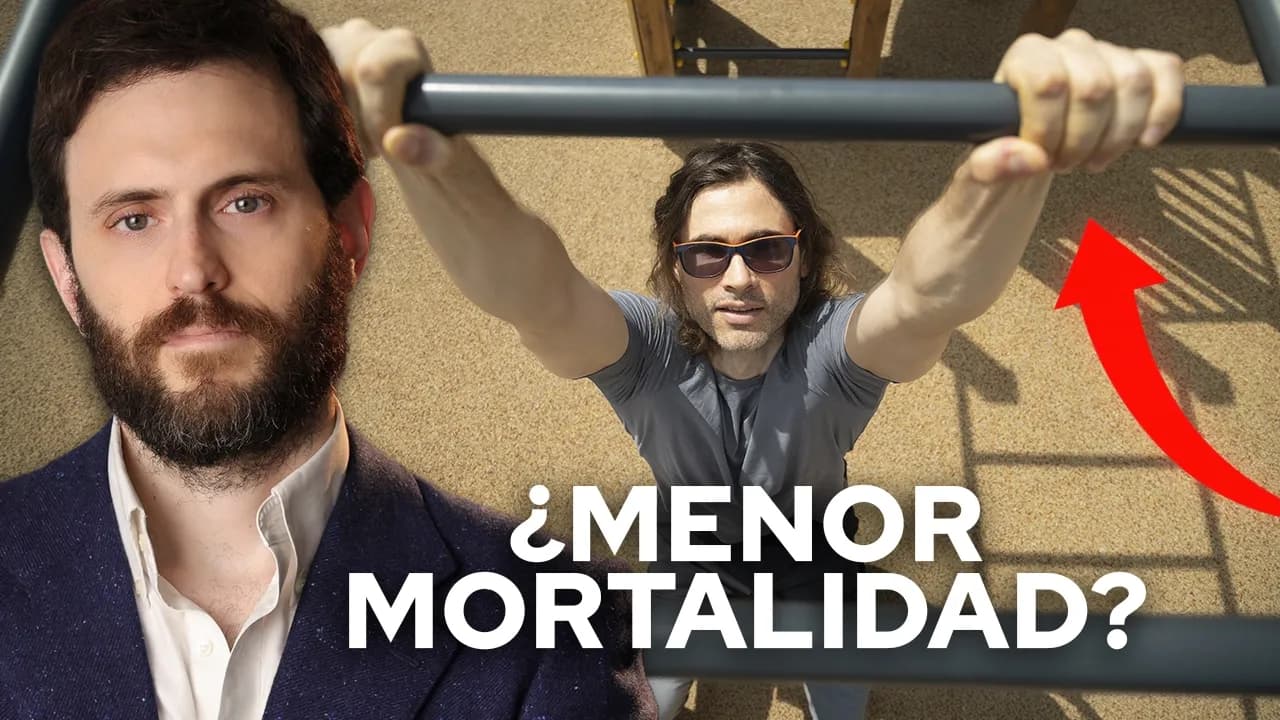
Grip strength demonstrates the dual nature of these markers. On average, grip strength serves as a strong indicator of overall health and general strength for people taken from any population. It also functions as an important direct measure because hands represent the primary means of interacting with and manipulating the world. Loss of grip ability directly changes behavior and quality of life.
However, focusing training exclusively on grip strength to move from the 80th to 90th percentile will not extend lifespan. Conversely, improving grip strength when below the 30th percentile will meaningfully impact quality of life. The distinction matters: grip strength serves as both an indicator and a direct training target when appropriate.
VO2 max shows similar characteristics. When data analysis excludes factors like metabolic health, body composition, and sleep quality, VO2 max becomes less predictive of longevity than previously understood. It often serves as an indicator of good health rather than a direct causal factor. However, the ability to use and process oxygen, metabolize carbohydrates and fats for fuel, and produce functional movement outcomes represents a real physiological capacity.
These metrics should be considered on a continuum. When any measure falls in the low or poor range, direct training on that specific capacity will likely improve both quality of life and longevity. When performance is already fairly good, advancing from good to great or great to elite levels may not produce substantial additional benefits for longevity specifically.
While pursuing elite performance in grip strength, leg strength, or other measures is worthwhile for its own sake, making any single metric the sole or primary focus for longevity purposes misses the broader objective.
The training approach for longevity requires maximum comprehensiveness across motor capacity. This includes balance and flexibility, speed and strength, and dynamic movement capability across frontal, lateral, and transverse planes without limitation to specific movement types. Required capacities include muscle mass, strength, muscular endurance, and aerobic fitness with endurance for extended periods—encompassing the ability to walk for hours, stand for prolonged durations, perform light physical activities, and climb stairs.
This comprehensive approach represents the complete program structure when longevity or overall health serves as the primary training goal.
Keep Andy Galpin in your library
Save the videos and channels worth coming back to, and find them again in one place.