Essentials: Micronutrients for Health & Longevity | Dr. Rhonda Patrick
These notes were generated by AI and may contain inaccuracies.
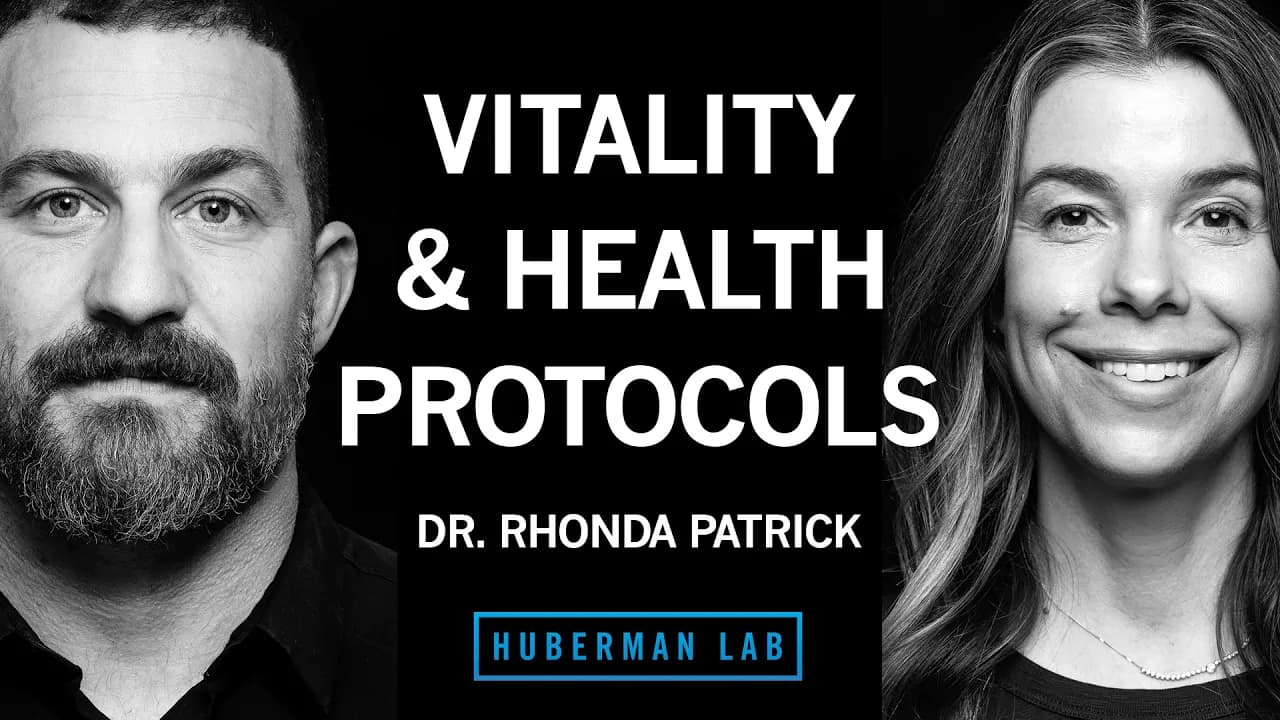
Welcome to Huberman Lab Essentials, where past episodes are revisited for potent, actionable, science-based tools for mental health, physical health, and performance. Andrew Huberman is a professor of neurobiology and ophthalmology at Stanford School of Medicine. Discussion with Dr. Rhonda Patrick begins.
Temperature is a powerful biological stimulus. Cold exposure stimulates metabolism, brown fat activation. Heat exposure provides similar benefits. Question on whether discomfort from deliberate cold and heat anchors to the same pathway.
Evolutionary Context of Intermittent Challenges
Humans evolved with intermittent challenges: hunting, gathering, physical activity, caloric restriction, intermittent fasting, food scarcity, plant consumption. These activate stress response pathways (hormesis) with antioxidant, anti-inflammatory effects, stem cell production, autophagy. Cross-talk between stressors like exercise, fasting, heat, cold.
Hormesis: Small intermittent stresses activate pathways that handle stress from exercise, heat, metabolism, immune function, aging. Examples:
- Heat shock proteins (HSPs): Robustly activated by heat; also by cold (less robustly), sulforaphane from broccoli sprouts.
- NRF2 pathway: Activated by sulforaphane for detoxification of carcinogens.
Debate on plants dismissed as oversimplification. Sulforaphane activates NRF2, regulates genes for glutathione production, detoxification of compounds like heterocyclic amines (HCAs) from food.
- GWAS studies: Genetic variants impair HCA detoxification increase colon cancer risk; negated by high cruciferous vegetable intake (sulforaphane activates glutathione S-transferase).
- Broccoli sprouts: 100x more sulforaphane than broccoli.
- Human evidence: Activates glutathione in the brain.
Cooking Broccoli and Sulforaphane Yield
Cooking broccoli lowers sulforaphane; adding 1g mustard seed powder to cooked broccoli increases sulforaphane 4-fold.
Rhonda shifted to sulforaphane supplementation; also uses moringa powder (activates NRF2 similarly) added to smoothies.
Marine omega-3s (cold-water fatty fish): ALA, EPA, DHA.
- High-quality: triglyceride form (glycerol backbone).
- Lower-quality: ethyl ester form (take with food).
Omega-3 Dosage and Quality Testing
Recommend 2g/day threshold.
- IFOS (International Fish Oil Standards) website: Third-party tests concentration, contaminants (mercury, PCBs, dioxins), oxidized fatty acids (TOTOX <10, ideally <6). Refrigerate fish oil (polyunsaturated fats prone to oxidation).
Benefits of 2-4g EPA/Day
Powerful anti-inflammatory; modulates thinking, feeling, aging.
Omega-3 index (Dr. Bill Harris): RBC levels, 120-day turnover (long-term marker).
- US average: 5%.
- Japan: 10-11% (5-year increased life expectancy).
- 4% index: 5-year decreased life expectancy vs. 8%.
- To reach 8% from 4-5%: ~2g/day (less for triglyceride form).
Measuring Omega-3 Index
Test RBCs; wait 120 days post-supplementation for retest.
Omega-3 Mechanisms
- Resolvins (DHA metabolites), specialized pro-resolving mediators (SPMs): Resolve inflammation timely.
- EPA: Blunts inflammation crossing blood-brain barrier, inhibits serotonin release; enables more serotonin.
- DHA: Cell membrane component (neurons); affects receptor/transporter structure via fluidity. Deficiency alters serotonin/dopamine receptors.
- Phospholipid DHA during fetal development: 10x more brain DHA (animal studies). Body converts to phospholipid form.
Vitamin D: 70% US population inadequate (<30 ng/mL); ideal 40-60 ng/mL (meta-analyses of all-cause mortality).
Steroid hormone: Binds vitamin D receptor (VDR), heterodimerizes with retinoid X receptor (RXR), binds VDREs (vitamin D response elements), regulates >5% protein-coding genome.
Vitamin D and Serotonin
TPH2 (tryptophan hydroxylase 2) has VDRE: Converts tryptophan to serotonin in brain (serotonin doesn't cross BBB). Regulates immune system, blood pressure, bone homeostasis.
Vitamin D Sources and Supplementation
- D3 (cholecalciferol) for supplementation; D2 plant-based (fortified foods).
- Fatty fish has some; insufficient to correct deficiency.
- Sun exposure (age reduces skin synthesis efficiency).
Mendelian randomization studies: SNPs in vitamin D pathway genes (e.g., conversion to 25-hydroxyvitamin D) link to higher all-cause, respiratory, cancer mortality, MS risk.
- Test levels (ask doctor).
- 1,000 IU D3 raises blood levels ~5 ng/mL (e.g., 20→40 ng/mL needs 4,000 IU).
Safe: 1,000-5,000 IU/day (hypercalcemia requires hundreds of thousands IU long-term).
- Study: 4,000 IU/day in vitamin D-deficient African-Americans reversed epigenetic aging ~3 years.
Still need sun exposure.
40% US insufficient. Essential for ATP production/utilization, DNA repair enzymes (cofactor; insidious damage from normal metabolism).
Sources: Dark leafy greens (chlorophyll center is magnesium) – kale, spinach, Swiss/rainbow chard, romaine lettuce.
Magnesium Supplementation
Can cause GI distress at high doses. Rhonda: 130-135 mg/day.
- Magnesium L-threonate: Less gut impact.
- Magnesium malate: Best (malic acid benefits gut); green apples, tart cherries high in malic acid.
Rhonda: 3 minutes at 49°F in cold tub; before podcasts, talks, when anxious (improves focus, mood).
Mood enhancement: Slow, significant, hours-long dopamine elevation (vs. spike/crash from Adderall, caffeine, etc.). Avoid too frequent to prevent full cold-adaptation blunting effect; some anticipate post-cold dopamine.
Rhonda wants adaptation: More mitochondria in adipose tissue, possibly muscle.
Cold Adaptation: Shivering vs. Mitochondrial Uncoupling
Shivering: Inefficient muscle contractions for heat.
Uncoupling: Mitochondria proton leak across inner membrane disrupts electrochemical gradient → maximum respiration → heat (not ATP) via burning glucose/lipids. More efficient.
Adaptation via longer duration or more frequent exposures.
With longer cold exposure or repeated sessions, shivering stops, and the body shifts to uncoupling thermogenesis. Another adaptation is increased mitochondria production in adipose tissue, regulated by norepinephrine (noradrenaline) via PGC-1α. This protein promotes mitochondrial biogenesis in each adipose cell, enhancing heat production as a survival mechanism: "Okay, I'm going to be exposed to this cold next time. How can I make sure I don't die? Oh, I can have more mitochondria and I'm going to make more heat."
Browning of Fat
This process is called browning of fat because adipose cells with more mitochondria appear darker under a microscope due to the increased mitochondrial density.
Benefits of Mitochondrial Biogenesis in Muscle
More mitochondria in muscle improve muscle mass and endurance, as mitochondria generate cellular energy. Normally, mitochondrial biogenesis requires stimuli like high-intensity interval training (HIIT). Cells turn over, replacing old mitochondria with new ones, but biogenesis must be stimulated. Mitochondria fuse, exchange contents including mitochondrial DNA, and fission to maintain youthfulness. Aging accumulates old mitochondria in the pool, so introducing new healthy ones combats aging: "why wouldn't you want to like bring up new healthy young mitochondria into that pool, right? So in my mind when I hear mitochondrial biogenesis, I'm like aging. Like that's the first thing I think of."
High-intensity interval Tabata sessions on a stationary cycle, 3 times per week: 10 minutes of 20 seconds all-out pedaling ("pedaling like your life depending on, you're maxing it") and 10 seconds off.
Sauna preheated to 189°F, enters immediately after Peloton, drinks water, stays 30 minutes. Uses time to read science papers, prepare presentations/podcasts, or think/hash over ideas. Uses sauna for memorization, possibly due to stress response enhancing memory via emotional triggers.
Stress and Memory Enhancement
Sauna stress aids learning/retention, substantiated by James McGaugh (UC Irvine, University of Arizona). He defined an inverted U-shaped function for adrenaline and memory: too relaxed = poor memory; optimal stress = peak memory; extreme stress (panic) = impaired memory/autonomic function.
Sauna induces vasodilation and blood perfusion to the brain, enhancing cognition. Overlaps with moderate-intensity aerobic exercise: elevates core temperature, sweating. Blood redistributes to skin for cooling, but overall blood flow improves to brain, muscles, everywhere.
Dose-dependent: 4-7 times/week = >60% reduction vs. 1 time/week; 2-3 times/week = >20% reduction.
Cardiovascular Benefits
- Cardiovascular mortality: 4-7 times/week = 50% reduction (men); 2-3 times/week = 24% lower.
- Sudden cardiac death (e.g., heart attack): >60% lower at 4-7 times/week.
Studies by Dr. Jari Laukkanen, University of Eastern Finland.
Repeated heat stress (sauna, hot tub, jacuzzi) leads to adaptations like sweating at lower core temperatures for earlier cooling. Stays 30 minutes, listening to body.
Optimal Sauna Duration and Temperature
Studies show duration matters: 11 minutes (even 4-7x/week) = only 8% reduction in CVD death; >19 minutes (sweet spot ~20 minutes at 174°F) = 50% reduction. Observational studies corrected for confounders (cholesterol, exercise); dose-dependent by frequency/duration suggests causality. Intervention studies: 20 minutes sauna equivalent to moderate-intensity stationary cycling (elevated heart rate/blood pressure during, then both drop below baseline post-session).
Heat stress mimics moderate aerobic exercise benefits, ideal for those unable to exercise (disabled, recent heart attack, certain heart conditions, alcohol consumption, elderly with low blood pressure, pregnant women—consult physician; avoided during pregnancy).
Synergistic with Exercise; Heat Shock Proteins
Synergistic for healthy exercisers. Activates heat shock proteins (HSPs): 50% higher after 30 minutes at 163°F, elevated ≥48 hours (rodents). HSPs prevent protein aggregation (e.g., plaques in Alzheimer's models), protect muscle from atrophy (animal/human data: local heat prevented ~40% disuse atrophy).
Hot bath (104°F, 20 minutes shoulders down) robustly activates HSPs and brain-derived neurotrophic factor (BDNF).
"We covered a lot of territory but I just want to thank you again. It was extremely thorough and extremely informative. On behalf of the listeners and uh just directly from me, thank you so much for your time. I learned a ton."
"My pleasure. Thanks for having me on. It was really awesome conversation. So, I enjoyed it a lot. Let's do it again."
Keep Andrew Huberman in your library
Save the videos and channels worth coming back to, and find them again in one place.