Exercise, Heat, Cold & Other Stressors for Longevity | Lifespan with Dr. David Sinclair #3
In a Nutshell
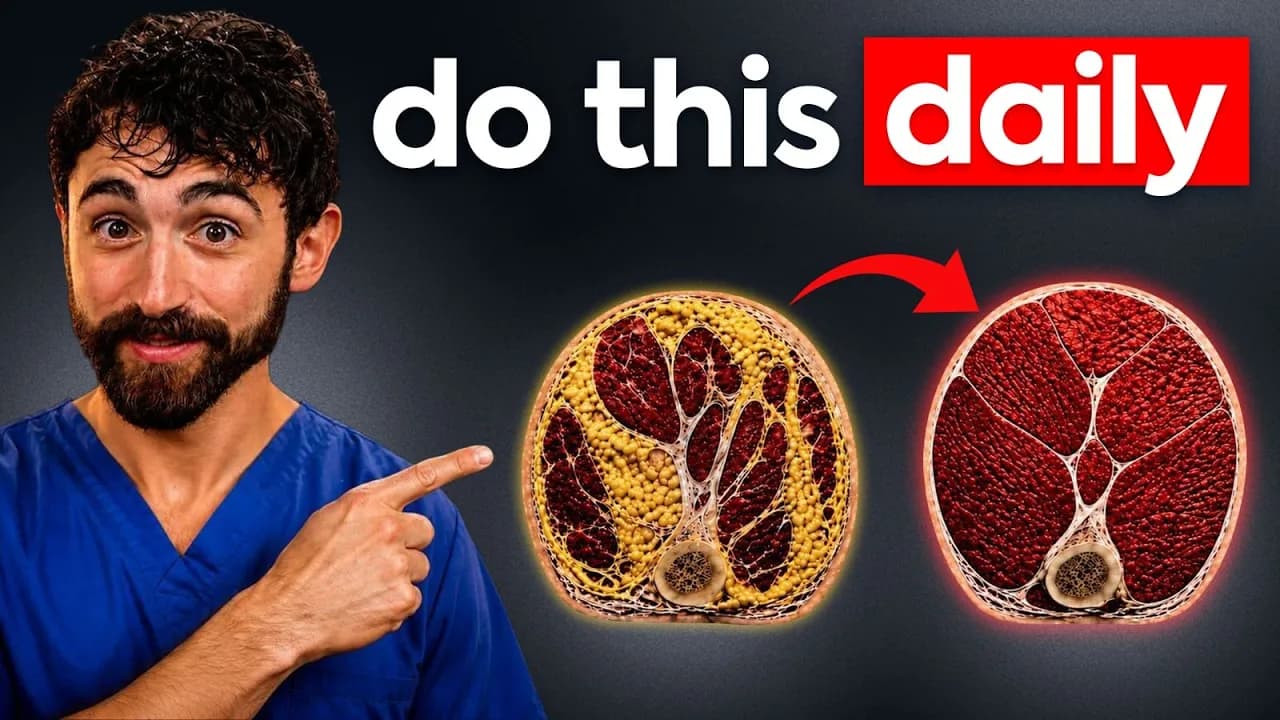
Exercise, heat, cold, and hyperbaric oxygen act as **adversity mimetics**, tricking the body's survival circuit (mTOR, AMPK, sirtuins) into activating longevity defenses like mitohormesis, new mitochondria, blood vessels, and senescent cell clearance, countering modern comfort's aging acceleration. High iron promotes free radicals and zombie cells—limit via plant-based diets, intermittent fasting (IFAN), and blood donation if needed—while 10-15 min/day vigorous exercise (hypoxia-inducing), 75 min/week weights, saunas, cold showers/therapy, and HBO2 reverse epigenetic clocks, boost brown fat, and cut all-cause mortality 27%. Measure progress with InsideTracker blood tests or Horvath clock; 80% of health is modifiable through these hormetic stressors.
These notes were generated by AI and may contain inaccuracies.
David Sinclair, professor of genetics at Harvard Medical School and co-director of the Paul F. Glenn Center for Biology of Aging Research, hosts the Lifespan podcast with co-host Matthew LaPlante. This episode discusses exercise and adversity mimetics.
After the last episode on foods for longevity, discussion returns to iron. High levels of iron accelerate aging. Iron is essential for hemoglobin to carry oxygen, but optimal levels are lower than previously thought. Long-lived people on recommended diets have lower iron and hemoglobin levels. High iron, genetically (e.g., hemochromatosis) or from supplements, predisposes to accelerated aging.
Red meat is high in iron, supporting limited meat intake. Multivitamins with high iron accumulate in tissues. Ferrous iron produces free radicals that damage tissues and promote senescent cells (zombie cells), which leak inflammatory molecules causing inflammation, aging, senescence, and cancer.
Three main free radicals:
- Superoxide molecule: Damaging, leads to advanced glycation end products (damaged proteins). Fasting helps remove them.
- Superoxide anion: Creates most oxidative stress.
- Hydrogen peroxide: Damaging.
Superoxide converts to peroxide via superoxide dismutase. Glutathione converts peroxide to water. Excess iron prevents detoxification, forming hydroxyl radical, damaging DNA, RNA, lipids, proteins, driving aging and senescence.
Maintain enough iron to avoid lethargy and ensure oxygen transport, but not super high levels.
10% of US population has HFE gene, increasing hemochromatosis risk. Measure blood biochemistry for free iron (worst) or bound iron. Avoid iron supplements unless needed (e.g., women during menstruation). For hemochromatosis, donate blood.
Plant-based diet, low iron, eat less often.
David skips breakfast and lunch, eats only dinner for overnight and midday rest, activating defensive genes: mTOR (senses amino acids), AMPK (senses energy/glucose), sirtuins (sense those plus exercise).
- Athletic Greens: 75 vitamins, minerals, whole foods, adaptogens, probiotics, enzymes, vitamin C, zinc. David uses daily for travel. athleticgreens.com/sinclair for 5 free travel packs, year of vitamin D3/K2.
- Levels: App with CGM for glucose monitoring. David is advisor. levels.link/sinclair.
- InsideTracker: Analyzes blood/DNA for nutrition. David uses over a decade. insidetracker.com/sinclair for 25% off with code Sinclair.
Adversity mimetics mimic biological adversity to improve lifespan/healthspan. Term coined here.
In 1990s, Cynthia Kenyon mutated worms, found DAF-2 (insulin receptor gene) mutation doubled lifespan (15 to 30 days). Single gene, not free radicals/DNA damage, but signaling. Revolutionized aging control via genes/supplements/drugs activating defenses.
Lenny Guarente showed similar in yeast at MIT. First longevity genes.
Sensors: mTOR (amino acids, e.g., low branch chain downregulates), AMPK (energy/glucose), sirtuins (NAD, up with exercise/hunger). Communicate via insulin signaling.
Mutant worms lacked insulin signal, mimicking hunger benefits without starving. Stress-resistant worms survive heat, cold, starvation.
Bodies evolved fighting entropy/disease in adversity (cold, hunger, predators). Modern society provides comfort/food/shelter, deactivating longevity defenses. Comfort worst for long-term health.
Trick body: right foods (stressed plants), eat less often (intermittent fasting with adequate nutrition or IFAN, coined here). Body perceives scarcity despite full fridge, burns fat, boosts metabolism/alertness, defends against insults.
Get off butt: standing desk prevents atrophy. David cramped piriformis muscle writing book, limped 9 months, fixed with exercise, physio, NAD injection.
Sitting reduces muscle/hormones (testosterone), causes pain, hip weakness risks falls/bone breaks in old age.
Stand, walk, run, cycle for hypoxic state (more oxygen intake).
Exercise prevents 23% cancers, 30% cardiovascular disease (50 min/week or 10 min 3x/week). All-cause mortality reduced 27% (slows aging).
Aging causes diseases; lowering all-cause mortality slows aging. Confirmed by Horvath clock.
Any exercise good; 4-6,000 or 10,000 steps/day. Walk after meals (Chinese proverb: 1,000 steps after meal to live to 99) for glucose uptake, new blood vessels, oxygen.
Movement activates AMPK (senses ATP/AMP). Low ATP activates AMPK, increases mitochondria for long-term power/health benefits.
Low exercise good start, but add vigorous (breathing/heart rate up). 10-15 min/day or even 15 min/week benefits.
Hypoxia (panting, can't talk, 10 min few times/week) activates HIF-1alpha (hypoxia inducible factor), turns on genes for blood vessels/mitochondria. Hormesis: little stress strengthens. William Kaelin won 2019 Nobel for HIF-1alpha.
When oxygen is low, HIF-1alpha turns on a generic stress program. Free radicals are generated because electrons that should be used by the electron transport chain in mitochondria to generate ATP become superoxide radicals. The electron transport chain is like a battery made of proteins in the mitochondrial membrane. Proteins pass electrons like a hot potato, pumping protons (hydrogen atoms) into the intermembrane space, making it acidic. Oxygen is needed at the end to accept the electron in respiration, explaining heavy breathing during exercise. Without oxygen, free radicals damage cells, but a little damage stimulates mitohormesis (mitochondrial hormesis), leading to more mitochondria production for energy.
The proton gradient drives protons back through ATPase, spinning a turbine-like wheel many times per second to make ATP for muscle work, like a hydroelectric dam. More mitochondria from weeks of exercise increase chemical energy production, reducing puffiness. Exercise also builds more blood vessels for better oxygen transport. Both decline with age, but can be circumvented and reversed beyond exercise.
Aging causes muscles and brain to become insulin insensitive; pancreas overproduces insulin. Due to epigenetic aging clock, genes switch incorrectly (ex-differentiation), reducing GLUT4 glucose transporters on cells. Glucose stays in blood, damaging vessels, leading to type 2 diabetes and cardiovascular disease. No energy for mitochondria.
VEGF (V-E-G-F) signals new blood vessels. Exercise (run or walk, running better) activates PGC-1alpha transcription factor, producing VEGF from muscles. VEGF leaks to endothelial cells in blood vessels, which sense it via receptors and branch new capillaries, as if chased by a saber-tooth tiger. Sedentary lifestyle reduces vessels, starving muscles and brain of oxygen. Aging defects this pathway; exercise doesn't build vessels effectively in old age, visible in mice via imaging (thinning vessels, poor blood flow even with exercise).
Restored by boosting NAD (fuel for sirtuin survival circuit), upregulated by exercise via NAMPT (relative of yeast lifespan-extending gene).
Epigenome regulates DNA on/off switches; dysregulates with age, possibly causing aging. Horvath clock (DNA methylation) or cheek swab measures biological age. Lifelong exercisers are epigenetically younger. Proteomic clock (blood proteins like GDF15) also shows aerobically active people 5.5 years younger. Mediterranean diet slowed GDF15 methylation. Other clocks: immuno clock. Enables testing small groups (100 people, 2 months) for reversal, vs. past large metformin trials.
80% of future health is modifiable; 20% genetic.
Clocks predict death. Measure to track interventions like exercise, diet, supplements, meditation.
InsideTracker (blood test, sponsor) or DNA tests (~few hundred dollars). Lab method pools thousands of samples for <$1/test (paper on bioarchive.org by Patrick Griffin; product soon). Inner Age 2.0 compares to peers.
Do what you love: sport, wind surfing, sailing, move. Sex burns ~4.2 calories/minute (average 5 minutes = 20 calories), not as effective; better for longer walk. WHO/Mayo: 75 minutes vigorous exercise/week (15 min/day, spread out). Benefits: feel/look better, lower resting heart rate (<50 good; mid-40s for 50s). Measure via hand, ring, wristwatch, apps, wearables (sleep, biometrics). Advanced: chest monitor 1000x/second predicts heart attacks, flu, depression.
InsideTracker (10+ years): graphs biomarkers, Inner Age 2.0 shows getting younger. Doctors value data (same labs they use). Example: patient charts impressed doctors. Athletes use trackers mid-game.
Maintains hormones (e.g., testosterone), walking, posture, appearance, muscle mass (lose 1%/year). Prevents falls (19 hip fractures/minute in US; mortality like metastatic cancer). Build muscles around waist, Pilates, stretch for flexibility.
Boost testosterone naturally via large muscles (thighs, butt, back): leg extensions, curls, hip hinges, deadlifts > cream (20% boost). Leg/back exercises maxed levels.
Senescent cells: epigenome dysregulation/ex-differentiation leads to zombie state (alive, non-dividing, secrete SASP causing inflammation/cancer). Exercise kills them: 12-week program (34 people) dramatically lowered circulating senescent cells in blood/immune system (Aging Cell, Englund et al., 2023).
- Low intensity: 4 steps (not 10,000), standing desk, treadmill desk, walk after meals.
- High intensity: Few times/week, 10-15 min, lose breath (HIIT, treadmill running) for blood vessels/mitochondria.
- Get off butt daily.
10 to 15 minutes a day or 75 minutes a week of exercise is enough, as recommended by experts. Weights are just as important for maintaining muscle mass, which supports hormones like testosterone for both men and women. Exercise big muscles; don't just focus on upper arms for looks. Simple options: pushups, sit-ups, or weights at home—no gym needed. Goal is longevity by alerting genes and cells to adversity through adversity mimetics.
Hyperbaric oxygen treatment relates to exercise's genetic and cellular effects; latest studies from last couple years. Wounds heal faster with more oxygen, possibly due to hormesis or free radical generation, or better tissue growth. Military uses it to prevent bends; therapeutic for neurological disorders and aging.
Hyperbaric chamber: room or tube increasing pressure to 2+ atmospheres, supplemented with more or pure oxygen. Sinclair tried it in L.A. in a glass cylinder for ~1 hour, watching "Schitt's Creek"; relaxing, funnier on high oxygen. Science shows it reverses telomere shortening (chromosome ends like shoelace aglets; wear leads to cellular senescence, zombie cells). Israeli study (group Sinclair visited) reported telomere growth in humans and mice, slowing aging.
Sinclair visited their giant chamber (like bus interior with mask, Star Trek-like control room). Compelling data: Alzheimer's mice plaques/tangles went away. Building mini chambers for his lab. Humans with dementia/Parkinson's improved dramatically after sessions. Craze in U.S., especially L.A.; anecdotal remarkable benefits. Need more studies with placebo controls.
Existing small-scale human studies: memory improvements, telomeres, T helper cells increase, cognitive performance (2021 study: 6 elderly memory loss patients all improved).
Easy intervention to test; propose testing biological clocks before/after 7-10 sessions to see if aging reverses.
Similar to exercise: hypoxia (low oxygen during run) activates HIF-1alpha for health. Exercise free radicals cause mitohormesis. Hyperbaric hyperoxia produces free radicals, stimulating mitohormesis like low oxygen. Theory: descending from high oxygen simulates hypoxia like running; differential matters. Multiple up/down cycles in one treatment better than single.
30 people, 60 daily 90-minute sessions, 5/week in large chamber. Measured senescent cells in bloodstream and telomere length: both reversed. Dramatic reduction in senescent cytotoxic T-cells (stained bright blue when old) in immune system.
Centers in major cities run by doctors; growing rapidly. Mimics exercise: lie down, watch TV, sleep, get running benefits via high oxygen mimicking hypoxia. Not replacing exercise.
Research catching up to popularity; centers everywhere. Cold benefits across organisms.
Produces brown fat (or beige fat), abundant in babies for warmth pre-shivering (~1 year). Adults have it (discovered ~10 years ago at Harvard by Bruce Spiegelman and Ron Kahn via PET scans), mostly back/shoulder blades. Cold revs it up, increasing amount. Healthy: revs metabolism, burns white fat, secretes beneficial proteins. PRDM16 gene turns white to beige/brown fat; mice lacking it get type 2 diabetes, cardiovascular disease.
Worms, mice. Favorite: dwarf mice (Mike Bonkowski's lab, longest-lived "Yoda" via growth hormone receptor mutation; lived 3x longer). Shivering due to cold/solitude; giving buddies eliminated most lifespan extension, showing cold's role.
Brown fat mitochondria rich in UCPs (uncoupling proteins): leak protons, generate heat, reduce free radicals. Animals (worms, flies, mice) engineered with high UCPs live longer. Cold therapy activates this.
Sinclair did 3 minutes with Joe Rogan: strip to underwear, gloves/socks, play music (chose Beatles' "Help!"). First 2 minutes fine, last minute intense shivering (muscle heat generation). Felt stimulated, lucky to be alive, good for days (revved mitochondria, more brown fat).
Start midlife: old mice don't make brown fat as well as young. Never too late, but better earlier; like vigorous exercise.
Ancestors shivered (ice age); modern 68-72°F controlled environments lack this. Alternatives: cold showers (cheap, unpleasant for Sinclair), sleep with few covers/low temp (activates UCPs, builds brown fat).
Evolutionary stressor; ancients used (pre-Roman fires under floors). European tradition, especially Finland/Scandinavia; studies mostly on men. 2-3x/week (often home-built) reduces cardiovascular disease/heart attack mortality up to 20%.
Activates HSPs (heat shock proteins): correct protein folding, build blood vessels/mitochondria. Worms with upregulated HSPs (heat or genetic) live longer.
Dosing unclear, no overdo evidence. Sinclair pre-pandemic: 1x/week, multiple 15-min heat + 4-min ice bath cycles (consult doctor; stresses heart). Max benefit: heat-cold cycling.
Alternatives: hot showers, traditional cedar/rock saunas, infrared saunas (penetrate skin, evidence for reversing skin aging, improving hair growth).
Runner's high, cryotherapy "blessed to be alive," sweat lodges "best drug," hyperbaric fun: activates 3 main defense pathways + endorphins.
Cycle heat/cold 5x one day/week (e.g., Sunday with son). More better; daily possible. Home: turn down temp, cold shower/bathtub (near ice bath effect). Extreme: Gabby Reece/Laird Hamilton ice baths + underwater weight exercises for hypoxia (Sinclair nearly drowned; not recommending yet).
Hyperbaric challenging: few centers, hundreds $/session, but future option mimicking exercise/hypoxia.
Upcoming: mimic adversity with molecules, pills, injections (next episode: NMN, NR, resveratrol).
Thanks for joining. Subscribe on YouTube, Apple Podcasts, Spotify (5-star reviews on Apple). Support sponsors, Patreon: patreon.com/davidsinclair. Next week: supplements/molecules for longevity.
Keep David Sinclair in your library
Save the videos and channels worth coming back to, and find them again in one place.