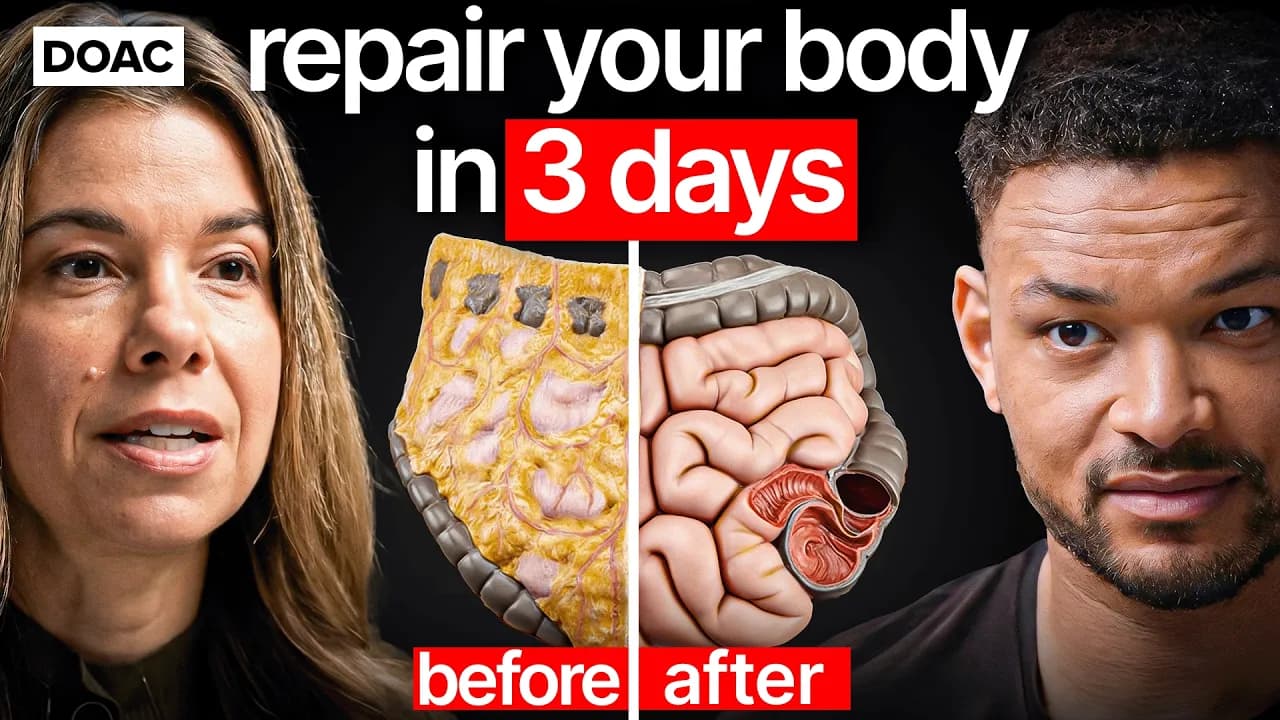
The Best Vitality & Health Protocols | Dr. Rhonda Patrick
In a Nutshell
Dr. Rhonda Patrick outlines her non-negotiable protocols for vitality: 5-6 hours/week of HIIT and resistance training (e.g., CrossFit-style sessions, deadlifts, squats), daily 9-minute "exercise snacks" of vigorous bursts reducing all-cause mortality by 40%, cancer mortality by 40%, and CV mortality by 50%; intermittent fasting (11-7 PM window, stop eating 3 hours before bed) for metabolic flexibility, visceral fat loss, ketone-driven focus, and autophagy; and key supplements like 10g creatine (brain/muscle benefits), 2g+ omega-3s (inflammation resolution, longevity), vitamin D (4-5k IU), magnesium glycinate/threonate (sleep/cognition), plus glutamine/NAC for immunity and AG1 multivitamin. Avoid ultra-processed foods to minimize LPS-driven gut inflammation, atherosclerosis, and inflammaging; prioritize VO2 max via HIIT, stop eating late for CV/sleep benefits, and use sauna (20 min at 180°F, 5x/week) for heat stress adaptation. Listen to your body, combine with sleep (7-9 hours), and focus on hormetic stressors (exercise, fasting) over extremes for sustainable health.
These notes were generated by AI and may contain inaccuracies.
Short bursts of exercise, at least 1 minute long up to 3 minutes, moving faster with intent, have outsized effects on health outcomes. Individuals doing 3 minutes of unstructured exercise snacks three times a day (total 9 minutes a day) experience a 40% reduction in all-cause mortality, 40% reduction in cancer-related mortality, and 50% reduction in cardiovascular-related mortality.
9 minutes a day.
Welcome to the Huberman Lab podcast discussing science and science-based tools for everyday life. Andrew Huberman is a professor of neurobiology and ophthalmology at Stanford School of Medicine. Guest is Dr. Rhonda Patrick, a biomedical scientist and leading public health educator. For over a decade, Rhonda has been a trusted voice in building science-based health protocols.
Today's discussion covers latest research on improving health and vitality, avoiding disease. Rhonda shares her exact exercise, nutrition, supplementation, and sauna protocols, with details on mechanisms and logic. Topics include reducing cancer and cardiovascular risk, reducing visceral fat and arterial plaque, how eating can increase inflammation, supporting gut health, creatine, vitamin D, broad vitamin/mineral/fiber support, different forms of magnesium and their effects, omega-3s (prescription sources may be cleanest and cost-effective), prioritizing resistance training and HIIT over protein (protein still needed), fiber, micronutrients, and benefits of short-term fasting.
Dr. Rhonda Patrick provides a master class on designing and adjusting health protocols to specific needs. Podcast is separate from Andrew's Stanford teaching/research, aimed at zero-cost science information to the public.
Welcome back, Dr. Rhonda Patrick.
Excited to be here.
Thank you for being the first person in public science health education. You've educated on science, parsing papers/data, health practices.
Thank you so much for that. And also, thank you for doing what you do. You really do a great service for science communication, education, helping people love science and get healthier.
You're the pioneer.
Lately posting workouts, clearly very fit. Competitive athlete: long jumper, triple jumper, but real competitiveness from jump roping on a professional team. Started team in second grade with friend: San Diego Sands Skippers, part of International Rope Skipping Organization (started by her uncle). Competed yearly in Boulder, Colorado. Performed and started jump rope teams at schools in San Diego, did workshops, got out of school for it. Focused on cardiovascular health, healthy heart.
Jumping rope (also called skipping rope) has unique benefits: cardiovascular exercise, weightbearing for bone density. Important early on to bank bone density before menopause when estrogen drops and bone loss increases.
Rope flow and cross-body movements (e.g., David Weeks) get people out of standard curls/bench presses/lunges.
Noticed awesome posture, rare these days; possibly related to bone health/posture.
Exercise is part of personal hygiene, non-negotiable like brushing teeth (from Dr. Ben Levine, leading cardiovascular exercise physiologist at UT Southwest, Dallas).
Non-negotiables: cardiovascular exercise and resistance training for building/maintaining muscle strength.
Works out 5-6 hours/week: combination of high-intensity interval training (HIIT), not always Norwegian 4x4 (hard workout: e.g., 4 minutes hard, 3 minutes recovery, x4; improves cardio fitness, best longevity marker). Mixes rowing machine, assault bike, lifting weights (deadlifts, squats).
Vigorous intensity exercise: heart rate to 80% max at points, especially intervals; non-negotiable.
Four days/week at least 1 hour:
- Two sessions CrossFit-type: first 30 min strength training (heavier, fewer reps, e.g., deadlifts, squats, cleaning, front squats, barbell/back squats). Rest 2 minutes between sets (recovers quickly, coach confirms).
- Last 30 min HIIT: heart rate up, rowing machine, lighter cleans (more reps, lighter load).
Two sessions ~1 hour 20 min HIIT with girlfriends (more recovery, chatting): rowing, assault bikes, Rogue skier, chest presses, assisted pull-ups, lighter squats/more reps.
Total four hours/week CrossFit HIIT-type.
Runs 4-6 miles/week (vigorous but not max HIIT): 2-3 mile runs, enjoys, sometimes with husband to talk.
Weekends: family hikes, sometimes hill sprints, enjoyable nature time.
No weight vests on runs/hikes; experiments later? Brings puppy, focuses on experience. Gets workouts during week.
Every day something, even if traveling: e.g., 10-min Peloton Tabata (two back-to-back Tabatas: 20s on/10s off, 2:1 ratio, 30s recovery between). Or in hotel: air squats, high knees, jumping jacks x10 min, heart rate up, sweating.
Variety of brain benefits from 10 min vigorous exercise: increases neuronal connections, 14% improvement in executive function (50ms processing speed improvement), better mood.
Studies compare low/moderate/high intensity: walking vs. jogging (can talk) vs. HIIT (can't talk during intervals). High-intensity increases plasma serotonin (correlates with brain serotonin), improves impulse control. Serotonin important beyond mood (SSRIs for depression): key for impulse control in modern society (social media bombardment).
Our Place: avoids PFOA/PFAS forever chemicals in 80% non-stick pans/utensils/appliances (linked to hormone disruption, gut microbiome issues, fertility problems). Titanium Always Pan Pro: pure titanium, zero chemicals/coating, non-stick doesn't degrade. Saves up to 40% sitewide through April 12th at fromourplace.com/huberman.
Lingo: continuous glucose monitoring app shows minute-by-minute glucose response to food/exercise/stress for stable glucose (impacts brain/mood/energy). CDC: 1 in 3 US adults has prediabetes, many unaware. 10% off 4-week plan for US/UK at hellingo.com/huberman.
Serotonin heavily associated with mood but key for impulse control; exercise effects non-trivial.
No phone during workouts (watch for emergencies, silent/no notifications). Social media distracting, terrible for brains (even if business depends on it). Chats with friends instead, in real life.
Experimenting with no phone in gym enhances mental/physical reset.
Dedicated weight workouts: mostly multi-joint (front/back squats, cleaning). Cleans/front squats hardest (new since Feb 2024), mentally challenging. Always endurance-focused (long runs/races), strength training new but biggest brain effect: better stress handling (rest of day easier).
Reps vary: e.g., 5,4,3,1 (singles hardest); or 6,5,4x2,3x2. Modify by feel (stressed day: lower reps/lighter). Deadlifts (straight bar) loved. Drop sets: 10 reps lighter after.
Accessory: dips, Bulgarian split squats (stabilization muscles).
Few women do singles on multi-joint like deadlifts/cleans. Debate: some credentialed trainers say past 35 shouldn't do squats that
Older credentialed strength training experts claim people past 35 shouldn't do squats, deadlifts, or heavy lifts, suggesting higher reps to failure for hypertrophy. Strength training focuses on building strength through triples, doubles, and singles, not just hypertrophy. Heavy compound movements are mentally tough, similar to cold plunging—unpleasant but builds mental toughness. The anterior midcingulate cortex (aMCC), hyperplastic throughout life, enlarges when doing things you hate, not just hard things. This is the strongest anatomical correlate in super-agers. Dreading but doing heavy lifts keeps aMCC volume increasing. Coaches increase weight when it gets easier, maintaining challenge. No injuries so far, knock on wood. Posting progress as a newbie inspires others. VO2 max and cardiorespiratory fitness are crucial alongside strength for long-term health.
Aerobic base is essential. Strength training builds both mental and physical strength. Protein intake: 1.2-1.6 g per kg body weight (less than 1 g per lb). Heavier training doesn't necessarily increase protein appetite due to intermittent fasting and caloric deficit to reduce visceral fat. Aiming higher (1.6+ g/kg) led to weight gain from excess calories in whole foods. Average 1.3-1.4 g/kg works well. Focus more on training, less on protein obsession—protein complements training. Appetite may shift to protein over refined carbs naturally.
People struggle with 1 g protein per lb body weight, feeling forced unless high demands like resistance training or backpacking. Starches satiate, reducing protein intake. At 47, perimenopause phase affects needs.
Meals: homemade turkey burgers, pasture-raised chicken, wild Alaskan salmon, grass-fed filet mignon steak. Paired with greens (sautéed collard greens with garlic/onion, kale, salads) for micronutrients. Smaller portions, some intermittent fasting. High-protein oats, oatmeal, rice, homemade pasta, sourdough occasionally. Avoid processed starches causing sleepiness and postprandial inflammation.
Refined carbs with additives increase gut permeability, leaking lipopolysaccharide (LPS) from gram-negative bacteria into bloodstream, activating immune system. LPS (outer component of gram-negative bacteria cell walls) ~1g in gut. Meals transiently open tight junctions normally; ultra-processed foods (refined sugar + saturated fat) worsen it. Postprandial inflammation drains energy, causes lethargy.
Protein foods cause less tight junction opening than big meals or ultra-processed ones. Saturated fat without fiber (e.g., butter alone) hard on gut. Whole foods minimize LPS response. Gluten complicates: celiac (small %) causes persistent permeability; others may have sensitivity or nocebo effect (study: gluten-sensitive people felt worse on gluten-free bread they thought had gluten).
LPS injection raises inflammatory markers (TNF-alpha up 50%), induces depressive symptoms, social withdrawal. Inflammation crosses blood-brain barrier, linked to subset of major depressive disorder. SSRI non-responders have high C-reactive protein (inflammation biomarker).
LPS binds LDL via lipid interactions (adaptive response; cholesterol rises post-illness/stress). Obscures apoB protein, preventing liver LDL receptor recycling. Leads to small dense LDL lodging in arterial walls. Macrophages engulf LPS-bound LDL, forming foam cells—start of atherosclerosis. Gut health links to cardiovascular and brain health via chronic low-grade inflammation.
AG1 taken daily for nearly 15 years since 2012. Comprehensive: vitamins, minerals, prebiotics, probiotics, adaptogens. Supports gut health, immune health, energy. Fills nutritional gaps alongside whole foods. drinkag1.com/huberman for 6 free travel packs + vitamin D3 K2.
Vagus nerve key gut-brain conduit; LPS in gut induces fever (blocked by vagotomy). Tight junctions like cellular fence; transient opening normal post-meal. LPS (from dead bacteria) leaks into bloodstream, not live bacteria typically. Activates brain glial cells, breaks blood-brain barrier—early neuroinflammation in neurodegenerative disease. Gut health linked to brain health.
Inflammation drives the aging process, termed inflammaging. It contributes to molecular events leading to hallmarks of aging, resulting in phenotypes like frailty and diseases such as type 2 diabetes, cancer, and Alzheimer's disease. Inflammation arises from multiple sources beyond the gut, including stress, emotional stress, and insufficient sleep. Keeping inflammation low is crucial.
Glutamine may buffer the immune system under stress and reinforce tight junctions in the gut. Personal anecdote: taking glutamine during periods of heavy work, insufficient sleep prevented getting sick compared to an imaginary control.
Limited but supportive evidence exists. During graduate research on cancer metabolism, removing glucose from lymphoma cancer cells in petri dishes killed many but not all; survivors relied on glutamine. Glutamine, an amino acid, converts to Krebs cycle intermediates for mitochondrial energy production and to glutamate, a neurotransmitter.
Glutamine is essential for immune cell activation, observed in studies under an immunologist advisor. In postdoc with Dr. Bruce Ames, colleague Dr. Mark Shaganaga studied gut permeability, LPS, and gut health; glutamine provided energy to gut epithelial cells via mitochondrial intermediates (animal studies).
Human studies on gut health are sparse. More compelling evidence links glutamine to immune support: endurance athletes training constantly for marathons have higher respiratory tract infections due to high energy demands. Studies show 30 grams glutamine reduced incidence of respiratory tract infections.
Personal use: 5 grams daily; increases to 15-20 grams (in 5-gram doses) during child's illness, exposure, season, or travel to avoid gut issues. Also takes creatine, unsure of contributions. Never gets sick now, even with exposure at home; accepts possible placebo effect.
Cancer cells love everything good for you.
Caution for colon cancer due to glutamine fueling cancer cells, similar to folate enabling DNA synthesis in cancer. Recent in vitro study on taurine scared people but not concerning. Personal opinion (not medical advice): not scared of glutamine causing cancer unless pre-existing liver or colon tumor; first-pass metabolism limits risk. Whole body MRIs costs decreasing for better screening.
Takes NAC daily, increases to three times daily when traveling (around sick people, winter) or run down. Study: NAC reduced deliberate flu exposure infections from high 70s% to high 20s% vs. placebo. ER doc Roger Seheult recommends for exposure.
NAC is a powerful antioxidant. Oxidation isn't inherently bad; constant slow-drip oxidation damages DNA, proteins, lipids, but bursts (e.g., exercise) drive adaptations. Concern: daily NAC might blunt exercise adaptations; time away from exercise. High-dose vitamin E (400 IU, RDA ~24 IU) + vitamin C studies show blunting; vitamin E alone less so.
SELECT trial: selenium + vitamin E intended to slow prostate cancer but increased risk due to alpha-tocopherol lowering anti-inflammatory gamma-tocopherol, potentially raising PSA.
For smokers, NAC may benefit precancerous cells. Prefer endogenous antioxidant responses from hormetic stressors or phytochemicals over high-dose supplements (vitamin C, E, NAC) to avoid reductive stress (excess reducing equivalents like NADH, NADPH).
Ideal: short bursts of oxidation for adaptation during recovery, not chronic pro-oxidants from poor diet/inflammation. Avoid blunting beneficial ROS from exercise.
Personal: avoids cold plunging 6-8 hours post-resistance training to preserve inflammation, blood flow.
Regular glutamine at steady starch intake leads to feeling stronger; avoids low starches (causes weakness, poor sleep). New study links starches to improved sleep. Anecdote: high-activity people (marathoners, ultra) sleep better after rice/pasta (even at lunch); high cortisol prevents brain shutdown.
Eating stimulates sympathetic nervous system (energy-requiring, raises temperature); digestion takes ~5 hours. Late eating prevents parasympathetic rest/recovery phase.
New study: continuous blood pressure monitoring (mid-afternoon through night) showed stopping eating 3 hours before bed lowered nighttime blood pressure dip (baroreflex), heart rate; translated to 20% lower cardiovascular event risk (e.g., heart attacks). Improves sleep (subjective in this study; others confirm). Satchin Panda's studies support.
Easy implement: stop eating 3 hours before bed for sleep and cardiovascular health.
Cortisol peaks early morning (awakening response) via bright light, intense exercise, intermittent fasting. Binds glucocorticoid and mineralocorticoid receptors, altering 20% of genome across organs.
Hormetic stressors (exercise, intermittent fasting, cold exposure) from Mark Matson's lab change receptor density differently than chronic bad stress (emotional, financial, psychological, sleep deprivation).
Bad stress: slow cortisol drip increases glucocorticoid receptors, decreases mineralocorticoid receptors; leads to cortisol resistance, lost anti-inflammatory/immune suppression benefits, dysregulation.
Good stress: acute spike, proper on/off for adaptation; different biological response in hypothalamus/other organs.
Don't fear cortisol from HIIT/intermittent fasting (unless excessive); want body to turn on/off properly vs. chronic dysregulation.
Cortisol has been demonized as the stress hormone, fueled by images of Cushing's disease with moon face and excessive visceral fat. This fearmongering targeted women in the health fitness space. Dr. Stacy Sims appropriately noted that some women shouldn't train fasted if they don't feel well due to high cortisol, resonating with many women's experiences. However, the message got contorted to "women shouldn't train fasted." Lauren Keno Simple countered that both women and men can train fasted or fed based on preference, without fearing cortisol spikes.
Deliberate cold exposure increases adrenaline, peripheral dopamine, and likely central dopamine, but data shows it lowers cortisol. Sims suggested women use milder cold exposure, but this twisted into "women shouldn't do cold exposure due to cortisol." The correct narrative: do what works for you. Cortisol is neither good nor bad—high in the morning, low at night.
Dr. Patrick trains fasted when it feels right, listening to her body. She eats before workouts if needed, especially during her cycle. Intermittent fasting helped her lose visceral belly fat and provides cognitive benefits in the morning. Her sessions are about an hour, not long runs; she accepts a minor performance hit during high intensity but burns more fat fasted. For longer sessions, performance suffers more. Key: align with goals and how you feel—listen to your body.
At 30, she didn't need fasted training to manage visceral fat, but hormonal changes now require it. Estrogen directs fat to subcutaneous storage (pinchable fat); its decline in perimenopause/menopause shifts fat to visceral storage around organs like intestines and liver.
Visceral fat acts like an endocrine organ, secreting hormones and inflammatory factors. Metabolically active, constantly breaking down triglycerides. Associated with double the risk of early death; 44% higher cancer risk (many types). Primary issue: insulin resistance.
Proxy measurement: waist circumference ≥35 inches (women), ≥40 inches (men). 70% of women over 50 and 50% of men over 50 have high visceral fat.
Effective reducers: aerobic exercise, high-intensity interval training (HIIT), caloric deficit—especially combined. Gains quickly from poor diet.
Visceral fat surrounds liver, drains free fatty acids via portal vein, bypassing insulin suppression of lipolysis. Unlike subcutaneous fat, it doesn't respond to insulin post-carb meal, continuously supplying free fatty acids to liver, causing insulin receptor resistance.
Can gain visceral fat without total weight gain (e.g., "skinny but metabolically unhealthy" individuals).
Early signs: lethargy, energy crashes from inflammation (energy sink) and overcompensatory insulin spikes dropping blood glucose, triggering cravings for calorie-dense foods.
Brain insulin resistance occurs rapidly: impairs satiety signals via hypothalamus, promotes visceral storage, increases eating.
Recent study (healthy young men): 1,200-1,500 extra daily calories (high saturated fat/sugar, ultra-processed) for 5 days caused brain insulin resistance, visceral fat gain, liver fat accumulation—without total weight gain.
Other causes: chronic elevated cortisol, sleep deprivation (e.g., 4 hours/night for weeks gains visceral fat with minimal weight).
Creates vicious cycle: affects mood, energy, eating, leading to more visceral fat.
Chronically high cortisol: elevated morning levels persisting, especially pre-sleep, disrupts sleep (even if falling asleep). Last 1-3 hours before bed: lower stress, heart rate, avoid eating to reduce cortisol.
Sleep loss dysregulates appetite. Study: metabolism cycles during sleep (sugar phase, ketogenic-like phase)—recalibrates systems. Alcohol's harms largely from sleep disruption.
Good sleep boosts exercise motivation, better food choices. Avoid sleep anxiety: aim for average good sleep.
Dr. Patrick's IF: stops eating 3 hours before bed (habit, despite occasional lapses). Behavioral tool for caloric restriction without counting; enables metabolic switch (Dr. Mark Mattson term).
~11-12 hours depletes liver glycogen, shifts to fat burning, ketogenesis (fatty acids/ketone bodies as fuel)—metabolic flexibility, evolutionarily ingrained.
Ketone benefits (e.g., beta-hydroxybutyrate): clean fuel (less oxidative stress), energetically efficient (less energy to convert vs. glucose), signaling molecule for adaptation (strength in food scarcity). Activates BDNF for learning, memory, synapse formation, neuroplasticity.
Access via IF, high exercise energy expenditure, or caloric restriction—not IF-exclusive.
Dr. Patrick: fasted workouts most times (wakes 6-7 AM, workouts ~8:30 AM, bed ~10 PM/asleep by 10, stops eating ~7 PM). First meal timing varies by day.
Fasting in the morning until around 11 or sometimes 12, later if doing a podcast. Fasted state provides cognitive benefits via metabolic switch to ketones, particularly beta-hydroxybutyrate, which increases GABA (inhibitory neurotransmitter), balancing glutamate (excitatory). This quiets brain chatter, enhances focus and cognitive sharpness. Most productive work done in mornings while fasted and feeling smarter.
Typically 11 to 7 eating window. Some days two meals (skipping breakfast), some days three with varying sizes. Third meal (if three) is light, like half or three-quarters of a turkey burger, mostly protein, not heavy. Listen to body: some days shorter fast if woke up hungry after stopping eating 4-5 hours before bed, then eat, workout.
Mark Mattson recently published study on 5:2 intermittent fasting: two days per week severe caloric restriction (one 500-calorie meal), five days normal eating. Compared to healthy diet with moderate caloric restriction. Fasting group showed 20% improvement in battery of cognitive tests, attributed to ketones' effect on GABA. Caloric restriction can produce ketones, especially severe, but key for weight loss.
Early time-restricted eating (e.g., stop by 6-8 p.m.) provides cardiovascular reset. Courtney Peterson showed significant blood pressure drop (10 mmHg), comparable to first-line hypertension drugs. Not achieved with constant eating despite fewer calories.
Uses intermittent fasting as tool, avoids calorie counting. For endurance athletes (10-14 miles/day), exercise provides metabolic switch. Training improves metabolic flexibility (switching between glucose/carbs and fat/fatty acids). Prefers deliberate daily switch: on for a time via fasting, then off by eating. Not starving; avoid extremes in exercise or fasting.
Critics claim fasting benefits due to caloric restriction (correct) or muscle loss risk. Resistance training prevents muscle loss; eat more protein in window if needed to gain muscle.
Trains extensively fasted for fat burning, especially visceral fat. Added adrenaline from slight fasting boosts cognition, reduces caffeine need. Waking hungrier lately due to earlier last bite (farther from sleep) and thermogenic effect of eating raising core temperature (want drop for sleep).
Eat if hungry upon waking, train fasted if not. Mechanism is same: great sleep, workouts without disrupting one for the other. Frame habits in logic for flexibility (e.g., travel, social obligations, later eating). One metabolic switch per day via fasting, exercise, or both.
Fasted/ketosis state is repair/recovery mode (vs. fed anabolic/growth state). Activates genes for DNA repair, autophagy (cleanup of cellular gunk: DNA fragments, protein aggregates). Basal autophagy always occurs; enhanced by fasting (liver, brain sensitive), exercise, caloric deficit. Muscle responsive to both fasting- and exercise-induced autophagy. Limited human data (hard to measure in non-blood tissues like liver).
Not for everyone; alternatives: exercise, caloric restriction (for weight/visceral fat loss, with aerobic exercise). Simple rule: stop eating 3 hours before bed for extended fast, cardiovascular benefits.
Studies (Satchin Panda in Science; Jakabitz? Jigabitz and Freud from Israel): same meal (calories, macros) in morning vs. afternoon vs. evening yields different insulin response. Most insulin sensitive morning; less toward evening/3 hours before natural bedtime due to rising melatonin (prepares pancreas/organs for rest, reduces insulin production). Avoid carb-rich meals or eating close to bedtime.
Highest morning insulin sensitivity doesn't require immediate eating; avoid bedtime eating, eat sometime in day. Stacy Sims: not everyone (esp. women) should exercise fully fasted; small snack like whey protein + almond milk. Validates personal experience.
Slight sleep deprivation (1-2 hours less, e.g., 5 hours) causes significant inflammation, acute insulin resistance (worsens after 2-3 nights). Exercise negates much of it. Personal anecdote: as new parent, CGM showed pre-diabetic glucose (fasting/postprandial); high-intensity spin classes 2x/week normalized it.
<7 or >10 hours sleep linked to higher all-cause mortality vs. 7-9 hours. Meeting guidelines (75 min vigorous + 150 min moderate/week) offsets mortality risk for short sleepers, countering insulin resistance/inflammation.
Everyone has periods (new child, job, stress) to back off exercise. Don't hold to extremes causing sickness/injury/misery. Goal: health + happiness. Health is daily/lifelong; sometimes means taking a day off. Continue enjoying health-promoting activities.
Promoting no days off from exercise can help those not exercising enough, but for active people, reducing intensity by coming off the accelerator is useful. Not everyone has time or motivation for hour-long workouts. Emerging data over the last decade shows short bursts of physical activity add up to meet weekly requirements.
VILPA (vigorous intermittent lifestyle physical activity) involves unstructured moments in daily life to elevate heart rate: playing with a puppy, chasing grandkids or children, playing tag, sprinting up stairs, running to catch the bus. Studies use accelerometers on wrists to measure fast movement accurately, unlike unreliable questionnaires. Data from hundreds of thousands of participants show short bursts (1-3 minutes) of intentional fast movement (jogging, etc.) have outsized health effects, even in non-exercisers.
High end: 3 minutes, 3 times a day (9 minutes total) vigorous unstructured activity associates with 40% reduction in all-cause mortality, 40% in cancer-related mortality, 50% in cardiovascular mortality. Dose-dependent: 3 minutes/day or 3.5 minutes/day in women show profound benefits on all-cause and cancer mortality. Multiple studies confirm short bursts add up.
If no natural opportunities, do structured snacks like 10 bodyweight squats every 45 minutes over 7.5-hour workday—better for blood glucose regulation than a 30-minute walk. Breaks sedentary time, an independent risk factor for cancer (though high exercise mitigates).
Being sedentary is a disease.
Even at maintenance or below-maintenance calories without energy toxicity, sedentary lifestyle is problematic.
Gold standard: VO2 max (maximum oxygen uptake). Studies often estimate via submaximal tests or calculations (e.g., 12-minute run distance). Low cardiorespiratory fitness predicts all-cause mortality as bad or worse than cardiovascular disease, smoking, hypertension—even in non-obese, non-insulin resistant people without diagnosable diseases.
Improving from low to low-normal: 2-year life expectancy increase. Low to high-normal: ~3 years. Low to high: 5 years. Improved by aerobic exercise; high-intensity interval training (HIIT) helps ~40% who don't respond to cardio alone. Short bursts also provide high-intensity benefits (chasing kids/puppies, stairs, luggage at airport).
Nobody takes stairs at airports/escalators; opportunities abound (e.g., DC public transport long stairwells). Shoutout to Steve Magnus (accomplished runner, coach, scientist): best take on measuring VO2 max—how fast you run a mile is a top measure of cardiorespiratory fitness. People surprised how easy easy efforts feel, how hard hard ones should.
Mix HIIT, walks, hikes. Listen to body, avoid overdoing (endurance athletes differ from committed exercisers).
Speaker started weight training/running at 16, creatine at 18-19 (5-10g/day). Original protocol: loading 5g 3-5x/day with grape juice (insulin spike), maintenance 5g/day, washout every 20 weeks. Still does loading occasionally (feels great, stronger); unaware of cognitive benefits then.
Creatine now "supplement of the year" (after vitamin D, melatonin). Loading for studies (saturates muscles in 3-4 weeks vs. 5g/day). Real-world athletes load quickly. Hyper-responders gain 4-8 lbs water/muscle mass fast. Safe for kidneys, not a steroid.
Body makes 1-3g/day (liver, brain). Stored as creatine phosphate for energy. Muscles consume during workouts (energetically demanding), allowing higher training volume/reps → muscle protein synthesis (plus water). Not directly anabolic like protein.
Speaker started 5g/day creatine monohydrate (most researched) for training. Darren Candow podcast (2024) highlighted brain benefits (older adults, strategic planning/working memory via frontal phosphocreatine bias). Also benefits bone.
Brain makes own creatine but resistant to uptake (muscles greedy, especially during workouts). German study (small, needs replication): 10g/day increases brain creatine (MRI) beyond endogenous levels, especially frontal regions.
Shines under stress (sleep deprivation, TBI, psychological stress, depression, constant use like conversations). Not standalone; requires brain "workout." Study: 0.35g/kg body weight (~20-25g) during 21-hour sleep deprivation restores cognition to baseline/better. Improves mild cognitive impairment/early Alzheimer's (20g range). Brain energy demand rises under stress; creatine aids energy production, reduces inflammation.
Creatine reduces inflammation generated in stress states through indirect and direct effects on inflammatory processes. Early data suggests benefits, with sufficient safety data for 10 grams per day. Dr. Rhonda Patrick takes 10 grams daily in two doses to avoid GI irritation or diarrhea in sensitive individuals. She takes it in the morning, noticing improved brain functioning later in the day after increasing from 5 to 10 grams, helping her sustain mental effort during constant learning and reading papers. This effect is pronounced when traveling and sleep-deprived in hotels, where she takes 20-25 grams, finding it helpful despite potential placebo effect.
Creatine may improve cognitive function, especially in stressed brains. Potential benefits for Alzheimer's, traumatic brain injury (TBI), and real-time brain aging. Studies show creatine supplementation aids recovery in children post-TBI. Dr. Patrick views her use as addressing brain aging from chronological age and mental demands.
Andrew Huberman interrupts positively, noting biologists like Torsten Wiesel (Nobel Prize co-recipient for brain plasticity and vision, sharp in his late 90s, still runs and paints) maintain cognitive sharpness into 70s and 80s by building knowledge bases. Fields Medal given to those 40 or younger in math/physics, but biologists peak later. Dr. Bruce Ames (Rhonda's late mentor, died at 96) did best work in late 80s.
Biology involves constant learning of new papers, increasing brain-derived neurotrophic factor (BDNF), synaptic connections, and neuroplasticity, keeping the brain younger. Learning new things or languages combats brain aging regardless of field.
Dr. Patrick shares anecdotal benefits of 10 grams creatine for brain function, noticing deficits at 5 grams. Small studies show consistent trends for cognitive benefits despite flaws and small sample sizes. More research expected, building on exercise physiology and extensive safety data from decades of study (e.g., Andrew took it at 18). Safety solid up to reasonable doses; extremes like 50 grams or dry scooping risky.
For safe supplements with promising data (animal/human studies), ask: Do I want to be in the experimental or control group? First confirm safety margins. Effects don't need to exceed exercise/sleep; evaluate independently (e.g., alcohol vs. cannabis). Affordability matters. No claims supplements outperform basics; messaging often confuses this.
Creatine improves exercise volume, recovery, and stressed brain function.
Andrew started Lovaza (prescription high-concentration omega-3, now generic/inexpensive) at 50 for clean source avoiding mercury/PCBs. Blood profiles improved dramatically.
Test omega-3 index; aim high (8%), not low (4%). ~2 grams/day shifts low to high. Low-hanging fruit for health impact with minimal effort vs. exercise or fish (which has microplastics/heavy metals/PCBs).
Most powerful naturally occurring dietary compounds for suppressing and resolving inflammation, core to aging. Epigenetic clocks sensitive to inflammation; RCTs show omega-3 slows biological aging (e.g., 3 months), with functional outcomes: 16% lower prefrailty (omega-3 alone), 66% lower invasive cancer risk (omega-3 + vitamin D + resistance training synergy).
Swiss RCT: Omega-3 alone slowed clocks (participants 88% active at baseline, so added resistance training didn't); vitamin D/resistance alone didn't, but combined with omega-3 synergized, slowing by 3.8 months.
Vitamin D (4,000 IU/day, 6 weeks) reverses epigenetic aging in severely deficient (e.g., overweight/obese African-Americans). Outcomes depend on starting point.
Andrew takes Lovaza, 5-8,000 IU D3/day + sunlight/resistance training; feels much better. Sunlight benefits beyond vitamin D. Dr. Patrick takes ~5,000 IU + sunlight.
Bulk of RCTs show cardiovascular benefits (lower heart attacks/strokes). Observational/molecular/epigenetic data support. Resolvins/protectins from DHA/EPA metabolism resolve inflammation (active immune then off).
~2 grams/day (conservative vs. 4 grams Lovaza prescription) for parents/others. Omega-3 index: 5-year increased life expectancy (high end), 90% reduced sudden cardiac death, brain weight in children (pregnant women taking).
Essential lifespan (in utero to old age). Incorporated into cell membranes for fluidity (endothelial cells, arteries flexible for stress response). Counters age-related heart stiffening (pericardium/myocardium collagen). Affects transporters/receptors (dopamine/serotonin). Trans fats stiffen membranes (banned ~2018), opposite effect; smoking also bad.
Explaining cellular/molecular why (e.g., membrane fluidity) motivates habits, aids memory via context, helps decisions in imperfect life. > "The way to remember something is context."
Speaker is bullish on magnesium threonate (magnesium L-threonate) and magnesium glycinate/bisglycinate before sleep. Takes AGZ for sleep, which contains magnesium threonate, magnesium glycinate, saffron, and tart cherry—supported by emerging research for facilitating sleep transition or quality.
Magnesium threonate and magnesium bisglycinate are interchangeable for sleep, but threonate has studies suggesting cognitive benefits.
Dr. Patrick compares magnesium bisglycinate/glycinate vs. magnesium L-threonate:
- Threonate: Limited data (mostly animal) shows it crosses blood-brain barrier more readily, facilitates neurotransmission, improves cognitive function.
- Glycinate/bisglycinate: Glycine aids sleep; prefers this form for sleep.
Studies referenced:
- Guong Lu data in mice: cognitive enhancement, offsets cognitive decline.
- One human study (small sample): positive reports on sleep quality with threonate.
Magnesium affects 3,000+ pathways, cofactor for many enzymes—limited specific human outcome studies.
Timing: Takes bisglycinate ~2 hours before bed; sometimes more if exercised (sweat depletes magnesium, athletic needs up 20%).
Recently experimenting with threonate due to animal data and emerging human cognition evidence (e.g., Magtein study—funded by manufacturer, potential COI but data not necessarily discredited if blinded).
Daily requirements: Women 300-350 mg, men 350-400 mg (sliding scale by activity). Needed for DNA repair, energy production/utilization, neurotransmission, converting vitamin D3 to active form.
Concern with threonate: If it preferentially goes to brain, may not suffice for systemic needs (theoretical, no data).
Lack of large RCTs on magnesium forms due to funding limits (1% NIH budget increase, not enough for comprehensive studies across demographics/outcomes). Not drug company disinterest—nutraceuticals are for prevention, not curing diseases with specific endpoints.
Magnesium depletes with chronic stress/cortisol. Multivitamins not useless—COSMOS trials (3 large RCTs, older adults 65+, Centrum Silver for 1-2 years): reduced global brain aging by 2.1 years, episodic memory aging by 4.9 years (battery of tests; episodic memory for events/people/experiences).
Takes multivitamin to cover bases (good quality; recommends for older adults).
- Vitamin D, omega-3s, creatine, magnesium glycinate (interested in bisglycinate for extra glycine/sleep).
- Sometimes magnesium malate/taurate/glycinate mix for sleep.
- Ubiquinol (reduced CoQ10) for mitochondrial health—more data on oxidized ubiquinone (stable), but ubiquinol more bioavailable.
- Urolithin A (e.g., Mitopure): Metabolite from ellagitannins (pomegranate, raspberries, walnuts) via gut microbiome. Stimulates mitophagy (mitochondrial autophagy)—RCTs show in blood/muscle biopsies. Emerging: improves endurance, immune function, reduces inflammaging (keeps immune cells younger). Low dose, experimental.
- Glucoraphanin precursor to sulforaphane (e.g., Avmacol): 13 studies. From cruciferous veggies (broccoli sprouts best). Activates NRF2 pathway (detox stress response):
- Increases glutathione (plasma/brain).
- Detoxifies air pollutants (e.g., China studies: 60% benzene excretion in 24h).
- Likely BPA/plastics (same enzymes; animal data protective; mechanistic logic).
- Deactivates phase 1 enzymes (pro-carcinogen to carcinogen, e.g., heterocyclic amines from grilled meat).
Char on grilled meat is serious carcinogen (occasional ok).
Cans are BPA/BPS/PFAS-free (tested).
Concerns: Receipts, microplastics (clothing main ocean source via washing/dryers; traps available ~$70; required in some Europe countries).
How sets thresholds for supplements (e.g., BPC-157): Exciting animal data (cartilage/nerve growth, angiogenesis—cancer risk?), minimal human data (one weak self-report, incomplete BPC enema trial for bowel inflammation). Anecdotes of faster healing, but physicians wary (non-FDA except GLPs).
Compounding pharmacies can now produce (except patented semaglutide/tirzepatide).
Approach: Short-term use, not daily forever.
Assume maximum two months of peptide use to work around or through an injury. People who experimented used it for three months with improvements, possibly placebo. Safety is key: source from good pharmacies or qualified practitioners like naturopaths, functional medicine doctors, or board-certified MDs prescribing off-label. Concerns with unregulated neutraceuticals include contamination.
Personal trial spiked PSA, nuked REM sleep, increased deep sleep. Avoids due to growth hormone pathway concerns potentially vascularizing tumors. Cautious approach prioritizes safety before experimenting.
Experimenting with mopure (urthana) despite limited data, seems safe. Also taking nicotinamide riboside (NR).
Takes sublingual NMN from Renew by Science (powder under tongue) for energy effect. Control experiments show it accelerates hair and nail growth, which stops upon cessation—raises concerns about promoting growth in tumors or polyps.
Asked Dr. Charles Brenner about NMN study in mice where it accelerated rare pancreatic cancer growth (energy benefits cancer cells too). Brenner referenced Australian study where nicotinamide prevented skin cancer (not melanoma).
Experimenting cautiously for mitochondrial health, fertility, energy recovery effects. Some studies show reduced insulin sensitivity, but data limited. Loves True Niogen NR (includes human studies data sheet); sister reports feeling much better (possibly placebo). Brenner is a serious scientist, but not convinced of direct longevity effect—not a core supplement.
Budget Considerations
Would not prioritize NR or NMN if budget-limited (e.g., $100-200). Might aid exercise recovery, mitochondrial function, NAD+ repletion. Omega-3s top priority, superior to NAD boosters.
Good studies on L-carnitine for sperm/egg quality via mitochondrial effects. NR also improves fertility via mitochondria. Studies from mentor Bruce Ames' lab on L-carnitine + alpha-lipoic acid (now Juvenon supplement). Husband takes it, but too many supplements to add personally. Doing HIIT and urithana for mitochondrial optimization—can't do everything, budget-limited.
Injectable L-carnitine allows lower doses (poor oral absorption); offsets TMAO rise concerns (oral form). TMAO depends on gut bacteria; can measure levels (same for choline).
Takes alpha-GPC (e.g., before workout or late focus) instead of caffeine to avoid sleep interference—increases REM sleep, provides energy late day. Works until 8-9 PM, avoids post-2 PM workouts with caffeine. For 6 PM workout to sleep at 10:30 PM.
Used to take it 10 years ago, might experiment again. Safer alternative to nicotine (highly addictive, raises blood pressure, vasoconstriction; causes throat spasming via muscarinic receptors on smooth muscle).
Nicotine popular among young people (e.g., 9 mg x8/day after adaptation)—slippery slope, bad habit. Older people might benefit cognitively.
Doses: 600 mg alpha-GPC (up to 900 mg), pure capsule from reputable brand. Helps lock in for physical/podcast focus (relies mainly on water, caffeine, electrolytes, sleep).
WashU study (talented researcher doing brain imaging): ADHD drugs like Adderall, Vyvanse, Ritalin only increase alertness to good night's sleep level—no true focus enhancement. Sleep defects may underlie ADHD. Drugs enable focus via alertness; sleep closes gap.
No single drug proven to increase cognition/focus—mostly alertness. Anxiolytics help too.
Ketosis and beta-hydroxybutyrate increase GABA, aiding focus by quieting mental tracks (anxious phenotype). Intellectually/physically active people have high capacity; harnessing it pleasurably avoids discomfort mislabeled as anxiety/ADHD.
Differing brain excitatory/inhibitory balance: some need GABA up, others glutamate. Sweet spot: alert but calm.
Experimented with ketogenic diet years ago—liked alert-but-calm effect but couldn't sustain.
Nicotine also provides alert-but-calm (stimulant that calms), low-cost/legal reason for addiction. Avoids amphetamines/cocaine.
Might try alpha-GPC again (stopped during pregnancy, forgot basics).
Nattokinase for blood lipids: insufficient data for opinion (takes it anyway).
Microplastics concern: 4-5/10, less than nutrient deficiencies (body detoxifies some chemicals). Limits exposure (avoids plastic bottles mostly). Stress of avoidance might outweigh benefits.
Glass bottles (e.g., Mountain Valley Spring Water) had more/larger microplastics than plastic in French/US studies—due to lid paint contamination during bottling. Larger particles poorly absorbed via gut (excreted in feces); prefers glass for size despite higher count when traveling.
TSA allows full glass/commercial water bottles through security (medical reasons, test sample).
Seed oils: Avoids—reduces processed foods; polyunsaturated fats oxidize when heated (e.g., fast food reheating increases inflammation). Raises vitamin E needs. Balanced omega-6/3 intake. Data shows replacing saturated fat with seed oils improves lipids, but olive/avocado oil likely better. Some hype.
Uses olive oil, small butter amounts (seed oils taste terrible).
Taken a little pause on the
Dr. Rhonda Patrick has paused her sauna routine but typically did it five nights a week in the evening, alternating between sauna or hot tub. She enjoys the hot tub outdoors under the stars with her husband. Sessions last 20 minutes at 180°F. Andrew Huberman expresses interest in resuming a five-night-a-week hot tub protocol. The benefits come from deliberate heat exposure, which is similar between hot tub and sauna.
Data shows creatine improves agility in young children playing sports like soccer and is safe. Dr. Patrick gives her son 2.5 grams of creatine per day.
Dr. Patrick used to add bananas to smoothies but stopped because bananas produce an enzyme that breaks down polyphenols, especially those in blueberries. She includes blueberries in smoothies for their polyphenols, which improve cognition, along with greens. Avoid mixing bananas with blueberries in smoothies as it decreases the beneficial polyphenols.
Do not ignore studies with small sample sizes. Early sauna studies had N of 10 or smaller; benefits emerged from aggregating those studies, animal data, and observational data to form a totality of evidence. Avoid over-relying on randomized placebo-controlled trials with large participants when such data is unavailable. A single small study (N=10) is interesting but pilot-phase; do not bet everything on it. Creatine studies have small sample sizes but multiple studies exist. In 2014, Dr. Patrick published on Tim Ferriss's blog and discussed sauna benefits on Joe Rogan's podcast, facing criticism for small sample sizes. Subsequent data has validated and expanded on those findings. Consider totality of evidence from clinical, observational, and animal studies, relevant endpoints, but avoid overconfidence.
Audience questions covered vitamin D, exercise, fasting, magnesium, supplements, creatine, inflammation, and longevity, all addressed earlier. Andrew Huberman thanks Dr. Patrick for the thorough, actionable tutorial grounded in mechanisms, noting what is known and unknown. He personally thanks her for insights that changed his behavior, citing at least four to a dozen daily changes from prior conversations, including gut inflammation, health-brain-body axis, and metabolic flexibility. He plans to relisten and take notes. Huberman praises her rigor, grace, and standard-setting.
Dr. Patrick thanks him, noting she learns from him too.
Andrew Huberman thanks listeners for joining the discussion with Dr. Rhonda Patrick; links to her work in show notes. Subscribe to YouTube channel (zero-cost support), follow on Spotify and Apple (leave 5-star reviews and comments), check sponsors. Submit questions/comments via YouTube. New book: Protocols: An Operating Manual for the Human Body (first book, 5+ years in making, based on 30+ years research/experience). Covers protocols for sleep, exercise, stress, focus, motivation with scientific substantiation. Available for pre-sale at protocolsbook.com.
Follow Huberman Lab on Instagram, X, Threads, Facebook, LinkedIn for science and tools (some overlap with podcast, much distinct). Subscribe to free monthly Neural Network newsletter at hubermanlab.com (menu > newsletter): podcast summaries, 1-3 page PDFs on sleep optimization, dopamine, deliberate cold exposure, foundational fitness (cardio + resistance). Email not shared.
Thank you for interest in science.
Keep Andrew Huberman in your library
Save the videos and channels worth coming back to, and find them again in one place.