Essentials: Tools to Boost Attention & Memory | Dr. Wendy Suzuki
These notes were generated by AI and may contain inaccuracies.
Welcome to Huberman Lab Essentials, revisiting past episodes for potent science-based tools for mental health, physical health, and performance. Andrew Huberman, professor of neurobiology and ophthalmology at Stanford School of Medicine, discusses with Dr. Wendy Suzuki about memory, exercise, and brain function.
Dr. Suzuki outlines four factors: novelty (new experiences draw attention), repetition, association (e.g., shared acquaintances make people memorable), and emotional resonance (happiest, saddest, funny, or surprising moments). Interaction between amygdala (processes emotional/threatening situations) and hippocampus (key for long-term memory) enhances encoding.
Hippocampus (named for seahorse shape with intertwining subregions) encodes facts/events with novelty, associations, emotional relevance, or repetition into long-term memory. Defines personal history. Case of HM (1954 surgery removed both hippocampi for severe epilepsy; published 1957): immediate loss of new memory formation for facts/events.
The hippocampus and what it does really defines our own personal histories. It defines who we are.
Beyond memory, enables imagination by associating information for past, present, or future scenarios. Without it, inability to imagine novel events.
One-trial learning for emotionally salient events due to evolutionary protective function (remember dangers for survival). Example: Dr. Suzuki's apartment break-in in Washington DC (crowbarred door, theft); still triggers memory and alertness at that corner/hallway.
Transition to Dr. Suzuki's personal story for practical tools.
Wendy's Journey: From Stress to Exercise Discovery
During 6-year tenure process at NYU, worked relentlessly, gained 25 pounds, became stressed. Vacation river rafting in Peru: weakest on trip. Started gym, lost 25 pounds in 1.5 years. Noticed improved grant writing (focus longer/deeper, better recall of details from 30 articles—hippocampal function). Became "gym rat" instead of workaholic.
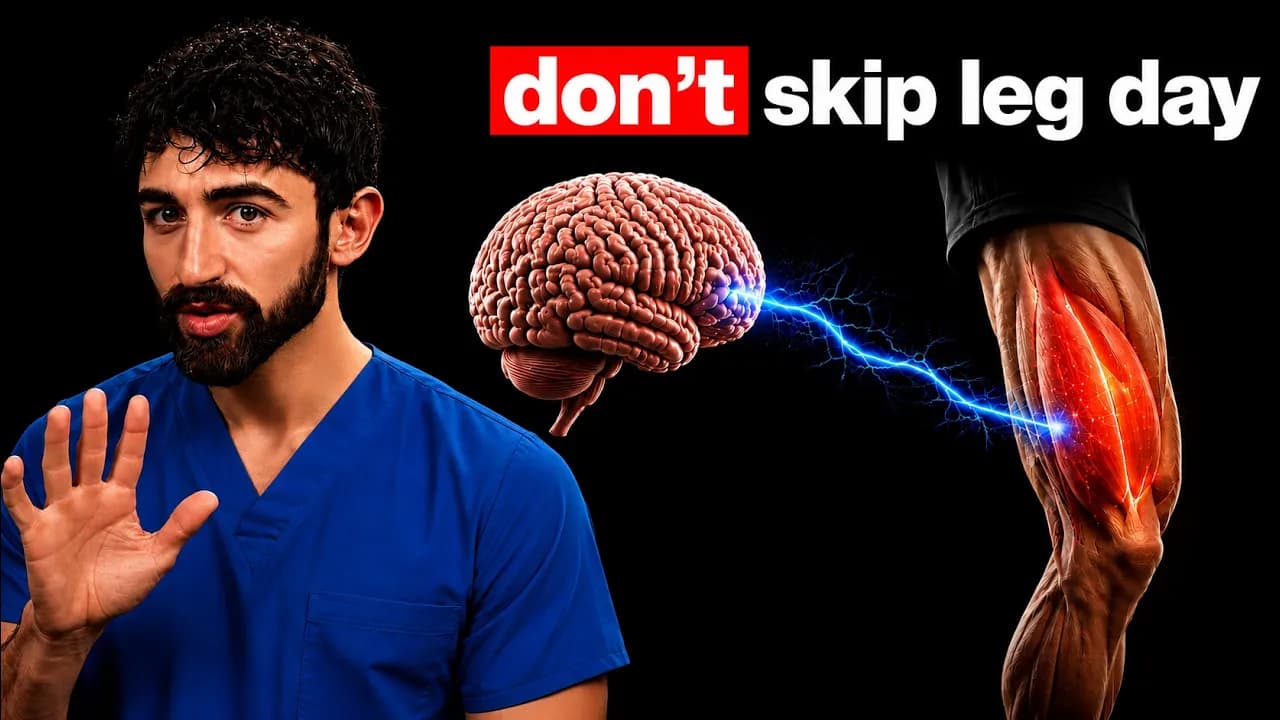
Father's dementia (got lost 7 blocks from home; engineer, sedentary vs. athletic mother playing tennis into 80s). Motivated research: exercise releases neurochemicals (dopamine, serotonin, norepinephrine for mood; BDNF for hippocampal new cell growth).
Every single time you move your body, it's like giving your brain this wonderful bubble bath of neurochemicals... growing a big fat fluffy hippocampus.
Prevents/delay onset of Alzheimer's effects into 70s.
30-45 minutes aerobic exercise daily (raises heart rate for hippocampus/prefrontal cortex benefits: better attention shifting/focusing). Uses 30-minute video workouts (variety: weights, kickboxing; adds 10-15 min stretch). Fits routine, no gym needed.
Minimum: 10 minutes walking outside shifts mood (dopamine, serotonin, norepinephrine). Cardio (power walk, running, kickboxing) for hippocampus/prefrontal benefits.
Two pathways:
- Myokine (from skeletal muscles, not heart; rat studies: running increases myokine crossing blood-brain barrier, stimulates BDNF).
- Liver: exercise stress releases beta-hydroxybutyrate (ketone crossing blood-brain barrier, stimulates BDNF).
BDNF boosts new hippocampal neurons.
Rodent literature clear: wheel running triggers hippocampal neurogenesis. Human controversy, but Rusty Gage (Salk Institute) study: markers in terminally ill humans (some old) showed new hippocampal neurons. Recent studies (better techniques) confirm into 9th decade, even in older adults.
30-45 min aerobic: consistent mood boost, improved prefrontal function (Stroop test: attention shifting/focusing), faster reaction times (cognitive-motor). Lab study (20s-90s): decreased anxiety/depression/hostility, increased energy; older adults showed greater Stroop/Eriksen flanker improvements. Effects last up to 2 hours.
Making the world a better place.
Best timing: morning, before peak brain use (benefits parents exercising whenever possible).
Memory hiccups start 50s/60s; lifelong exercise (BDNF) offsets via bigger hippocampus.
Favorite study (2018, Swedish women): 1960s, 300 women aged 40s classified low/mid/high fit; 40 years later (80s): high-fit gained 9 more years of good cognition (correlational, aligns with regular BDNF).
Studied 30s-50s low-fit (≤30 min/week prior). 3 months, 2-3x/week spin class vs. competitive video Scrabble (control: group social, no cardio).
Spin group: ↑ positive mood, ↑ body image, ↑ exercise motivation.
What about cognition? and what changed in the cognitive circuits of their brain. Number one, we got improved performance
Improved performance on the Stroop task. Key findings in the hippocampus:
- Better performance on a recognition memory task (memory encoding: differentiate similar items to remember).
- Improved performance on a spatial episodic memory task (Doom-like game navigating a spatial maze in a virtual city), classically dependent on the hippocampus.
This study answered: minimum doable exercise for cognitive benefits in 30-50 year olds who are low-fit is 2-3 times per week.
- Doable and challenging if low-fit, but not requiring becoming a marathon runner—just regular body movement.
How long are those sessions again? 45 minutes (5 min warm-up, 35 min pushing, 5 min cool-down).
Second Study: Mid-Fit People
Mid-fit defined as exercising 2-3 times/week regularly (already benefiting brain).
- Collaborated with spin studio; participants exercised as much as wanted (2-7 times/week) for 3 months.
- Control group: no change in exercise.
- Result: every drop of sweat counted—more workouts led to:
- Better mood.
- Lower depression and anxiety.
- Higher positive affect.
- Better hippocampal memory.
Encouraging for regular exercisers: increasing frequency improves hippocampal function, baseline mood, and affect.
Value of Affirmations in Exercise
Dr. Suzuki teaches IntenSati (developed by Patricia Moreno): combines kickboxing, dance, yoga, martial arts movements with positive spoken affirmations.
- Example: punching while saying "I am strong now" (each move paired with affirmation like "I'm strong. I'm inspired. I believe I will succeed.").
- Using own voice for declarations builds habit of positive self-talk.
- Literature shows affirmations (spoken or read) change mood; reveals internal negative self-talk.
- IntenSati provides mood boost from affirmations + all exercise brain benefits (sweaty workout).
Meditation Study
Practical: 10-12 minutes daily guided body scan meditation for 8 weeks.
- Significant decreases in stress response (measured by Trier Social Stress Test for unexpected stress).
- Better mood.
- Improved cognitive performance.
Mechanism: Builds habit of focusing on the present moment—countering fearful future-thinking or reliving past; powerful tool for the day.
Top Three Tools to Boost Attention
- Exercise: Direct effect on prefrontal cortex functioning.
- Meditation: Improved focus, especially on present moment.
- Sleep: Essential for attention, creativity, learning, retention, performance, and basic brain function.
Exercise, meditation, sleep help you learn, retain, and perform better.
Thanks to Dr. Wendy Suzuki for leadership in university system, public education, decades of work on memory and neural circuitry.
Keep Andrew Huberman in your library
Save the videos and channels worth coming back to, and find them again in one place.