Exercise Scientist Critiques Hany Rambod: The Greatest Bodybuilding Coach Ever?
In a Nutshell
Dr. Mike critiques Hany Rambod's training methods as near-perfect, rating him the greatest bodybuilding coach for his ability to push athletes to true failure through extended sets, assisted reps, and precise cues. Key techniques include prioritizing weak points like rear delts early in workouts, using partial reps at the hardest portion of movements, and emphasizing slow eccentrics for maximum growth stimulus. Rear delt training should begin sessions with specific hand positioning (thumbs toward each other), while fly machines benefit from extended set protocols combining holds, partials, and drops to failure.
These notes were generated by AI and may contain inaccuracies.
Hany Rambod coaches the Tren Twins through an intense chest workout. The session includes chest flies with cues to drive higher and perform partials at the hardest part of the movement. The Tren Twins demonstrate explosive concentric movements from the bottom position with full range of motion and eccentric control.
Two distinct fly techniques exist on a spectrum. One involves significant elbow bend with hands or arms at approximately 90° angle, which takes biceps out of the movement and focuses heavily on chest. The other uses completely straight arms, which massively involves biceps through stretch under tension at the bottom position but requires substantially less weight. Most people should choose something between the extremes, such as a 10° or 20° offset bend, and experiment to determine which works best for individual biomechanics.
The Tren Twins acknowledge they don't typically perform eccentric training. Dr. Mike notes that slowing down the eccentric component represents a major opportunity for improvement in their training approach.
Hany identifies rear delts as a weak point for the Tren Twins and emphasizes that weak body parts should be trained at the beginning of workouts rather than dead last. This applies the same principle as training weak calves first in a session. Many competitors claim to prioritize certain muscle groups but continue training them in their usual position, which is often last in the workout.
The side delts provide the most visual pop and should start most delt workouts using various lateral raise variations with cables or dumbbells. Rear delts receive substantial indirect work from back training but benefit from extra targeted work. Front delts receive extensive training through chest work and are typically the largest delt head already. Training front delts excessively can disrupt delt symmetry, so energy should be redirected toward side and rear delt development.
Most people avoid starting with rear delt work because pressing movements allow lifting significantly more weight and provide greater ego satisfaction. Rear delt cable flies typically involve much lighter loads that don't create the same impressive visual display in the gym environment.
For optimal rear delt isolation, wrists should be positioned with thumbs turned toward each other to replicate the natural angle of pull. Turning thumbs sideways engages both rear and side delts. If shoulders tolerate the position, thumbs can be angled 45° toward the body to create a bent Y raise that intensely targets the rear delts.
Hany employs the "one more" cue repeatedly to push athletes past perceived limits until they can no longer complete reps, at which point true failure has been reached. This technique helps athletes achieve genuine muscular failure through continued encouragement.
Dr. Mike prefers not being touched during training to track personal strength metrics, but acknowledges that specialized coaching from elite trainers warrants physical assistance. Hany assists Terrence on the top end of movements because this portion is mechanically harder, allowing more full range of motion reps while preserving the bottom-end tension where most growth stimulus occurs.
Ideal shoulder machines should be most difficult at the bottom position and easier as the weight moves upward, creating an optimal force curve for hypertrophy. Current machine designs often fail to match this biomechanical ideal.
After completing conventional lateral raises, partial reps—particularly bottom-end partials—provide additional growth stimulus. This technique allows increased training volume without requiring additional rest periods between sets, improving the time-to-stimulus ratio.
Grip strength often limits shoulder training effectiveness before target muscles reach failure. Versa Gripps address this limitation by allowing secure attachment to bars and implements, eliminating grip as a limiting factor and enabling maximum delt stimulation.
Hany emphasizes that partials should involve substantial range of motion (approximately 30-50% of movement) rather than minimal "baby partials" that barely move the weight. The struggle through the most challenging portion of partial reps drives significant shoulder development.
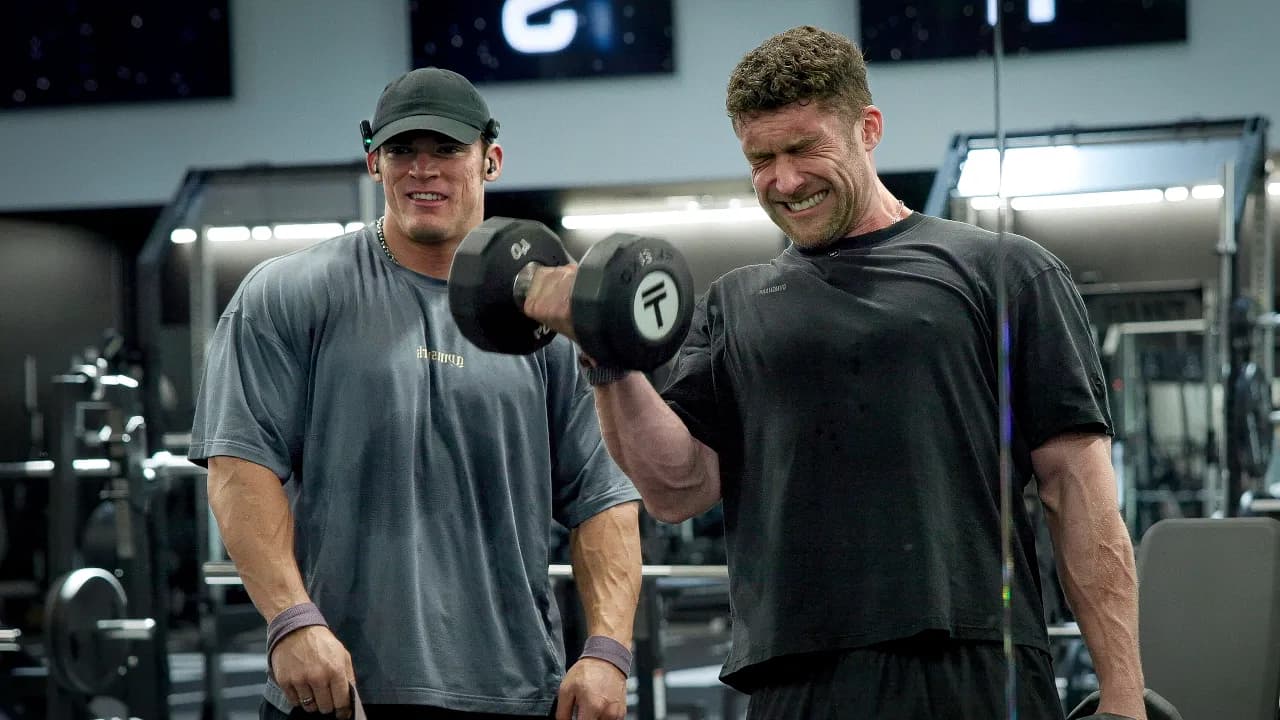
One-arm dumbbell preacher curls demonstrate excellent technique with controlled eccentric phases and pauses at the bottom position on some reps. This approach enhances both safety and effectiveness of the movement.
When concentric strength fails but eccentric capacity remains, training partners can assist through the concentric phase while the athlete controls the eccentric independently. This represents training beyond failure and can provide substantial growth stimulus. Documentation of assisted sets should be maintained, particularly when using RPE-based tracking systems.
Multiple fly machine techniques prove effective: holding and pausing at the top for enhanced mind-muscle connection, brief touching without holding, or maintaining any consistent partial range where hands stop equidistant from each other. The lengthened partial component drives the majority of muscle growth stimulus.
A single extended set can combine multiple techniques: holding at the top position until failure, transitioning to brief touches until failure, then reducing range to a predetermined distance (such as one foot apart) until failure, and finally attempting to move the weight from the bottom position until complete failure. This approach can generate 25+ reps in a single set with extreme growth stimulus.
Stretch curls performed on cable machines require positioning the body further back with chest up to maximize tension and stretch simultaneously at the bottom position. The cable stack should be positioned roughly parallel to the arms when hanging down, between knee and hip height, to optimize the lengthened position stimulus.
Close-grip push-ups are performed immediately following stretch curls as a superset, with Hany providing assistance and cues throughout the movement.
The final eccentric phase of any set ending at the top of the concentric movement should be performed three times slower than normal when possible. This extended eccentric creates disproportionate muscle growth stimulus while generating less nervous system fatigue compared to concentric work. This technique applies to exercises where the bottom position is safe and the athlete can exit the equipment afterward.
Hany Rambod receives a 10/10 rating as the greatest bodybuilding coach by measurable standards, having coached more Olympia champions than nearly any other coach combined. His communication style treats athletes as human beings, demonstrates genuine investment in their success, and provides constant attention during training sessions. His training cues effectively guide athletes through complex movement patterns and intensity techniques.
Keep Renaissance Periodization in your library
Save the videos and channels worth coming back to, and find them again in one place.