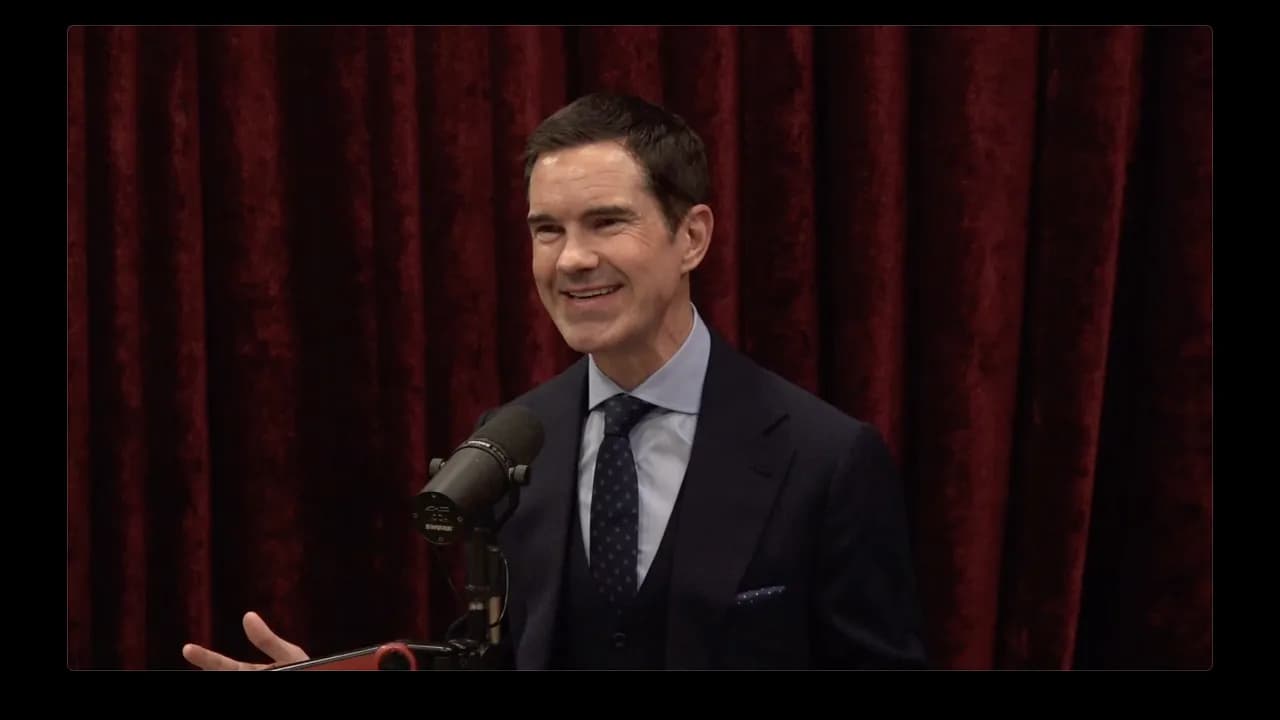
Expelled, Arrested & Somehow Winning At Life - James Smith
In a Nutshell
James Smith reveals that external success creates diminishing returns on happiness due to hedonistic adaptation, where the same brain chemicals drive emotions regardless of wealth or status. His journey from school expulsion and police arrest at 13 to building a successful business shows that problems don't disappear with money—they just change form, and family became his only genuine source of fulfillment. The core insight is that unwavering confidence comes from separating your value from your performance, and that true wealth is reality minus expectations rather than absolute achievement.
These notes were generated by AI and may contain inaccuracies.
When life improves, people maintain the same level of worry by magnifying smaller problems. Martin Seligman describes this as conservation of dysphoria, where the amount of concern stays constant despite fewer genuine issues. The speaker compares this to a single coin in a vase making the most noise - when other problems are eliminated, the remaining issue becomes disproportionately annoying.
When someone has only one problem, it becomes paralyzing because full attention focuses on it. The speaker references the psychological phenomenon where trying not to think about a purple elephant makes it more prominent in consciousness. This illustrates how having fewer problems can paradoxically create greater distress.
People who appear to have no visible problems don't receive sympathy, yet suffer guilt for their struggles. The speaker notes that despite being wealthy young, he couldn't empathize with others' problems, thinking "You have money, so you have no problem." He later realized this was a different category of issue - one can have good income while being very unhappy mentally.
The chemicals responsible for happiness and sadness in the brain remain the same regardless of external circumstances. The speaker explains that living in a big house or convenient part of the world doesn't provide extra serotonin or dopamine. The same emotional experiences - laughing with friends, smiles - come from the same chemicals whether experienced by students or billionaires.
James Smith's friend Ali Ona, a doctor working night shifts, encountered a patient with intestinal blockage. A South African specialist refused to come perform the decompacting procedure, stating the doctor could do it himself. After spending half an hour manually removing waste while family members screamed, the doctor checked his phone and saw he'd received payment for a PDF sold seven and a half years ago for seven pounds, earning more after taxes than treating the patient.
At $10,000 monthly income, the achievement felt great. However, reaching $100,000 monthly provided only 0.8 times the happiness of the initial milestone. The speaker initially dismissed others experiencing this phenomenon as wrong, but later confirmed the pattern himself - each income increase provides progressively less satisfaction.
The first trip abroad with friends creates wonder and excitement, drinking beer at 6 AM in departure lounges. Subsequent trips create increasing levels of expectation and demand. This process of hedonistic adaptation works like a drug addict constantly needing more to achieve the same effect.
Dan Bilzerian reached the peak of pleasure faster than most, with all women, drugs, flights, vacations, houses, cars, and guns. When asked if he ever felt he achieved everything too quickly and wished to slow down, the implication was that reaching desired destinations creates the question of "where next?" The same principle applies at any level of achievement.
Before having children, the speaker would have said he didn't want them due to the headaches involved. After his son was born, he found direction he'd never felt before. The experience of holding his adopted son was the first time touching someone related by blood in his conscious life. Fatherhood made him less ambitious in other areas and redefined his success benchmark around being a good parent.
After quickly conceiving their first child, the speaker and his partner now face secondary infertility. Despite taking TRT, his sperm count and testosterone levels remain good at the IVF clinic. They're experiencing a beta-hCG paradox where better numbers delayed starting IVF earlier. Many friends aged 34-35 want children but prioritize buying houses and achieving financial security first.
The speaker states his family is now his only source of happiness, with everything else being noise. He wants to be rich for his family and children, to raise them with love. This provides purpose beyond the selfish "I, I, give me, give me" mentality. He acknowledges this realization may come with future complications.
Dopamine, oxytocin, serotonin, and endorphins can be obtained from video games, TikTok scrolling, and countless artificial sources more easily than ever before. The speaker discussed with someone named Storr about nighttime social media scrolling, who asked what the problem was if the person enjoyed it.
Growing up means repeatedly giving up what works. The speaker shares a quote about viewing parents' childhood photos at the same age they are now, realizing parents were "older teenagers who didn't know what they were doing" - a perspective that resonates with his own feelings as a father.
At age 20, people feel invincible. Minor issues like stomach aches or tooth pain trigger thoughts of cancer or brain tumors. The speaker recalls drinking a beverage in Laos containing a dead lizard that was mostly ethanol, experiencing the freedom of youth where consequences seemed distant.
Tubing involves floating down rivers on inflated inner tubes from car tires. Bars along the river throw ropes to pull people in for drinking games. The activity was stopped in Australia due to insurance concerns about injuries far from hospitals. Many people died from the activity, and the cheap alcohol mixtures caused blindness and poisoning.
A city in Laos has a rule requiring all cafes to show Friends episodes all day. Restaurant staff have American accents and can recite dialogues from watching continuously. The speaker became stuck watching multiple episodes instead of going outside.
The speaker spent 3,000 pounds over 6 months backpacking in Asia. For the current tour, he expects to spend the same amount. He sold his Renault Megane R26 Formula 1 Edition to fund the Asia trip with his university girlfriend. They chose a 12-15 hour bus journey over a 51-pound flight to save money as backpackers.
On a bus from Luang Prabang to Hanoi, two French girls became severely ill with diarrhea, eventually defecating on their seats after the driver locked the toilet. The mountainous roads are dangerous, with drivers focused on keeping passengers alive. The speaker notes Thai buses have little regard for passenger comfort during such journeys.
Pai is considered the best place to learn riding mopeds because falling is inevitable. The bus route there is called "vomiting alley" due to 350 switchbacks over 6 hours. On the return journey in a Sprinter van, Chinese students behind the speaker vomited into plastic bags provided by the driver who never looked back.
There's a rumor that Chang beer is stronger than it appears, requiring careful consumption of bottles. The speaker tested this theory during his time in Thailand.
While in Thailand with his girlfriend, James got into a serious argument and began drinking heavily. In Koh Samui, he consumed multiple bottles of Chang beer before losing consciousness. When he regained awareness, he was walking along the roadside with locals who informed him he had been in a moped accident. He discovered that the skin on his shoulder and feet had been completely removed, and they were applying iodine to prevent infection. The moped showed no scratches, and he had no memory of the accident or the two hours he was missing from the hotel. Despite the severity of the incident, he avoided serious injury, noting it was terrifying how close he came to breaking his leg or suffering a head injury.
James reflected on how many times he has done stupid things and survived. He mentioned a previous incident in Bali where he fell off a moped after seven days and was prescribed tramadol for pain management. He recognized how easy it would be to become addicted to substances like tramadol, comparing it to Vietnam veterans who used heroin during deployment and struggled upon returning home.
James promoted Momentous sleep packs, which had been redesigned with a better researched form of magnesium, making the new formula stronger. The product helps users calm down, fall asleep faster, and sleep through the night without melatonin. It is NSF Sport Certified, meaning it undergoes third-party testing for label accuracy, heavy metals, and banned substances, with results published on the Momentous website. The product comes with a 30-day money-back guarantee and international shipping availability.
In Vietnam, James was riding a moped with all his bags when he decided to wear a helmet for the first time during the trip. While turning right, a local hit him from behind. The helmet saved him from serious injury, and his backpacks acted as body armor. He stood up and confronted the local before Americans approached to check if he was okay. The moped was completely destroyed with gasoline spilled on the ground. He realized that without the helmet, his brains could have been on the streets of Da Nang.
George from Man posted advice from married men about relationships. One suggestion was that when helping a partner choose an outfit, instead of triggering a fashion show that makes you late for dinner, you should say the first outfit looks great but ask to see their second choice. When they show the second dress, say you liked the first one better. This saves the trouble of them changing three more outfits.
Another piece of advice came from a father who had been married for 52 years: "A long and successful marriage is admitting you're wrong, even when you're right." This requires genuinely presenting yourself as wrong rather than appearing to avoid the issue.
The conversation turned to the practice of giving death row inmates a last meal before execution. James joked about a hypothetical method of psychological torture where inmates would be repeatedly injected with saline while being told "goodbye," only to learn the next day they would repeat the process, creating a form of Russian roulette.
Additional relationship tips included: if you can't decide where to eat, let your partner guess and agree to whatever they suggest, as 99% of the time it will be where they wanted to go anyway. Another tip was to always order fries even if your partner claims not to be hungry, as they will eat the extra fries.
James discussed how men often ask friends if they want to get snacks, then when arriving at the drive-thru, claim they won't order anything. This same behavior applies in relationships, where partners' weight and fitness levels tend to fluctuate together. When one person wants to lose weight and the other doesn't, it creates friction that can sabotage fitness goals.
James coined the term "fitness gap" to describe relationships where one partner wants to improve their fitness while the other doesn't, creating tension. He joked about using an umbrella with tirzepatide to secretly inject overweight family members as a form of intervention, referencing Russian poison umbrella assassinations.
James visited Exeter University's gym, noting it was noisy but everyone there was fit and good at their respective sports, though not very large. At 19 years old, the students were annoyed by the older visitors who increased the average age and doubled the average free testosterone levels.
A first-year university student approached James asking whether he should drop out after only six weeks, feeling he wasn't making progress and wanting freedom. The student was studying business but wondered if he could learn more by running a business instead.
James revealed he was expelled from school because he didn't have good enough grades to go to sixth form. He only had four GCSEs instead of the required five. The school eventually agreed to take him on the condition that he behave well, but he was released two weeks later.
As a child, James wanted to join the army and was in the Army Cadets. He applied to Welbeck College because his father said he could only join as an officer. The interview was complicated by a police record from when he shot someone with an air rifle as a child.
James was obsessed with the army and cadets. He could still disassemble and reassemble the SA80 rifle blindfolded. The cadet rifle was called the L98A2 GP Cadet Rifle with iron sights. He trained at Arborfield and Pirbright, shooting at ranges and performing drills including checking that rifle barrels were empty.
At age 13-14, James took a knife to school to show his friends. The knife was a lock knife that couldn't be closed without pressing a button. When confronted by teachers about bringing a knife to school, he asked why he couldn't. The teachers explained that someone could claim he threatened to stab them.
James and his neighbor would shoot at different things with air rifles, breaking rifle barrels and using pellets. They decided to increase the risk by shooting at moving cars on the highway. They didn't consider they were damaging the cars until one day they shot someone who required seven stitches at Heatherwood Hospital in Ascot.
When police arrived at James's house, his mother threw the Yellow Pages at him, crying and asking what he had done. The police were looking for boys with air rifles. His mother immediately identified him as the culprit. His father advised him not to say anything until speaking with a lawyer.
At the police station, James was arrested at age 13. He was fingerprinted, had DNA taken, and photos were taken. During interrogation, police officers explained he had the right to remain silent and that anything he said could be used against him in court. The police suggested that if he apologized to the victim, they wouldn't pursue further legal action.
A ballistics report was prepared, and the victim was taken to Heatherwood Hospital. Doctors had to call police about the shooting incident. Armed response officers came to the door, though James's parents didn't see them with guns. The police knew the boys weren't intending to hurt anyone and were just being silly.
The ballistics report revealed the man was a passenger in the car. In England, his wife was driving with the right rear window open. The passenger's son was shot in the face. Police claimed the man shot his wife. The car could have crashed, potentially causing a collision with another vehicle. The boy, 6 or 7 years old, could have been hit as well. There were seven bullet wounds on his face under his lips requiring stitches.
The police questioned who fired the shot - whether it was the man or his friend. The man explained he was driving and offered full cooperation. The police acknowledged shooting at moving objects was foolish. The ballistics report confirmed the man met the description but was innocent. There was no other culprit identified. There was no record of conviction, though until age 18 the man had been reprimanded by police and had a caution on record.
The man understood that any additional trouble would result in certain imprisonment. At university, he didn't get into video games but instead drank alcohol heavily between ages 14-16. When police stopped him with alcohol, he would immediately dispose of it down the drain rather than argue. His friends would resist, but he would comply with "Yes sir, No sir," pretending to be cooperative to avoid further consequences.
The man achieved only 4 GCSEs and couldn't enter sixth form. During his brief two-week admission to sixth form at Chelsea Slough Grammar School, he and friends skipped class to smoke cigarettes in the drama department behind the scenes where props were stored. While pushing his friend on a wheeled sofa off the stage, the screen fell creating a loud disturbance. The Head of Year caught them smoking and witnessed the sofa incident.
The Head of Year called his mother, who arrived with a Yellow Pages directory. The mother was informed they had grounds to officially expel him. The school presented an ultimatum: leave voluntarily or face formal expulsion. After getting in the car, his mother took him directly to Bracknell Job Centre instead of home.
His mother threw his Nokia phone onto the road when he tried messaging friends about being expelled. She told him she wouldn't take him home without securing work. At the Job Centre, when asked if he wanted to continue studies, he inquired about options and learned about agricultural colleges offering BTech courses in sports coaching.
The man convinced his mother to let him attend college. His PE background helped significantly with the sports coaching BTech course. He developed strong relationships with lecturers, played rugby for the college, and secured county rugby playing time. He would exchange rugby kits for lecturers in return for extended coursework deadlines, even bribing them with items like waterproof jackets for Tenerife trips.
Berkshire College of Agriculture offered grave digging courses alongside sports programs and horseback riding. The foundation degree (FDSC) could convert his BTech first year into university credit. Despite his parents initially refusing university due to concerns about debt and poor behavior, he eventually applied for Bournemouth University.
After being denied university admission by his parents, he continued studies for two more years. Buckingham University had a campus at his previous college, meaning he spent four years total at the college. In his third year, he transferred to Hartpury College for a top-up course to complete his full degree. Hartpury was renowned for rugby, though he discovered the competition was far more intense than expected despite being Berkshire Under-20 captain and playing senior rugby.
During Freshers' Week, the man contracted mumps, which spread rapidly throughout the entire rugby team. The illness caused significant swelling making him look like a hamster, and he lost 8-9kg during the three weeks he was home recovering. The disease later spread to his testicles, requiring treatment at Addenbrooke's Hospital where doctors expressed concerns about potential fertility issues.
Upon returning to university after three weeks, classmates didn't recognize him and questioned if he was in the wrong lecture. Embarrassed, he left without explanation and subsequently stopped attending lectures entirely. He discovered that submitting blank coursework cover sheets prevented him from being kicked off campus despite living there.
Everyone at university knew him as "Jimbo" rather than James Smith. Even his dissertation supervisor only recognized him as Jimbo through rugby connections. He never accessed his student union account logins. Statistics and research classes scheduled for Thursday 7am proved impossible due to Wednesday night social activities involving liquid partying in Gloucester and late-night cheeseburger stops.
During his placement year, he created a drinking game requiring shots every minute, leading to unconsciousness. The university year head discovered graffiti including a penis drawing on windows using a deodorant can, plus a knife stuck in a refrigerator door. He described university as primarily a place for learning drinking strategies rather than academic pursuits.
After university, he worked door-to-door sales for gas and electricity verification at age 22, then spent a year in corporate inside sales at RSA Security (part of MC) making verification calls. When denied commission increases despite meeting targets, he would leave his phone off the receiver for 50 minutes at a time, repeatedly pressing automated menu options to inflate call statistics.
At AA, he worked in outbound telesales helping customers upgrade car coverage. He discovered the system tracked time between calls but couldn't detect when customers had hung up, allowing him to leave calls connected for 15 minutes of "dead time" without detection.
The extreme boredom of sitting at a desk for 40 hours weekly with no work led to significant psychological distress. He realized that achieving goals in disliked jobs demonstrated his capability, questioning how much more successful he could be in work he genuinely enjoyed. This boredom ultimately motivated him to pursue personal training entrepreneurship at age 24, driven by dissatisfaction with previous employment rather than entrepreneurial ambition.
When James told his father he was pregnant, his father cried. Their generation viewed children as a sign of status—the biggest achievement. A child is more important than books sold. One is better than a thousand.
Young people today know about cars like the Lamborghini Aventador SVJ and Nissan GT-R, but they don't know the cost or what they'd need to earn to afford them. There was no ChatGPT to ask how to afford such cars. The speaker compares this to a dream like Harry Potter or sports fandom—having a picture of Messi on your bedroom wall and thinking "I'll be Messi."
Fast Cars magazine in the UK was equivalent to softcore porn under the guise of a passion for cars. The entire industry was built on this. The measurements have changed—people now see 24-year-old millionaires in Miami and think they should achieve the same by that age.
People like Alex FG (23-24 years old) and Iman Ghazi (24-25 years old) set new standards. The signals of dignity have changed. The job is not the only way to achieve success—it can be done by depositing money in the bank.
The speaker mentions drinking an entire case of Athletic Brewing non-alcoholic beer the previous night. Athletic Brewing makes the world's best non-alcoholic drinks, allowing people to enjoy something cold and delicious without the usual side effects. Products can be found at grocery or liquor stores, or a variety pack of four flavors can be delivered by visiting athleticbrewing.com/modernwisdom and using code 'modernwisdom' for 15% off the first online order.
Earning £100,000 a year meant being successful when the speaker was growing up. No one he knew earned that much. His goal in personal training was 6 hours a day at £60 per hour. The schedule ran from 6:00 PM with 15-minute breaks: 6:00, 7:15, 8:30, 9:30, 10:45, 11:45, finishing work at 1:00 AM.
Childhood and early business life were stress-free. There wasn't much pressure until around 2015, 2016, or 2017 when the speaker felt he was competing with the world. He wants to give young people the gift of not having to put pressure on themselves to finish something.
The concept of "keeping your head above water" involves writing down rent, car loan installments, holiday savings, and totaling these monthly amounts. A rowing coach and his wife celebrate reaching their monthly survival income goal with a glass of champagne—sometimes on the 7th, sometimes on the 20th. If they reach it on the 7th, they're unbeatable for the rest of the month.
Once you reach the level needed to keep your head above water, you become nearly invincible. The speaker's first brand deal was returned because he had £1,300 in his Monzo account—he couldn't be bought. People's needs, wants, and housing change based on the level at which they keep their head above water.
Wealth is reality minus expectations. Many millionaires are actually destitute by this definition. If you achieve more than expected from life, you are rich. If you achieve less than expected, you experience desire minus reality.
The scope of comparison has increased greatly. At Exeter Student Union, the speaker told a 6'2" man with golden hair that he won the lottery—he could have been born anywhere in the world, statistically likely in Africa or Asia, but was born in Britain. Only 3% of people are taller than 6'2", and being taller may bring negative effects like knee buckling in EasyJet seats.
Joe Hudson says most people think confidence comes from doing work efficiently or not making mistakes, but unwavering confidence comes from knowing your value doesn't depend on your work. The speaker's value depends on work, not on being separated from it.
The change that came in the speaker's twenties was understanding that value doesn't depend on the job. The game keeps getting bigger—from valuation and fundraising announcements for Nutanix to announcing partnerships with Walmart, HEB, and Morrisons Daily. The game gets bigger with more difficult opponents, comparing a Renault Megane RS 265 to a Ferrari costing about $1.2 million.
Wealth is relative. People may not be in their desired career or earning as much as wanted, but they have a lot. In today's world, it's not taught that having a wife for 10 years, two children, and navigating natural struggles despite cost issues should be valued more.
There's a rebellion happening where both men and women of past and present generations can reach their desired social position without spending as much money as wanted. The criticism, bickering, and discomfort come from people achieving things they thought would make them happy, but realizing the underlying problem remains.
The original live show written for Australia was about the "Arrival Fallacy"—the illusion of reaching the end of history. The view from the top of the mountain isn't as good as expected while climbing. A fat man telling a hungry man the food isn't tasty sounds like a luxury problem that nobody wants to hear.
When facing the situation of achieving success but still feeling dissatisfied, there are three paths: Gold medalist syndrome—thinking the goal wasn't ambitious enough (regional manager to national manager, bachelor's to MPhil); shouting against the system and saying it's broken; or looking inside oneself and questioning the entire game of survival and achieving desired goals.
The speaker has completed cycles and shouldn't walk the same path. No one should suppress or limit his happiness. He needs to look inside and see which part of himself always feels dissatisfied no matter what he receives. They're trying to create a billion-dollar brand for this reason.
Success on social media is referred to as a game or sport—earning points. The speaker couldn't play the game very well, lost some points and gained others, but might be playing better these days. Bringing this to a comfortable level achievable for most people may not be luxurious or involve buying a house, but work is underway and moving forward.
Skills can be analyzed simply. First, improve character—like getting financial benefits for weapon benefits in GTA. Using cheat codes isn't funny. If given 10 lakh followers tomorrow, it wouldn't be fun because cheat codes were used. The sheer amount of work and repetition matters—like practicing headshots in Call of Duty or making 400 episodes of a podcast.
Cooperation in gaming develops team player skills. A well-organized team performs better than four individual players in a game like Call of Duty. It's more enjoyable because victories and defeats can be celebrated and shared together.
In gaming and real life, even on a bad day, you don't waste the whole day. If you die on any level, you get another chance to try. Unwavering confidence comes from knowing value doesn't depend on performance. The gaming analogy separates performance from value—unless you're a professional esports player.
When starting speech coaching, friends asked what would happen to the speaker's beautiful natural voice. Learning piano from a teacher doesn't prompt concerns about losing natural playing ability. Pronunciation, speaking style, and communication posture are very close to being, while piano playing style is seen as a means of growth.
In jujitsu belt systems, everyone thinks black belt holders are best to learn from, but sometimes learning from a purple belt is better because they're closer to your current condition than a black belt. The main mantra is following the emergence, not the outcome—learn from someone who knows what they were doing when in your situation, not what they're doing now.
A grand master pianist knows a lot but someone only 2 years ahead solves problems more familiarly with fresher memory of learning. The speaker confirms the voice issue and started adding personal styles while talking. After watching 200-500 episodes, communicators became worse because they were conscious of speaking style—positioning tongue for S and L sounds due to slight stutter, omitting unnecessary words like "hmm" and "yes."
Jefferson Fisher and James Sexton are excellent communicators with their own styles that remain perfect and not lifeless. James Sexton is a magician who speaks so well that the speaker wants to move away from the screen because he's using NLP applied to mitochondria to make purchases.
Motor Fuel Group operates petrol stations. If a good petrol station exists, it can be found there. If not, then buy fuel from somewhere else.
Many people tell us that YouTube is their unsubscribes from the channel, although they had already subscribed. Check it out below and subscribe. See if the button is pressed or not. Subscribe to watch the episodes before others. This supports the show and helps bring in bigger and better guests. For this, just tap once.
Keep Chris Williamson in your library
Save the videos and channels worth coming back to, and find them again in one place.