Extended Interview: Democratic Michigan Senate candidate Abdul El-Sayed
In a Nutshell
Abdul El-Sayed is running for Michigan Senate on a platform that prioritizes AI regulation through a new cabinet-level agency, Medicare for All, and breaking up corporate monopolies. He argues that frontier AI development needs an immediate pause, AI companies should be restructured as public-interest corporations with sovereign wealth fund ownership, and data centers must face strict community protections. His core message is that corporate money has corrupted both parties, preventing real solutions to healthcare costs, economic inequality, and emerging technological risks.
These notes were generated by AI and may contain inaccuracies.
It shouldn't be as hard to afford a tank of gas, groceries, rent, or mortgage in the richest, most powerful country in the world. It shouldn't be as hard to see a doctor. Politicians have been bought off by big corporations who suppress wages and raise prices. Rebuilt health departments, put glasses on kids, took on corporate polluters, eliminated medical debt. Built the campaign by going everywhere and talking to everyone. Democracy is a process, not an outcome.
Five years ago would have said healthcare, but now the most important issue is AI. AI is foundationally going to change the economy at a timescale that cannot be adapted to. Concerns include AI slipping human control, being taken by terrorist groups for bioweapons, or arms races that could result in losing half of what was meant to be preserved. Students taking $60,000 in loans worry the job they were supposed to have won't exist anymore or might not exist in 10 years. Rural communities worry about data centers being placed in their backyards, already unable to afford utilities and concerned about water impacts.
AI was promised to cure cancer but instead is being used in an arms race around prior authorization between hospitals and insurance companies. The point of healthcare should be providing people care, not making money for large corporations. This connects back to getting money out of politics and Medicare for all.
Need a cabinet-level agency like an FDA or SEC for AI that invests in and focuses on regulating the inside of the AI industry. AI should not fire weapons, fire people, or deny healthcare. AI corporations need to be divested from traditional big tech and rebuilt as public interest corporations. Democratically appointed leadership should comprise 50% of the board. Fifty percent of their value should be held in a sovereign wealth fund to ensure risks are thought through at the board governance level and to prevent microscale incentives from creating technologies that could kill humanity.
If CEOs are right that AI will take 50% of white collar jobs in 5-10 years, part of the value created should be held in federal government wealth for reinvestment in job creation capacity and ensuring those pushed out of the economy aren't left destitute. Terms of engagement for data centers need community benefits agreements negotiated transparently with local communities, including the ability to reject projects. Data centers cannot raise utility rates, must improve reliability with some revenue going to that purpose, cannot touch waterways, and must use all union labor. Until federal terms exist, local and state moratoriums are needed.
Full on pause on frontier research where companies are pushing forward. China's research is largely spoofing models, similar to a skier being pulled by a boat where speeding up makes the skier appear close when they're actually being pulled. If the US slows down, it would find China is more focused on dispersion than frontier research. An international treaty is needed to work with China because all parties have incentive to preserve humanity and avoid recursive self-improvement scenarios where AI exceeds human control.
The US lives in corporatism, not capitalism. Capitalism is about leveraging supply and demand to allocate capital with free entry and exit into markets. Adam Smith stated there's no market without morals and the biggest risk to capitalism was always monopoly and oligopoly, not government regulation. Monopolies and oligopolies have the power to raise prices and suppress wages, acting as monopsonists. The Federal Trade Commission was created over 100 years ago to break up monopolies but has been abandoned.
DTE, the local utility, has raised rates faster than in 46 other states over the past 20 years by buying off politicians. Power is lost two or three times a year for three or four days at a time. Phones are made by one of two companies (Samsung or Apple) with carriers limited to AT&T, Verizon, or T-Mobile. Trading Walmart for Amazon represents trading one oligopolist for another because the original has no incentive to compete and allows another to build a more powerful monopoly.
Unions are one of the most important antidotes to monopsonies. The ability of a few employers to set employment prices is countered when unions collectivize labor and push back against wage suppression by leveraging the same economies of scale against corporations.
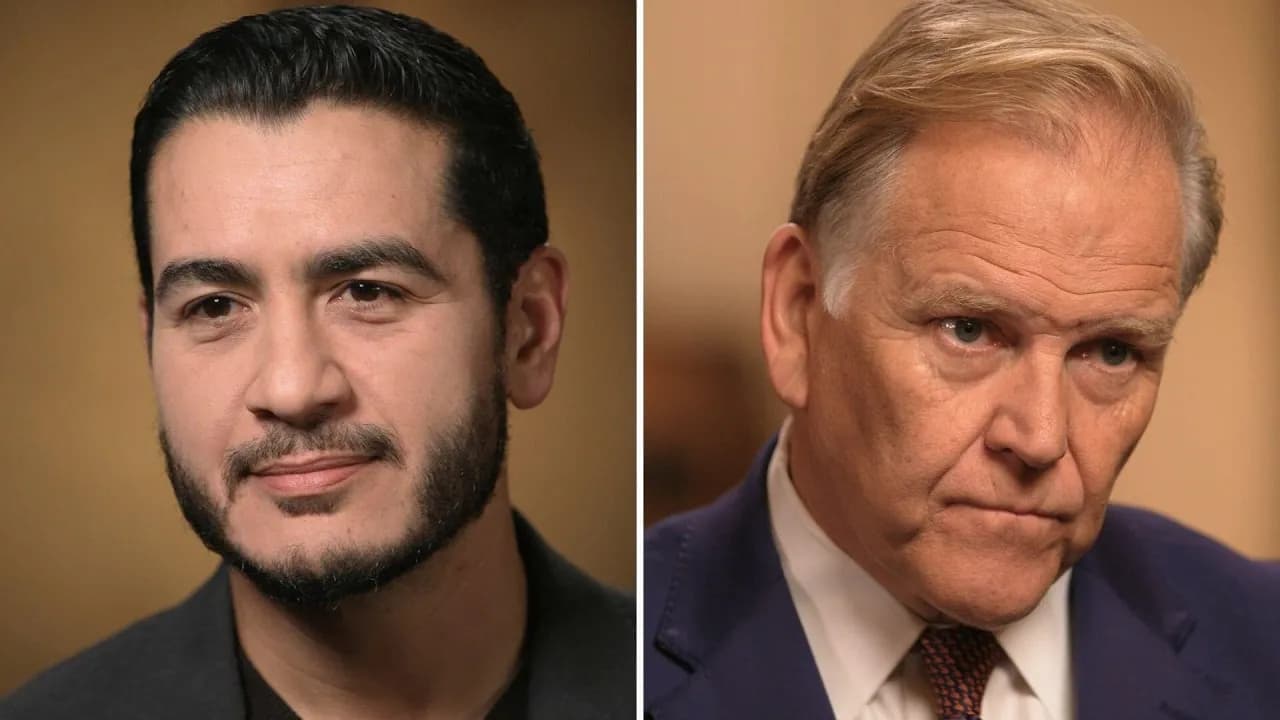
Mike Rogers is a man who at one point wanted to serve publicly but started playing the game and got addicted. Early in his career he got into public service for the right reasons, but at some point started taking the rules of the game as fixed. The rules involve taking corporate money to do corporate bidding and then making money on the back end from the same corporations being regulated. Made 14 million dollars and moved to Florida with a mansion and two yachts.
Father came to the US in 1978 in his early 20s to do a PhD at Wayne State University, then became an automotive engineer at GM's tech center. Helped design the 1996 Corvette, which also had the engine put in the 1996 Impala. Met and married mother, who is a daughter of the American Revolution from Gratiot County. They divorced after creating the speaker, and both remarried. Raised by father and stepmother Jackie, daughter of Jan and Judy Johnson with siblings Jeff and Jenny Johnson. Has two siblings and two half-siblings on mother's side.
Moved around a lot, spending childhood years in Missouri and Florida, back in Michigan by fifth grade. Father is Egyptian immigrant, stepmother is daughter of the American Revolution. Would spend summers in Egypt with grandmother, grandfather, aunts, uncles, and cousins, then return to a cottage on a lake in Macomb County. Learned to code switch and find the least common denominator of things. Never took for granted being normal in any room walked into, which became a gift for explaining oneself and understanding how people understand others.
Faith is a choice made every day. Came back in college when out from underneath family and trying to make sense of the world. Faith reminds that one is small in the eyes of God. Realizing smallness relative to everything else leads to thinking about what makes meaning in life and the importance of relationships with people around you. Had front row seat to opportunities including amazing public schools, medical education, and Oxford scholarship on scholarship. Kids growing up 15 minutes away had opportunity sets more like cousins than the speaker's own.
Notion of speaking the truth even if it be against oneself leads to being radically honest and finding incoherence in things. Command to justice includes the prophet's saying about being commanded to be charitable with neighbors so much that it seemed the neighbor would inherit wealth. Responsibility to the person next to you sharing space, and being honest and direct even when speaking against oneself. Freedom of religion means nobody gets to read their faith into law to the exclusion of others, whether person of faith or no faith at all. This represents a civic faith that must be clung to in politics.
Not a socialist, too much of a scientist to believe in any ideology. Not a capital C capitalist but a capitalist who understands that a good way to get the most value is to enable people to have basic means and then if they have great ideas and work ethic, they can create cool things. Healthcare, childcare, good infrastructure, and good schools are like giving football players pads and helmets so they can play without catastrophic injury. These are basic requirements so people aren't catastrophically injured playing the economic game.
El-Sayed does not view the Democratic Socialists of America as a monolithic group but as an organization. He believes they are right about some things and wrong about others. One specific disagreement is their call to abolish the Senate, which he sees as inconsistent with running for the Senate. He also disagrees with socialist approaches to healthcare, specifically rejecting the UK model of a single-provider system where every hospital is government-run.
El-Sayed argues that Medicare for all is actually highly capitalist because it removes health insurance as a product and frees up the market. He states that current healthcare is not capitalist at all, as rates are set through opaque negotiations between insurance companies and providers, violating principles of transparency. By having government provide insurance to everyone, providers can then compete openly for patients, leading to a flourishing of different kinds of healthcare providers. He emphasizes that this is not a government takeover but rather freeing up market competition.
El-Sayed acknowledges that the Affordable Care Act was amazing policy but would have liked to see a public option included. He was critical of immigration policies, war, and drone strikes during the Obama era. He frames his critiques as building further on the foundation Obama built rather than disagreeing with him personally. He praises the JCPOA as masterful, arguing that Trump's decision to tear it up led to war with Iran, higher gas and grocery prices, and loss of American service members' lives.
El-Sayed states that Democratic losses in 2024 resulted from failures of democratic politics rather than policy. He identifies two main issues: first, failure to communicate effectively about major legislation like the Inflation Reduction Act, which was a basket of important policies that nobody fully understood. Second, the corruption of Democratic aims due to corporate funding of campaigns, which began in the 1980s after Reaganism defeated unions. When both parties are funded by corporations, corporations win, leading Democrats to focus on culture war issues instead of the allocation of scarce resources.
El-Sayed acknowledges that the Biden administration's border policy was a failure, representing one of the largest waves of illegal immigration in recent history. On inflation, he presents a more complicated picture, arguing that much of the inflationary cycle was triggered by Trump's failure to contain the pandemic. He also criticizes the Biden administration's handling of Gaza and what he describes as funding a genocide, which created a glaring inconsistency with Democratic values on human rights and international law.
El-Sayed notes that American healthcare costs 19 cents on every dollar spent in the economy, contributes to a third of all bankruptcies, and carries $225 billion in medical debt. He proposes funding Medicare for all by taxing billionaires at approximately 8%, returning $4.65 trillion to the economy. He argues this would be less expensive than the current system of paying insurance premiums plus deductibles, as people would pay slightly more in FICA taxes for durable healthcare that doesn't disappear with job changes, marriage, divorce, or turning 65.
El-Sayed disputes that insurance companies discipline healthcare spending, arguing they created out-of-pocket costs like deductibles and co-pays to push costs onto individuals rather than negotiate prices down. Under Medicare for all, Medicare would become the dominant payer with power to negotiate costs down over time, similar to how public schools coexist with private options. He acknowledges Medicare reimbursements would need to increase substantially initially but argues this would slow the rate of price increases long-term.
El-Sayed connects the aging population problem to the high cost of having children, noting that childcare costs approximately $2,000 per child. He argues that making it easier to have children requires addressing rising costs of childcare, healthcare, and housing rather than simply cutting taxes for billionaires and starting unnecessary wars. He criticizes pro-natalist policies that ban abortion while failing to invest in making child-rearing affordable, arguing that such approaches lead to unsafe abortions rather than increased birth rates.
El-Sayed supports abolishing ICE but distinguishes between border enforcement (handled by Customs and Border Protection) and interior enforcement. He argues for returning to something like the former INS model that could enforce immigration policy without the violent tactics he associates with current ICE operations, such as shooting people in the face or back of the head, or shooting at cars with five-year-old children inside. He believes the Biden administration's border policy failures resulted from complicated political advocacy at the time.
El-Sayed describes himself as a constitutionalist who believes rights are protected regardless of whether individuals personally use them. He argues that assenting to government taking away any rights means assenting to government taking everyone's rights. He emphasizes that both Muslim Americans and LGBTQQ community members must fight for each other's rights, whether the right to pray in mosques or the right to love who you love. He sees no tension between his faith as a religious Muslim and championing constitutional rights in a socially liberal party, distinguishing between culture (choices people make) and constitutional rights (the ability to make those choices).
The question of culture and the question of politics are separate, and Republicans tend to get this wrong. The fact that one can show up and fight for a right that one may never ever use is exactly what the constitution is supposed to protect in the first place. People do not need to understand why someone prays the way they pray - they just need to decide that if someone tries to take away that right, it is wrong under the constitution.
On the rights of parents to control over their children's education, the tension between Islam and Muslim voters and cultural liberalism around issues like what is taught in school and what happens with transgender kids on sports teams is not actually true. These social issues are manufactured because people have phones in their pockets with access to all the world's information. The notion that someone is going to prevent their child from being exposed to something they find disagreeable because of school is profoundly outdated.
The free flow of information is a beautiful thing. The most important thing is not trying to protect a person from seeing something, but rather coaching kids through the world by engaging with them and saying "here's what I believe, here's what you may see in the world, you get to make your choices about who you're going to be in the world."
The debate about what's taught in a classroom has been made into a cultural flash point because a lot of folks who want to make this a topic of conversation do not want to be talking about the real issues that people face. Cultural war issues are about trying to distract from the fact that people cannot afford gas, cannot afford groceries, cannot see a doctor, and are worried about whether their kids are going to have a good life. Instead, the conversation is about who gets to play what sport, which should be the question of the people who govern sports.
Number one, the United States has been told it is pursuing a two-state solution only to aid, arm, and abet the very people who are trying to foreclose on the possibility of a second state. Number two, taxes should not be used to buy another country a bomb or a tank - whether Israel, Egypt, Saudi Arabia, or Pakistan. The interest should be making sure kids get good schools, there are functional roads, and paying for healthcare and childcare rather than spending billions to do the worst things.
Number three, the state of Israel did a genocide. The human rights community in Israel says that it was a genocide. The notion that money was spent to do a genocide by a foreign government and that there cannot be a conversation about this is deeply problematic. Finally, the United States is actively fighting a war that it has no business fighting, and this has been the goal of one person in international civics - the prime minister of the state of Israel.
There is a bipartisan consensus that Israel is an ally, and most politicians are not willing to say anything otherwise, but that may have a lot more to do with the nature of political spending. When running in the primary, one organization spent more than any other organization to beat the candidate - AIPAC, which is focused on making sure that politicians do not say what was just said.
The scale of US spending, the scale of war crimes, and the impact on politics explains why Israel stands out. AIPAC spent $33 million in the primary alone, out of $70 million in overall spending. There is not any entity on behalf of the Saudi government that is as strong as AIPAC is on behalf of the Israeli government. Saudi Arabia has exercised lots of influence over US foreign policy, including around 9/11, but there is not a big organized force in US elections because there is not a big anti-Saudi lobby or movement operating on the political left.
The belief is in equal rights to peace, dignity, and self-determination for Palestinians and Jewish Israelis alike. If the Palestinian people and the Israeli people decide that they want two states for two people on equal terms, that is supported. If they decide they want one state shared in a different way, that is supported. If they decide they want 23 states or land for all, that is supported. The process ought to start with the notion that there is self-determination among Palestinians, which has never been respected and public policy has never respected.
The two-state solution assumes that both Palestinians and Israelis want independent states, but that is not how it is operating de facto. It is operating as a South Africa situation, and what Israel is doing right now is somehow considered consistent because the claim is being made that the US is for a two-state solution while operating in complete contradiction to it. The current state of Israel exists in contradiction to the possibility of a state of Palestine, and starting from that premise to carve out a Palestinian state is not equal rights to peace, dignity, and self-determination.
The question of whether Israelis want a Jewish state and therefore there should be a Jewish state and a Palestinian state is addressed by stating that the question right now is how to empower two communities with equal rights to peace, dignity, and self-determination to have the conversation amongst themselves. The problem is that this process has never been dignified, and the self-determination needs of Palestinians have not been dignified.
When it comes to the well-being of the Jewish community in the United States, there is lockstep support for Jewish safety. Having grown up in a predominantly Jewish community, the understanding exists of what it is like to fear what happens at a place of worship. The focus is always going to be on Michigan, and the same money being spent over there should be money spent over here. Tax dollars subsidize the genocide and should be spent here instead.
The war with Iran should end, and the Senate should use their war powers to end the war with Iran. The JCPOA was reached because there are other needs that Iran has - Iran does not want to be a pariah. There is a lot of power that can be inflicted that is not just war, because right now the war does not seem to be ending and all that is happening is escalating and spreading. The war needs to end and there needs to be a return to the negotiating table to get to the kind of space where there is a pathway like at the end of the Obama administration.
Wherever disagreements exist when it comes to Israel, there are a lot more things that are agreed upon - the right to pray as chosen to pray, safety for religious minorities, the right to choose, and the sanctity of democracy at home. There is so much more that is agreed upon than disagreed upon. When it comes to standing up for Jewish Americans, support will be there. The hope is that the things that bring people together are bigger than the things that draw them apart.
The goal is for a Jewish child growing up in the homeland and a Palestinian child growing up in the homeland to look forward and say their life is not going to be at risk because of violence. If there is not a clear opportunity for the Palestinian people to have their right to peace, dignity, and self-determination alongside the Jewish people's right to peace, dignity, and self-determination, there is fear of ending up right back in a cycle of violence.
The Palestinian people deserve to have the homeland. Historically, support would be for a version of the two-state solution, but the problem with saying the state as it is should be taken as fixed implies that whatever is carved left means there is no actual real opportunity for self-determination for the Palestinian people. It is like saying after eating, then someone can have the seconds, which is not fair. Peoples need to be brought together to ask how to navigate the shared understanding of this space.
If winning the Senate race, the biggest thing that would be different in US politics is the ability to run a campaign and win against big money by engaging with people and having a conversation about who we are and who we want to be. The idea that people can be persuaded is taken really seriously - going everywhere, talking to everybody, going on Fox News and various podcasts. The ability to actually have a voice in the United States Senate that says whether it is corporate money and dark money going to Republicans or Democrats, that is the problem. The conversation needs to be about who we are and who we want to be.
By the time the campaign is done, all of the outside spending will have reached a third of a billion dollars just to beat the candidate in a campaign. The candidate does not take money from corporations and wants to stand up to them and fight for working people. That is what changes - the kind of political movement being built in Michigan, which is what the framers intended this to be: government of, by, and for the people, not of, by, and for corporations, billionaires, and special interests.
Keep 60 Minutes in your library
Save the videos and channels worth coming back to, and find them again in one place.