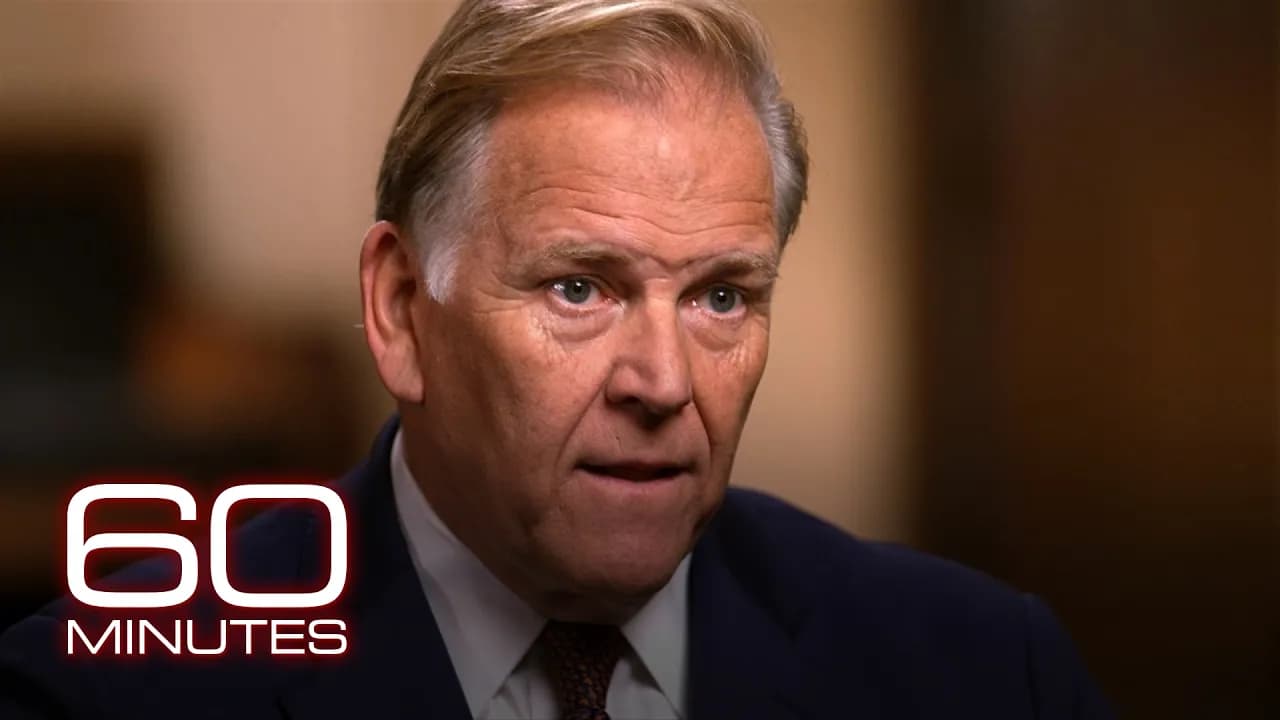
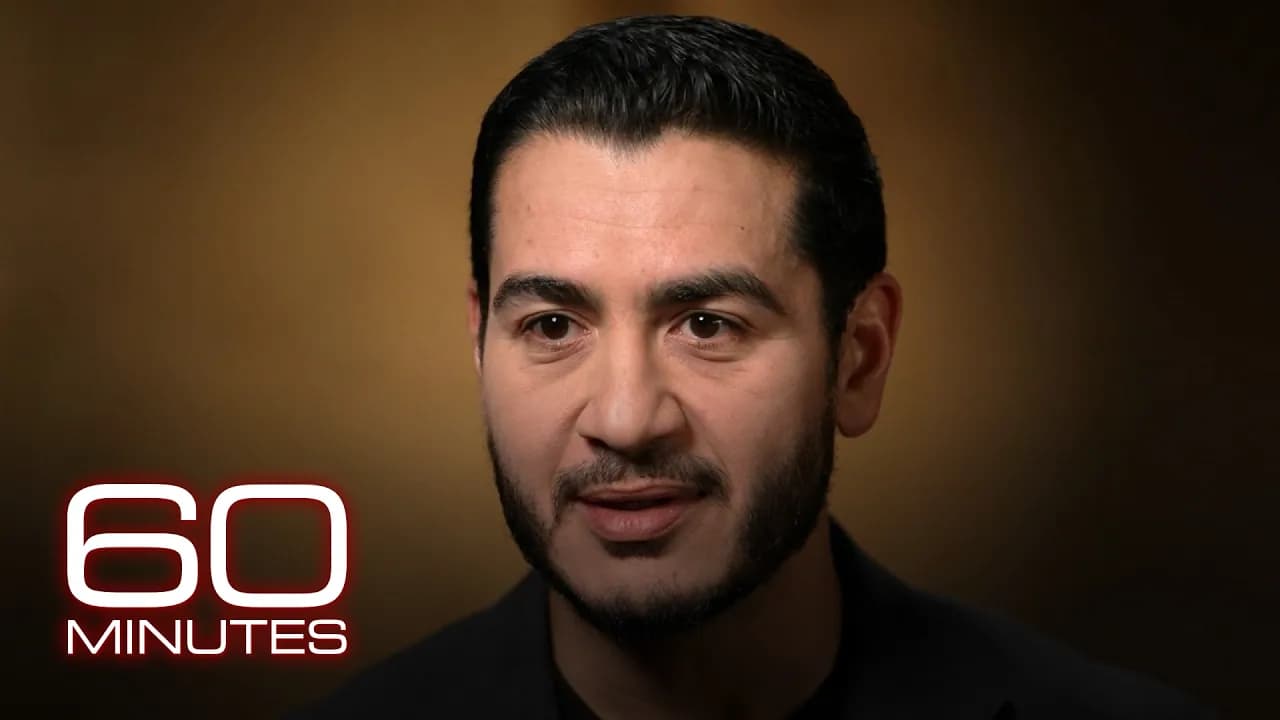
Michigan candidates Abdul El-Sayed and Mike Rogers: The 60 Minutes Interviews
In a Nutshell
Abdul El-Sayed, a progressive Democrat, and Mike Rogers, a traditional Republican, are locked in a tight Michigan Senate race that could decide Senate control. El-Sayed pushes Medicare for All, AI regulation, and an arms embargo on Israel, while Rogers focuses on literacy, jobs, and criticizing El-Sayed's Israel stance and alleged Muslim Brotherhood ties. The outcome hinges on whether Michigan voters prefer El-Sayed's transformative policies or Rogers' pragmatic, state-focused approach amid Trump's tariffs and unpopularity.
These notes were generated by AI and may contain inaccuracies.
This Tuesday, control of the US Senate may be decided in the battleground state of Michigan. The Democratic nominee, Abdul El-Sayed, could be the nation's first Muslim senator, running on transformation, busting monopolies, Medicare for all, and an arms embargo on Israel. The Republican candidate, former Congressman Mike Rogers, seeks to paint his opponent as a radical while focusing on Michigan jobs and education. Rogers faces the test of whether a Republican can win in the shadow of inflation, war, and President Donald Trump's unpopularity. El-Sayed faces the test of whether ideas that thrill the progressive wing of the Democratic party are what middle America wants right now.
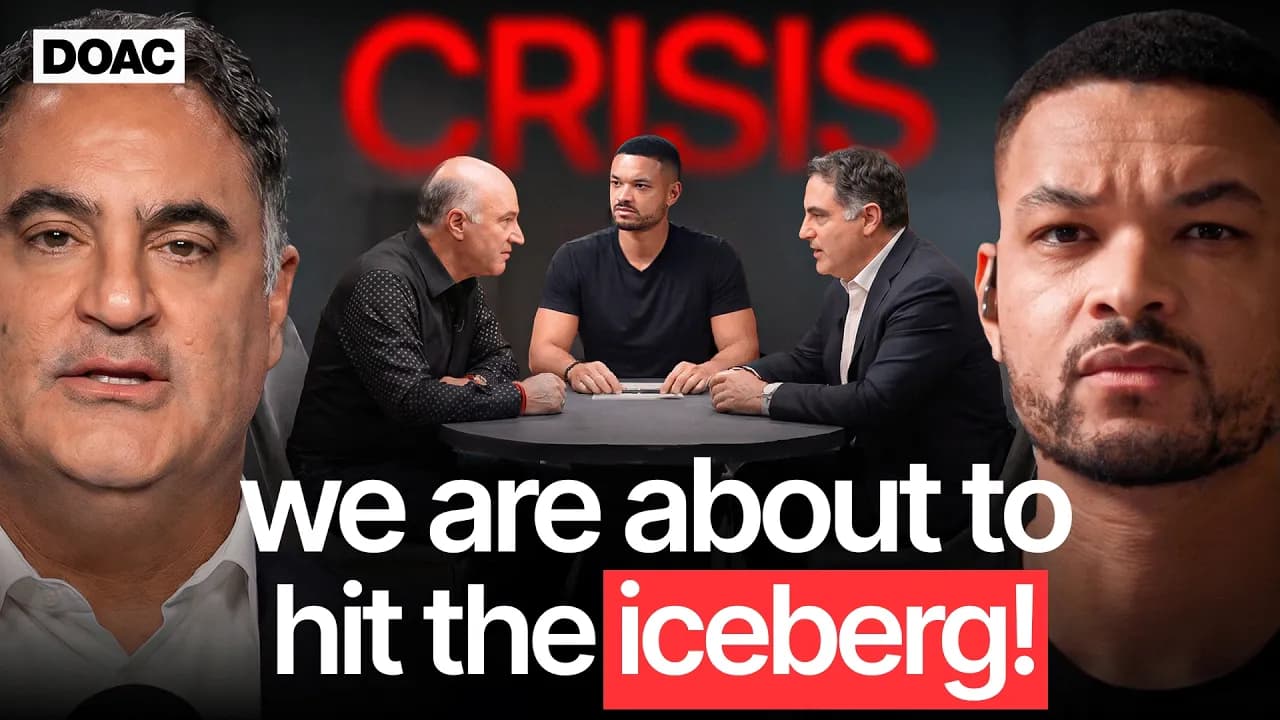
The contest is close, contentious, and has left the two men without a kind word to say about each other. El-Sayed called Rogers "kind of like a glitchy AI chatbot" while Rogers accused El-Sayed of "going after my mom." The candidates were interviewed in the home stretch of an expensive, bruising, and consequential Senate race.
The son of Egyptian immigrants, Abdul El-Sayed won the Democratic primary against a more centrist rival by a sliver of a percentage point. After a Rhodes scholarship and a medical degree from Columbia University, El-Sayed went straight into public health administration and then politics. He's often associated with the Democratic Socialists of America but isn't a member and keeps his distance from the label.
When asked to pick one economic issue that should be the priority for the next Congress, El-Sayed identified monopolies and oligopolies. He stated: "I'm a capitalist. If you read Adam Smith, he'll tell you the biggest risk to capitalism was never government regulation. It was always monopoly and oligopoly." When asked if he was ever a socialist, he responded: "No. I'm a capitalist who understands the idea that you should have guaranteed healthcare in the country. Anybody who tells you that's anti-capitalist is not really understanding how capitalism works."
El-Sayed is promising a version of Medicare for all that he says would leave private health insurance options intact, funded in part with a sweeping tax on billionaire wealth. On the trail, however, he says healthcare is no longer voters' top concern.
When asked what the most important issue is that he hears about from Michigan voters, El-Sayed identified AI. He explained: "It comes in in two different ways. One is students saying, 'So, I just took $60,000 in loans and the job that I was supposed to have on the back end doesn't exist anymore or might not exist in 10 years.' Or it's folks in rural communities who say, 'They're trying to put a data center in my backyard. I already can't afford my utilities, and I'm worried about what it's going to mean for our water.'"
El-Sayed wants a cabinet-level agency to regulate AI and a full pause on frontier AI research that some fear threatens the human race. He stated: "Full on pause. We need AI under democracy and AI under control."
Michigan hasn't elected a Republican to the Senate in decades. Rogers hopes to make that a virtue, stating: "This is a change election in Michigan and that's why I don't really care what's happening around the country. I need to fix Michigan." In a populist era, Rogers can sound like a throwback Republican.
When asked what the number one piece of legislation he'd want to work on on a bipartisan basis if elected to the Senate, Rogers identified reading and literacy. As a former army officer and FBI agent who left Congress after 14 years just as Donald Trump ascended, Rogers comes from a big military family spanning four generations. He noted that one of the big reasons for missing recruiting targets during COVID was that kids weren't reading well enough to pass the test, stating: "If we don't fix this literacy problem in America in 2026, we are all in trouble."
When El-Sayed recently took a bus tour with Democratic Socialist star Alexandria Ocasio-Cortez through Trump country in Michigan's Upper Peninsula, they weren't talking about literacy. The Democrat has been wooing MAGA voters while the 63-year-old Rogers has been going into predominantly Black neighborhoods that rarely see a Republican, trying to persuade African Americans that El-Sayed is taking them for granted.
Rogers stated: "He went to New York with AOC to talk about how they're going to change the world in 2028. You know what I want to do? I want to take care of Flint. I want to take care of every Michigander who has kids and grandkids who want to stay in this state."
For Rogers' pitch to work, Michigan voters have to believe that a Republican senator can fix a Republican president's policies. Trump's trade wars, especially the tariffs on Canada, Michigan's neighbor and trading partner, have cost the state an estimated $23 billion since January 2025.
Rogers stated he doesn't think the tariffs are helpful to Michigan or the automotive industry, and has raised concerns with the Secretary of Commerce, who responded "I'll get back to you." When asked why other Republican senators can't fix it despite having a Republican Senate majority, Rogers noted: "Well, you need one more Republican senator, though. That's how you do it." He said he would support overriding the president on tariffs if he couldn't work it out otherwise.
Donald Trump is going to come to Michigan. One of El-Sayed's attack lines is that a vote for Rogers is effectively a vote for Trump. The Republican candidate seems to be looking for daylight with the president while avoiding direct confrontation. Rogers supported the unpopular war with Iran but now says it needs to "wind down."
When asked if the Trump administration has a corruption problem, Rogers stated: "Well, I can tell you this. I'm an FBI agent by training. I worked on organized crime and public corruption. So, I'm going to act as United States senator with the best interest of Michigan." When asked about the president accepting a jet from a Middle Eastern nation, Rogers said: "That's not what I would have done. But that's, I don't think it's illegal for the president to do that."
It's a delicate relationship where President Trump needs Rogers to flip the seat and Rogers needs the president to turn out the party base. They campaigned together in Port Huron, Michigan last week where Mr. Trump trained his fire on El-Sayed, stating: "I'm here to keep a jihadist Muslim Brotherhood member from becoming a United States senator."
The president is talking about an Islamist movement whose offshoots were recently designated as terrorist groups. Rogers has also accused his opponent of having links to the Muslim Brotherhood, citing a 2012 letter that El-Sayed signed after the Arab Spring in support of Egypt's new democratically elected government, which was backed by the Brotherhood. El-Sayed has declined to comment on the letter but says he disavows the Muslim Brotherhood. He argues that Republicans are targeting his Islamic faith.
When asked why faith stuck for him, El-Sayed responded: "I think anybody of faith has on again, off again relationships with one's own faith. In my younger years, I certainly rebelled and it was something that kind of came back to me in college." When asked how faith shapes his politics, he stated: "There is this notion of speak the truth even if it be against yourself and I try to be like radically honest."
One place where El-Sayed casts himself as a truth-teller is the debate over US support for Israel. When asked what's wrong with America's relationship with Israel, he stated: "Number one we have been told that we are pursuing a two-state solution only to aid, arm and abet the very people who are trying to foreclose on the possibility of a second state. So, it's incoherent on its own terms. Number two, I don't know about you, but I don't pay my taxes to buy another country a bomb or a tank. That's Israel. That's Egypt. That's Saudi Arabia. That's Pakistan. Three, the state of Israel did a genocide."
Rogers stated: "His language is wrong. They use terms like genocide. Maybe I passionately defend Israel's right to defend itself and to exist as a Jewish state. That sets me at odds with my opponent right off the bat. He refuses to even acknowledge that Israel has the right to exist. I don't ever get the question of does Palestine have the right to exist."
When asked if Palestine has the right to exist, El-Sayed responded: "Yes. Does Israel have the right to exist? Yes. If there is a shared understanding. I believe in equal rights to peace, dignity, and self-determination for Palestinians and Jewish Israelis alike. If the Palestinian people decide and the Israeli people decide that they want two states for two people and they decide that on equal terms, I'm for it. If they decide that they want one state shared in a different way, I'm for that."
In a state with one of the nation's largest Arab American populations and about 100,000 Jewish voters, the Middle East is territory where the campaign's national and local elements converge. This past March, after a terrorist attack on a Michigan synagogue and preschool, El-Sayed condemned the violence, stating: "There is never a justification for attacking innocent people or houses of worship. Never." But he added "Hurt people hurt people," seeming to put blame on Israel. He later apologized.
Rogers stated: "There are Jewish students at University of Michigan that my wife and I talked to who have to hide their star of David to walk across campus because the harassment is so bad. Think of that."
In a close election, the Rogers campaign hopes that Jewish Michiganders, usually a reliable Democratic constituency, could be one of its keys to victory. When asked if he is saying enough to reassure those voters that he is on their side, El-Sayed responded: "Wherever our disagreements are when it comes to Israel, there are a lot more of things that we agree on here. When it comes to standing up for Jewish Americans, I will be right there."
However, the Jewish vote breaks, the state's more than 200,000 Arab Americans are expected to turn out to vote for El-Sayed in record numbers. It's one more variable in a race filled with them, where the winning Michigan coalition could be a national surprise.
When asked what's the biggest thing that would be different in US politics if he wins, El-Sayed stated: "The ability to run a campaign and win against big money by engaging with people, having a conversation about who we are and who we want to be." Rogers responded: "Well, I'm not sure about American politics, but I'm going to change the politics of Michigan for sure because you're going to have somebody who's an advocate for the state of Michigan."
One close race, two very different campaigns, and an election whose outcome will reverberate far beyond the state of Michigan.
Keep 60 Minutes in your library
Save the videos and channels worth coming back to, and find them again in one place.