Fitbit Air Long-term Scientific Review
In a Nutshell
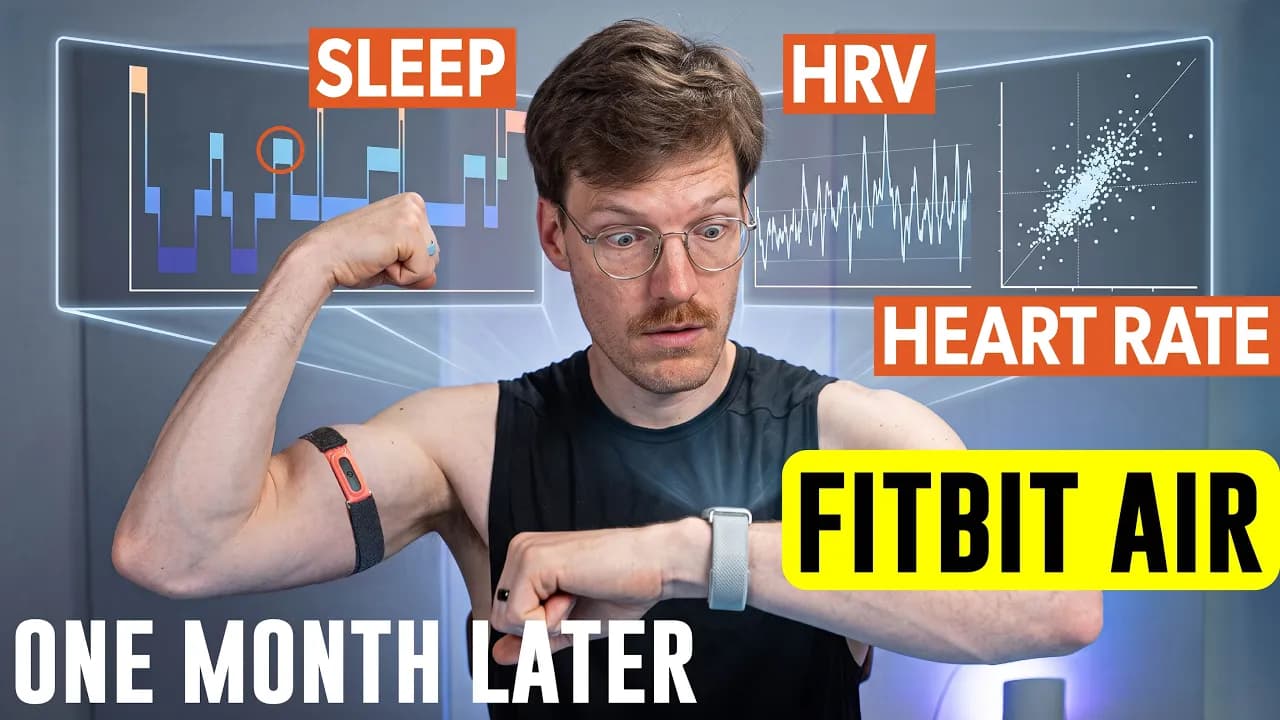
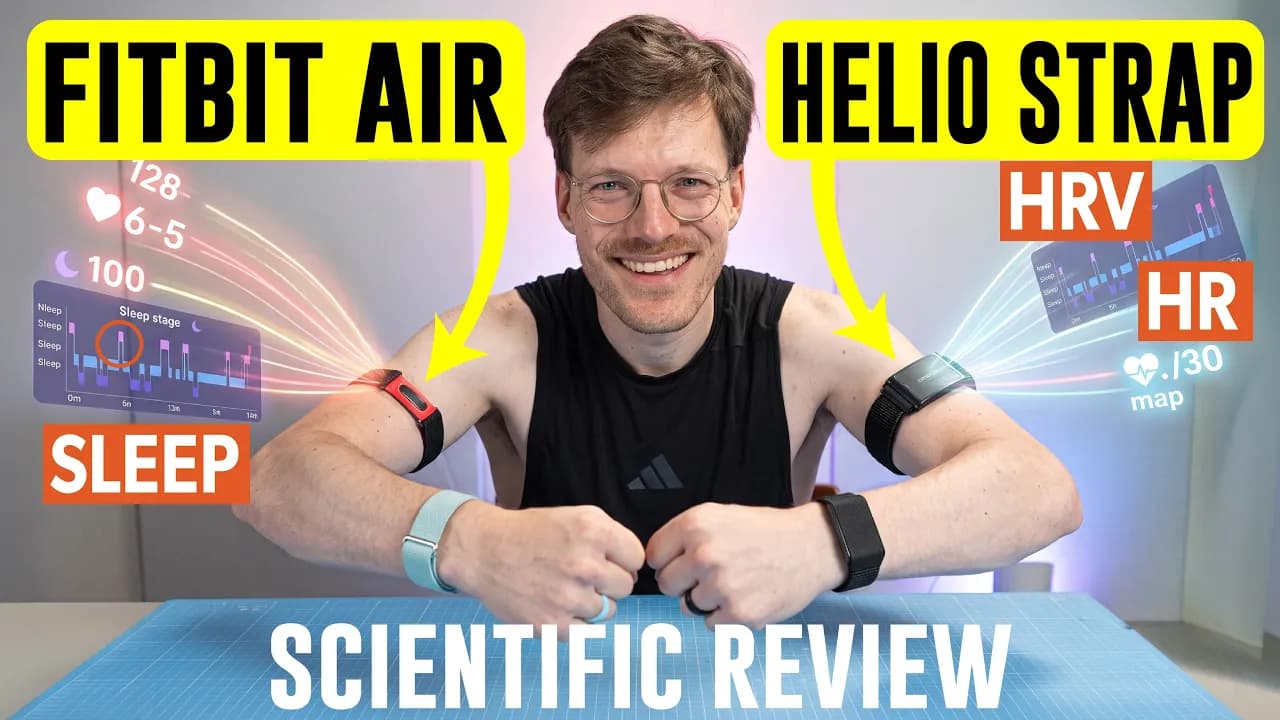
The Fitbit Air delivers excellent heart rate tracking (R=0.99-1.00 for cycling/running, R=0.94 for outdoor cycling) and ranks in the top tier for sleep stage accuracy (94% deep, 76% light, 79% REM vs. EEG reference). Weightlifting detection remains weak due to wrist pressure and automatic recognition failures. Overall, it earns 98/100 for HR and 83/100 for sleep, placing it among the best 2026 devices while offering flexible biceps/wrist wear.
These notes were generated by AI and may contain inaccuracies.
I've been using a Fitbit Air for several months in a passive "wear and forget" style without actively starting exercise tracking. Everything is done automatically, which led to interest in data quality for health and sports metrics, including automatic activity detection effectiveness, whether full exercises or partial exercises are monitored, nocturnal heart rate variability (HRV) measurements, and sleep stage accuracy.
The review focuses on unbiased data and data science to determine device performance. The reviewer is Rob, a postdoctoral scientist specializing in biological data analysis. Data was collected over two full months (September and October) with the device worn on the biceps for the most reliable data.
For stationary cycling, the Polar H10 chest strap served as the ECG reference on the horizontal axis while the Fitbit Air (worn on biceps) appeared on the vertical axis. Each point represents one heart rate measurement, with the blue line indicating perfect correlation. The correlation coefficient (R) reached 1.00, considered excellent. Individual cycling sessions showed high precision with entire exercise sessions monitored and the Fitbit Air (red) closely matching the Polar H10 reference (greenish-blue).
Running showed a correlation of 0.99, still very good. Most points clustered on or near the blue line, with only a small cluster indicating slightly lower heart rate detection for brief moments. Individual runs showed minor deviations, mostly at the beginning when the device may still be in low-frequency mode before detecting high-quality activity. Some breaks were detected as pauses in workouts, resulting in lost heart rate data during short breaks.
Outdoor cycling presented more difficulty with a correlation of 0.94, still fairly good. Some points showed low heart rate detection, with occasional slight delays in detecting heart rate rises. Performance remained very good overall despite these minor deviations.
Weightlifting proved the most difficult due to significant pressure on the wrist. The device sometimes detected very low heart rates in middle ranges. Since exercises weren't started manually, the Fitbit Air often didn't detect weightlifting sessions. Over two months, only two weightlifting exercises were started manually. Performance was uneven - sometimes accurate, sometimes missing heart rate peaks entirely. Results varied between different exercise types (back/biceps vs. chest/triceps).
The Fitbit Air performed better than approximately 80% of previously tested devices for indoor cycling, 63% for outdoor cycling, and 81% for both running and weightlifting. An overall score of 98 was calculated from the three correlations, resulting in an "excellent" rating for heart rate tracking.
Sleep stages were compared against the Z Max EEG device as reference, which measures brain waves and eye movements from the forehead and serves as the silver standard for sleep tracking. If the Fitbit Air matched exactly, all values along the yellow diameter would be 100%.
Deep sleep compatibility reached 94%, light sleep 76%, and REM sleep 79%. The device showed slight overestimation of deep sleep and occasional confusion between REM and light sleep. Individual night comparisons showed good deep sleep detection with slight increases detected by the Fitbit Air compared to the reference.
REM sleep detection conformed well, typically encountering difficulty near the end of nights when interrupted by wakefulness moments. Some REM segments were missed, particularly near night endings. Brief wakefulness moments were excluded from analysis due to potential electrode issues with the reference device.
Among devices tested or released in 2026, the Fitbit Air ranked among the best performers. All Fitbit devices (including Fitbit Edge, Fitbit Air on wrist, Fitbit Charge 6) clustered in the same high-performance area, indicating consistent algorithm performance. Other strong performers included Apple Watch Ultra 4, Salis 12, and the original Oura ring. The Eight Sleep Pod performed best overall but costs significantly more than the Fitbit Air.
A sleep score of 83 was calculated as the average across three sleep stages, resulting in an "excellent" sleep rating. The reviewer expressed confidence that wrist-worn performance would match biceps results.
Nocturnal heart rate showed good overall match with the ECG reference, though the device appeared to have a minimum detection threshold around 37-38 beats per minute, refusing to register lower values even when actual heart rate dropped to 34 bpm. Average heart rate during low-heart-rate nights showed slight elevation compared to reference (40.5 vs 38 bpm), but the order of nights remained consistent.
HRV tracking showed systematic bias with the Fitbit Air recording lower values than ECG measurements, particularly at higher variability ranges. However, the ranking of nights remained nearly identical between devices. The three nights with lowest and highest HRV matched between reference and Fitbit Air, making the absolute values less critical since users compare themselves to their own baseline.
Google's Health Guardian feature monitors blood pressure trends, insulin trends, and provides high/low heart rate alerts. Blood pressure monitoring showed no increase detected during October and November. Insulin trends indicated low diabetes risk category. Low heart rate alerts may produce false positives during sedentary periods, while high heart rate alerts occur rarely enough to be potentially meaningful when received.
Automatic activity detection has improved with more activity types detectable, including differentiation between cross-country and regular running based on location data, and recognition of recurring activities like Wednesday tennis. The app interface remains cluttered but contains comprehensive information and ranks better than many competitors.
The Fitbit Air can be used on either the biceps or the wrist, providing flexibility for different preferences and use cases. Viewers are encouraged to subscribe to the channel for future content and updates.
When purchasing the Fitbit Air, Whoop belt, Amazfit Helio belt, Garmin Scurvy Polar Loop, or Fitbit Air biceps belt, using affiliate links provided below costs nothing extra and may provide discounts in some cases. A general Amazon affiliate link is also available, which can be set as the default shopping method on Amazon without incurring additional fees. This supports the channel with every purchase made, including everyday items like toilet paper or coffee beans.
After watching this video about the Fitbit Air, viewers should check out the comparison between Fitbit Air and Garmin Scurvy, as well as a separate video about the recommended sleep optimization device called A Sleep Pod.
Keep The Quantified Scientist in your library
Save the videos and channels worth coming back to, and find them again in one place.