Fitbit Edge - Fitbit Air "Upgrade"?
In a Nutshell
The Fitbit Edge is a Fitbit Air with a screen, built-in GPS, altimeter, ECG, and skin temperature sensor, priced at $180. Heart rate accuracy matches the Fitbit Air on the wrist but is significantly better when the Air is worn on the biceps. It offers 7-day battery life, automatic activity detection for over 100 exercises, sleep tracking comparable to top devices, and Google Health Premium features like AI coaching.
These notes were generated by AI and may contain inaccuracies.
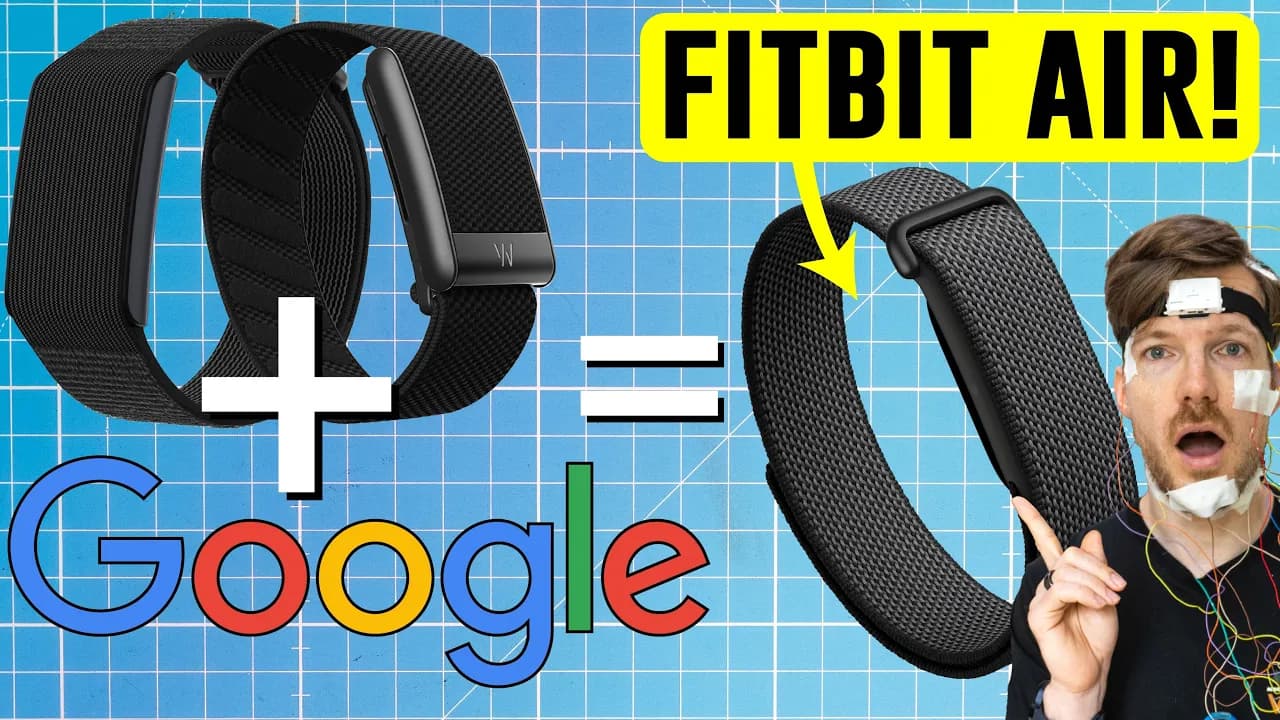
The new $180 Fitbit Edge is essentially a Fitbit Air with a screen, but the Fitbit Air is really just a Fitbit Charge 6 without a screen. The Fitbit Edge, Fitbit Air, and Fitbit Charge 6 all have almost the same devices in terms of measurements. The Fitbit Edge can be thought of as a Fitbit Air with a screen, built-in GPS, and many more sensors and features. This is not a full review yet, as the review ban still has about two weeks to go.
The optical heart rate sensor in the Fitbit Edge is based on the same sensor technology found in the Fitbit Air, and is related to what we saw in older Fitbit devices such as the Charge 6. Therefore, its heart rate measurement performance should generally be on par with the Fitbit Air. Compared to the Fitbit Air, the Edge sensor has hardware that includes an electrocardiogram (ECG) function and a dedicated skin temperature sensor. Electrocardiography (ECG) is not permitted on all devices in all countries. The way the device is worn, its weight, its position on the body, the processing algorithm, and the type of exercise can make a big difference to accuracy. Although the actual sensor is almost the same as the one in the Fitbit Air, we cannot automatically assume identical results.
One of the advantages of Fitbit Air is that it can also be worn on the biceps. The Fitbit Air performed best when worn under the shirt on the biceps. Optical heart rate sensors often get more accurate signals from the upper arm compared to the wrist, especially during activities that involve a lot of wrist movements. In theory, you might find a way to attach the Fitbit Edge to your upper arm, but in practice, that would almost negate the purpose of the device, and you would need to start exercising somehow. Since there is no screen, the device was specifically designed to display and start exercises. If you are wearing long sleeves, reaching that screen may be difficult and uncomfortable. For most people, the Edge will be a device worn only on the wrist. This may put the device at a disadvantage because you have to wear it on your wrist, making it always visible, and you cannot hide it.
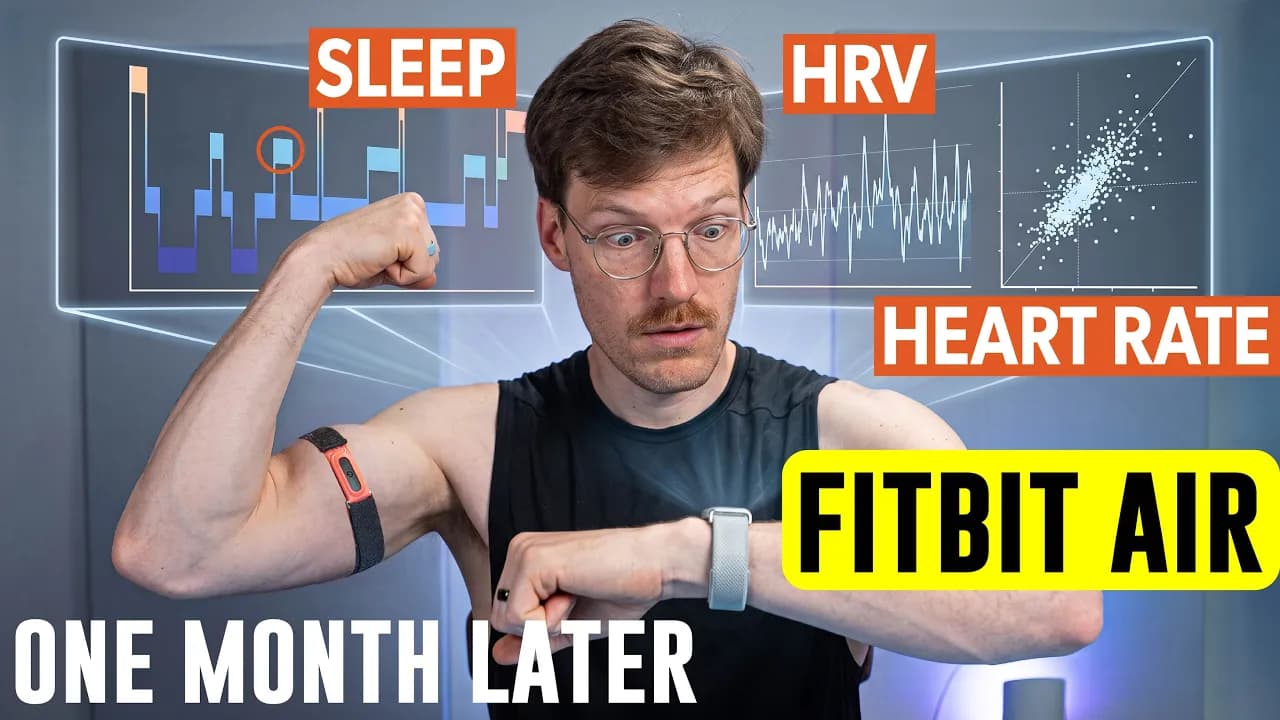
Tested the Fitbit Air during several exercises such as indoor cycling, outdoor cycling, running, and weightlifting. Used a correlation coefficient with a reference device. For indoor cycling, the correlation coefficient is 0.99 when worn on the wrist, outperforming 61% of the devices tested. For outdoor cycling, the correlation coefficient is 0.92 when worn on the wrist, outperforming about half of the devices tested. For running, the correlation coefficient is 0.99 when worn on the wrist, outperforming 80% of devices. For weightlifting, the correlation coefficient is 0.93 when worn on the wrist, outperforming 72% of the equipment. When transferred to the biceps, all measurements improved: correlation coefficient of 1.00 for indoor cycling, outperforming over 80% of machines, better than 80% of machines for cycling, better than 91% of machines for running, and better than 82% of machines for weightlifting.
The Fitbit Edge will give you live stats on your wrist with visual training and a physical button to navigate. The screen also makes the Edge more useful as a traditional fitness tracker. You can see your heart rate and other exercise data without taking out your phone. While running, Edge can give you directions, such as increasing or decreasing your effort or maintaining your current speed. During strength training and intense workouts, it can display directions for recording weights and repetitions. The screen will consume battery power, making the device slightly larger to accommodate a larger battery. The battery rating for both the Fitbit Air and Edge is almost the same at 7 days.
The Fitbit Edge has its own built-in GPS, while the Air relies on your phone for GPS. In the United States, the supported satellite systems for the Edge device are GPS and Galileo, while outside the United States, there are GPS, Galileo, GLONASS, BeiDou and QZSS. The improved GPS algorithm that was released with the Pixel Watch 5 will not be available on the Edge. Google claims GPS tracking accuracy up to 40% higher than Fitbit Charge 6. Edge should also have an altimeter, so that it can measure changes in elevation due to hills, stairs, or climbing. It can automatically detect and record selected external activities if you forget to start them manually.
Google says you'll get up to a week of battery life, and a full charge takes about an hour and a half. If you charge for just 5 minutes, that should be enough to provide power for a whole day. The replaceable battery is a particularly interesting feature. Google says this is the first Fitbit device designed with this option, which could actually extend the product's lifespan.
Many of the basic tracking features will not require a Google Health Premium subscription. Edge supports more than 40 workout modes, live workout metrics, automatic activity recognition, GPS tracking, elevation tracking, post-workout summary, steps, distance, speed, heart rate minutes, VO2 Max, heart rate load, and readiness. You can transmit your exercise heart rate directly via Bluetooth to compatible fitness equipment. Edge is getting the updated automatic activity detection feature from Google. This new system should be able to recognize more than 100 types of activities and use information from your movement, as well as your exercise history, routine, and location, to be able to differentiate between the various identified activities. The system is supposed to be twice as accurate and produce 50% fewer detection errors. The updated automatic activity detection feature will also come to Fitbit Ace and Pixel watches.
Edge tracks your heart rate throughout the day and night, and stores your heart rate every two seconds. The actual internal sampling frequency is likely to be much higher with the processed heart rate value stored at a two-second accuracy.
Health Guardian features monitor your health over the long term and can notify you if anything changes in a negative way, or possibly a positive one as well. These features have already been announced for the Pixel Watch 5 and will also be coming to the Fitbit Air. The most interesting trends are blood pressure trends and insulin resistance trends. These features use patterns in your data such as heart rate, sleep, activity, and skin temperature to detect potential long-term trends. These features are not clinical readings, but they give you an indication that you may want to get tested.
Edge uses Google's latest sleep-tracking algorithm, which is essentially present in all of their devices. Tested the devices by comparing Google's devices to an electroencephalogram (EEG) machine that can measure brain waves. All Google devices performed similarly in recent tests. The best devices have most likely included Google devices for some time now. Both versions of the Pixel Watch 5, the Pixel Watch 4, the Fitbit Air on the biceps, the Fitbit Air on the wrist, and the Fitbit Charge 6 are all among the best performing devices alongside Apple Watches, the Whoop Strap, the Oura Ring 4, and the Eight Sleep Pod.
The Google Health Coach uses Gemini technology to integrate your fitness, sleep, and health data to provide personalized guidance. This part is paid and requires a Google Health Premium subscription. It can create weekly fitness plans and modify those plans when your schedule changes, and it suggests exercises that can be started directly from the Fitbit Ace. The Fitbit Ace includes a 3-month subscription to Google Health Premium for new and returning users, but after that it costs $10 per month.
The Fitbit Ace can deliver phone notifications, control music on a Bluetooth-connected media player, and display turn-by-turn navigation directions from Google Maps. When paired with an Android phone, the Ace device can send quick replies to text messages directly from the watch. You can control the music playing on your phone, but you cannot store music on Ace to listen to offline. It also lacks NFC technology, which means there is no Google Pay service on it.
By default, you will get a silicone band in one of four colors: black (obsidian), foggy gray (fog), olive (olive), and brick red (canyon). These come with a case in matte black, brushed silver, satin pyrite, or champagne gold respectively. There are also many additional belts. The performance loop exercise band allows you to adjust it to fit your wrist perfectly. There are also magnetic silicone bands and metal bands made of stainless steel. The small strap fits wrists measuring 130 to 170 mm, while the large strap fits measurements between 170 and 210 mm. There is a special "Stephen Curry" edition available in the United States, Canada, and parts of Europe, the Middle East, and Africa.
The Ace is essentially a Fitbit Air that has been transformed into a traditional fitness tracker with a screen. You get a built-in GPS system, altimeter, electrocardiogram (ECG), and a dedicated skin temperature sensor. Live workout statistics, navigation, notifications, timers, alarms, and device controls are now available. You will also get a replaceable battery and access to a much larger training system. The Ace is larger, more expensive, and may cause distraction, whereas the Fitbit Air is a device you wear and completely forget about. The accuracy of the heart rate monitor is difficult to wear on the biceps, and that is where the Fitbit Air gives much better results. The Fitbit Edge costs $180 in the United States. Pre-orders begin on October 12, and it will be available starting October 27. The Fitbit Edge looks like an interesting compromise between a simple, screenless tracker and a fully-fledged smartwatch.
Keep The Quantified Scientist in your library
Save the videos and channels worth coming back to, and find them again in one place.