Friars turn to AI for restoration of the Basilica of Saint Francis | 60 Minutes
In a Nutshell
After the 1997 earthquakes destroyed parts of the Basilica of Saint Francis of Assisi, restorers recovered over 80,000 fragments but could not reassemble them manually. A team led by Giovanni Belli is now using gigapixel photography, laser scanning, and AI to create an ultra-high-resolution digital twin of the basilica and to match the remaining fragments. The project aims to enable precise future restoration and make the art accessible worldwide through VR.
These notes were generated by AI and may contain inaccuracies.
Saturday marked the 800th anniversary of the death of one of Christianity's superstars, St. Francis of Assisi. Every year, millions of visitors flock to the Basilica in Assisi to celebrate the miracles attributed to one of Italy's patron saints. That the church is still standing is a miracle itself. It has survived war, fire, and flood, but nothing left more devastation than a pair of powerful earthquakes that struck in 1997, cratering the roof and leaving countless art treasures permanently damaged. Now, a team of art historians and software engineers have joined forces with the Franciscan friars to try to finish the restoration. This time with the help of digital wizardry and artificial intelligence.
Seven centuries ago, the friars knew a good location when they saw it. What was once a barren hill in Umbria, where criminals swung from gallows, was transformed into the Basilica of St. Francis of Assisi, the magnificent resting place of one of Christianity's most beloved saints. Sometimes called the original hippie, Francis rejected his family's wealth for a life of poverty. Medieval masters couldn't resist the story of the radical monk and lined up to paint it. But in 1997, the great church almost came crashing down. Two quakes hit one after another. A section of the soaring roof collapsed. A thick mushroom cloud filled with the soot of priceless art rolled down the aisle. Four people were killed by falling rubble. Everything was destroyed, was unsafe.
Friar Julio Chesareo, like Julius Caesar, but with an O, told us he was a student here at the time. Earthquakes still scare him. "I am always terrified. If I have the impression that there is something shaking, maybe it's just the wind. Immediately I feel, you know, sort of cold coming from inside." The damage was a shock for the Italian country. It was a shock that galvanized a desperate salvage operation. Restorers worked to heal the broken bodies of the saints. It was painstaking work and not all the pieces fit. 30 years later, some of the frescoes are still pockmarked, the walls bare.
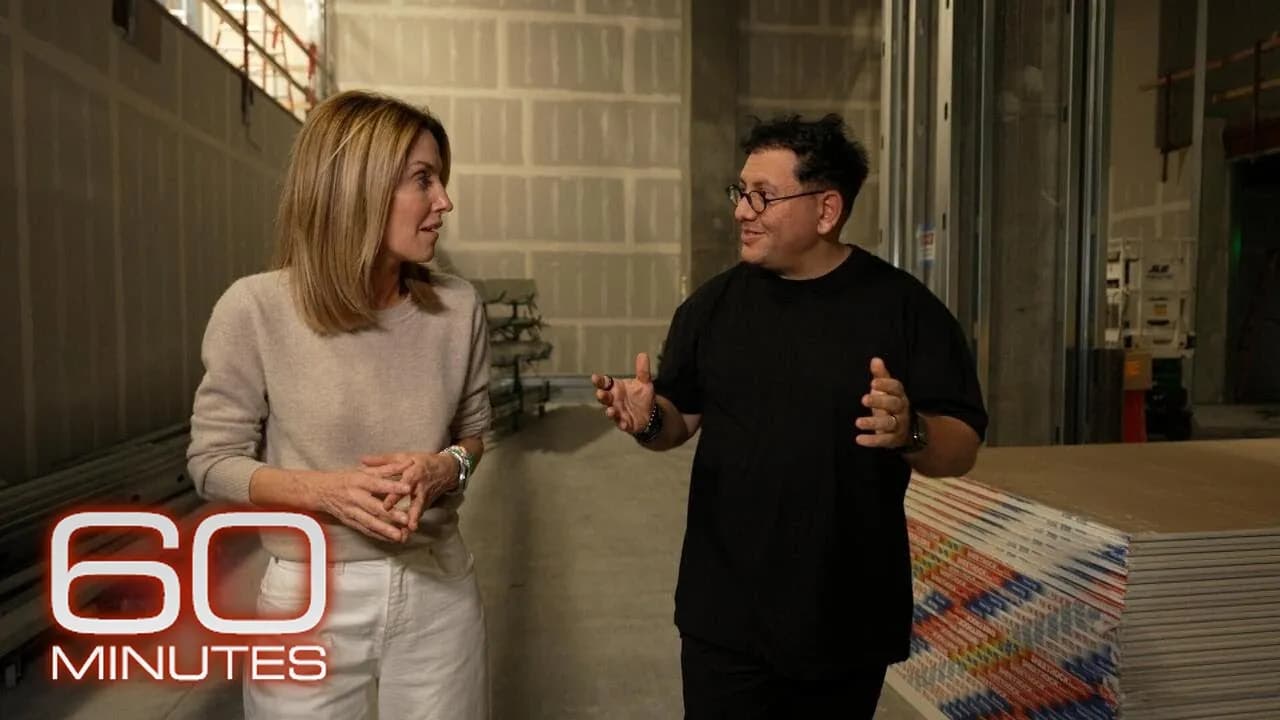
No wonder the friars jumped at the chance to use 21st century technologies to restore their 13th century home. "Right now we are digitizing in a super high definition this fresco which is St. Francis talking to the arts chapter." Giovanni Belli is leading the project to create a digital twin of the basilica. Belli is the CTO of Hala Defiion, a technology company that specializes in ultra high-definition gigapixel photography. "This is no ordinary camera. It's a robotic camera that we use to take super high definition images. So, you can see all the smallest details of the work of art, the strokes of the painting, of the brush. You can see everything has great detail." A gigapixel is three orders of magnitude above a typical mobile camera's 50 megapixels, reaching a billion pixels. "You with your camera and the pictures can see things that the human eye cannot."
Using cameras, drones, and lasers, Belli's team will take hundreds of thousands of pictures, stitching them together to create the most high-resolution 3D blueprint of a building ever made. If disaster strikes this earthquake zone again, restorers will have an exact road map to rebuild. For Sergio Fusetti, a survivor of the 1997 quakes and chief restorer, those words are bittersweet. For him, high-tech help arrived too late. He asked us to follow him down a narrow passageway to the hidden storage rooms beneath the church. The lock was rusted. No one had been here in months. Then another dusty hallway. Another lock. Until finally Fusetti showed us why we were here.
A rare look at more than 80,000 fragments from the 1997 quakes. All neatly cataloged and in purgatory. "You have no idea where these go?" "No." "We have tried everything." He showed us some of the larger pieces still stored in a box. "So, it's like a jigsaw puzzle." Fusetti told us he'd toiled for years trying to finish the job. But despite his best efforts, he's left with a heap of plaster chips, each an irreplaceable part of a 13th century masterpiece. When you are able to fit a piece back where it belongs, does it feel like a restoration or does it feel like a resurrection? It was an ongoing gamble, he told us. Sometimes you work all day and place just one fragment, but sometimes we found the pieces, and it was deeply satisfying. Fusetti says he's gone as far as humanly possible. "Only artificial intelligence can help us now," he told us.
Upstairs, the digital cavalry was galloping on. Giovanni Belli told us he plans on using AI to fit together the leftover chips and to tackle other problems like cracks in the paintings, discoloration, layers of paint, lifting. That kind of analysis done by hand and with the eyes of a physical person would require years to just do one round of the whole building and with AI, minutes. But Belli has more in mind than just preserving the basilica. The company hopes to use AI to make art more accessible, starting by making a trip to the museum more like the movies.
The same technology is being used to open up Italy's hidden treasures. One day last June, we descended 60 feet beneath the streets of Rome. Under an ordinary parking lot was something extraordinary. The remains of thermal baths built by a Roman emperor from 200 AD. A laser scanner captured details of rooms with 30-foot ceilings and delicate mosaics. These ultra high-definition cameras have revealed hidden chambers and passageways forgotten by history. And then there's time travel. We ended up in ancient Pompeii at a party. "Looks like they're having fun at this party. The wine is flowing." With virtual reality goggles, visitors can look their ancient hosts in the eye. "Somebody's playing the pipes. Somebody else is playing a harp. People getting drunk." Belli hopes to use VR headsets to allow users to step inside some of Italy's most famous paintings.
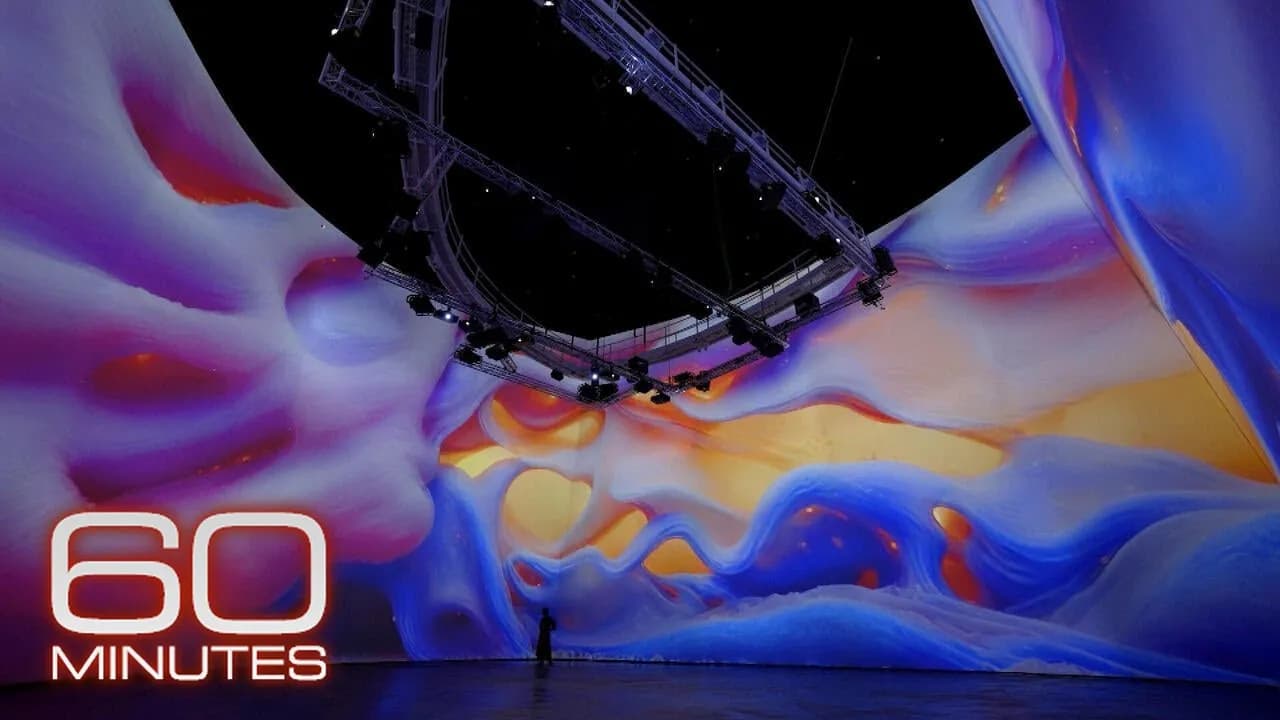
"When I founded one of the companies that built this kind of technologies, I was a software engineer, pretty new to the art world. And the main question that I was focused on is a kind of philosophical one. How good can the digital representation of a physical object be? What is missing?" "So it sounds like you're trying to put the soul into the technology." "Yeah. You can see you can say that. Yeah. It's nice." Belli admits the technology can't duplicate the emotional impact of standing in front of a work of art. Not yet. But strapping on VR goggles could make lessons like this a thing of the past. "There are scenes with people sitting listening to sermons. You could actually enter that group. Yeah, why not? You can have a walk around, even fly around. Why be stuck to the ground? You can walk on the ceiling and see how the stars feels under your feet. You can run let your fantasy run wild."
As the sun set on another azure sky in Assisi, we followed in the sandal steps of the friars who've walked these halls for centuries. We wanted to ask Friar Julio Chesareo if he had any qualms about using artificial intelligence as a custodian for the legacy of St. Francis. "The biggest benefit for me, it's not the technology for itself. The technology is not a purpose. It's a tool. It's a tool to reach the goal. The goal is sharing this treasure which is a treasure of faith and beauty. Technology helps us to go further away to reach more people than we could before and in a more efficient way." The Basilica's digital twin will be complete next year and available to the public. The friars told us they are hoping it will turbo boost the spirit of St. Francis both in the heavens and the cloud.
Keep 60 Minutes in your library
Save the videos and channels worth coming back to, and find them again in one place.