When AI becomes a paintbrush, is it art?
These notes were generated by AI and may contain inaccuracies.
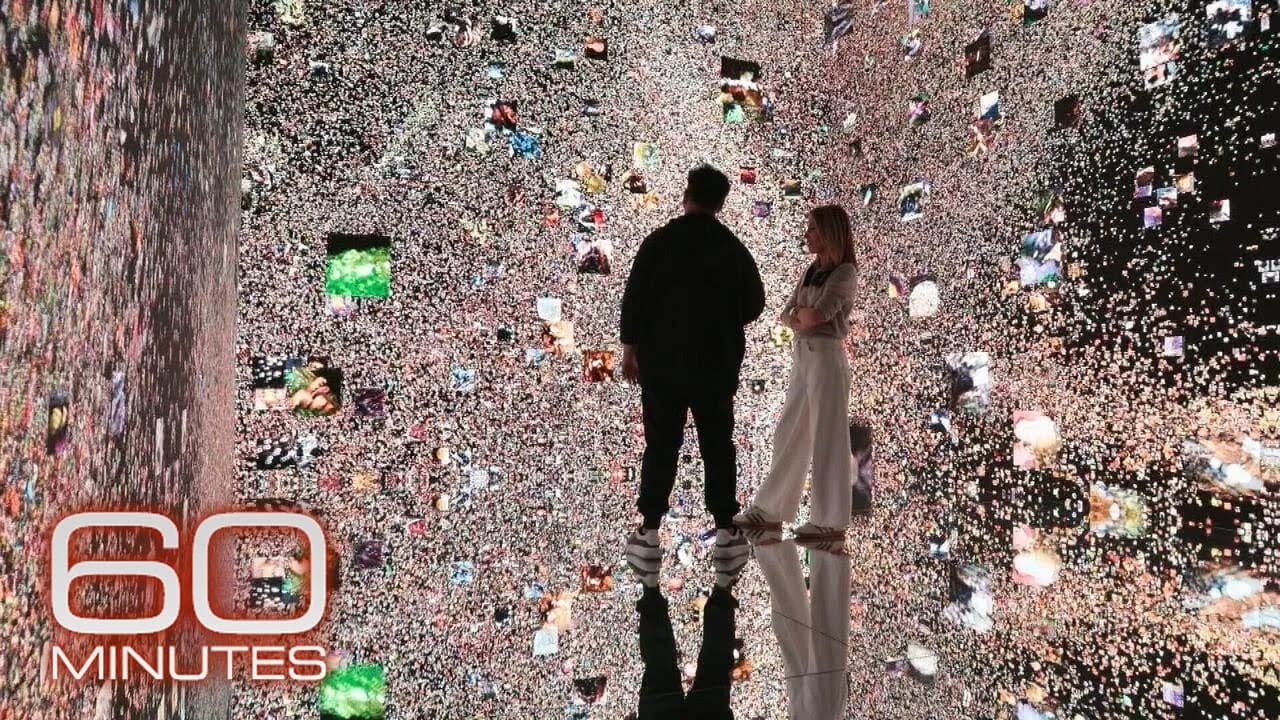
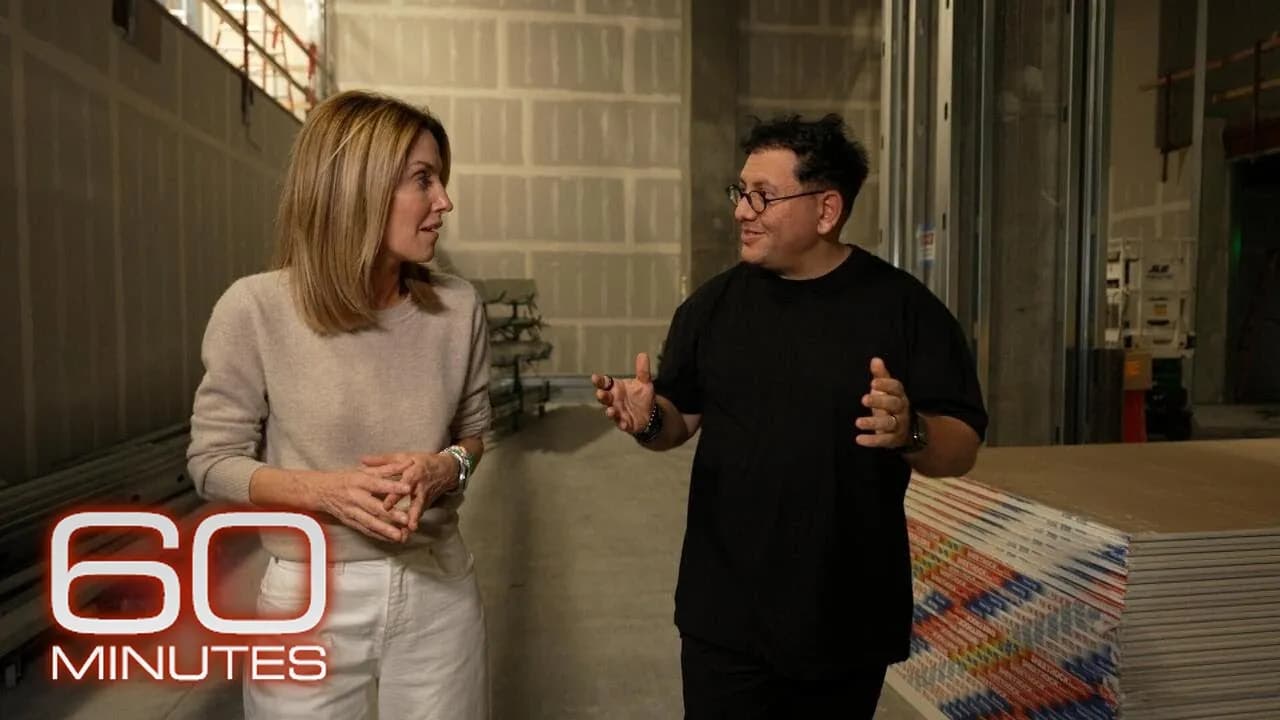
60 Minutes overtime. So, is this always changing? Yes. You'll never see the same thing twice. Like a living artwork. This week on 60 Minutes, we take a look at the world of AI art. Our subject is Rafi Anidol, a 40-year-old Turkish American artist who's considered a pioneer in this art form. He uses AI to create his art and it all uses data, lots of it. For this piece, he used 200 million photos of Earth. Data from NASA was the driving force behind these exhibits.
When I think about data as a pigment, I think it doesn't need to dry. It can move in any shape, in any form, any color and texture.
It sounds a little trippy. It is trippy because as artists we ask, what is beyond reality? Anidol's works have appeared at some of the world's top museums.
We wanted to know how AI creations stack up in the art world.
Right now, AI art seems to be an average of averages that are being trained on further algorithmically generated averages. So rather than becoming better, it's becoming vaster and more average.
Jerry Saltz is the Pulitzer Prize-winning art critic for New York Magazine.
I want the algorithm to experience death. I want the algorithm to know the feeling of feeling like you have a fat neck or bad hair or that you're too short or too loud. I want to train the algorithm to experience carnality in so far as without sex and death there is no art.
When you hear people getting so excited about AI art in this moment, what do you think?
What I think is that artists fear AI. They fear being replaced. We all have a latent fear of being replaced by AI. I guess I think that we will be on some level and we have to make ourselves better or more useful or more unique at what we do in order to keep our jobs.
I like to think of it as a material. Artists use materials. A digital file is a material. I wish it well and I would never ever ignore it.
You wouldn't ignore it because because it is a tool. It's like saying, "Here's some oil paint." And I go, "I'm against oil paint." It's like saying, "I'm against the novel." You don't know until you read the novel. If you're against it,
is it ethical to create work based on other artists work?
There are no laws in art. I'm sorry. You know, we as much as we try to legislate it, you can't. And every artist is a shaman pirate living on the edge of the village. They have their own idea of what they're going to do. You give them a tool, they're going to use it, and they're going to take anything they can. All art comes from other art. And they're going to use other art to make this art.
Do you think you're going to see good art in your lifetime that was created using AI?
Yes, I do. I think that I've already seen art that has used AI be good.
But you notice I don't say AI art. You said will AI art become good? I say art that utilizes AI will become good. And that's the difference to me.
Last year, artist Rafi Anidol used AI to create an exhibit at the Guggenheim Museum Bilbao in Spain. He built the project around the architectural legacy of Frank Gehry, the legendary architect who designed the museum itself, training a custom-built AI model on a vast archive of open access photos, sketches, and blueprints of Gehry's work. This is how the system interpreted all that material. Jerry Saltz called a similar installation a glorified lava lamp. What do you think? Is this art?
Heat up here. Heat up here. Heat. Heat.
Keep 60 Minutes in your library
Save the videos and channels worth coming back to, and find them again in one place.