Garmin CIRQA - Finally! Everything We Know!
In a Nutshell
Garmin's new Circa smart band is a $200 screenless tracker that competes with Whoop and Fitbit by offering no-subscription core features, a side button for manual activity start, and an optional $10 biceps band for better HR accuracy during lifts or cycling. It integrates seamlessly with existing Garmin watches and provides full access to metrics like Body Battery, Training Readiness, sleep stages, and HRV through the Connect app, though it lacks built-in GPS. Key unknowns remain around wrist vs. biceps accuracy, automatic workout detection quality, and multi-device data handling, which will determine if it justifies double the price of rivals.
These notes were generated by AI and may contain inaccuracies.
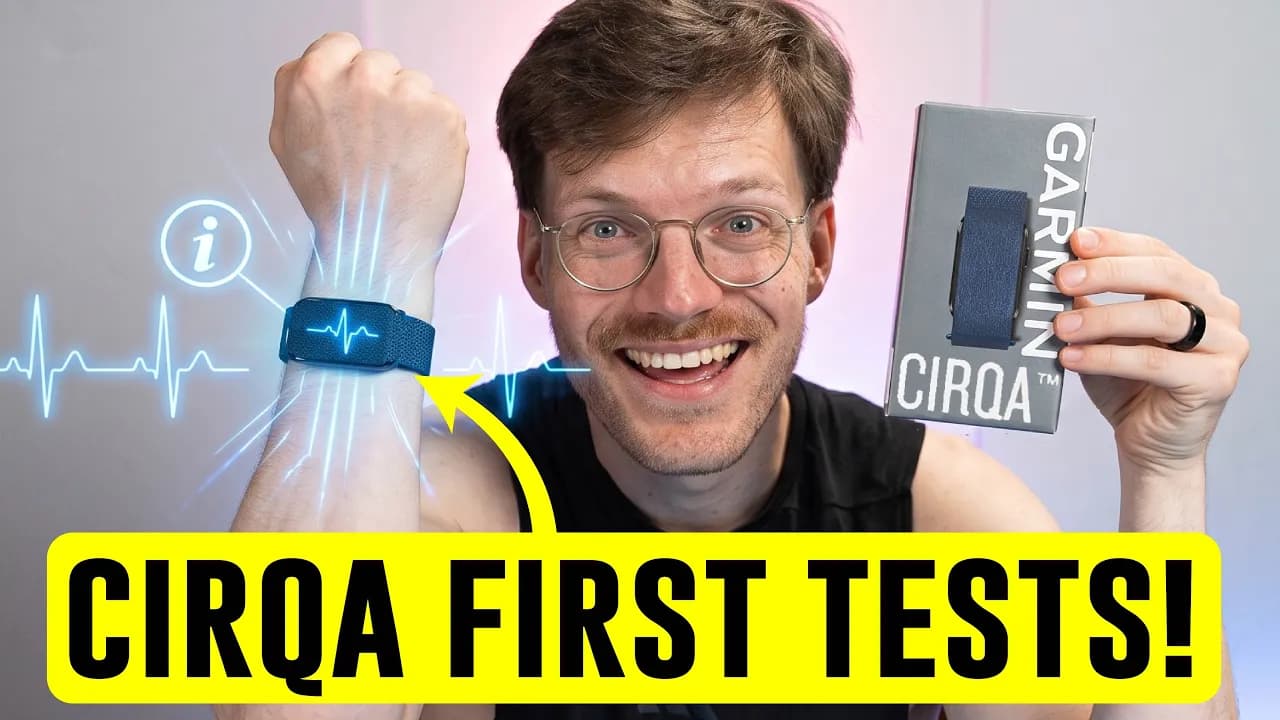
Garmin has officially announced the Circa Smart Band, positioned as the first real competitor from Garmin to the Whoop strap, Fitbit Air, and Amazfit Helio strap. The device launches with a biceps band option. It costs $200 in the United States and €200 in Europe, making it twice the price of the Fitbit Air and Helio Strap. The Circa does not require a subscription for the main health and fitness features and promises up to 10 days of battery life.
The basic idea is similar to other screenless devices: the Circa continuously collects health, sleep, and activity data and sends everything to the Garmin Connect app rather than displaying it on a screen.
The most immediately visible difference is the button on the side. The Circa can track more than 80 activity types. Most activities can be selected through the Garmin Connect app, while the side button can be configured to start one of your favorite activities directly from the band. This is a useful feature. Updates may allow long presses and double presses to trigger actions, though this is not supported at launch.
The device has no screen or menus, but users can explicitly tell it when to start a specific workout. This may help avoid uncertainty associated with automatic workout detection, such as missing the start or end of an activity.
The Circa also detects certain activities automatically, including walking and running. In the Garmin Connect app afterward, users can edit, confirm, or delete the activity. Garmin states the band will use this feedback to adapt and classify future activities more accurately, similar to how the Fitbit Air does it. Garmin has not provided enough technical detail to determine how personalized the system is, how quickly it adapts, or how much it will improve over time.
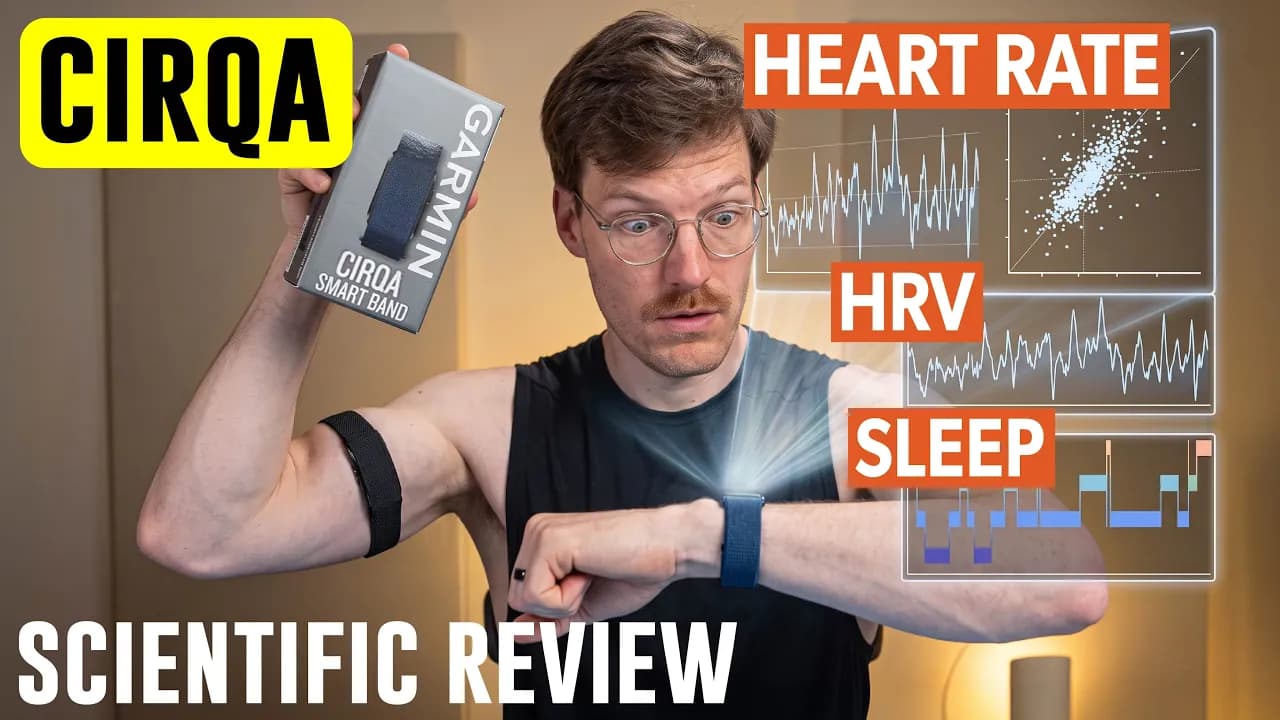
The Circa launches with an optimal armband accessory, allowing wear around the biceps in addition to the wrist. The biceps band is available separately and is not included with a standard Circa purchase. It is only available in black and costs $10 more. Purchasing the Circa with the biceps band totals $260.
The biceps band is considered one of the best upgrades to a screenless wearable. It is useful during strength training and biking because wrist movement and gripping may interfere with optical heart rate measurements, and signals are usually better on the biceps. It may also be more convenient for people who want to wear a conventional watch on the wrist and hide the device.
The existence of the biceps band does not automatically guarantee better accuracy. Rigorous testing will be required.
The Circa is relatively light. The sensor module weighs about 15 g. Total weight with the wristband is approximately 21 g. It uses a fabric strap and is rated up to five atmospheres for water resistance. The device is designed for continuous daytime and nighttime wear.
The Circa covers much of what is available on Garmin's current watches. It measures continuous heart rate, resting heart rate, heart rate variability during sleep, respiration, stress, blood oxygen saturation, and skin temperature. It provides Garmin metrics including Body Battery, sleep score, Training Readiness, Training Status, VO2 max, workout benefit, and recovery time.
The sensor appears to be a version of the older Elevate V4 sensor, not the newer V5. The charging port is the standard Garmin charging port with no magnetic attachments.
The main health and fitness functionalities do not require a subscription. There is an optional Garmin Connect Plus subscription for additional services including live activity, selected Garmin Coach plans, nutrition tracking, guided content, and Garmin Active Intelligence. There is no mandatory subscription, but users can upgrade with a subscription.
The Circa does not have built-in GPS. It can use GPS from a connected smartphone to record routes, distance, and pace during outdoor walks, runs, and cycling, requiring users to carry their phone for GPS data.
The band can broadcast heart rate data over ANT+ to compatible Garmin devices, including Garmin Edge cycling computers, allowing it to function as an external optical heart rate sensor during an activity.
The most relevant feature for existing Garmin users is the ability to work alongside other Garmin devices. Users can switch between Garmin devices throughout the day with data synchronized through Garmin Connect. Someone could use a Forerunner or Fenix watch to record workouts and switch to the Circa during the rest of the day, wear a Garmin watch during daytime and the Circa for sleep, or keep the Circa on the biceps while wearing a conventional watch on the wrist.
The exact behavior of this multi-device system requires testing. Important questions include how Garmin handles overlapping data, which device is treated as the preferred source, whether the system knows when the device is on the biceps versus the wrist, and whether switching creates gaps or overlaps.
Sleep tracking is likely one of the Circa's main applications. It provides sleep stage estimates, a sleep score, nap detection, sleep coaching, sleep alignment, respiration, breathing variations, overnight HRV status, and skin temperature trends. It also has a vibrating smart alarm.
Recent testing of Garmin devices shows indications that Garmin sleep stage tracking may have improved slightly compared with previous results. Heart rate and heart rate variability during the night appear very solid. Preliminary results from the Forerunner 70 versus a reference show good heart rate patterns during the night, with some minor issues in HRV. Sleep stage tracking might also be somewhat better.
These observations are preliminary and may not apply equally to every Garmin device or person. Whether the Circa uses the same sleep stage tracking algorithms will depend on the sensor hardware, wearing location, fit, and signal quality.
The optional biceps band raises the question of whether wrist versus biceps placements produce similar heart rate, HRV, and sleep stage tracking results.
The Circa has several distinguishing features compared to other screenless trackers: no mandatory subscription for core functionality, a physical button to start favorite activities without the app, an optional biceps band available at launch, integration with Garmin's existing watches, cycling computers, training metrics, and Garmin Connect ecosystem.
Limitations include no display, no built-in GPS, and only one favorite activity that can be started directly from the physical button. Some additional software services require Garmin Connect Plus, though these are relatively limited. The optional biceps band adds to the total purchase price.
Whether the Garmin Circa can compete in performance with the Fitbit Air, which costs half the price, remains to be seen.
Planned testing includes comparing heart rate accuracy on both the wrist and the biceps, the same comparison for sleep stage tracking against EEG device and ECG chest strap references, testing heart rate and HRV, testing automatic activity classification and whether it improves over time, and evaluating multi-device functionality with other Garmin watches. The key question is how the device functions in real life and the accuracy and consistency of measurements.
Keep The Quantified Scientist in your library
Save the videos and channels worth coming back to, and find them again in one place.