Generally Recognized As Safe; Youngest Survivors | 60 Minutes Full Episodes
These notes were generated by AI and may contain inaccuracies.
There is no way for any American to know if a product is safe if it is ultraprocessed. Robert F. Kennedy Jr. and former FDA Commissioner David Kessler disagree on health policy but agree on ultraprocessed food as a culprit. How does this compare with tobacco? >> It's as large, if not larger.
Eva Clark, Hana Berger Moran, and Mark Olski are among the youngest survivors of the Holocaust, born in April 1945. >> A woman presented her baby to him. He's now just seen all these dead bodies and there's a baby. >> This one we have to try to save.
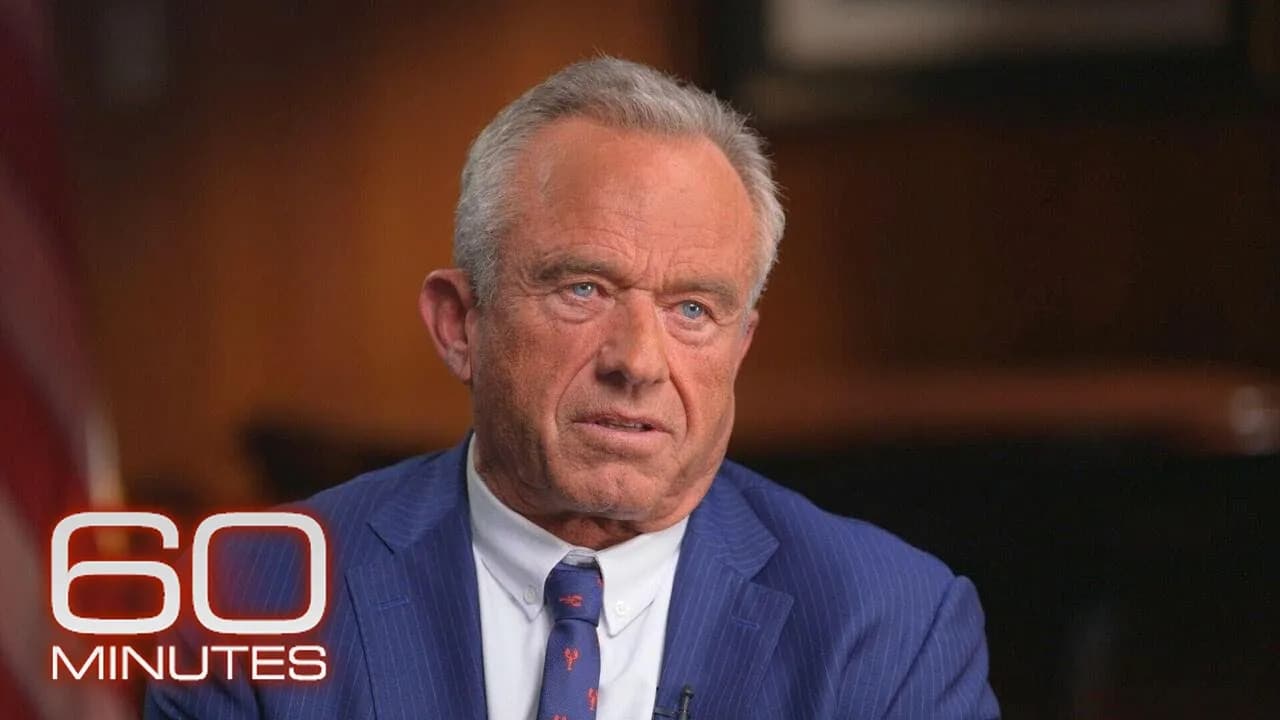
Americans across the political spectrum voice concern about health impacts of ultraprocessed foods—boxed, plastic-wrapped, ready-to-eat items. Leading the charge: Health and Human Services Secretary Robert F. Kennedy Jr. and Dr. David Kessler, former US Food and Drug Administration commissioner. They target the 67-year-old GRAS (Generally Recognized as Safe) government classification from 1958, allowing food companies to self-verify ingredient safety without government oversight. Ultraprocessed foods make up 50% of adult calories and 60% of children's diets.
Over the last 40 years, the United States has been exposed to something that our biology was never intended to handle: energy dense, highly palatable, rapidly absorbable, ultraprocessed foods that have altered our metabolism and have resulted in the greatest increase in chronic disease in our history. Type two diabetes, pre-diabetes, hypertension, abnormal lipids, fatty liver, heart attacks, stroke, heart failure, from our food, from our food.
David Kessler was FDA commissioner in the 1990s, exposing tobacco companies' nicotine manipulation. >> I am here to provide you with actual instances of nicotine control and manipulation in the tobacco industry. if you raise your right hand.
How does this compare with tobacco? >> It's as large if not larger. >> The scale affects everybody. 70% of Americans are either obese or overweight—not because they got indolent or lazy, but because of low-nutrition, high-calorie food destroying health.
Kennedy issued new dietary guidelines advising against highly processed foods. >> You have said that these ultraprocessed foods are poisoning us. >> We're seeing people obscenely obese and at the same time malnourished.
GRAS exemption from 1958 allows companies to add ingredients without oversight if deemed safe by experts. Kennedy plans to close this loophole. That loophole was hijacked by industry, adding thousands of new ingredients. Europe has only 400 legal ingredients; US FDA does not know how many—estimates 4,000 to 10,000.
There is no way for any American to know if a product is safe if it is ultraprocessed.
David Kessler petitions to revoke GRAS status for processed refined carbohydrates, sweeteners, starches like corn syrup and maltodextrin unless proven safe. They convert cheap starch calories into ingredients rapidly absorbed, causing metabolic havoc, targeting brain reward circuits, triggering overeating, depriving fullness—empty calories ending up in liver, causing cardiometabolic disease.
Pick up any one of these products. You ever look at the ingredient label? Corn syrup, corn solids, maltodextrin, dextrose, xylose, high fructose corn syrup. These ingredients were subjected to industrial processing so that our system can't handle it.
Kennedy: We will act on Kessler's petition; FDA should have asked these questions long ago. Will use gold standard science to review GRAS ingredients.
Kennedy's vaccine skepticism and agency revision of childhood vaccine schedule raise questions. >> Are you concerned that your stance on vaccines might make people reluctant to support you on ultraprocessed foods? >> My stance on vaccines is the same. People should have good science and they should have choice. People who want vaccines can get them fully insured.
Kessler: >> The secretary and I disagree strongly on vaccines. But if he's willing to take action on these ultraprocessed foods, I will be the first to applaud. This country is ill. If we can make progress, let's do that.
San Francisco City Attorney David Chiu filed lawsuit against 10 manufacturers of ultraprocessed foods, alleging they engineered addictive, dangerous products like tobacco companies, hiding risks, causing public health crisis.
Consumer Brands Association statement: No agreed-upon scientific definition of ultraprocessed foods; companies adhere to FDA's rigorous evidence-based safety standards.
Food author Michael Pollan: Oreos, granola bars (e.g., Nature Valley), snack foods qualify as ultraprocessed despite health claims, due to ingredient count and sugar. Ties ubiquity to federal farm subsidies via farm bill for corn and soybeans—commodity crops, not edible corn on cob or edamame, but raw ingredients for processed foods and animal feed.
We subsidize the least healthy calories. We are supporting both sides in the war on type 2 diabetes: subsidizing high fructose corn syrup causing it and paying healthcare costs.
American Farm Bureau Federation: Healthy diet relies on variety of nutrient-dense foods, some from shelf-stable products.
Why are there not subsidies to produce more of the healthy foods?
Cheap food is government goal. Removing corn subsidies could raise prices, opposed by powerful food lobby.
Kennedy on taking on big food: Belief in prevailing comes from president behind us. Not regulating ultraprocessed food, but ensuring informed public. Laser focused on making whole foods affordable and accessible, even in food deserts.
Consumer Brands Association: GRAS enables innovation; companies adhere to FDA science and risk-based evaluation.
Kessler: >> We changed how this country views tobacco. We need to change how it views these ultraprocessed foods. Would like big food CEOs before Congress like tobacco executives.
Michael Pollan's food rules: >> If you can't pronounce the ingredients, it's not food.
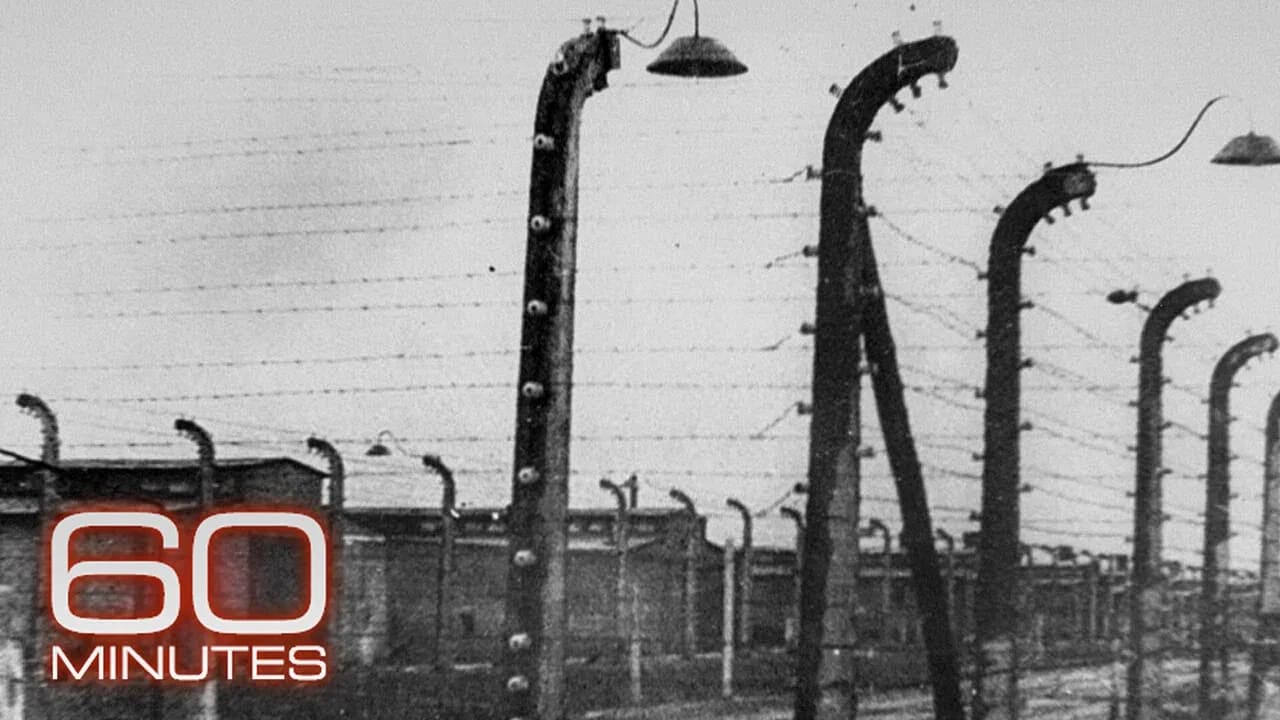
Last spring marked 80th anniversary of WWII end in Europe and liberation of Nazi camps. Story of three women married and newly pregnant in 1944, sent to Auschwitz, then slave labor in Germany. Pregnancy punishable by death.
Eva Clark, Hana Berger Moran, Mark Olski—among youngest Holocaust survivors, born April 12th, 20th, 29th, 1945, just before Germany's May surrender. Everyone calls them the babies; they're now 80.
Mothers: Eva's mother Anka (Czechoslovakia), Mark's Rachel (Poland), Hana's Priscilla (Czechoslovakia). Anka from small town, parents owned Jewish cafe. Rachel had eight siblings from textile town. Priscilla east of Prague, junior backstroke swimming champion of Czechoslovakia.
Fell in love as war descended. Eva's father journalist; met in nightclub. Mark's mother spoke little of father but to grandson Charlie: elegant man.
Nazis seized apartments; families sent to ghettos and camps. Mark's parents in Warsaw and Lodz ghettos. Eva's parents in Theresienstadt (where Eva conceived, violating rules). Pregnancy in camp a crime to annihilate Jews.
Mid-1944, killings accelerated; pregnant women loaded from different cities to Auschwitz. Hana's mother with husband on train: naming baby Hannah (girl) or Michael (boy), knowing it was death camp.
Auschwitz arrival: families separated, most to gas chambers (peak 6,000/day). Women stripped, shaven, to barracks. Hana's mother saw husband once across barbed wire: >> Be careful and think only good thoughts. Last time.
Frequent selections by Josef Mengele. Hana's mother met Mengele naked in line: >> Good-looking woman, are you pregnant? She denied.
All three denied pregnancy to Mengele, sent to slave labor camp Freiberg Saxony (porcelain factory for fighter plane parts). Never met each other. 12-hour shifts, diet of ersatz coffee, thin soup, tiny bread. Hid pregnancies with baggy clothes from gas chamber victims.
Early 1945, Allies advancing, Auschwitz liberated. Germans planned to eradicate evidence, send women to be gassed. Hana's mother gave birth on factory floor plank over table; guards watched, bet on sex.
36 hours later, loaded on open coal wagons—death train, 16 days, no food, little water, seeking camp to kill them. Farmer gave Hana's mother milk, possibly saved life.
Mark's grandmother (70 lb, 9 months pregnant) in sick car; people died, thrown off. Gave birth with dying woman's foot on stomach; baby alive, she had milk. Born April 20th—Hitler's birthday.
Eva's mother gave birth on arrival at Mauthausen (Austria), last camp standing. Climbed off truck unaided onto cart pulled up steep hill while in labor. Saw blossoms, birds, Danube—thought last sight. Gas chambers used last day before arrival (April 28th, 1945)—Nazis ran out of gas. Arrived April 29th.
Every little tiny factor of this story is amazing. I call them the miracle babies.
Survived Mauthausen almost a week. Baby Hana with infected sores.
Hana's mother saw green army car, heard "Roll Out the Barrel"—knew not German. Young soldier with red cross helmet; she showed Hana in English. Medic: >> I'll get the doctor because your baby needs help. Took Hana; next day nurse returned her bandaged: >> She's sleeping.
Medic (Leroy Pete Peterson) never forgot Hana.
Mauthausen: fortress-like, >95,000 died. Three babies/mothers arrived April 29, 1945. May 5, two dozen soldiers from 11th Armored Division, General Patton's Third Army, found camp accidentally checking bridges.
22-year-old medic Leroy Pete Peterson from Illinois kept scrapbook. Son Brian Peterson: humble man, always smiling.
All right, here's the gasket.
Pete Peterson and his two sons rebuilt an army-style Jeep that belonged to his dad. "Oh, grandpa's going to he'll be smiling on us." Peterson survived a Jeep explosion. "That is the exact time when the jeep was blown. That's when the jeep was blown up. Survived and fought in the Battle of the Bulge before his unit liberated Mauthausen. He suffered from PTSD years later.
Do you think it was from the battles or do you think it was from the camps? From the camps. The smells and the sounds and the sights that that bothered him.
This official US Army photo of Americans liberating Mauthausen captures the joy of prisoners finally being freed. But the photos Peterson kept in his scrapbook show a far darker reality. "He took these? Yes. Oh, piles of emaciated corpses. Oh my god. Oh my god. And in this photo, a man who died right in front of Peterson's eyes. Look at this man. How are they? How? Yeah."
Peterson's job was to triage which inmates could be helped when he came upon a shocker outside one of the barracks. A woman presented her baby to him and showed him that she was badly infected. "And he's now just seen all these dead bodies. And there's a baby. This one we have to try to save." Peterson told Brian that he and the unit doctor used penicillin, brand new at the time, to treat the baby's wounds and helped sew her up. He never got the incident out of his mind. "Literally, every time that we looked at this book, that was his final thoughts. I wonder what ever happened to that baby."
In the weeks after liberation, that baby and her mother, like many freed prisoners, traveled back to their hometowns across Europe in hopes of finding living family members, and in Mark Olski, Eva Clark, and Hana Burger Moran's mothers' cases, their husbands. Sadly, all three men had died. While Mark and Eva's mothers later remarried, none of the women had other children. So Mark Olski, Eva Clark, and Hana Burger Moran grew up as only children, learning about the war in bits and pieces from their mothers.
I was told that I had been that I was born on a train, but not no details. And so I thought, "Oh, hey, cool. I'm born I was born on a train."
But as he learned the truth, he became enraged. "When I was 12, 13, people asked me, 'What do you want to do with your life?' And I said, 'I want to go to Europe and just kill as many Germans as I can.'" He vividly remembers his mother's response. "In almost the exact words, she said, 'They took so much from us. If if this is what you become like, they will have taken your soul.' Oh, she said that to you? Wow. Wow."
Hana's mother raised her in Czechoslovakia. But as an adult, Hana moved to Israel, then to the United States for graduate school. Her mother sent her off with a request. Try to track down that young American medic. "And she says, 'Please find him. Find him. Find him.' Were you supposed to do that? I didn't know his name." She discovered it was the 11th Armored Division that liberated Mauthausen and sent them a letter. "I was getting various messages this name, that name. I got in touch with them. Oh no, it's not me. And finally, I get the message, oh, you want to talk to Pete Peterson."
Peterson was 81 at the time. "Dad mentioned that he had heard from a woman uh that he believes is the baby that he saved at Mauthausen. Oh my god." They met in May 2005, 60 years after their first meeting. "I was so happy to finally touch him, see him. He was actually staring and looking at her. I saved that person. That's you. That's you. That's really you. [laughter] And I was able to thank him finally. Truly thank him because he saved my life. He did."
Do you think knowing that she survived helped with the PTSD in any way? Oh, absolutely. That lifted a big weight off of him.
"And I [clears throat] asked him if I can call him Daddy Pete. Daddy Pete, I didn't have a father, you know, so he became my daddy. He adopted you? Well, he had [laughter] no choice. You adopted him? Let me put it that way." Pete Peterson died 5 years later. Hana spent a week with him during his final illness. "What's your relationship now? She's my big sister. Exactly. And he better listen [laughter] to his big sister. Yeah. from the past. Nobody survived. So I have my family. I am so lucky."
And she was about to get even luckier. "I had found out that it was the 11th Armored Division that had liberated Mauthausen." Eva, whose mother had raised her in the UK, reached out to the liberators a few years after Hana had, sending a picture of her mother and three generations of descendants. The photo appeared on the cover of the division's next newsletter. "I opened this magazine and I said to my mother, 'You're not going to believe this. There was Hannah's story.' Another baby. Another baby. Up to that point, my mother had always thought that we were the only ones. So, she had no idea. No. About these other two. No idea."
The two babies spoke and made plans to meet just after their 65th birthdays at the Mauthausen camp, now a preserved memorial where the anniversary of liberation would be celebrated. And that's where baby number three comes in. That same spring, Mark's son, Charlie, was struggling to find a 65th birthday present for his dad. "He's very hard to shop for. Uh, [laughter] so I thought maybe I'll do some research, see if I can find somebody who has a story. It must have been really miraculous to have a baby in a concentration camp."
A Google search brought him to the website of the 11th Armored Division where he saw Eva's family photo and story. "And I looked at the story and it was everything I'd ever heard from my grandmother. Everything matched up. It was the labor camp in Fryberg that the mother had the pregnancy, that they had run out of gas, the dates, everything lined up, and I couldn't believe it." The website's administrator connected him to Eva and Hana within an hour. "Hannah was in San Francisco and wrote me back immediately. Uh, my gosh. And said, 'This is incredible. We're meeting for the first time in two weeks at the camp. Uh, so it's too bad you're just finding us now.' I thought, 'Too bad, nothing. This is great. We're coming.'"
"First thing he said, first thing out of his mouth that I heard was, 'Would you like to go to Austria with me around the time of your birthday?' My mind is, 'One of my kids wants to spend a bunch of time with me.' [laughter] Sure. Yeah, why not? I'm there."
And that's how the three babies met for the first time in May 2010. "We spent the whole of the Saturday in one cafe talking, laughing and crying and talking about our mothers and comparing and contrasting their three stories. Does your mother do this? Does your mother do that? And we were all incredulous. Absolutely incredulous. It was like we've known each other all this time and we just had to get caught up on what happened for the last 65 years. hell of a birthday present. It [laughter] was the best birthday present I ever got. The next year I was like I I'm just getting a gift certificate."
That year at age 65, they marched in the annual commemoration at Mauthausen. [applause and music] This past year at 80, they marched again at the special 80th anniversary celebration where thousands came from all over the world to remember the prisoners who worked and died here and their liberators. The [applause] US delegation. Brian Peterson made the trip to honor his father [music] while the son of the US sergeant who led his soldiers into the camp played taps.
And while the babies were far too young to have their own memories, they told us inside one of the still standing barracks that they couldn't help but sense the presence of their mothers. "What are you feeling in this place? Do you carry her emotions with you? All I am thinking [music] about is I've been here before. I've been here before. I have been here before, but I left. [clears throat]"
At all the 80th anniversary commemorations like this concert in Vienna, the three babies were celebrated guests of honor. Happy [applause] birthday. [cheering] Quite the journey from how their lives began. [applause]
"How would you describe this relationship? It's one of siblings and I'm very glad to have siblings. We found each other. We We should have been together from day one. You certainly and your mothers absolutely were marked for death. You were supposed to be annihilated. My mother occasionally would say, 'And in the end, we won [laughter] because you all survived.' And we have families. How many grandchildren? I have four. I have two. I have five grandchildren. And their mothers live to be 96, 90, and 84. The lines go on. Life goes on. Let's live. Lord be praised. To our life and to our mothers. mothers are strong mothers. Yes."
Filmmaker Ken Burns has given viewers new understanding of American history with his documentaries, including the Civil War and the American Revolution. To mark the 250th anniversary of the Declaration of Independence, we asked Burns what would surprise the nation's founders about America today.
"I think the founders would be very pleased that their revolution became a model for democracies around the world. I think they would also be surprised, pleasantly so, that we are still here 250 years later. They were hugely concerned about the strains on the new country. If they were to magically arrive in this moment, I think they would be troubled about how stressed our system of checks and balances is, but equally impressed that we've been able to overcome significant national and global challenges. They would be disappointed, I think, not because of how divided we are, we always have been, but how we are increasingly struggling to acknowledge our shared values. My hope for the 250th anniversary of our founding is that Americans understand that democracy and self-governance requires our constant attention. The best way to commemorate the 250th is to study our history in all its complexities and to vote."
I'm Anderson Cooper. We'll be back next week with another edition of 60 Minutes. But coming up next, a special CBS News Things That Matter town hall with Maryland Governor Wes Moore.
Keep 60 Minutes in your library
Save the videos and channels worth coming back to, and find them again in one place.