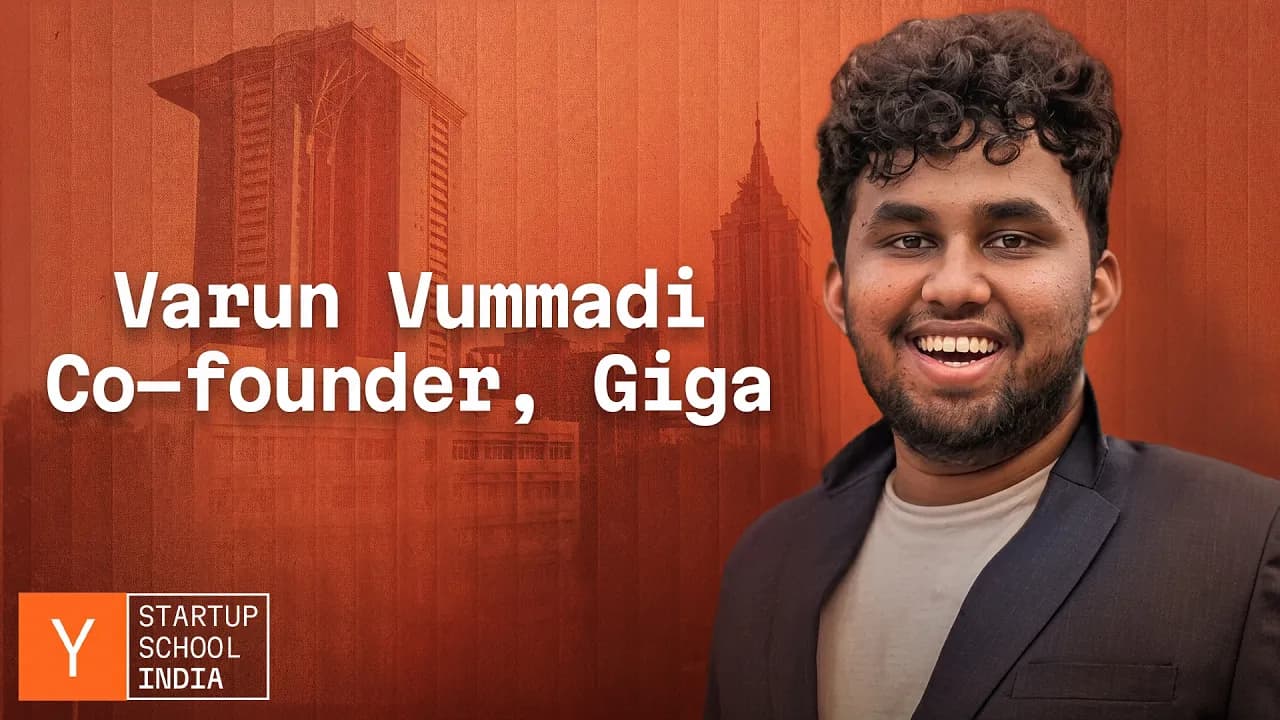
How I Bootstrapped a SaaS to $10M ARR With Zero Funding (15 Q&A) | Chatbase, Yasser Elsaid
In a Nutshell
Yasser Elsaid bootstrapped Chatbase from launch to $10M ARR in under three years by launching fast, iterating on real customer feedback, and growing purely through organic channels like Twitter, Reddit, and content. He stresses ditching the overly cautious "bootstrap mindset" once revenue is reliable—aggressively hiring, running non-ROI-positive experiments, and moving upmarket with pricing to drive scale. Key growth levers include strong product-led onboarding to cut churn, layering warm outbound on top of existing brand traffic, and maintaining a culture that reverses bad decisions quickly as conditions change.
These notes were generated by AI and may contain inaccuracies.
We started close to 3 years ago. Launched at 1:00 p.m. and received the first customer 30 minutes later. Ten minutes after the first customer came the second, and roughly an hour later the third customer. At that moment it became clear that everything else had to stop. Reached 1 million ARR in exactly 117 days. Continued growing while remaining bootstrapped with no external funding, consisting only of the founder and the team. The belief is that more bootstrapped companies will achieve previously impossible revenue numbers.
Chatbase is a platform for customer-facing AI agents focused on customer support and sales. The product builds an AI agent that acts as a brand ambassador delivering a conversational experience to every customer. Bootstrapped Chatbase to $10 million ARR and plans to share the exact playbook used.
The biggest advantage of bootstrapping is control. The only stakeholders to listen to are customers and the team, which provides freedom to build exactly what is wanted. The definition of success changes once funding is raised. Bootstrapping allows success to be defined as a 50, 100, or even 200 million outcome, which feels achievable. Raising capital alters that equation and can make certain successful outcomes harder to reach. Getting a successful outcome for the founder, team, and customers is more likely on the bootstrapped path.
Many founders are seeing this shift. With current AI tools that assist with coding, customer support, and marketing, smaller teams of 10 to 50 people can achieve higher revenue per employee. This makes bootstrapping more feasible. It is also more enjoyable to retain control.
Operating as a bootstrapped company focuses on profitability, ensuring every action is ROI positive, maintaining cash reserves, and maximizing efficiency. The most common mistake is retaining a bootstrap-founder mindset that remains extremely cost-efficient, always ROI-focused, and risk-averse. For founders aiming to build something huge, create impact, hire aggressively, and grow revenue and customers, the critical error is not being aggressive enough.
The cautious mindset makes sense early on, but once reliable revenue exists, risks must be taken. Experiments that may not be immediately ROI positive should be pursued. Expensive but high-quality hires should not be delayed. Stopping the bootstrap mindset led to significant revenue growth.
Started university in Canada studying computer science. The surrounding environment pushed everyone toward securing a FAANG internship in California, known as "Cali or Bust." Optimized efforts toward that goal and secured internships at Tesla and Facebook. The environment felt too safe and structured, primarily optimizing for the highest likelihood of earning above $200,000 annually.
Found inspiration in people building companies and valued the freedom to wake up and decide what to build. Realized continuing on the internship path would lead to a predictable life where the only changes would be incremental titles and salary increases. Desired the ability to create things instead.
Discovered the indie hacker community on Twitter, including Peter Levels and Mark Lou. Saw how individuals could take an idea, build it, and validate it through paying customers. Building smaller projects developed skills directly applicable to Chatbase. The most impressive founders consistently show a pattern of starting with ideas and bringing them into existence, which builds skill, confidence, and better product ideas.
Any skill learned at a big company is mostly irrelevant because the dynamics, goals, and people differ completely. The fastest way to build a specific company is to start. Early on, especially when solo, the outcome correlates 100% with the input put in. The founder controls all inputs and the output results from those inputs.
This mirrors individual sports where the athlete controls training, equipment, coaching, and nutrition, and the outcome depends solely on those inputs. Applying this mindset to building companies is beneficial. Knowing destiny is controlled provides comfort. With sufficient intelligence, energy, and conviction, tying those traits directly to the outcome made starting a company the obvious choice.
While building earlier projects that used AI before ChatGPT launched, limitations and new opportunities became visible. One idea stood out as obviously valuable and not yet pursued by others. The concept involved using powerful language models trained on general data but giving them access to specific data belonging to a person or company. The initial example was uploading a textbook or book and chatting with it.
Stopped attending class in 2022, before ChatGPT became mainstream. At the time only GPT-3 existed and capabilities were limited, yet enough hacks existed to make demos and some customer use cases functional. The conviction was that models would improve; building the harness around them now would mean both the product and customers would benefit as capabilities advanced.
Launched at 1 p.m., received the first Stripe notification 30 minutes later from a pricing page linked in a tweet. The moment someone paid felt special. Within an hour multiple customers had arrived, confirming the need to stop everything else and focus entirely on building.
No money was spent on marketing in the first three months because none existed. Personal savings from internships covered model serving costs. Once revenue covered those costs the business became profitable and has remained so. Growth came entirely from organic channels: building in public, posting on subreddits, Twitter, and LinkedIn, and discussing the product daily.
Being forced to rely on organic marketing early proved beneficial. The skill of organic marketing allows brand building around both the company and founder, and later makes paid marketing far more efficient. First month reached $3,000 MRR and posted about being ramen profitable. Second month approached $40,000 MRR, then $60,000, reaching $1 million ARR in 117 days from the first tweet.
Hitting this milestone quickly helped discard any notion of keeping Chatbase as a lifestyle business and reinforced the focus on building a very large success.
Problems faced going from 0 to 1 million differ from those going from 1 to 10 million. From 0 to 1 the focus is finding what people want and building it through customer conversations and iteration. This stage can be brute-forced with time and effort.
From 1 to 10 million, leadership skills become necessary along with the ability to sell and clearly explain ideas and the product. Building culture, assembling the team, setting energy and incentives, and establishing processes represent an entirely different game compared with a three-person team. Many people lack these skills. Going from 10 to 100 million will present yet another distinct set of challenges, though lessons from 1 to 10 million transfer forward.
Churn started high because many early users were experimenting with new AI tools without understanding capabilities or ideal use cases, and the product lacked many features now present. Current low churn results from customers seeing daily product improvements. Even when a specific customer does not need a new feature, consistent shipping signals that the company cares and is moving quickly.
The second factor was product improvement itself. Early traction does not mean the product is in its best form. The best version emerges after collecting feedback from hundreds or thousands of customers. New customers then encounter problems already solved for previous users.
Getting on calls, observing real usage, ensuring correct setup, and removing hurdles proved essential. No special cancellation flows or hidden cancel buttons were used. Churn reduction came down to product quality and clear communication of value.
Early on, features were released but remained hard for users to discover or use. Onboarding was overhauled to include persona-based paths that surface capabilities and setup instructions. Customers were also offered the option to speak with a team member, reinforcing that a real person cares about their success. Consistent product improvement over time drives the churn graph downward. Any tactic claiming major churn impact without improving the product was likely a waste of time.
PLG is extremely powerful yet harder to execute than sales. Getting on sales calls, setting up the product, and answering questions is the easier path. Building an extremely intuitive product that allows users to succeed with minimal effort, especially when the product is powerful, is significantly harder.
It is not smart to leave interest on the table by insisting on being PLG-only. Working with larger companies, helping them onboard, and running longer sales processes can ensure success. Many companies begin with sales-led or shift from PLG to sales-led because sales is easier than maintaining a powerful self-serve growth engine.
Starting as a PLG product with self-serve as the main interface forces the creation of a good, intuitive, simple yet powerful product because no one is handholding users. This foundation remains valuable when later adding a sales-led approach. Stripe serves as a strong example of combining both.
A big part of AEO (Answer Engine Optimization) is strong SEO. Most models gather information through web search, and ranking well for humans translates to ranking well for AI because page-rank-style algorithms function similarly. Basic SEO practices remain effective: writing blog posts, internal and external linking, and producing quality content people want to reference.
Organic content also strengthens SEO because a strong brand gets referenced by others creating content. Additional AEO tactics include maintaining presence on review sites, Reddit, other user-generated content platforms, YouTube, and TikTok because models index and search across all these surfaces at both training and runtime.
The requirement is to exist everywhere while delivering a consistent message. The team must share a clear understanding of the value delivered, target customer, and unique selling points, then distribute that message across all available surface area. When a specific channel works, increasing activity there makes sense. One dedicated team member now focuses primarily on SEO and AEO.
Warm outbound leverages the PLG foundation, content creation, and existing website traffic. Because growth did not begin with cold outreach, a large volume of high-intent visitors already exists. Warm outbound converts more of that traffic by reaching visitors who never signed up, users who signed up but did not subscribe, and subscribers who stopped using the product.
These individuals represent the highest-intent people currently reachable. Outreach includes sending emails offering help after signup or LinkedIn connection requests offering setup assistance. Recipients respond positively because they already know the brand through content and feel trust. This warmth produces far higher success rates than cold outreach, which relies on volume and low reply rates.
Targeted outbound focuses on specific customers already invested in the company. For Chatbase, approximately 80% of this outreach is warm, highly personalized, and often conducted through WhatsApp groups. The approach emphasizes building friendships with customers and maintaining high-touch relationships. This style of engagement is fulfilling for the team because it allows them to build relationships and directly solve customer problems through conversation.
Chatbase began as a B2C tool where users uploaded textbooks or books to chat with them, priced at $10 and $30. Upon transitioning to B2B, pricing shifted. The lowest plan started at $19 and later moved to $40 to accommodate smaller companies and individual developers. The highest self-serve plan increased from $300 to $500.
Price increases were implemented as the product became more powerful, using more tokens for reasoning and solving complex issues. Despite these increases, churn remained stable because customers recognized greater value. Pricing experiments should be conducted while treating customers well, avoiding constant aggressive increases. Experimentation reveals which customer segments derive the most value, enabling deeper conversations about their use cases.
Moving upmarket delivered the largest revenue impact and clarified the growth direction. The biggest mistake identified was not experimenting with pricing more frequently. Companies rarely regret pricing experiments but often fail to experiment enough. Older customers who received value should continue to be supported. The optimal pricing point delivers so much value that customers do not focus on the cost.
When choosing between high margins with less revenue or more revenue with lower margins, the better long-term strategy is pursuing higher revenue and more customers even with reduced margins. A decision was made to purchase billboards in San Francisco to increase brand awareness. The ROI was not immediately measurable, but certain investments are not evaluated solely by return on ad spend. These activities build brand capital over the long term. For smaller companies, such moves reduce margins significantly, yet they are necessary when the goal is building something substantial. Calculated risks are required, and while some initiatives will fail, most should succeed when executed thoughtfully.
Two key decisions at company inception are whether to seek a co-founder and whether to raise funding; both depend on circumstances. Searching for a co-founder without a prior relationship is difficult. The strongest co-founder pairings typically involve people who have known each other for an extended period and share deep trust and confidence in each other's abilities. Partnering with a mediocre or underperforming co-founder is often worse than remaining solo. An exceptional co-founder outperforms going solo, but extreme confidence in both values and complementary skills is essential before committing.
The decision to raise depends on the definition of a successful outcome. For exits valued at $10 million to $50 million, bootstrapping offers a higher probability of success. For outcomes in the $500 million to billions range, raising capital becomes necessary because bootstrapping makes such scale extremely difficult. Raising when targeting a smaller exit complicates achievement because investors seek 100x returns, pressuring rapid hiring and spending. This creates high variance: outcomes are either exceptional or constrained by liquidation preferences, terms, and dilution, preventing meaningful returns even at a $100 million exit. Reaching a $100 million outcome through bootstrapping can be easier than reaching billions after raising.
In fast-moving industries with frequent competitor activity, new model releases, and shifting market dynamics, decisions must adapt as inputs change. Pride and ego often prevent founders from reversing publicly stated decisions, yet this rigidity signals low self-confidence and can lead to company failure. The same principle applies across the entire team. When inputs evolve, revisiting prior decisions is required regardless of timing. A culture should be cultivated where reversing suboptimal decisions is encouraged rather than penalized.
Ignoring external noise is valuable. Many founders abandoned building GPT wrappers after hearing widespread skepticism, yet those projects later rebranded as model harnesses and achieved over $100 million ARR within three years. Speculation from others should be disregarded in favor of focused execution on building valuable products.
Keep EO in your library
Save the videos and channels worth coming back to, and find them again in one place.