Building a $200M Bootstrapped Chess Empire with Chess.com CEO Erik Allebest
In a Nutshell
Chess.com grew from a bootstrapped startup into a $200M+ business with 10M daily users by focusing on user experience and sustainable profitability rather than venture capital. The platform's rating system measures genuine skill, and this approach is being extended to poker. AI is accelerating learning and product development while human engagement with chess continues to rise despite machine superiority.
These notes were generated by AI and may contain inaccuracies.
COVID happened, Queen's Gambit happened, some news cycles happened, and the team initially believed the surge might be temporary like treadmills and sourdough bread during the pandemic. However, in 2023, another major wave occurred where kids started playing in schools due to short form content, the Mittens bot, and the cheating scandal. The platform spiked again, and when it came down, the baseline remained significantly higher than before. This sustained growth pattern demonstrated the platform's staying power beyond initial pandemic effects.
When considering how to design a rating system for poker, the chess playbook provides a model focused on measuring actual skill rather than factors like buying the most chips, using bots, or other artificial advantages. The goal is creating a system where people care about their poker rating as much as money because it reflects their true value and skill as a player.
Chess.com currently has approximately 10 million daily active users and 40-50 million monthly active users, with usage typically slower during summer months in the northern hemisphere. The platform has more than 250 million registered members. Revenue for the current year is projected to exceed $200 million. The company employs about 650 people who are passionate about chess and focused on making members happy, growing the game, and creating the best possible workplace.
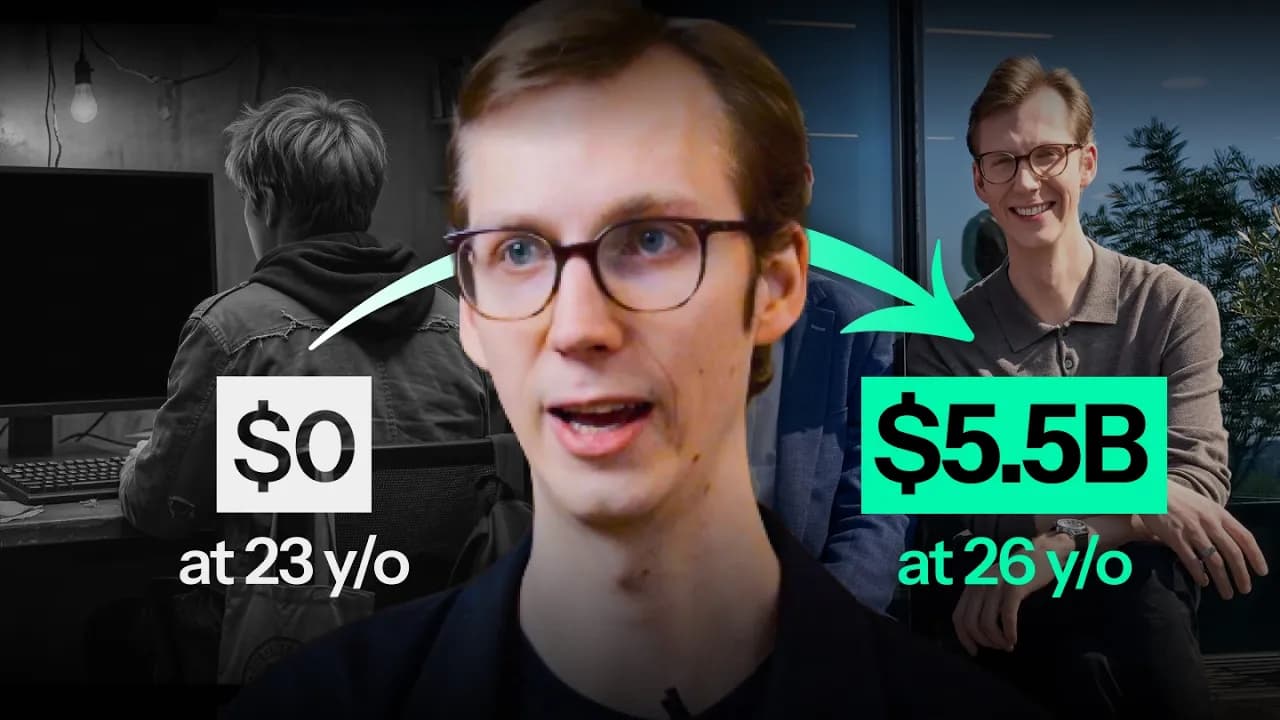
The domain was acquired from a bankruptcy auction in 2005 for $56,000 by Erik Allebest and a friend. The original owners had been building chess software but couldn't pay their debts. The vision was to create a chess community similar to MySpace where people could express themselves, learn, and share.
At Stanford Business School, Allebest had access to venture capitalists on Sand Hill Road but was told by most that the business was uninvestable and that he should get a real job. Classmates also declined to join, preferring to pursue what they considered more serious ventures. With no external funding, Allebest and his friend (who served as CTO while Allebest handled product) started building the platform themselves.
Allebest invested personal capital from previous business exits and borrowed a small amount from his friend's mother, which was later repaid. The company grew at the speed of cash, launching in 2007. Within 18 months, they began charging for memberships for online chess learning and quickly became profitable. Growth occurred incrementally as revenue increased, allowing hiring of community managers, developers, system administrators, and eventually designers.
The company never seriously considered raising venture capital again after the initial rejections. They maintained a philosophy of remaining profitable and growing sustainably. Early projections about team size proved consistently wrong - first believing they would never exceed 50 people, then 100 people - as chess continued to exceed expectations.
Current ambitions focus on reaching the full potential of the 250 million registered users, with a stated mission to get a billion people playing chess. The platform emphasizes chess's benefits in bringing people together, building confidence, and teaching that learning occurs even in losses.
The chess industry as it exists today did not exist 20 years ago. The main competitors were Free Internet Chess Server (FICS), Internet Chess Club (ICC), and Yahoo Chess. Chess.com differentiated through relentless focus on user experience: creating a product that felt great, remained free to play, worked in browsers, and provided a wonderful overall experience.
Lichess exists as an open source alternative, described as the Linux of chess platforms. It serves an important community function and coexists with Chess.com, with each driving game growth through different approaches. The platform notes that chess is not patentable, with thousands of chess apps and websites existing, making product quality, community, and content the decisive factors.
The realization that chess represented a major, sustained business came in 2024. Prior to COVID and Queen's Gambit, the platform had about one million daily active users. Post-pandemic, the team initially suspected the growth might be temporary, but sustained higher baselines after each spike indicated permanent change. The combination of cultural factors, short form content, the Mittens bot, and cheating scandals drove continued expansion.
The growth has created operational challenges around scalability across product and technology. The past year has been more stable organizationally as the team has adapted to managing a 650-person fully remote company, with current focus on experimentation, product improvements, infrastructure, and AI integration.
When Allebest began playing chess at age 18, it was considered a secret hobby associated with nerds and not discussed openly. The transformation has been remarkable, with chess now played by diverse groups including jocks and nerds, featured in Louis Vuitton fashion campaigns, and embraced by celebrities like Lewis Hamilton playing on private jets.
The platform redefined what constitutes a chess player by moving away from the previous standard that required 2,000+ rating to be considered legitimate. The new narrative celebrates mistakes, hanging queens, and players at all levels, emphasizing that everyone rated 500 is still a chess player on their journey and part of the community.
General Atlantic made the first private equity investment around 2020-2021, purchasing secondary shares from existing investors without capital infusion into the company. This occurred after initial reluctance to accept outside investment from individuals who later needed liquidity.
CVC Capital Partners recently invested through secondary share purchases, with General Atlantic reinvesting to maintain their position. The investment thesis aligned with the company's mission-focused approach, recognizing that community and product focus would build a strong business. No capital was needed for operational growth.
The investors have contributed industry knowledge from gaming, sports, and community businesses, pushing the company toward excellence through specific suggestions rather than generic demands. This has improved operational forecasting, reporting, and overall business operations beyond just investor relations.
Chess represents the longest-running experiment in human activity after machines achieved superhuman performance, beginning with Deep Blue defeating Kasparov 30 years ago. Contrary to predictions that computers would end human interest in chess, human engagement has increased significantly.
Initially, chess engines like Stockfish made the game somewhat boring as players attempted to replicate perfect computer play, resulting in grinding endgames. However, neural networks like Leela Chess Zero introduced aggressive, unconventional approaches that pushed the game forward and made it more exciting.
Current AI applications enhance human enjoyment through game review coaches, computer opponents, and personalized puzzle generation. The relationship is viewed as a partnership where human creativity combined with AI capabilities advances human capabilities further.
Younger players are reaching high levels faster, with seven-year-olds challenging grandmasters and ten-year-olds from India and England dominating competition. Access to tools like YouTube has accelerated learning compared to previous generations.
Erik discusses how his 18-year-old son has become a better video game creator than he could have been by self-learning through YouTube and AI tools. The son uses AI for research on solving problems rather than for creative work itself. This access to information and superhuman intelligence enables people to learn faster and better, raising questions about what the next generation will create.
However, Erik acknowledges concerns about AI potentially reducing human thinking and engagement. Research shows that people who use AI in certain areas stop thinking and using their brains. Guard rails will need to be established to determine what works and what doesn't, though Erik believes AI will ultimately push people further into learning and creating better things.
When asked why information access doesn't make everyone equally good at chess, Erik emphasizes that access alone isn't enough—you must do the repetitions to internalize knowledge. He shares a powerful concept: if you take any given day and multiply it by a thousand, that's what your life looks like. Five chess puzzles a day becomes 5,000 puzzles, making you significantly better. The key is consistent habits that compound over time, whether doing one sketch daily, running, or researching topics.
AI excels at providing immediate access to research and ideas, offering conversations similar to walking into a professor's office, available in your pocket. While issues exist with biases and ego inflation, people who use it well can deep dive into subjects at tremendous pace.
Chess.com possesses data on millions of people learning at every rating level, making mistakes and improving. The answer to acquiring expertise is straightforward: repetition of small building blocks through puzzles, reviewing mistakes, and training specific openings. There are no shortcuts to the process, though tools can make practice easier.
Erik compares this to training neural nets—you must give the brain data and repetitions. Unlike computers that can train in parallel across memory channels, human brains require sequential practice. Modern immediacy from social media makes people forget that practice cannot be shortcut—you must put in the time.
Erik addresses the challenge of cheating, noting the human drive to take advantage of others or steal rating points. While sad, chess has dealt with cheating longer than AI existed, with computers previously seen as an existential threat. Technology now fights cheating through extensive investment in anti-cheating measures.
Chess.com tracks data using statistical models and machine learning to distinguish human from computer play. They maintain two work streams: general detection and handling professional events with prize money. While cheating cannot be completely prevented without webcams in every home, they catch and ban cheaters while educating them about integrity.
Chess remains unique in a world of infinite possibilities where AI can generate 10,000 new board games instantly. Like how people return to classics like the Beatles amid infinite music, chess offers timeless appeal with no loot boxes, new skins, rule changes, or new heroes to learn.
The game features the simplest set of rules, full information, no luck, and identical shared experience whether played on a device or physical board. It strikes the perfect balance between enough complexity to blow minds and enough simplicity to learn. In today's world of proliferating everything, people seek timeless experiences, and chess evolutionarily became the king of games.
Erik frames Chess.com as simply a chess company, though it encompasses gaming, content, and social networking aspects. They've branched into other games with Gambit at gambit.com, their poker site that applies the chess playbook—rating players on skill rather than chip purchases or bot usage.
They're developing other classic games using their proven approach to gaming that emphasizes purity, wholesomeness, learning, and education. While chess comprises 99.99% of their focus, this small team explores other games without diluting their chess mission.
When starting 20 years ago, Erik received advice to hire Stanford technical founders, raise money, get an office, pursue big markets, and spend heavily on customer acquisition. Instead, he hired a friend from San Jose State, worked remotely, raised no money, spent nothing on acquisition, and chose a tiny market.
His advice: listen to your heart about what you want to create, relentlessly pursue your vision rather than market signals, listen to customers and pivot when needed, determine minimum resources to prove your concept, choose great people to work with, and execute to put something beautiful and unique into the world.
Erik believes in superhuman intelligence arriving at accelerating pace, though it will be scary without proper guard rails for human engagement. He remains optimistic about solving major problems in climate, politics, and education while creating a more equitable world, but worries about opposite effects.
He identifies this as more a cultural than technological problem, noting how big tech already concentrates wealth among few people. The technology itself is irrelevant—what matters is cultural choices about sharing creation's fruits. AGI can serve good or evil depending on those in charge, and Erik lacks confidence in current leadership whether billionaires or politicians.
Despite superhuman AI capabilities, Erik finds optimism in chess's growth because people want to acquire human skills even when machines outperform them, and appreciate exceptional human skill despite superior machine performance. He rejects the notion that human skill becomes irrelevant in superhuman AI environments.
Chess.com uses AI extensively across business operations, powering support team automations while maintaining human support for complex needs. Data analysts use LLM technology to explore interesting questions. Their CTO Josh built GNS, an internal authentication and knowledge layer with permissions across the organization, plus their own martech technology for deeper user and data integration.
AI accelerates development and product lifecycle through agentic development—having ideas, seeing problems, and fixing problems. This shortens timelines between identifying opportunities and deploying code, avoiding lengthy product scoping, roadmapping, building, testing, and QA handoffs.
AI enhances product research and user output during chess journeys. They're developing advanced stats aggregation comparing users to similar players or those slightly above, identifying improvement areas. An AI coach in your pocket provides on-demand guidance, not replacing human coaches but offering casual, accessible coaching.
Prototypes include interactive experiences where AI coaches analyze weekly games, provide feedback and recommendations, and enable chat conversations with the coach.
Designing poker ratings presents unique challenges due to interpersonal dynamics and financial risk considerations. The rating system accounts for opponents at the table, chips won, and hands played, with algorithms expected to evolve. Financial stakes matter significantly—$100 games differ vastly from $1,000 games, and play money games encourage reckless behavior.
Erik believes players will eventually care about poker ratings as much as money, reflecting true skill value. Personal experience shows losing rating points bothers him more than losing money, suggesting ratings will prove an interesting poker innovation that equalizes skill assessment regardless of financial resources.
Keep No Priors: AI, Machine Learning, Tech, & Startups in your library
Save the videos and channels worth coming back to, and find them again in one place.