How to Actually Fix a Hunchback (& Why Stretches Aren’t Working)
In a Nutshell
A dowager's hump is only treatable once the cause is identified: soft and spongy indicates a metabolic "buffalo hump" driven by high insulin/cortisol, requiring a low-carb diet, intermittent fasting, and fasting-insulin testing below 5; hard and rigid indicates either postural kyphosis or structural osteoporosis, each confirmed by X-ray. Postural cases respond to daily thoracic-extension exercises (foam-roller extensions, wall twists, prone Y-T-W raises) that restore alignment and counteract forward-head posture. Osteoporotic wedging demands weight-bearing exercise plus daily magnesium glycinate, 10 000 IU D3, and 40–45 mg K2 to rebuild bone collagen and direct calcium into vertebrae.
These notes were generated by AI and may contain inaccuracies.
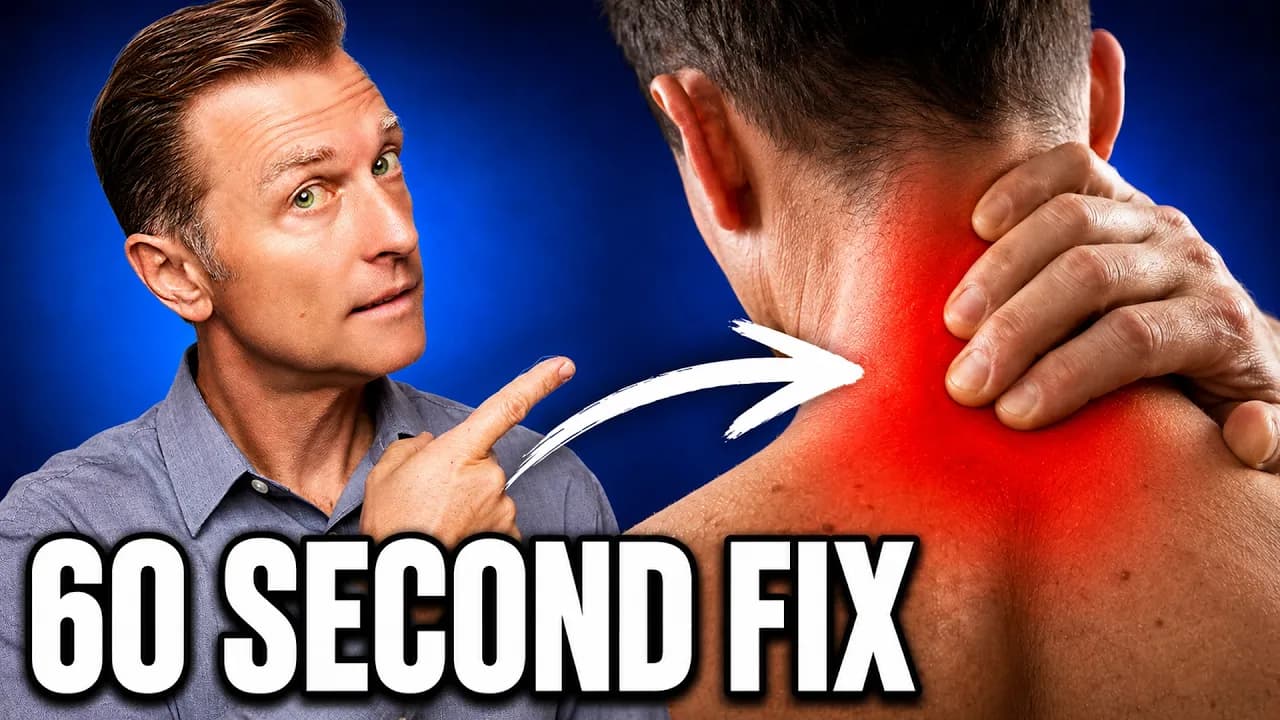
Can you actually fix a dowager's hump? This refers to the hump on the back of the upper back at C7, the last cervical vertebra, or T1, the first thoracic vertebra. The first step is to reach back with your hand and press into that hump. Check if it is soft, doughy, and spongy like a fat pad, or if it is hard, firm, and rigid. This determines what the hump actually is, since both situations look identical in the mirror. Only palpation reveals the difference, and treating the wrong condition will not produce results.
The hump could be postural, involving muscles and fascia, the connective tissue that supports everything. Muscles on the front of the neck may pull forward due to prolonged sitting behind a computer, leading to bad posture over years. This type is easy to correct with the right stretches. Alternatively, it may be a structural problem where vertebrae that should be rectangular or square are now wedged due to osteoporosis, forming a true dowager's hump. The actual structural vertebrae have changed and are bent forward, locked in place because the bones have thinned.
An X-ray is required to determine if the hump is structural. A side X-ray will show the shape of the bones. The fat pad situation is different. It is a metabolic fat pad, not necessarily structural. High cortisol or insulin causes this condition. People with high cortisol, including those with Cushing's syndrome, develop this fat pad along with midsection weight gain, skinny legs, and a round face.
High cortisol over time mobilizes blood sugar and converts protein into sugar, which increases insulin. Insulin then causes fat to accumulate. Cortisol is also called a glucocorticoid because it influences glucose. This metabolic fat pad is reversible by fixing the hormone issue. Applying stretches without addressing the hormones will not produce change.
For the postural problem, serious stretches on the thoracic spine in extension are needed. Stretches must go backwards across the entire thoracic spine to position the head and upper torso over the pelvis. Forward head posture adds 10 lb of weight to the upper back for every inch the head moves forward.
The best stretch is called thoracic pales and rails. A free download provides a daily routine and checklist used to maintain youthful function. The link is provided below the video.
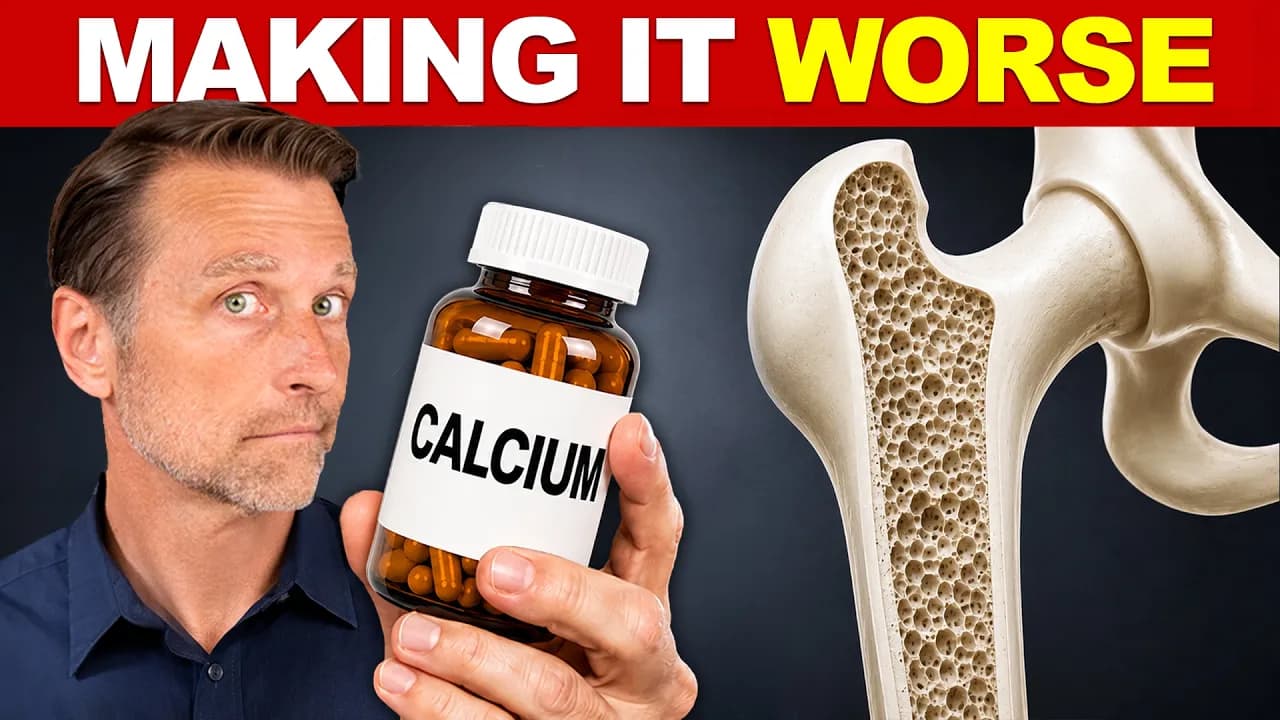
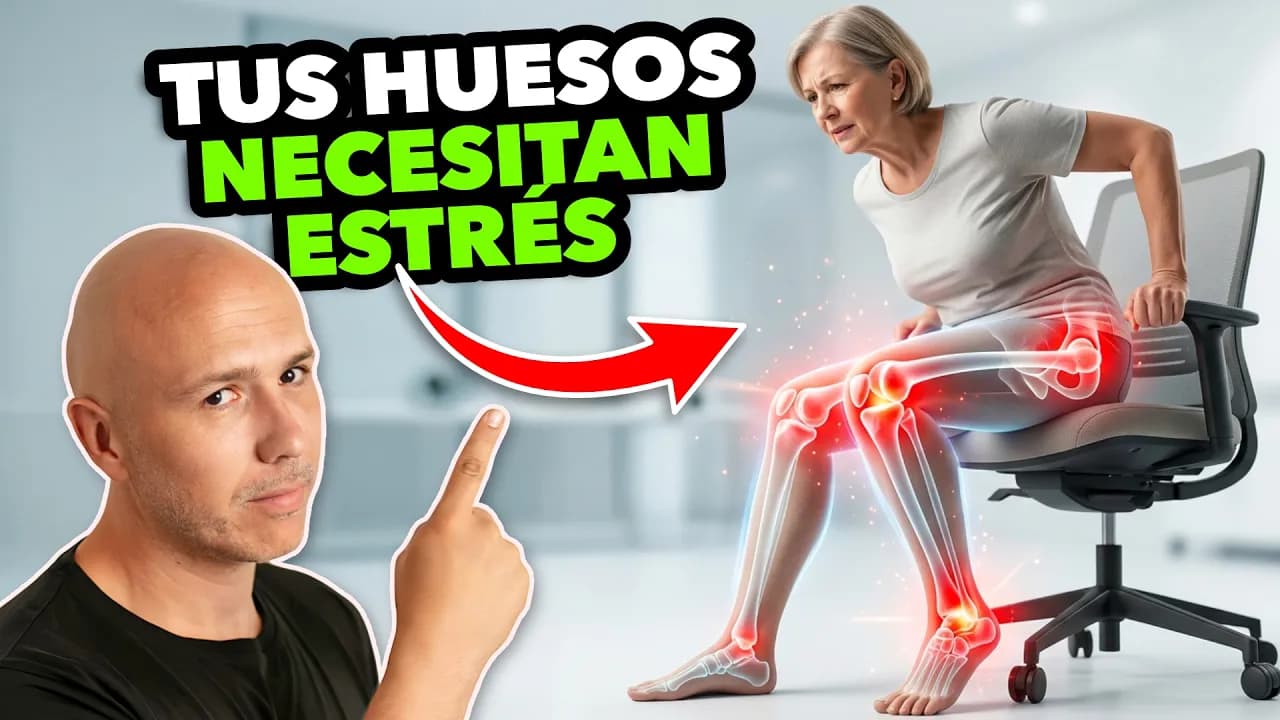
For osteoporosis confirmed by X-ray showing wedged vertebrae, calcium alone cannot fix bone loss. Bone is mostly collagen with trace minerals and calcium. Magnesium, vitamin K2, and D3 are also required. These must be taken together with weight training to stress the spine and stimulate bone growth.
A study from Japan showed that women with osteoporosis who took high amounts of K2 had great results. Search for companies selling K2 in milligrams. Take 40 to 45 milligrams of K2 daily to direct calcium into bone. Take no less than 10,000 IU of vitamin D3 daily. Magnesium glycinate is essential because it is required for D3 and K2 to work and acts as the master controller over calcium. Magnesium is probably more important than calcium for building bone.
If the upper back area is soft, doughy, and spongy, known as a buffalo hump, get fasting insulin tested. Normal fasting insulin is below five, and it is often much higher in this condition. The diet is likely too high in carbohydrates with too many snacks, creating a metabolic problem. The body stores fat in unusual places as a survival mechanism.
Switch to a low-carb diet and intermittent fasting with two meals a day and no snacks. Dr. Berg supplements are available on Amazon for those seeking recommendations.
Begin with a foam roller placed under the upper back where the hump is located. Reach arms up and back over the head and let gravity open the upper spine. Breathe and hold, then return to a seated position with arms crossed and head leaning forward. Hold the new position for 15 seconds. Repeat these steps five times in a row for two sets. People with osteoporosis or a history of spinal fractures should check with a physical therapist before using a roller under the spine.
Next, kneel on one knee next to a wall. Reach the arm back with the palm flat on the wall to open the chest and rotate through the upper back. Use the other hand to guide the twist from the rib cage. Bring arms out into a T position and turn the head to look back at the hand. Hold to feel the stretch through the middle of the back. Perform five slow twists per side for one to two sets.
Sit on a stool, lean forward, grab the back of the legs, round the upper back, and tuck the chin. Gently pull against the legs to create tension. This stretches tissue that tightens from sitting hunched over. Hold for 10 to 15 seconds while breathing normally. Repeat two to three times. One set is enough to start. Keep movements gentle and pain-free. People with osteoporosis or spinal fractures should avoid deep or forced rounding and seek guidance for appropriate alternatives.
Lie face down with a towel under the forehead to keep the neck straight. Lift arms out to the side into a Y position just off the floor. Pull elbows into a T position, lift into a W, and squeeze shoulder blades together. Return to T, then W, then T again, and back to the starting Y position. These movements strengthen muscles that pull shoulders back and maintain good posture. Perform one to two sets of five to eight repetitions each. Hold for two to three seconds at the top, then lower slowly. Rest about one minute between sets.
Lie on the stomach and prop up on forearms with elbows under the shoulders. Lift the chest while keeping the neck neutral and looking slightly down. This places the upper spine in extension, the opposite of forward head posture. Hold for 10 to 20 seconds while breathing. Repeat three times. One set is enough initially. Lower the chest and relax between holds.
Finally, lie on the back, bend the knees, and drop them to one side. Open the top arm out the opposite way and let the chest rotate toward the ceiling. Hold, then place the hand on the knee to anchor it and reach the arm back for a deeper stretch. Perform daily. Hold 5 seconds per side and repeat five times.
Keto and intermittent fasting are the next most important factors. A linked video provides more detailed information on these approaches.
Keep Dr. Eric Berg DC in your library
Save the videos and channels worth coming back to, and find them again in one place.