How to effectively train your abdominal muscles | Jeff Cavaliere, M.S.P.T., C.S.C.S.
In a Nutshell
Effective ab training requires targeting spinal flexion (top-down and bottom-up), rotation, and mid-range movements with exercises like crunches, reverse crunches, and hanging variations. Progress from floor exercises to suspended movements while prioritizing slow, focused contractions over counting reps. Train to complete exhaustion either through failure-based sets or timed circuits with minimal rest to maximize muscle engagement.
These notes were generated by AI and may contain inaccuracies.
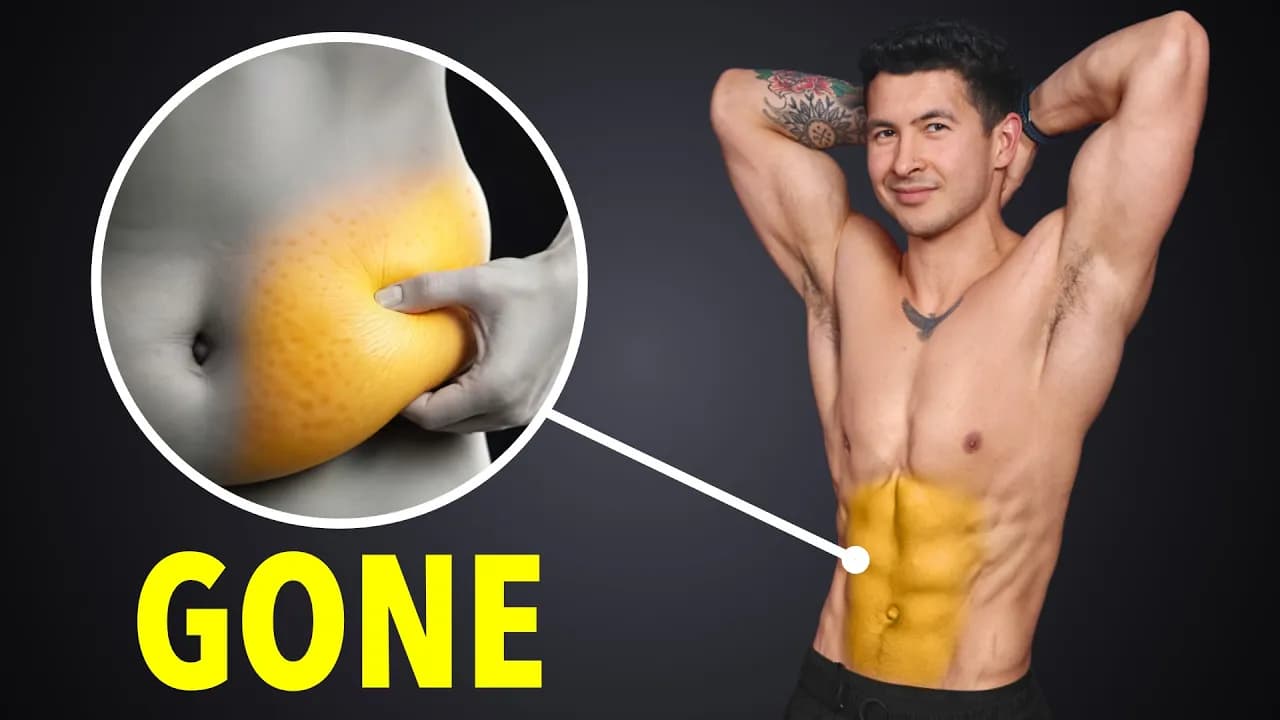
They say most of the work on abdominal muscles is done in the kitchen. That's absolutely true. Strengthening abdominal muscles and getting attractive muscles are two completely different things. Nutrition is what will control your body fat levels, period. What you see when you get rid of that body fat is determined by how dedicated you are to abdominal training.
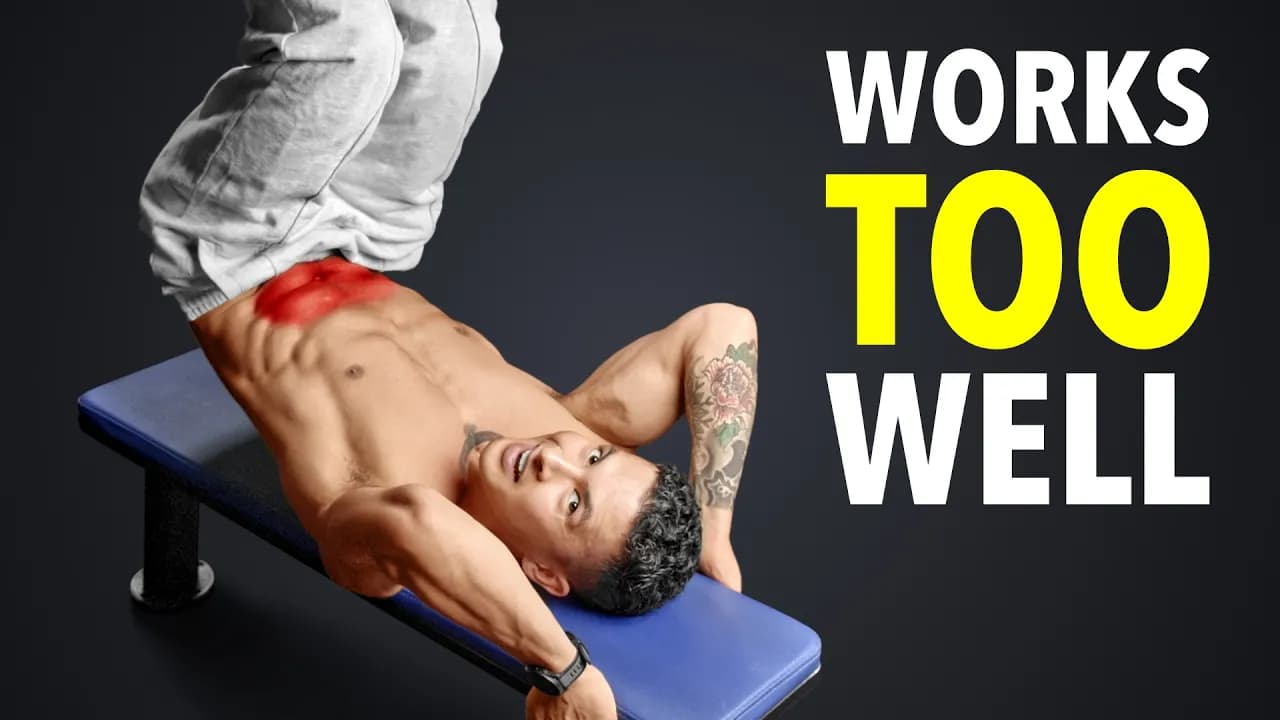
The exercises you choose should target these key functions. The main functions when it comes to the abdomen are its ability to create a top-down movement, i.e., pulling the rib cage towards the pelvis. Spinal flexion is the primary responsibility of abdominal muscle movement. Its installation requirements are enormous, but there's no movement happening there. Spinal flexion comes from top-down movements and bottom-up movements where the pelvis moves towards the rib cage itself, like any kind of reverse crunch exercise. The same two things, but they are done with rotation. So now it's not just a top-down movement, but a top-down movement with rotation. Therefore, it's called a top-down rotation. Rotation from bottom to top. So, anything that pulls the pelvis upwards while simultaneously rotating or twisting. Then there are the oblique muscles, which will work in conjunction with the abdominal muscles. Then there are mid-range movements where both the rib cage and the pelvis move towards each other at the same time.
How do you perform these exercises? Anything performed on the ground is generally easier than if you were performing it while suspended from a beam. Obviously, the easiest movement from top to bottom is the crunch, followed by the crunching with a twist, lifting the leg off the ground with a twist, and lifting the hanging leg with a twist. Basically, you choose from these.
How do you determine the sets and repetitions for this unusual muscle group? It's difficult to specify sets and repetitions for people when it comes to abdominal exercises for two reasons. Firstly, we can all do different quantities. Most importantly, we do a better job of creating high-quality contractions when we don't just focus on the number. If the goal is to get a good ab workout, focus on getting slower, more focused, and deeper contractions of the abdominal muscles, because it's very easy to engage the hip muscles. It's very easy to rely on momentum. We get lost in the ability to say: "Yes, 30, 35, 40." From what? 40 of what? 40 of the nonsense. That is, there was nothing truly productive about it.
Therefore, perform it until you are no longer able to continue. Just exercise until you reach a state of complete exhaustion, whatever it may be. Or perform it for a specific period of time, focusing on switching between movements as quickly as possible. However, knowing that the final result after these six or seven minutes will be the feeling of complete exhaustion. This can be done if the focus is shifted a little on the abdominal muscles, from the upper movements to the lower ones. Changing these focus areas will allow continuation for 30-second periods with very little rest, giving a cumulative effect in the end. So, these are the two ways that are usually preferred.
Keep Peter Attia MD in your library
Save the videos and channels worth coming back to, and find them again in one place.