How to Use Your Vagus Nerve to Improve Gut Health
In a Nutshell
Stress lowers vagal tone, which worsens gut inflammation and can make IBD lethal; restoring vagus nerve activity via electrical stimulation or breathing reverses this by cutting pro-inflammatory signals like IL-6 and TNF-alpha while raising anti-inflammatory IL-10. Human trials show non-invasive vagus nerve stimulators improve rheumatoid arthritis outcomes, reduce joint erosion, and deliver rapid drops in anxiety, depression, and cortisol. Practical tools—cyclic sighing breaths and at-home vagus stimulators—offer drug-free levers to dial down inflammation and protect gut health.
These notes were generated by AI and may contain inaccuracies.
For years, inflammatory bowel disease caused the immune system to attack the gut from within. An anti-inflammatory diet saved the speaker's life, but research at Oxford and Harvard revealed the need to activate another lever: the vagus nerve.
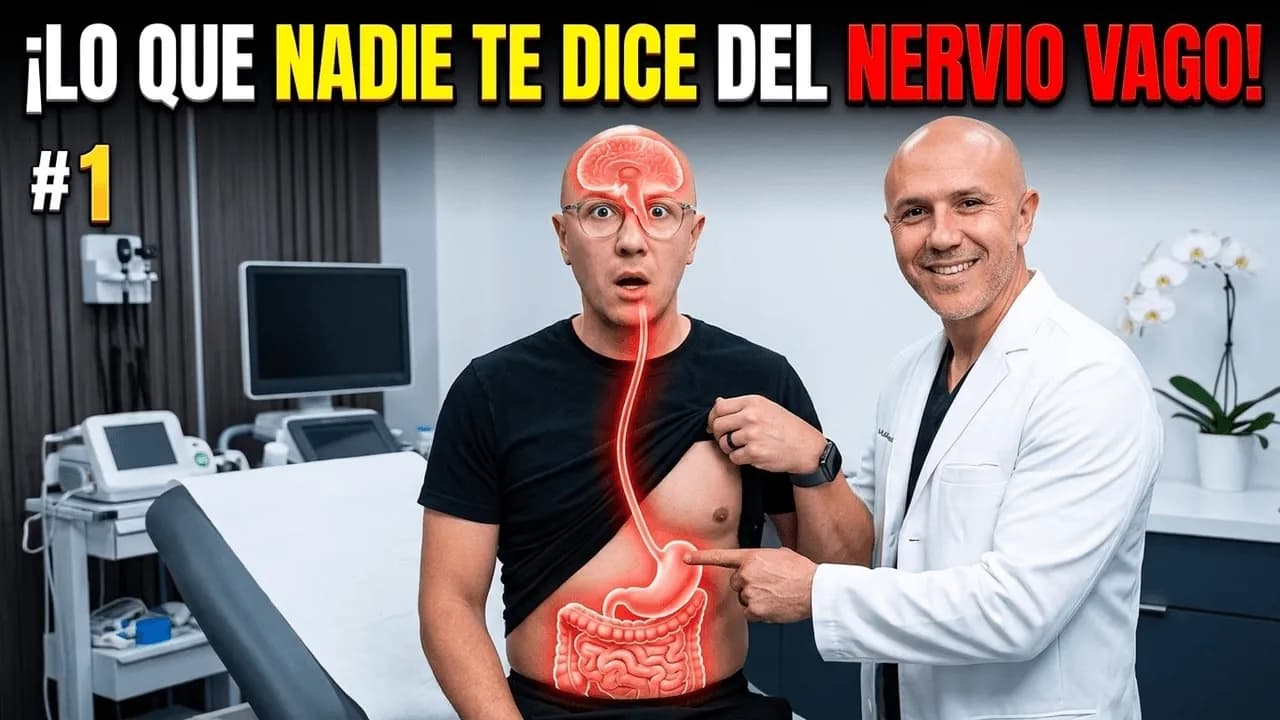
The vagus nerve is the longest nerve in the body and serves as the primary communication pathway between the brain and organs including the heart, liver, immune system, and gut. It carries messages about food, stress, and inflammation. Activating the vagus nerve can function as a dimmer switch on inflammation throughout the body, potentially altering the course of inflammatory and autoimmune diseases including ulcerative colitis and rheumatoid arthritis.
Stress is not merely psychological. In research with mice having severe IBD, the stressed group died within days when inflammation became lethal. Inflammatory bowel diseases shorten patient lifespans by approximately 10% on average, largely due to complications like sepsis and cancer linked to chronic inflammation.
Modern environments promote inflammation through chronic stress, air pollution, processed food, and sedentary lifestyles. These factors affect the gut, heart, liver, and body-wide systems.
Researchers stressed mice with severe IBD. The animals did not merely worsen; their disease turned lethal. Key finding: vagus nerve activity dropped approximately threefold in stressed animals. The vagus nerve functions as captain of digestion and helps calm inflammation.
Researchers then surgically exposed the vagus nerve in the neck and applied short bursts of electrical stimulation. This reversed outcomes: disease scores fell, intestinal bleeding improved, inflammatory signals (IL-6, TNF-alpha) dropped in the colon, and anti-inflammatory IL-10 rose.
The biochemical process involves SUMOylation, where cells attach small SUMO molecules to proteins, altering their behavior. This acts as a molecular stress dial elevated during inflammation. SUMOylation is elevated in human IBD patients with Crohn's disease and colitis. Vagus nerve stimulation reduced this inflammatory marker by approximately 70%.
- Stress lowers vagal tone
- Lower vagal tone worsens gut inflammation
- Restoring vagus nerve activity calms inflammation
Psychological stress has a physical pathway through the vagus nerve into the molecular machinery of intestinal inflammation.
The speaker's worst ulcerative colitis flares consistently clustered around international travel. The most severe flare occurred within weeks of moving to Oxford, requiring admission to the palliative care ward. This personal experience drives interest in the mechanistic research.
A randomized, double-blind trial called RESET-RA enrolled 242 patients with rheumatoid arthritis who had failed multiple drugs. Participants received either an active vagus nerve stimulation device or an identical but inactive device.
At 3 months, vagus nerve stimulation produced significant improvements versus controls. Benefits increased further after 12 months of treatment. In 2025, this led to the first FDA authorization of a vagus nerve stimulator for an autoimmune disease.
Rheumatoid arthritis causes chronic inflammation that erodes joints. Vagus nerve stimulation slowed bone erosion as visualized on MRI of the hands and wrists.
The brain reads inflammation in fine detail through labeled lines of vagal sensory nerves. One set detects pro-inflammatory signals; another detects anti-inflammatory signals. These connect to a control center in the brainstem that functions as a biological inflammation thermostat.
Silencing this brainstem cluster allows inflammation to run wild, with pro-inflammatory signals more than tripling and anti-inflammatory mechanisms failing.
The vagus nerve and breath are physically coupled. Every exhale links to a pulse of vagus nerve activity. Lengthening exhales nudges the nervous system toward calm.
A Stanford randomized controlled trial found that cyclic sighing (double inhale through nose, long slow exhale through mouth) improved mood and lowered physiologic arousal more effectively than mindfulness meditation.
The speaker practices this during travel—while in Ubers, airports, or planes—to manage stress-related IBD risk.
The colitis study reframes stress management as hardcore gut therapy rather than self-care cliché. Psychological stress alone can turn survivable inflammatory disease lethal by dropping vagal tone.
The speaker's personal stress reduction includes watching Marvel movies, drinking licorice tea, and eating cheese platters. Enjoyable stress reduction practices should be treated as legitimate health tools.
Non-invasive devices clip around the outer ear or neck to deliver gentle electrical pulses. One randomized controlled trial in chronic insomnia showed vagus nerve stimulation outperformed sham devices for sleep quality.
The speaker uses the Pulsetto device, which wraps around the neck and generates small electrical impulses modulating vagus nerve signaling. In a pilot trial of 40 adults, participants experienced:
- 56% reduction in depressive symptoms after 4 weeks
- 45% reduction in anxiety scores
- 41% improvement in sleep quality
- Approximately 70% experienced cortisol reductions of 30-50%
Subjective effects include feeling calmer within 7 minutes, reduced post-meal bloating, and improved sleep (multiple nights of 8 hours straight). The speaker finds the sensation enjoyable and refers to it as a personal vagus nerve therapist.
Health represents an N=1 experiment. An anti-inflammatory diet that many consider fringe saved the speaker's life. The goal is not to copy specific protocols but to stay curious about one's own body and transform health from a chore into a privilege and joy.
Keep Nick Norwitz in your library
Save the videos and channels worth coming back to, and find them again in one place.