How To Heal 20 Years of Gut Damage in 30 Days
In a Nutshell
The core message is that gut healing requires three simultaneous interventions: daily vagus-nerve activation via physiologic sighs to trigger mucin secretion, a 12-hour eating window plus fermented foods rather than fiber to reduce inflammation, and an oral peptide stack of BPC-157, Larazotide, and KPV to repair the intestinal lining, block leaky-gut signals, and suppress intracellular inflammation. These tools, not fiber megadoses or strict carnivore extremes, are presented as the fastest evidence-based way to restore barrier function and calm IBD-level damage in as little as 30 days.
These notes were generated by AI and may contain inaccuracies.
At age 21, the speaker was diagnosed with inflammatory bowel disease after their body began attacking itself, resulting in ulcers opening in the intestines. Food became dangerous with a real chance of losing the colon entirely. For years, their life revolved around constant pain, bloody bathroom visits, fear, and the constant question of why their gut was on fire. After completing a PhD in metabolism, medical school, and nearly a decade of self-experimentation, they developed answers and tools.
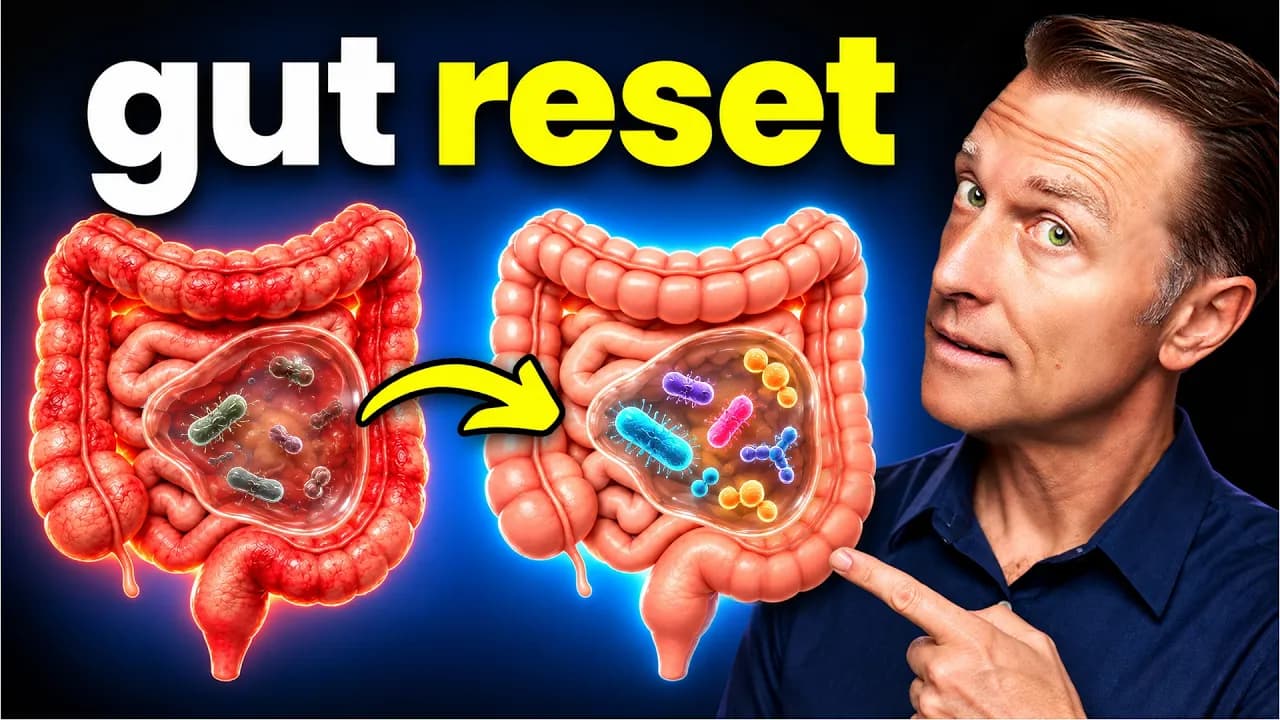
The speaker poses the question: if they could go back to the moment of diagnosis knowing what they know now, how would they put out that fire within them as fast as possible? This video answers that question not just for people with inflammatory bowel disease, ulcerative colitis, or Crohn's disease, but for anyone whose gut feels broken, as gut problems exist on a spectrum and most people are somewhere on it.
The gut can be thought of like a highway that experiences constant traffic, except the asphalt on the highway is being ripped up and replaced almost daily. The speaker emphasizes these are science-backed, evidence-based options, not fiber fear-mongering or carnivore tribe fringe conspiracies. When the gut is hurting, life shrinks to pain, fear, bathrooms, and exhaustion. The speaker states they would literally bet their colon that the findings translate directly to humans.
The video will outline free and unexpected foundational tools to support gut health that can be implemented immediately. Part two covers dietary principles beyond the obvious, noting it's not about fiber. Part three covers the ultimate peptide stack for gut health, which doesn't require injection but includes powerful peptides that can be taken orally with multiple elements of gut healing, calming inflammation, supporting tight junctions, healing leaky gut, and quelling the inflammatory storm inside intestinal cells.
The speaker acknowledges some tools are free while others are investments, noting from personal experience that investing in quality food and supplements is sometimes worth it, otherwise one might end up spending over $2,000 out of pocket for a colonoscopy after moving to the United Kingdom for a PhD while living on a limited scholarship stipend, then needing to eat nothing but 79p sardines from Tesco for months to make up for it.
Breath work is presented as the most accessible and underrated tool. The speaker acknowledges that when first diagnosed, this sounded like woo woo fluff, but presents science showing that glands in the gut, particularly Bruner's glands, secrete mucin which nourishes beneficial gut bacteria and helps build resilience in the gastrointestinal system.
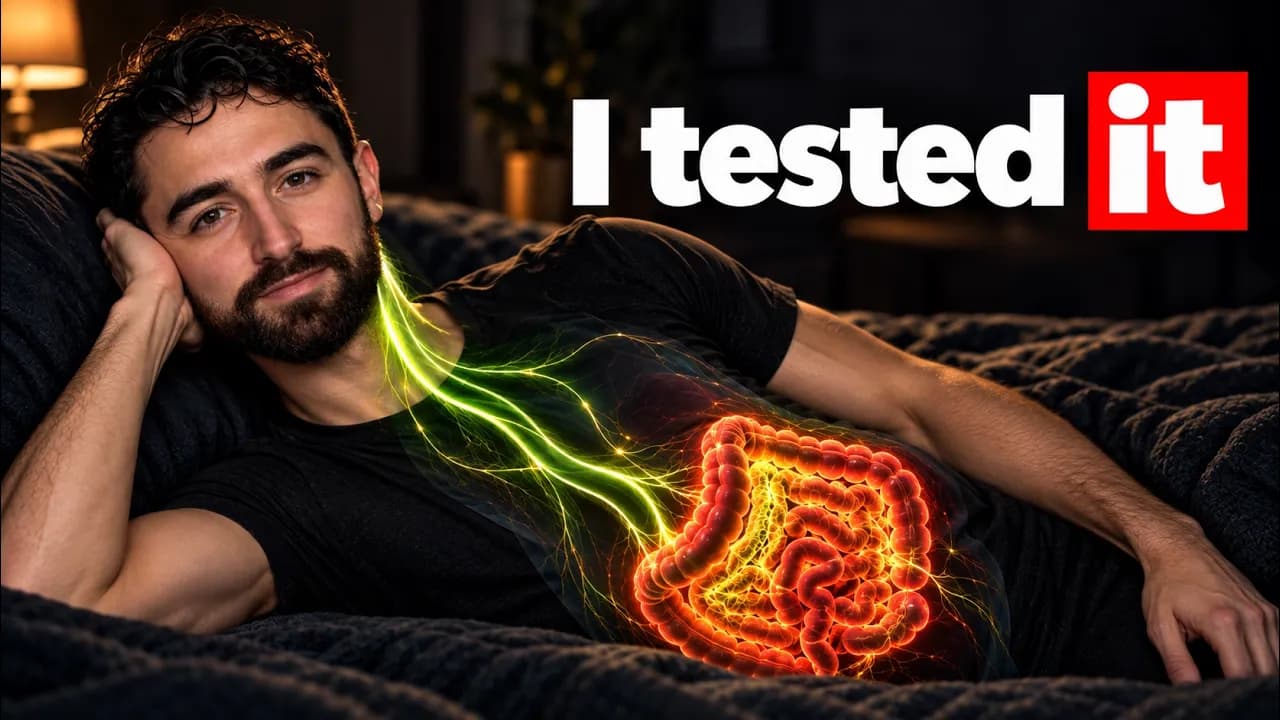
The question becomes how to activate Bruner's glands to generate mucin to feed gut bacteria. The gut is directly connected to the brain via the vagus nerve, the superhighway connecting brain to gut. This nerve's activity is influenced by brain activity or mental state, creating a direct line from the brain to Bruner's glands that can feed or starve gut bacteria.
If the vagus nerve is cut or negatively altered, it can cause severe bloating, impairment of intestinal barrier function (leaky gut), and can starve bacteria. This represents a direct pathway by which mental state, mind, and mood can heal or harm the gut. Stress reduction helps activate the glands in the gut via the vagus nerve to heal the gut and gut lining, whereas chronic psychological stress destabilizes and harms the gut and starves off the bacteria.
The most effective technique is the physiologic sigh: take one deep inhale through the nose, then before exhaling take a second smaller inhale or air sip on top of the first, then slowly exhale all the air out of the mouth. This is one physiologic sigh. Repeating this for 1 to 5 minutes results in feeling the body calm down almost immediately, likely activating the vagus nerve to activate Bruner's glands to secrete mucin, feed gut bacteria, and help the gut lining.
Any mode of stress reduction should theoretically work, allowing personalization. If meditation is preferred, meditate. If taking a hot bath is preferred, take a hot bath. If cuddling up with a girlfriend and forcing her to watch Harry Potter with occasional terrible impressions of Dobby the elf is preferred, do that too.
Some form of time-restricted feeding is important, though this doesn't need to involve strict prolonged fasts like 24-hour fasts. Something as simple as a 12-hour eating window each day and avoiding food 3 hours before bed should give enough time for the gut to recover and heal itself each day. Using the highway analogy, the gut needs time for the construction crew to come in and relay the asphalt so the highway moves smoothly. A simple example is not eating between 7:30 p.m. and 7:30 a.m.
Most people think of fiber first when healing the gut through food, but this is a mistake. There are strong controlled human data showing that fiber has a bit of a gamble when it comes to gut inflammation. Some people have an anti-inflammatory response to fiber while others have a pro-inflammatory response. Fiber can cause inflammation and damage the gut in some people, according to the strongest human randomized control trial data, including a paper out of Stanford. This does not mean fiber is bad; it means context matters.
Fermented foods appear to lower inflammation far more consistently across humans. These include sauerkraut, kimchi, properly fermented pickles, and kefir, especially kefir made from goat milk or sheep's milk because it has A2 casein which is less inflammatory than A1 casein found in cow's milk. Practically, start with the blandest of fermented foods like sauerkraut, beginning with a small amount and gradually working up to as many as six servings per day depending on tolerance. These can be mixed together, such as taking sauerkraut with a little stevia in some full fat Greek yogurt.
If the gut is severely compromised, there are data suggesting that fiber elimination can actually help with true inflammatory bowel disease. This has been clinically validated and is sometimes prescribed by clinicians for children with inflammatory bowel disease and Crohn's disease who don't respond to treatments, working in 60 to 85% of cases. Eliminating fiber in a compromised gut situation can alter the composition of the microbiome and activity of particular microbes, in particular inflammatory gut bugs sometimes called pathobionts like Bilophila wadsworthia. This might help explain why fiber-free carnivore diets appear to be therapeutic in at least a subset of people with true inflammatory bowel disease. These approaches can be combined, such as a short-term month-long fiber elimination diet as a reset followed by slowly introducing fermented foods.
Probiotics naturally go hand-in-hand with fermented foods. The speaker takes one from Winnow Labs, explaining that while probiotics are generally a bit of a hit or miss, microplastics are a genuine concern as they're ubiquitous, impossible to avoid completely, and get in through the gut lining accumulating in tissues like the heart and brain where they can cause substantial damage by activating immune cells and stimulating inflammation. The Winnow Labs probiotic was engineered by Dr. Matthew Dunn who received his PhD in molecular biology and biochemistry. The team curated a set of microbes that essentially binds up plastic like biological velcro, with bacterial strains proven to bind microplastics. However, there are not yet any clinical trials showing that long-term use reduces whole body microplastic burden in humans. This should be thought of as a high-quality probiotic combined with a promising microplastic shield mechanism layered on top.
The ultimate peptide stack for gut healing includes three compounds: BPC-157, Larazotide, and KPV. Each does something slightly different and complementary, and each needs to be taken a little bit differently.
BPC-157 is a peptide often used as an injectable for sports and orthopedic injuries, but when taken by mouth may help repair the intestinal terrain itself. At a high level, it's involved in tissue repair and regenerative signaling, supporting blood flow, mucosal healing, and restoration of the gut lining directly. It's generally best taken on an empty stomach once or twice daily at 250 to 500 micrograms with the goal of maintaining a regenerative environment for gut healing.
Larazotide was originally developed for celiac disease to improve gluten tolerance, and that's where the strongest human control trial data exists. It acts like a shield against compounds that can increase intestinal permeability or leaky gut by blocking something called zonulin signaling. Zonulin is a molecule involved in creating leaky gut or increasing intestinal permeability, allowing inflammatory compounds to pass through the gut lining into the body creating whole body inflammation. This phenomenon doesn't just happen in celiac disease but can happen subclinically in many people. Leaky gut occurs across a wide range of inflammatory conditions and is probably underdiagnosed. By blocking zonulin signaling, Larazotide helps keep the tight junctions between intestinal cells sealed and stable. This should be taken roughly 15 minutes before meals, usually around 0.5 milligrams, because meals themselves may contain compounds that increase zonulin and increase intestinal permeability.
KPV is focused on suppressing inflammatory signaling within inflamed gut cells themselves rather than targeting tight junctions. It enters the gut cells and immune cells and inhibits inflammatory pathways like NF-kappa B signaling. What's especially fascinating is that KPV behaves almost like a smart inflammation-seeking missile because the mechanism is dependent on a transporter called PepT1, which becomes more abundant and highly expressed in the gut and immune cells when inflammation increases. The more inflamed a tissue becomes, the more transporters for KPV are available to enter the cell, making it potentially a highly targeted therapeutic agent that goes where the inflammation is. There are also intriguing preclinical data suggesting it might have relevance in colon cancer biology.
Taken altogether, this creates a powerful gut defense system. BPC-157 and KPV are both taken on an empty stomach, usually between 250 and 500 micrograms, supporting tissue recovery and reducing inflammation through complementary mechanisms. Meanwhile, Larazotide works like a permeability shield and should be taken before meals.
The company the speaker personally uses is called Wingspan because their products are manufactured in the US in an FDA registered facility and they are cGMP certified, and after asking around it was the brand most consistently recommended by people whose opinions they genuinely trust.
Everything covered was unknown to the speaker on the day they were diagnosed, and lacking that knowledge could have cost them if not their life then at least their colon. The sincere hope is that wherever anyone is on the gut health spectrum, there's something here they can use today or give to someone else who's suffering or keep in their back pocket for a day when they need it. When the gut is hurting, life shrinks to pain, fear, bathrooms, exhaustion, and just survival rather than actually living. The speaker lived it but also knows that gut healing is possible.
Keep Nick Norwitz in your library
Save the videos and channels worth coming back to, and find them again in one place.