I Said Yes to Every Email for a Month! (Again)
In a Nutshell
YouTuber said yes to every product pitch email for a month and received a $800 smart toilet, a triple-screen laptop that scored 2/10, and a 10/10 robot camera that follows you at 18 mph. The experiment also turned up a $1,200 AI massage chair, a $3,600 Sony Bravia 9 "True RGB" TV, and a sketchy portable gaming PC whose company only sells one other product—a $10,000 e-bike. Key takeaway: the best finds were the least practical, while the most expensive items delivered the least value.
These notes were generated by AI and may contain inaccuracies.
As a product reviewer, I get a lot of emails and say no to 99% of them. This causes me to miss out on crazy items. I previously did this experiment a couple years ago, which resulted in receiving a casket that is still in the studio. The top comment on that video suggested doing this segment every year at random times so people don't know when I'm saying yes to everyone. This led to receiving this toilet.
The email claimed smart toilets are rising in popularity. The Amazon listing describes a smart toilet with bidet built-in, auto flush, auto open/close lid, foot sensor, heated seat, warm water wash, warm air dryer, deodorizer, night light, remote control, in white. It comes with a remote that pairs to the toilet via Bluetooth in 10 seconds, indicated by blinking lights on the remote and inside the bowl. The remote takes AAA batteries, which were not included despite the $800 price tag. The reviewer is not a toilet reviewer and would normally decline this item, but will mention the tech features.
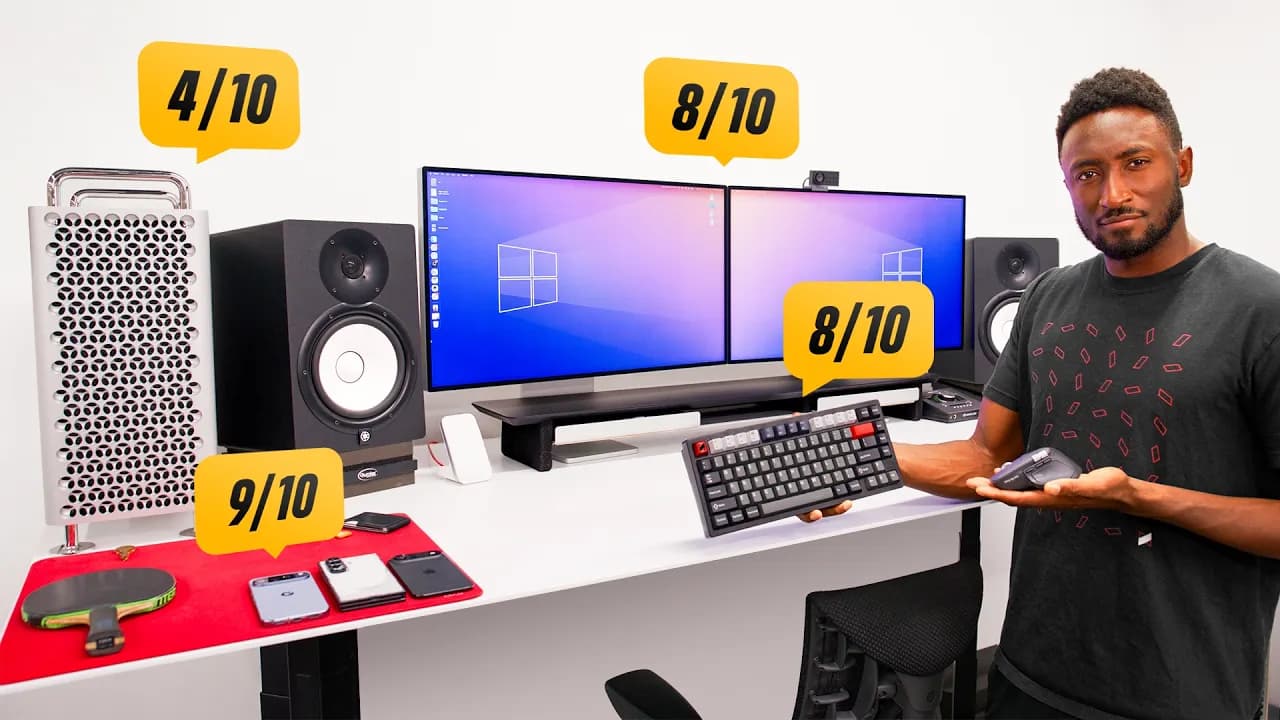
This is a triple-screen laptop that reminds the reviewer of the gScreen Spacebook, a dual-screen laptop from Alaska received 10-12 years ago. The Xbook has an Intel Core Ultra 7, 32GB RAM, and 1TB storage. The first screen is accessed by opening the laptop normally. The second and third screens are accessed by pulling out the additional screens and connecting them via magnets. All three screens are touchscreens that can either mirror or extend displays. The trackpad is described as bad and the laptop itself is not particularly fast. A trick allows folding it to use as a regular laptop or flipping it for dual touchscreen mode on the other side. The reviewer gives it a 2 out of 10, calling it an idea worth overlooking fundamental downsides similar to early Samsung Galaxy Fold phones.
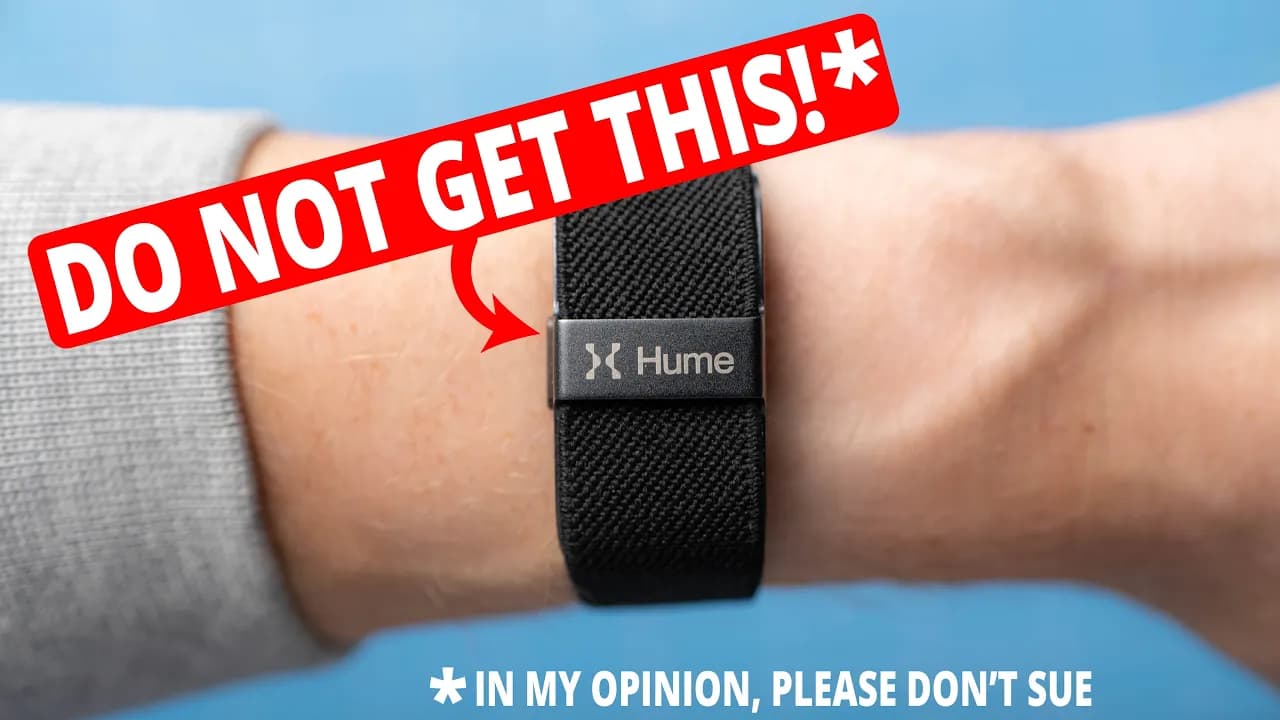
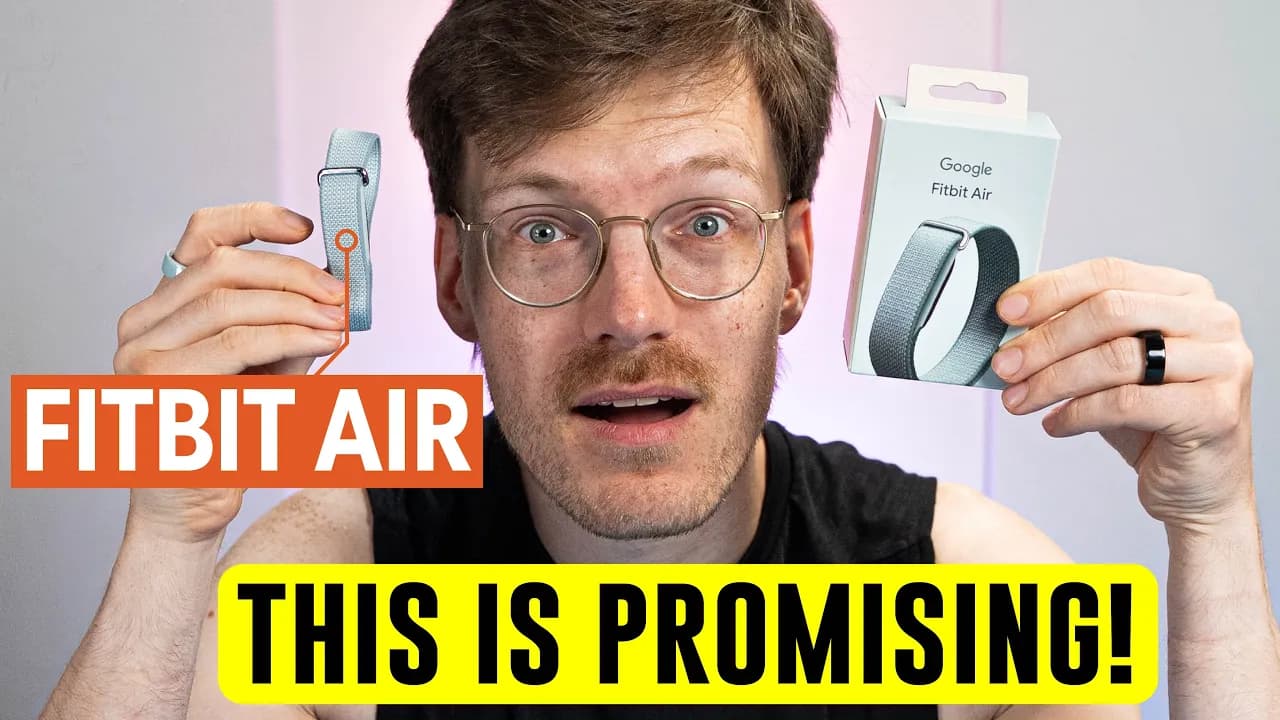
This is a screenless fitness tracker priced at $200 with no subscription. It aims at the Whoop market as a comfortable puck on the wrist without a screen. It has a customizable button on the side to start workouts, which is convenient without needing a phone. The blue band is soft, fabric, stretchy, and attaches by Velcro. The reviewer finds it a slightly less elegant version of the Fitbit Air, which is smaller, narrower, and pokes off the wrist less. The Fitbit Air came out before this and offers data without required subscription. DC Rainmaker's testing covers data accuracy comparisons between this, Fitbit, and Whoop. The reviewer gives it a 6.5 out of 10 and probably wouldn't recommend it.
This is a smart toilet seat alternative to the full smart toilet, priced at $200 for the first year free, then $10 monthly subscription. Unlike the previous smart toilet, this measures heart rate, heart rate variability, breathing rate, and stress levels through electrical leads and metal pieces on the toilet. An app shows this data in real time, including a stat called duration. The subscription model is why people don't like Whoop. The reviewer hasn't connected or tested it but finds the cold metal unappealing and would rather have the Garmin. The rating is 4 out of 10.
This is a button that tells people you're busy and shows how long you've been busy, with pause functionality. It has an app to set busy time that syncs with the physical box. It functions as a Pomodoro timer with smart home connectivity for Google Home, Alexa, or HomePod integration. The reviewer finds the button satisfying to press with nice animations and screen. Though overpriced at $200, the reviewer gives it an 8 out of 10 because it's fun.
This is a small friendly camera robot on wheels that follows you around. The website had suspicious videos, some appearing AI-generated like the skateboarding one. Despite red flags, the reviewer said yes because of the experiment. The robot has a controller, ears, and an app. It has a front camera with light-up eyes and came with two batteries that pop out like a DJI drone. The app provides first-person camera view and controls, preferred over the controller. It can look up/down, track people, jump, and do front flips. It shoots 4K 30fps footage with object avoidance like a drone. In sport mode, it reaches 18 miles per hour while following subjects. It's durable, surviving falls and crashes into cardboard boxes and table legs despite being all plastic. The self-balancing gimbal allows recovery from impacts. The reviewer gives it a 10 out of 10 and plans to get another one.
This is a collaboration between Noctua, known for PC fans, and Pulsar. The wireless mouse has a fan inside, 42,000 DPI, and is extremely light. It glides nicely. The fan activates by pressing side buttons two and three and scrolling up, blowing air onto the palm to prevent sweaty hands. The box claims three-step control (off, speed one, speed two), but testing revealed five speeds indicated by light blue to dark blue to green to yellow. The reviewer gives it an 8 out of 10.
This is a medical-grade personal EKG device priced at $130. The reviewer is not a medical doctor despite having an honorary doctorate. It has multiple metal contact points on the outside and back for gripping and placing on the leg for third contact. It comes with a one-year KardiaCare membership allowing doctors to review the data. The reviewer gives it an 8 out of 10, noting they're not qualified to assess accuracy.
This phone has a sliding glass back that reveals a flip-out gimbal with a 200-megapixel main camera. The tiny gimbal motors provide stabilization like DJI Osmo but fit in a pocket when folded. It has stabilization modes and an AI assistant with anthropomorphized face that nods to music beats and gives happy/sad expressions. The AI can evaluate outfits. It's made in partnership with ARRI for color science, custom color modes, and LUTs. It supports shooting in Log or with pre-stamped LUTs. The reviewer gives it a 9 out of 10 because they actually made it despite seeming like a concept phone.
This is a $1,200 AI-powered massaging chair with cooling elements (low, medium, high vent), heating element, and lumbar massage (low, medium, high). The lumbar support piece moves forward and backward 3-4 inches, with an auto smart track feature claimed to be AI-powered. The headrest is customizable in every way. The reviewer normally wouldn't say yes to AI-powered chair emails but discovered it's possible to have too much customizability. The chair is functional for sitting. The rating is 4 out of 10.
These are Skullcandy's most expensive headphones at $280, made in collaboration with Bose. Skullcandy was previously known for lower-quality headphones from fashion stores. They have active noise-canceling and a bass wheel. A voice says "Power on" when turning on and "See ya" when turning off. At minimum bass setting, it's already 9 out of 10 bass. Maximum bass becomes overwhelming and muddy. The fun factor is high for those wanting to feel bass through chest and skull, but the reviewer wouldn't spend $280. The rating is 6 out of 10.
This thin portable gaming PC comes from grantsinclair.com, a company whose only other product is a $10,000 street-legal e-bike pod. The website raises suspicions about legitimacy. The device has two unlabeled controls functioning as a D-pad and selector, microSD card slot, mini HDMI port, USB Type-C charging port, and two speakers. It runs a couple built-in games like Astro Blaze and gets warm. It's essentially like a Raspberry Pi priced at $150. The reviewer has little experience with this type of device and finds the website weird.
I said yes. I'm not sure if I regret it yet. Maybe I will, maybe I won't, but now we have a tiny gaming PC. Five out of 10. It kind of doesn't do anything terribly. Maybe the pads on the bottom could be a little stickier. So I could, maybe these should be labeled. Eh, 5 out of 10.
This is a new TV. This is the Sony Bravia 9 too. This is in my inbox as a true RGB TV. That's the pitch. This is a very premium 65-inch TV. Costs $3,600 but also goes up to like 115 inches or something like that. It is not an OLED but Sony is pitching this true RGB technology to be almost as good as OLED without the downsides of OLED.
True RGB Technology
True RGB means independently controlled red, green, and blue LEDs instead of passing through filters. So really vibrant color and great brightness, but also no burn-in like you do get with some OLEDs, and that is the headlining technology. And it's also a smart TV, so I'm on the YouTube app and I found that right out the box it was very obvious that the reds are super saturated, and this is just in the standard mode. Even when I switch over here to the cinema mode or some of the other less vibrant modes, it's still a ton of saturation on the reds. So it's just something I noticed right out the box.
Anti-Glare and Design Features
Obviously, it's still a really good-looking TV. It's still 4K, still has a ton of resolution. But I found that some of the extra stuff around the TV, around the image, actually made just as much of an impact for me. Specifically, the anti-glare finish. You were looking at this TV in front of a massive window right now, and the first thing I noticed when looking at it is that it reflects almost nothing. So it's got these deep blacks, it's got really, really high brightness, it's got saturated colors, and you can see everything because the anti-reflective tech is actually good.
I also really like this little box right underneath the display right here, which hides the power cable. If you've ever seen those like lenticular films that you can put in front of a person to sort of make them disappear like an invisible cloak or whatever, that's basically the same thing, specifically to make the power cable go away. And then also fun fact, this remote is USB Type-C powered. You'll never lose the TV remote batteries again. I don't know how often you are losing the batteries.
Audio Performance
And I will also say that the spatial reproduction from the speakers on this TV was also really impressive to me. So there's this demo when you first set it up to sort of read the room. You hold the remote out in front of it, which has a microphone in it, and then it plays all these sounds and you can kind of hear it figuring out how to set up surround sound. But there are directional, like firing tweeters that go straight up at the ceiling in the back of the TV, and there's a bunch of other larger speakers. There's no woofers, it's not the most bass in the world.
Now, would I have normally said yes to this? Possibly. This is sort of also right on the borderline, if anything, just to see this new RGB, True RGB tech. Yeah, I think given the price tag, it's hard to give it much more than about like a 7 and a half out of 10. It is quite an expensive TV, uh, but the benefits are pretty clear.
So this experience, as you know, is me saying yes to a bunch of product review requests. And that is a very common type of email that I get. But I also get lots of other types of emails that weren't included in this video that I didn't say yes to. There are things like speaking invitations, event invites, ad sponsored requests, things like that.
RayNeo AR Smart Glasses
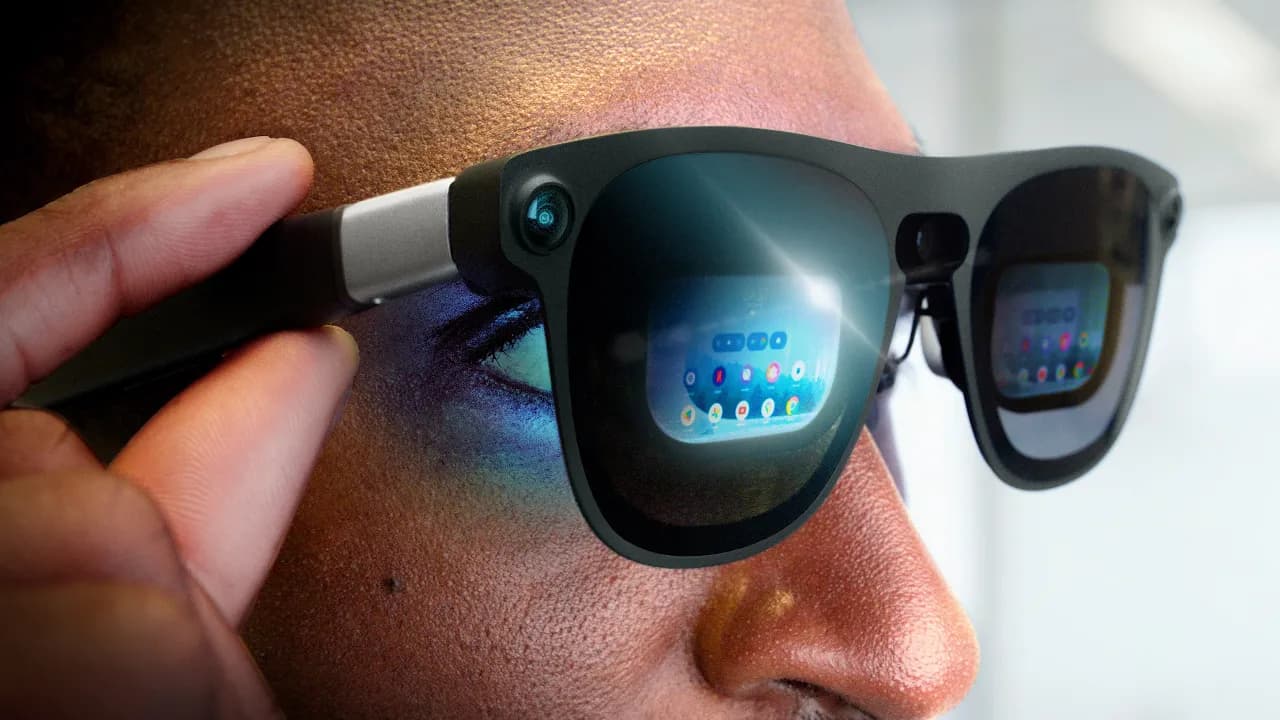
So I'll give a shout-out to the RayNeo AR smart glasses who get the award for most times emailing me during this one period. They were all asking to do an ad for the product. They emailed me six times from six different account. Shout-out to them.
Red Flag Company Experience
And then there was another certain company who will remain nameless, who initially reached out to just send a product, and I replied and I said yes, as I am. And I think they were a little taken aback by that. And so, they replied, "Actually, can we do a collaboration instead, like an ad?" And I said, "No, I'm not interested in that. I'm actually, you know, if you want to send the product for me to check it out, I'll do that." And so they said, "Okay, never mind but if we can do a collab/ad, then yes." I've never seen that before. They said their policy does not let them ship out any products without confirmed video coverage, meaning they wanted to guarantee that I was going to make a video. Fellow creators, that is a huge red flag. Do not ever agree to that, but do definitely get subscribed to tune back in to when I inevitably do this again.
And there's also one more thing that I did say yes to, which was to Best Buy for sponsoring this video. So I have been answering emails and covering tech for the better part of 17 years, which is actually more than I have not been doing this. But Best Buy has me beat. They've been celebrating their 60th anniversary this year.
Best Buy Value Proposition
So one of the most fun parts of these Say Yes to Everything videos is, now, there's a bunch of physical products that I actually get to get hands-on with and test that I ordinarily wouldn't have gotten to try. But that is what Best Buy does best is they'll let you get hands-on with the best tech before you actually make your purchase decisions. And they've been doing it longer than anyone else. I mean they're one of the only tech stores that has been selling cell phones since the start of cell phones, basically. So you can find the tech upgrades you need and elevate your daily life at BestBuy.com. We'll have a link down below in the description for you to check it out but otherwise this has been it. Thank you for watching. Catch you guys in the next one. Peace.
Keep Marques Brownlee in your library
Save the videos and channels worth coming back to, and find them again in one place.